
 Features
How Brutalismus 3000 found harmony in chaos
On their second album 'Harmony', Brutalismus 3000 stretch their ferocious sound even further, expanding from gabber-techno-punk hybrids to experiment with styles like hyperpop, nu-metal and trap. From this turbulent mix, they’ve produced some of their most melodic and catchy work to date
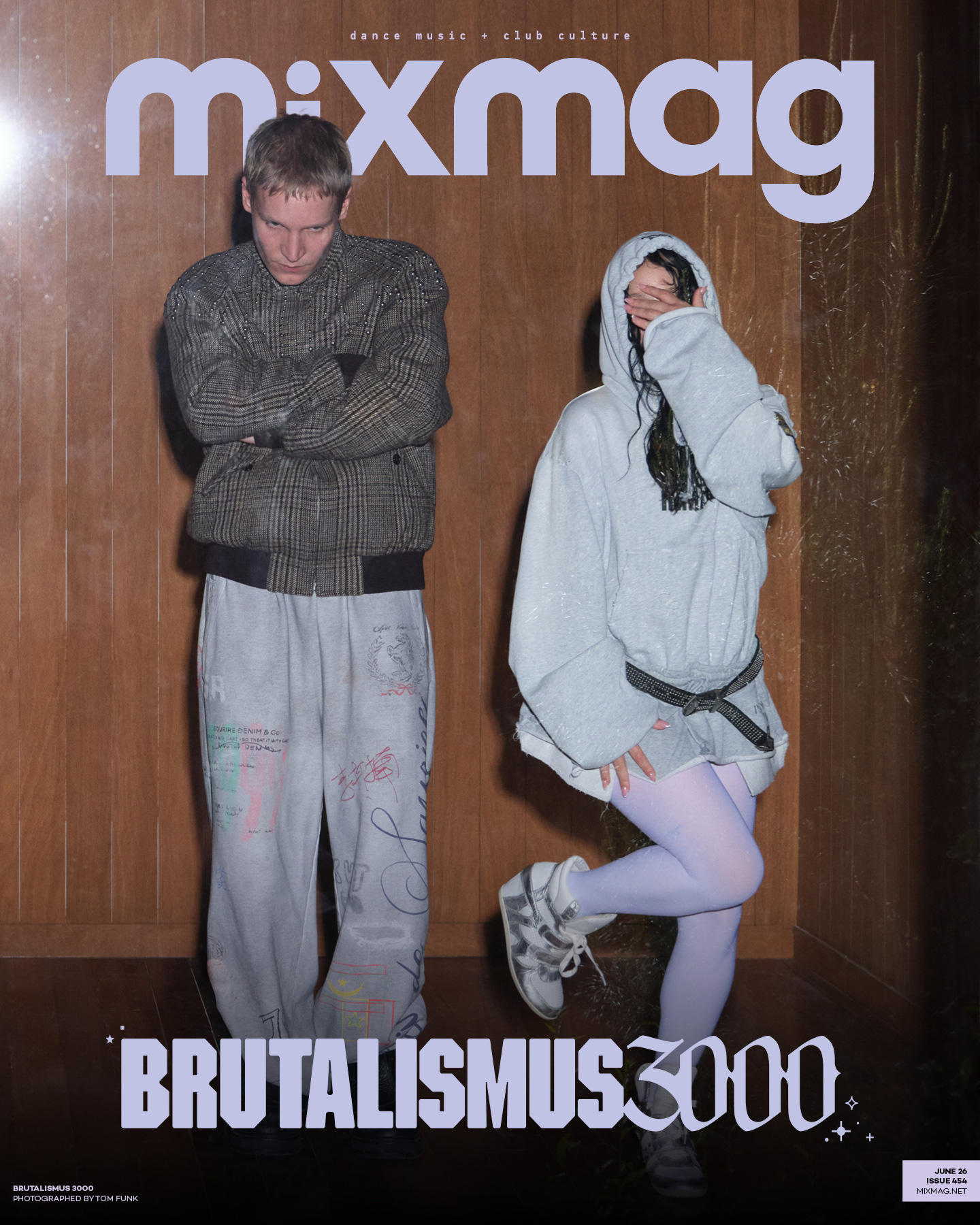
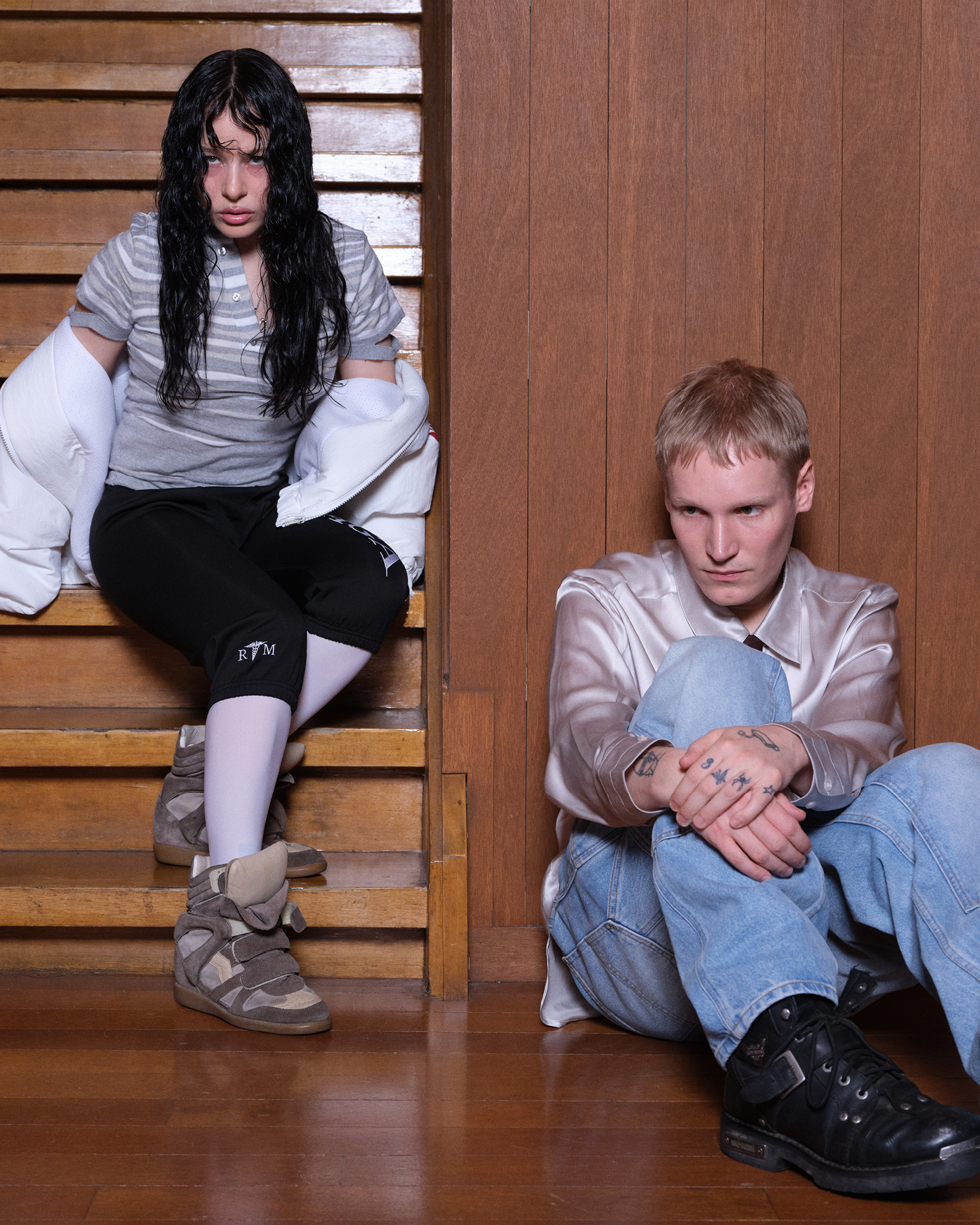
Making a career out of music was never the plan for the couple that make up Brutalismus 3000, let alone becoming one of the biggest names in the hardcore dance scene. But, then again, vocalist Victoria Vassiliki Daldas and producer Theo Zeitner have always been drawn to harsher sounds and heavier experiences.
Read this next: The Cover Mix: Brutalismus 3000
At just 16-years-old, Victoria, who goes by Viki, saw Limp Bizkit, The Prodigy, Korn and Slipknot when she attended Germany’s Rock im Park festival, near where she grew up in rural Bavaria. Meanwhile, Theo, who hails from the same German state, would drive six hours from his hometown Coburg to Berlin with friends and start moshpits at 60-capacity punk shows. Seeing Ty Segall’s stoner band Fuzz is particularly memorable: “I fell unconscious there in the mosh pit and had my teeth knocked out.”
After moving to Berlin to study film, Theo – who grew up on his dad’s love of The Beatles and Simon & Garfunkel, then made Crazy Frog’s ‘Axel F’ his first CD purchase – spent his free time making music. At first it was only a hobby. But that all changed when the aspiring director swiped right on Tinder in 2018 and met Greek-Slovakian Viki, who had played piano as a child and later had an Avril Lavigne era after finding MTV.
When they met, Viki was working in fashion and Theo was in a new wave band, and they quickly found common ground. After discovering their shared love of Pittsburgh punk rockers Anti-Flag and German electropunk, they spent that first date discussing D.A.F. (Deutsch Amerikanische Freundschaft), figureheads of the Neue Deutsche Welle movement. Soon after, the pair started going to Berghain, OHM and LSDXOXO’s Floorgasm parties with mutual friends. “They were complete party weekends,” Theo recalls. “It felt really weird for us to have a normal Saturday where we’d wake up early and not be hungover.”

After a while, though, he and Victoria started to feel tired of the music they were hearing so decided to try and make something themselves. “It was a natural progression of us thinking ‘we can do the same… maybe better’,” Viki remembers.
“We didn’t think of ourselves as a band. It really was just for fun,” Theo says, adding that the idea of combining techno with Slovakian vocals “sounded nice in my head”.
With Viki freestyling over beats made by Theo, they uploaded their unrelentingly hard screamers online under the moniker Brutalismus 3000. ‘Satan Was A Babyboomer’ and ‘Romantika’ quickly amassed a large audience during the COVID-19 lockdown. “People had time, they were bored and longing for that sound and to go to the club,” Theo says, attempting to analyse their appeal. “We drew from the '90s and our inspirations, but the style of music that we were making wasn’t over-fed yet.” Viki also considers that their fans on social media were open to hearing a mix of different genres.
Seeing their #ravetok fanbase translating to a physical audience at their first show after global restrictions were lifted was a surreal moment. “We jumped over a few steps,” Theo laughs, recalling 2,000 fans unexpectedly turning up for a 7:AM parking lot rave in Paris. Equally shocking for him and Viki was the fact that people wanted to take photos with them. “I just didn't think of that as a possibility then,” he recalls. “It never entered my consciousness that it could even happen.”
The years that followed were a whirlwind. Theo and Viki released their debut album ‘ULTRAKUNST’ in 2023 and made their Coachella debut 12 months later, among a busy worldwide touring schedule. During their travels, they noticed a stark difference in crowd reactions. “In the US, South America and Asia, they’re very open to genre-crossing,” Viki says, describing their young international audiences as a mix of goths and emos. Compared to when they perform back home, it’s a drastically different response. “I think, in Berlin it’s still coming,” Viki considers. “We educate them”, she jokes. Theo agrees: “It’s getting better, but sometimes the audience would be completely blank when you play anything other than a 4/4 beat.”

Although these muted reactions inspired the duo to break free from strict club constraints, they’ve consequently not felt a part of their local scene for some time. But the pair don’t see it as a loss. “We didn’t really like the aesthetic”, Viki explains of why they broadened the types of events they play. “Comparing how the scene is now to the one that we rebelled against when we started, I remember it really fondly,” Theo reflects. But the things he appreciated back then, while still opting to “rebel” against it, he no longer recognises in today’s landscape. “Now, it’s pretty grim,” he says, refusing to pull any punches. “I really don’t like the hard techno scene currently. It's very uncreative and unimaginative. It's very bro-y and very AI-y. It’s the opposite of art and what I think about.”
Theo’s gripes aren’t just on a sonic level, either. “It’s the corporate structure… it got super big, which is not a bad thing and maybe we also had our part in that, but it attracts a lot of people who have no passion or drive. They see a cool video of a DJ with hundreds of people admiring them, and then they just do it themselves, because it's not hard to do,” he suggests. “It’s really fucking easy to DJ that genre, so it draws in bad people, and then you have these mega corporations trying to get their money from it,” he argues. “There’s not really the passion of the underground…”.
Such discontent led the duo to leave their adopted city’s signature sound behind and start pursuing a more international sonic palette. “We were tired of what we were doing, so we wanted to do something new,” says Viki. This outlook guided the creation of their second album, ‘Harmony’, which was born from the simple origins of a title and some song names, many of which were picked from poems the pair had written together.
“It was our biggest challenge so far and the hardest we have ever worked on anything,” Theo confides, having taught himself to produce styles of music outside his comfort zone. “I never had a teacher or anything,” he says, having only previously made hard techno and gabber. “I only knew how to do that, so anytime we wanted to do something else, I had to learn it,” he says, citing getting to grips with 808s for trap beats.

Opening up their collaborative process for the first time and working with artists they respected was a revelation, too, particularly getting in the studio with one of their favourite producers, Dylan Brady, of hyperpop duo 100 gecs. “His crazy approach was really eye-opening,” Theo reflects, “because there’s nothing that he won’t try.”
“He would throw all the ideas in and just have fun,” Viki adds.
After the song structures were done, they enlisted the help of German-Iraqi electro pioneer Boys Noize. Going to his home studio in Portugal resulted in the trio spending five days working on the tracks until 5:AM each night. Witnessing his meticulous style of production was inspiring for Theo. “He does the crazy shit, too, but he's also very sound design-focused, and we changed quite a bit in the end”.
Working with Brady and Boys Noize also helped Viki to push her vocals further than ever before, especially as she had no experience of making music or singing prior to Brutalismus 3000. “Our older stuff was more the punky vibes and screaming, but for this album I really jumped into trying some melodies,” she shares, adding that “sometimes when you record with strangers, you don't have the self-confidence to try yourself out so much.” Surrounding herself with peers who encouraged her to do so was a turning point for Viki. “Dylan and Alex [Ridha, Boys Noize] are great because they’d say ‘just try that’ and then, at some point, you lose your shyness. It was worth it… I hope.”

Keen to continue pushing themselves, Viki and Theo also placed greater emphasis on the album’s lyrics than they had in their earlier work. The topics the pair felt drawn to stemmed from playing a lot of shows in the US, which resulted in ‘Harmony’ being full of “strong themes”. Submerged within the angsty electro assault of lead single ‘I Bring My Gun To The Function’ are messages about mass shootings. Border control is tackled on frenetic opener ‘No Friends In The Company’ due to issues they have both faced. “Maybe people can relate their own stories to it,” Viki says, adding that she and Theo like to keep their songs open to interpretation. “The idea is to have it all mixed together and be ambiguous,” he says, reflecting that tearing down structures is another of the album’s key themes. “If it's personal, or something political, it should all be mushed together.”
“All these topics are still there,” Viki explains, “when you go to the club, or when you leave the club”. However, Theo is keen to point out that “we don't feel like we’re making club music… so it's our own little bastard of the genre where we can go completely wild and have insane topics and really hard metaphors. We wanted to build a little bubble ourselves and poke around,” he summarises.

Expanding the Brutalismus 3000 universe, they also joined UK rave legends Underworld at their Pigshed studio in Essex, just weeks after both groups played a joint set at Berghain. “It had the greatest vibes and was super inspiring creatively,” Theo says of watching Karl Hyde write lyrics for their resulting track, ‘Friends at the Pigshed’. “It was a no-brainer,” he says of the decision to work together. “If we have the possibility to have Underworld on our record, we would be really stupid not to.”
Perhaps the most surprising name to join their crew, though, is Hollywood A-lister Anya Taylor-Joy, star of The Queen’s Gambit, who Theo and Viki befriended at a festival in Budapest. “She was in the crowd and our videographer asked if she wanted to come to the side of the stage,” Theo recalls. After some drinks, the trio spoke about working on something together. “You meet a lot of people and sometimes nothing comes of it, but she texted to tell us she would soon be in Berlin.” Amid a party weekend at Berghain, she recorded a poem that Theo had written about the “fatigue” he felt during his adolescence. “Those years felt like a fever dream,” he recalls of going out so much.
The interlude-style ‘Morning Is For The Happy’ – which ends with the poignant line “I’m fine, I just have no energy” – is reflective of ravers constantly chasing a high. “I think it’s really needed because it nicely divides the record,” Theo considers. Placed at the album’s halfway point, Viki analyses the split further: “It’s chaotic and aggressive in the beginning, and then I think it gets more optimistic towards the end.”

This rollercoaster of emotions is channelled in the staggering range of genres that the album traverses, including hyperpop, nu-metal, gabber and dubstep. “The only genre restriction we have is when we feel that something is missing,” Theo says, adding that it was a case of “going wild for 12 tracks and then seeing”. His favourite song on the record, second single ‘Gore Louvre’, was the result of the pair thinking “oh fuck, we just need one track with a hardcore kick”. While the final version ended up different to how they imagined, it is symbolic of their fluidity as artists. “I wanted to make a hardcore banger, but now it sounds like a rock ‘n’ roll track, which I kind of like,” Theo says.
One genre weaved into the album that might catch people off guard, though, is pop, with many of its tracks constituting the duo’s most melodic and catchy work to date. The mosh-worthy ‘You Were Never Really Here (But I Miss Ya)’, gabber-sprinting ‘Garland’ and transcendent ‘Testo Skin Part 2’ fuse dubstep drops and headbangable trap beats with yell-along choruses. For the band, it felt like a natural development rather than a planned pivot. “It’s definitely more experimental, because we usually don't do it,” Theo says, going on to cite Leonard Cohen as one of the duo’s favourite songwriters. Being able to grow their fanbase in different areas is “a nice side effect”, Viki adds.
Equally unexpected has been the messages from fans sharing how the couple’s music has helped them through difficult times. “They can be very intimate, which is touching,” Viki says, while Theo adds that some even shared their struggles with depression. “It is surprising because our music is kind of dark, but sometimes I think that is really comforting to people,” he considers. “If something is really aggressive and overwhelming, I usually like it,” he adds, saying that this type of art has a calming effect on him. “I'm really happy if that translates to other people.”

Though it’s been a long time in the works, Theo and Viki are – rightly – confident that ‘Harmony’ is their best work to date. “There were many points where we thought we wouldn’t get there and could get a little dramatic, like ‘fuck, it's not working’,” he reflects. Despite the challenge, he and Viki never gave up. “It really didn't come out like we expected, and what we wanted from it changed so often in the process,” she adds, sharing that they only stopped working on the album in April and have their sights set on scoring movies in the future. “It’s a burden gone from our shoulders,” Theo concludes, “because this is the record that we wanted two years ago.”
Much like the turbulent world we're all currently living in, there’s always harmony to be found within the chaos.
'Harmony' by Brutalismus 3000 is out on June 26, pre-order it here
Ben Jolley is a freelance journalist, follow him on Instagram


