
 Music
Music
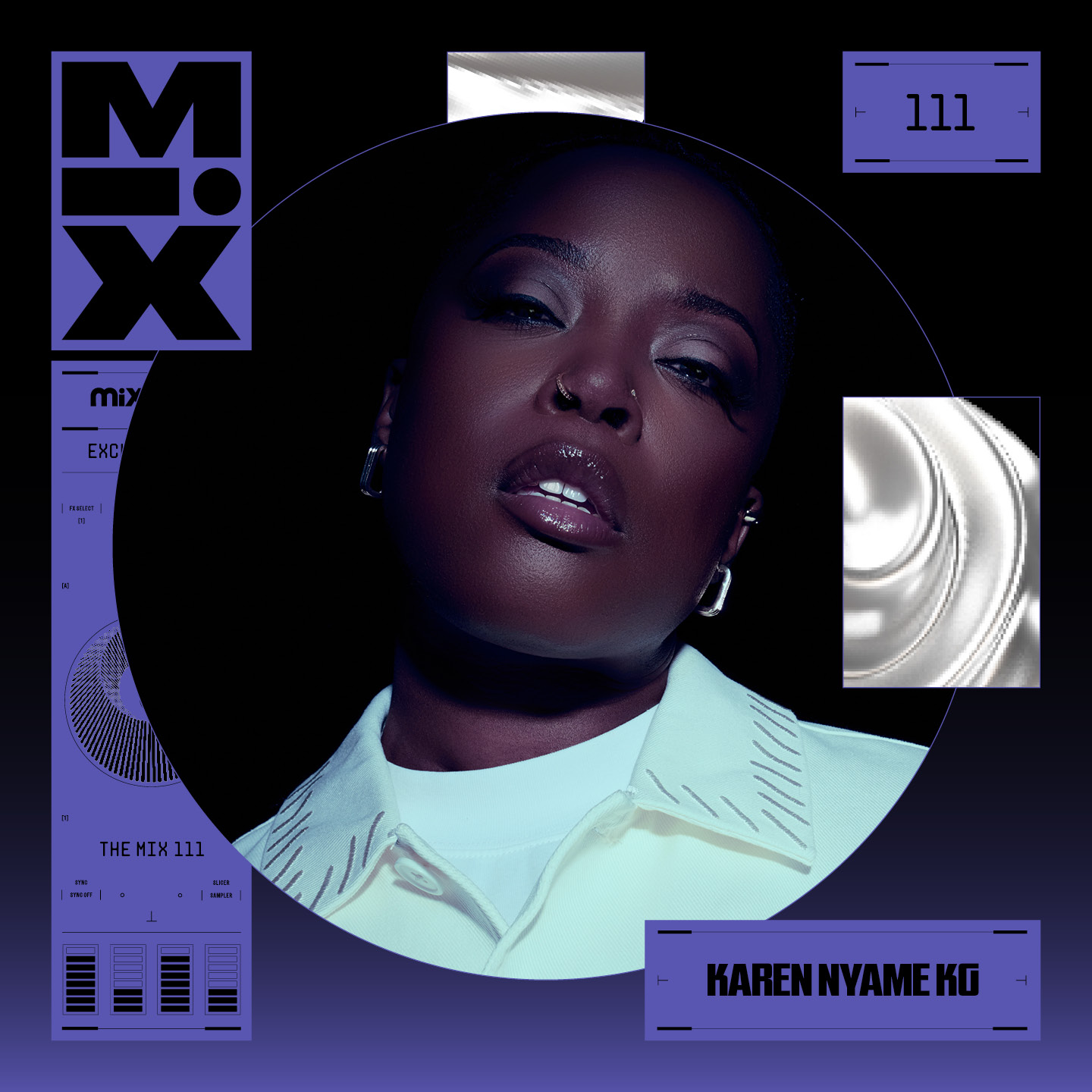
The Mix 111: Karen Nyame KG
With a mission to pay it forward and foster future generations in dance music, Karen Nyame KG has cultivated a strong community over the past decade. She talks about that community and takes the reins of The Mix to deliver a deep and soulful set traversing “every corner of house”
By definition, an epiphany is the sudden revelation where things click into place, like an unforeseen ‘eureka’ moment. We’ve all had it, that second of creative or cognitive ignition, including British-Ghanaian artist Karen Nyame KG, who in 2024, found hers in a dream.
After watching Black Coffee perform in Melbourne back in 2024, KG absorbed the crowd’s energy "like a sponge", inspired by the way he commanded the dancefloor. When she dreamed up the lustrous piano chords for a new track that night, ‘Epiphany’ felt like the most fitting name. It would become the lead track of her latest EP of the same name, her first solo record in almost two years. "I guess in my dream state, I decided it was time to create, so I took advantage," she says.
When it arrived on Bristol imprint Black Acre in May, ‘Epiphany’ marked a clear moment of personal progression and artistic certainty for KG, who previously stepped away from music temporarily after recognising a lack of support for Black women in the UK funky scene she had long been a part of. Shedding the collaborative approach she's taken across a preceding run of releases, ‘Epiphany’ puts KG back into the spotlight as a solo artist. It feels like a mature evolution of her sound after more than a decade of producing and creating music, with many tracks featuring her own vocals more prominently than ever before.
Read this next: "Making people feel and ascend through sound": Inside The KG Experience
Today, KG is still building a community around her through self-founded record label and event series Rhythm In The City, fostering a new generation of talent with a mission of paying it forward. "I want to create a hub and a space for other creatives that are emerging, so they can find a home and also have that pipeline and channel to build, because when I was coming up, they were very few and far between," she explains.
Following the release of her new five-track EP ‘Epiphany’, we caught up with Karen Nyame KG to talk about the record, building a community in dance music, and how the future of UK funky looks in the coming years. She also takes The Mix reins to deliver a deep and soulful set traversing "every corner of house" – check it out below.

Congrats on the release of your new EP ‘Epiphany’! Can you talk me through the themes on this one?
Starting from the title, it's definitely a deep realisation moment for me in terms of the stage I'm at when it comes to my artistic mastery. It's been such a long time coming, me being comfortable with my voice. Everybody who knows me, knows that my formative years of producing were just with instrumentals – I wasn't creating songs, I wasn't even using my voice in that capacity. This marks a level up for me, creating creatively and thematically from a cohesion perspective, leaning more into my sensuality and my identity as an artist and a producer.
‘Epiphany’ is your first solo EP in just under two years. I know you’ve been working on a lot of collaborative releases since then, but why did now feel like the time to make your return to solo production and get back to the studio?
Yeah, it's been a while. I like to live a little and build experience, you know? In that time, I've gone and played in Japan, I taught in Australia again last year and also debuted in New Zealand, so I feel like different countries and energies encourage inspiration creatively for me. I'm so full of ideas, so I figured it was probably time for me to put the solo effort out again now that I'm inspired. I thought 2026 was go time for me.
Did it feel different to do this one solo?
Yeah, we had a few musicians on board for this, but it does seem very centralised and focused on me. I'm in more of a pensive state as an artist now, as opposed to having that collaborative energy I’d usually have, but considering I've done it so much with remixes and producing for other people, I thought it'd be good for people to feel more of my energy this time around. It's been nice to get back to me, sonically speaking.
The title-track was inspired by a Black Coffee performance you saw back in 2024. What was it about that show that caught your attention?
That was my first time in Australia. I was on a joint tour with Hagan, and we had some split dates as well, so both of us would play shows together back-to-back and then go off and do our thing. At the time, I was with friends in Melbourne and Black Coffee was performing. I was at an open-air venue during sunset, and Black Coffee has a very distinctive aura around him when he plays. It was just levels... there was something about that evening that I was totally inspired by, just the way that he commanded the crowd's attention. Having that epiphany under the sunset while he was doing a madness on the decks, I was like, ‘What is this?’.
It's interesting, because after that night – and this is gonna sound mad cliché – but I dreamt about ‘Epiphany’ before I produced it, and that rarely happens. Whatever was in the air that evening, I was fully a sponge. I absorbed whatever was going on. ‘Epiphany’ was pretty much born out of that, I think it was the energy and the mood of the crowd because I'm quite sensitive to energies. I guess in my dream state, I decided it was time to create, so I took advantage.
Does ‘Epiphany’ sound anything like the dream version you had?
Yeah! The main title-track, which has those dramatic piano chords, hasn't changed at all. I can't even count how many iterations of ‘Epiphany’ there are! I've taken things out and put things back in, it's been a wild ride.
‘Epiphany’ was said to be a more matured evolution of your sound over the years. What was your production process like on this EP, and how has it changed since you first started making music?
Now, there are more intricate parts to my production. I like to mix live with digitally programmed sounds, but also replace those with actual live sounds. For example, on ‘Epiphany’, the piano was a midi chord progression that I produced, but then I got a musician friend of mine called Will – who goes under the name Memotone – to re-produce the piano loop for me on his grand piano. Integrating more live elements into my digital production has been more of a thing in the latter part of my production journey.
Before, I was producing beats on trial demo softwares like Fruity Loops, anything that I could get a license for, having to save different versions of the track multiple times because you don't have the full version. Just due to lack of resources, I wasn't able to beef up my productions in a way that I can now. But according to my peers, everybody that listens to my music from the point at which I returned, and then up ‘til now, they can hear that sonic progression. It's been a lot of growth, and I'm continuing to learn as well. You never really know anything as a producer, so I'm still developing skills even at this point.
You often perform your own vocals in your tracks – and they feature quite heavily on ‘Epiphany’, maybe more so than before. Is that something you’re becoming more drawn to and confident in?
Oh, absolutely. I am a firm believer of unlocking what's within, and I feel like producing is just one of many factors and dimensions of me as a creative. Having to add words in a poetic form to that has just elevated my creative practice. It's something that I've become more comfortable with as time has gone on, and quite frankly, I'm starting to take it more seriously than before. I know I can do it, I just can't go out for a night on the raz before a studio session…

Ha! Is that speaking from experience?
I’m like, whoops, I've lost my voice. Damn, that's unproductive, is it? I've never really taken it that seriously, but my voice is an instrument within itself that I'm now honing in on using more. The more you do something, the more you become one with it. So I'm really at one with my vocals right now, and I'm looking forward to doing more of that.
You’ve spoken to Mixmag before about experiences with misogyny in music, and how the UK funky scene once felt like a very male-dominated space. What’s your view on that today?
At this stage in time, I feel like there’s simultaneously been progression and regression. There’s this pendulum swing on both aspects of that, but I'd say that in comparison to when I was first starting out, there are now more women and LGBTQIA+ folks that are dominating these electronic spaces than before, which is great to see. I could count those on one hand at the time I was surfacing. You had people like Ikonika and Cooly G who were doing their thing on Hyperdub at the time, but they were very few and far between.
I feel like we’re at a point right now where we have the language, politically, to really call things out. There's development in that regard, things aren’t as taboo as they were before, and people are really speaking out against the lack of inclusion and diversity. I just hope that it does, at some point, stop being lip service. I feel like we oscillate between it being lip service and actual equity being built for marginalised groups in music. We've got a long way to go in that regard, there's a lot of systemic undoing and un-programming that needs to happen.
Read this next: Why didn't UK funky break the mainstream?
There’s also been a lot of movement in the UK funky scene in the last few years. Where do you see the sound going next?
It's really interesting. I feel like UK funky has mutated, it's never really gone anywhere. A lot of people have said that it's dead, but I feel like it's just hybridising over the years, which is beautiful. Now, we have a lot of South African influences in the way that UK funky is presented, it's become more tribal in essence. We have a little bit of amapiano influence in there as well, and there's expansion in that regard. I feel like it will continue to evolve past this point. We're pulling from different areas of the African diaspora at this point, so I feel like there'll be more of that moving forward.
You said last year that you were starting to break away from what you called “elusive hamster wheel” opportunities. Can you talk to me a little about that?
With Rhythm In The City, and looking at the stage in which I'm at right now, I’m simultaneously building myself out and establishing myself as a songwriter and a producer and artist, but also making sure that there's an extension of me being built in terms of community. Rhythm is pretty much the focal point of that as I grow and expand. I also want to create a hub and a space for other creatives that are emerging, so they can find a home and also have that pipeline and channel to build, because when I was coming up, they were very few and far between. I've always had this objective of paying it forward, so Rhythm is just a byproduct of what I'm creating for myself.
How are things going with Rhythm? Have you got any big plans for it in the next few years?
I hope to get some more team members on board. It's a lot of work running the label and the event brand! I really want to get back to it being more of a consistent thing, because there's definitely something there with the way that people receive it. I absolutely can't ignore that, so ideally, I want to get into A&R mode and start developing artists and producers, giving them a platform or a channel for them to put their music out and just making Rhythm more of an ecosystem. I'm very big on building worlds and universes, and I feel like Rhythm is going to be that in the next couple of years. That's what I'm aiming towards.
What’s next for you?
It's album time! I've actually never made an album, and I'm proclaiming this loudly. I've done this before, I've had this merry-go-round where I'm like, ‘right, I'm gonna do it’, and then it just never comes. Even with the idea of ‘Epiphany’, I had to whittle down the tracks down to about five because I've made so much music. I feel like I can give more, so it feels like an album season is approaching for me right now, and I'm in process of building that out more. I also really want to work with other artists, adding my signature and colliding with worlds that are outside of mine, producing for more people and writing for more people. That's the overall goal.
Can you talk us through your mix?
My mix is deep, Afro electronics and soulful sexy vibes, definitely primed for peak-time sweaty dancefloors. I'm traversing every corner of house as I do. The essence is sexy and moody, featuring a couple dubs from my favourites. I hope you enjoy it.
Karen Nyame KG's new EP 'Epiphany' is out now, buy it here
Gemma Ross is Mixmag’s Associate Digital Editor, follow her on Instagram
Tracklist:
Scotti Dee x Jarreau Vandal – My Search Is Over (Remix)
Karen Nyame KG – Dark Feminine (Unreleased)
Bucie – Respect Me
Dialect – Sitting In The Sun (Derrick Carter’s Winter Crazy Dub / Bok’s Dub 3)
Naija House Mafia, Calix, Jamie Black & Sigag Lauren – Bani Kudi
Karen Nyame KG – Allure (Instrumental)
DJ Shimza, DJ Maphorisa & Moonchild Sanelly – Makhe (Original Mix)
Hagan – Bass Bin (Original Mix)
Vida-Soul – Eru56
Nhlokzin, C-Moody & Black Desciple – One Last Dance (Original Mix)
Glenn Davis – 333
Kerri Chandler – Track 1 (Remaster)
From P60 & Lisa Shaw – Magic (Manoo Percudub)
DJ Merlon – Get to Know Me (ft. Lwazi)
Caiiro – Mapoch War
Karen Nyame KG – Epiphany
O’Man Blues – Rise ft. Dindy (Mark Francis Re-Edit)
Heavy Patience – All Week
Reinaldo Silva – Sawa
Breyth & Kususa – Dogs At The Door (Extended Mix)
Karen Nyame KG – Epiphany
Dlala Thukzin – Corona (ft. DJ Tira & Worst Behaviour)
Jazzuelle & Tebza De SouL – Sapphire (ft. Tebza De Soul)
Drega – Tanka Tanka
Josh Wink – Sixth Sense ft. Ursula Rucker (Louie Vega Remix)


