
 Features
Mochakk has found his calling
Brazilian superstar Pedro Maia, AKA Mochakk, lives a life of boundless creativity. A DJ, producer, label owner, skater, fashion entrepreneur, head of an events series, and more, his appetite for learning and new pursuits is endless — and he wants to use his position to bring about positive change in the world. We join him on a trip to Mozambique to find out more
Mochakk is only expanding his vision. From first shooting to viral DJ fame in 2022 to establishing himself as a fully-fledged dance music phenomenon the following year, the Brazilian artist is now ringing in career landmarks at a rate of knots and dialing up his influence across various cultural industries, enterprises and commitments worldwide. He is a figurehead for acheiving anything he sets his mind to — spreading positive energy from dancefloors to charitable causes and beyond.
Across his 2025 June/July “world tour rally” — featuring sold-out shows in his native Brazil and all the cities one would expect from a global powerhouse DJ and producer across Europe and the US, including his debut, self-curated Mochakk Calling Festival in Malta — Mozambique stood out as his first visit to the African nation. At a time where dance music from developing countries is reshaping the mainstream, Mochakk has pulled focus to territories that are future-facing and underappreciated, as opposed to only chasing the Ibiza-adjacent, luxury venue dream – one that is exorbitant for the average fan, and often two steps behind the culture.
This trip to the capital city of Maputo, which includes a workshop hosted with non-profit organisation Bridges For Music, free Mixmag Lab party, and performance at One Mozambique, would allow his team to explore what it really means to break new ground, create experiences that are truly unique, connect with local communities and grassroots talent, and stay true to the influences that make Mochakk the man he is. So when summoned from Cape Town to Maputo to witness the Brazilian superstar in action, there was no hesitation on my part.
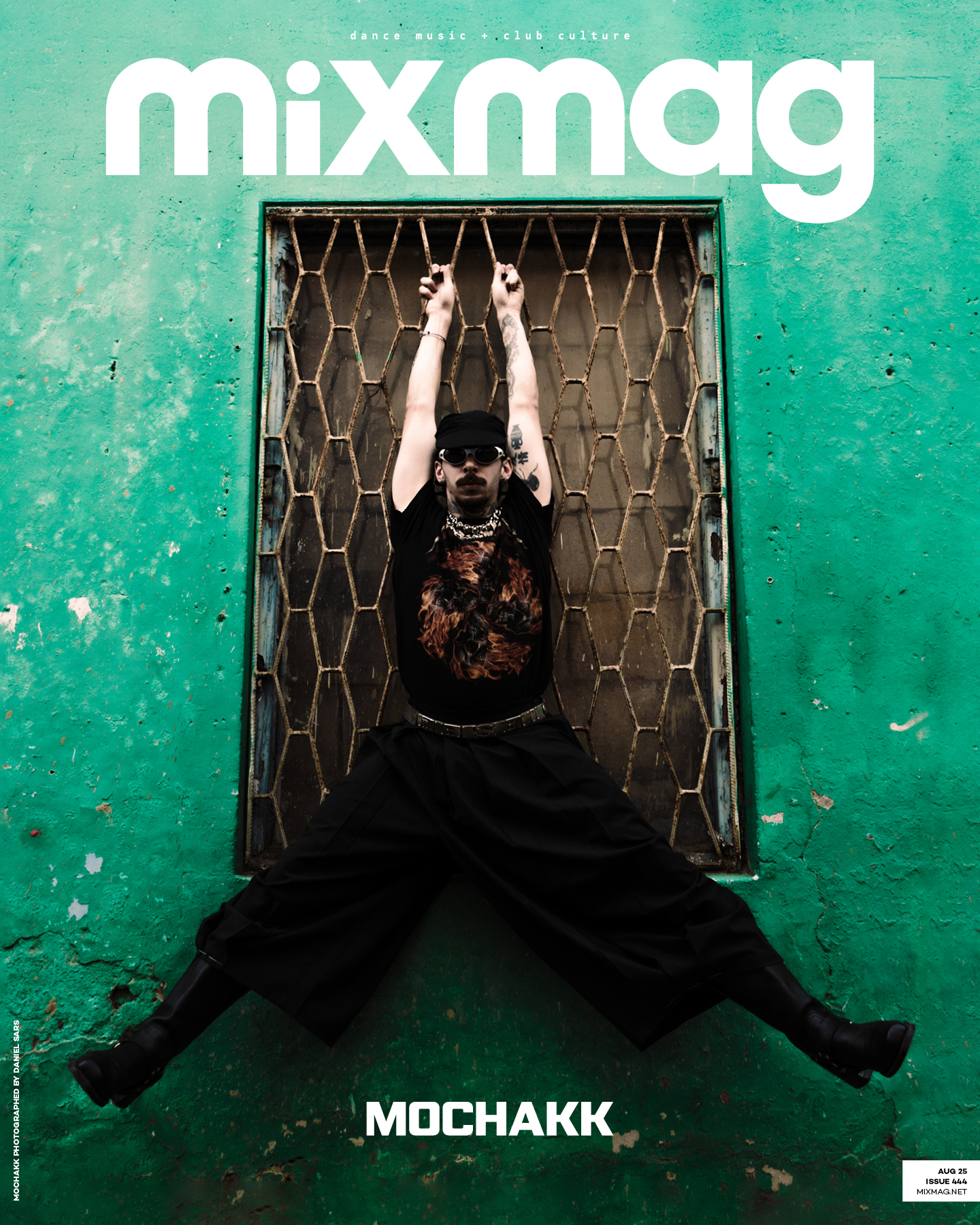
Pedro Maia is a common name you’ll encounter in Brazil. However, the spirit that inhabits this particular Pedro is a much rarer find. Crafting his moniker from his affinity for a quality caffè mocha and the Mayan god of rain, storms, thunder and lightning, “Chaac”, Mochakk himself is a personified blend of all of this particular Pedro Maia’s proclivities, including music, skate culture, history and art; drawing from the retro and the modern, chaotic and ordered, complex and elementary. Imagination, freedom and will are executed frequently in the Mochakk universe, which grows every time he sits down to create.
Mochakk is known for his immersive and eclectic DJ sets, where the physicality of his performance occupies the space between vibes and instinctive groove. Using his entire body to communicate the tempo, style and dynamics of the music he chooses, you’d know exactly how to move in response just by the sight of him alone. Some would say that his sets mend a part of us that is afraid to be playful, rambunctious and free. Others would say that his ability to identify just what the crowd needs makes him so captivating. In his words, he prefers to let what comes into his field of vision decide: “I’m a visual guy, when it comes to music. I like to look out and see if the venue is big or small, flat or with lots of tiers and levels; if I have a lot of pyrotechnics or if it’s more intimate.” It’s the synaesthetics of sound that moves him.
Sculpting this persona at age 15, he started out making hip hop beats from his hometown of Sorocaba. Making his way to the state capital of São Paulo for fashion school at first, then dropping out to study music, Mochakk carved out his own corner of the internet in that aforementioned breakout DJ moment vibing to PAWSA’s ‘Roll Play’ in 2022, where his undeniable energy sent fans online reeling. Just a handful of years later, he’s started his own record label, Dogghaüz; secured residencies such as Circoloco at DC10; opened a club in his hometown called Obliqo, where events, workshops and opportunities to perform are championed to uphold the local scene, while building his own Mochakk Calling international clubbing brand and festival, selling out to adoring fans in the millions. And all of this achieved by the age of 25.
Read this next: Mochakk is a fully-fledged dance music phenomenon
A calm, yet eager presence, Mochakk engages intently in conversation, articulating himself well from beneath a bristling moustache. Tattooed over the majority of his lanky body, his clothes strike a balance between '90s grunge flair and beachy aesthetics. The depth of music knowledge that spans across decades (and the historical context in which it’s been made) living between his ears is astounding. Steeped in his parents’ '80s pop, disco, funk and samba tonics, with a healthy dose of heavy metal, classic house and rap, Mochakk has turned a passion for innovation and exploration into a career that feeds both bodies and minds. His manager, Dave de Valera, who has been in the industry for 20 years maintains “there’s no one quite like him.”
Mochakk’s most memorable records include the ecstatic ‘Jealous’ on Circoloco, which is still racking up regular spins since its 2023 release; his Black Book Records outing ‘False Need’ which accommodates those who prefer electronic music of the dark and twisty variety; his Ninja Tune debut ‘From The Stars’, pairing a soul sample with an intergalactic feel and crunches of acid; and his biggest hit, the 2022 future-nostalgic ‘Da Fonk’ on Nervous Records. Mochakk reminisces about making the latter with singer Joni, who he describes as the “timbre chameleon”. Recorded in a closet with pillows for soundproofing, streaming numbers of the Nervous Records track currently exceed 43 million on Spotify alone, but Mochakk seems very content with the idea that his biggest numerical success may stay behind him in that track. For someone who has achieved such great levels of notoriety and demand, Mochakk is refreshingly boisterous in his art, and curiously low-key in the face of admiration for it.
Skating alone every day after his mother passed during the pandemic, Mochakk was left with a difficult spiritual and financial situation, and plenty of time to unpack his own thoughts. Skate culture gave him the means to find his centre, where he became more and more comfortable with the idea of failure, a key part of learning any new skill. The resulting resilience saw him gain a world of insight into his creative voice; one which he holds fast to as the citizen of a developing country where many unique voices tend to go completely unnoticed. Mochakk and the population of Mozambique have this fight in common.
“People here have been listening to my music for a while, so I want to give them a taste of something old and something new,” he says. “I remember receiving messages from Moçambiquan people back in 2018 and 2019 before I started traveling abroad to play, when I was only performing in Brasil. I wanted to come here to give them the opportunity to listen to those tracks from back then live, with me playing them.”

For a first experience of Maputo, there is much he finds familiar. Both Mozambique and Brazil share a colonial history under Portuguese rule, and thus a language, culture and music too. On the first day we congregate at a restaurant on the coast, called Costa Do Sol, with a veranda overlooking a vast and flat horizon punctuated with swaying palm trees. The warm, soft air is suddenly filled with the aroma of woodfire, garlic and fresh herbs as the waiters dress a long, white table with an abundance of seafood, fresh bread, steaming bowls of a local shrimp dish called matapa, roast chicken and fresh caipirinhas. Mochakk is equally gracious with the waitstaff, friends, colleagues and complete strangers, expressing his gratitude for a soft landing before raising a glass. After a few minutes, he lights up at the track billowing from the restaurant’s soundsystem. Throwing his head back, eyes shut tight, he leans in, completely taken by the live version of a well known Brazilian song, ‘Combinado’. No one in his camp seems surprised.
As the next track’s intro rolls in, Mochakk doesn’t hold back from singing along:
“Não, não têm explicação/ Certas coisas na vida da gente dispensam a razão!”
("No, they have no explanation / Certain things in our lives require no reason!”)
Brazilian singer and actor Mumuzinho’s ‘A Voz do Meu Samba’ is clearly a track he knows well. Hitting every note with ease, he and creative partner Pedro (who he refers to as Nadai to avoid confusion) stand up and begin to shuffle across the white veranda tiling. Roughly translated, they sing: “It doesn't matter if sometimes the thorn makes the path difficult for us to reach; there is no victory without a fight and the voice of my samba, no one will silence. It is with strength that I carry my song, and thus I embody the magic of an artist… And receive the applause of the people, and make my role as a samba singer valid.” A number he performs with the appropriate amount of vigour and pride.
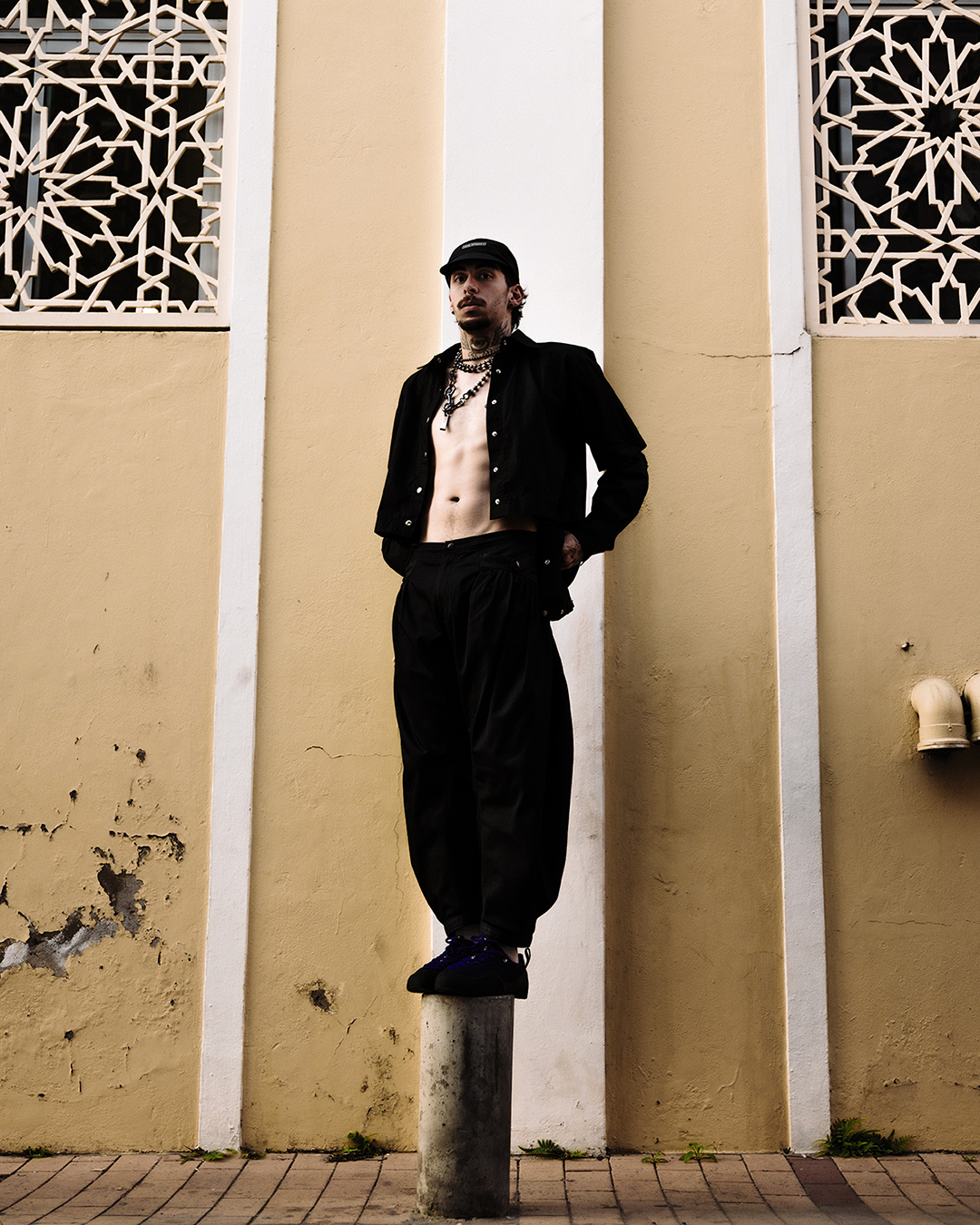
Soon after, we pile into a large van toward the inner city, where I ask about samba and its importance to him. He explains the history of protest music in Brazil, and more specifically how samba and Tropicália from the '60s were movements made for times like these. “Music is a very important tool that has been used for many years,” he says. “And I think it could be used for many years to come, especially in very volatile times that we’re having right now, all over the world.”
Mochakk is keenly aware of the thorns in our path as a society. It’s a contentious time for popular culture and politics, which are often closely intertwined. Though the show goes on. Awakened to music’s therapeutic properties, Mochakk takes up his role in the face of a string of travel restrictions. Titrating up several doses in his 3,000+ track catalogue, he moved on from playing Glastonbury for the first time, in a back-to-back(-to-back) set at The Glade with Skepta and Carlita, to make a couple more house-calls in Germany and Ibiza, before safely moving on to Maputo.

After a post-lunch skate session in a parking lot, he explains the double meanings found in samba, as can be found in a track called ‘Cálice’ released in 1973, which means “chalice,” [of blood]. “The lyrics of ‘Cálice’ by Chico Buarque and Milton Nascimento carried hidden messages around the dictatorship of the time, where all of the artists were being censored. If they were too explicit in their lyrics, they would even become exiled from the country to surrounding islands. “Cale-se” also means “shut it” in Portuguese, which is what Brazilian authorities were saying to those who opposed their rule,” he says. Brazil was in tumult at this time, he explains, and is now a powerful country, in large part thanks to the passionate people that pulled themselves out of subjugation with its strong culture of music and art. In this sense, he’s not a stranger to the idea of artistic suppression.
Mozambique has recently experienced unrest of its own around its controversial late-2024 elections. I ask him what he imagines for Mozambique’s musical legacy, knowing what his compatriots, as well as other artists across the world protesting with music, were willing to do to be heard.
“It was a very dark period in Brasil, but it sparked a big movement for the people, who really stood up for it. Art and music were a big tool to open people’s eyes and make people reflect on different ways of watching society and how it develops,” he says. “I feel like that’s the case for the world always, not even just here in Moçambique but all countries that need to face things that should be addressed differently.”
The protest art known as Tropicália came to be an important movement for Brazil’s liberation throughout the 1960s, and spanned music, as well as poetry, art, film, theatre and design. Remnants of the movement can be seen in the country’s cultural legacy to this day, as a stark “field of reflection on social history” and analysis of how Brazil is perceived around the world – going on to inspire the legacies of American rockstars like David Byrne and Beck.
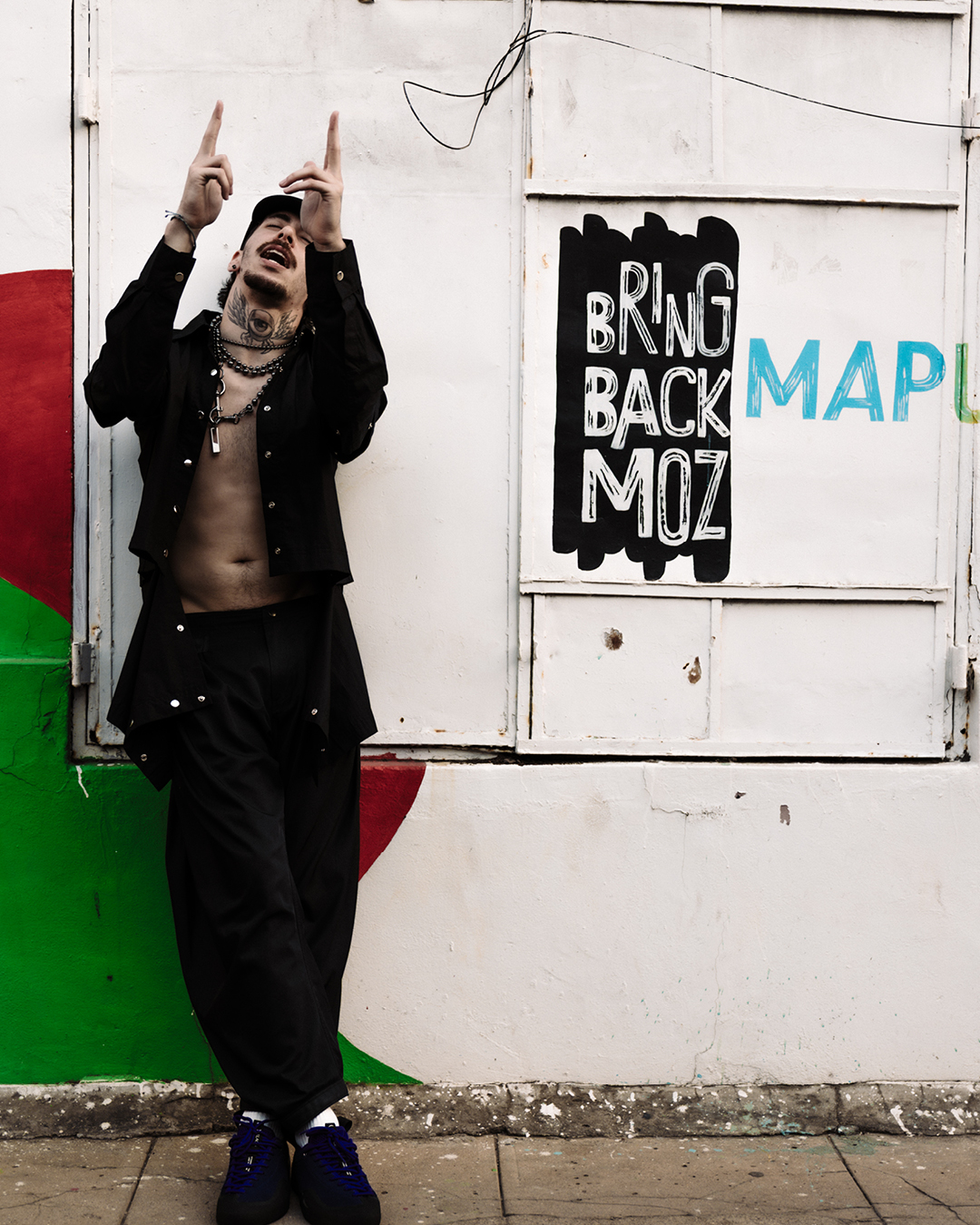
We arrive at the open-air cocktail bar, Bring Back Maputo, named by owner Yuri Mendes, where Mochakk is shooting a string of photos to immortalise his presence in the city. Tucked between towering Manueline buildings painted red, yellow, green and pink, the watering hole can be found just a stone’s throw from Maputo’s red light district. Mochakk points out that the bright buildings and street art remind him of Bahia’s architecture back home; they’re not a far cry from Cape Town’s Bo-Kaap aesthetic either. Yuri explains that he spent two years in Cape Town, where he learnt that the coloured paint represented Cape Town’s diversity, and wanted the same for his hometown. Upon his return, he used the same aesthetic to re-instil the life Maputo had before colonisation destroyed the city’s pride. It’s now his life’s work to keep the streets clean, and offer musicians an historic place to shoot material that would give Maputo its groove back.
While Yuri delves into the neighbourhood's history, a giant suitcase is offloaded into the main seating area and team Mochakk begins to rifle through, pulling together a series of looks. They settle on a dark Metallica T-shirt and long, black trousers to contrast with the vibrancy of the space surrounding them. Most of the clothes are baggy and dark, while others begin as what seems like a pile of offcuts, eventually assembled into entire jackets, shirts or tees.
Read this next: Meet the producers turning Bahia into a global bass paradise
Mochakk continues where Yuri left off, describing a clothing line he designed with a friend, which they called SORO, where he adopts the device of multiple meanings that samba seems to have embedded in him. “The word ‘soro’ can be a substance that goes into the veins of humans. There are lots of different types of soros with different properties. I’m not sure what you’d call it in English, but you put it in intravenously. It speaks to the idea of the veritaserum, the liquid of truth, where taking it in makes you open your mind and see things in a different way.” The doctor is in.
“It’s also an acronym for ‘seek other realities outside’, as in, outside of your own.” he adds. “To search for other points of view, or ways to look at a situation, or ways to look at an object to find new utilities for the same thing. The idea is to exercise creativity in the user of the substance – or in this case– the clothing pieces, which are modular. You can style it your own way and there are no right or wrong ways to do it.”

That evening, he echoes that sentiment while giving a workshop hosted by Bridges for Music, which is based in South Africa and works to empower young talent across the continent through music and education. With Mozambique being one of the world’s poorest countries, the work here is vital, and reflects Bridges For Music’s mission statement of using music to bridge socio-economic gaps and foster positive change for underprivileged communities, as well as encouraging cross-cultural collaboration and building a lasting legacy with its projects. The workshop is held at the XHub Creative Incubator, a workspace which aims to accelerate the development of local creatives, providing a space for training, mentoring abd contacts building. It was founded by Paulo Chibanga, one of the members of a band called 340ml who have been active since the turn of the millennium and continue to leave a lasting impression on Mozambique and South Africa with their poetic social commentary. In a talk hosted by local legend Ellputo and questions from the crowd, Mochakk discusses his creative process, his many disciplines and “how to make it as a DJ from a developing country”, impressing upon a small crowd of creatives that there’s no succeeding without discernment, and that throughout any creative pursuit, it’s important to keep perspective.
It is also at this intimate setup that Mochakk plays the very first Mixmag Lab party in Maputo with a handful of Mozambique's promising musical minds. Brimming with excited fans who obey the no-phone policy, the line-up consists of Afro house stalwart Freddy Da Stupid; DJ Double Drop (founder of the inimitable Xibalo Records), and Afro house phenom D-Money. XHub is treated to an extended set by Mochakk In the front-of-house, a group of local chefs roast skewered chicken hearts and crispy wings over an open fire, served with an array of sides to keep the energy in the courtyard flowing. Finally, the night comes to a close, where a young man presents Mochakk with a portrait he painted in thanks.
Among Mochakk’s energetic sets, Mauro MBS’s iconic ‘Philosophy of Dance’ has made frequent appearances. However, this being the first time he’s able to play it for an entirely African audience, it seemed only right to start the set with it.
“It felt wonderful to be able to play that song here [in Maputo], and ‘We Are One’ by Black Coffee and Hugh Masekela too. Everybody was singing along. I’ve played this record in so many other places but nobody ever sings to it,” he reflects. “Hearing people actually sing here was spiritual; all the hairs on my body stood up. It was enlightening even, because Brasil and Moçambique share a language and culture, so I felt like I was saying thank you and getting hugged back in response. I felt like I was amongst family.”
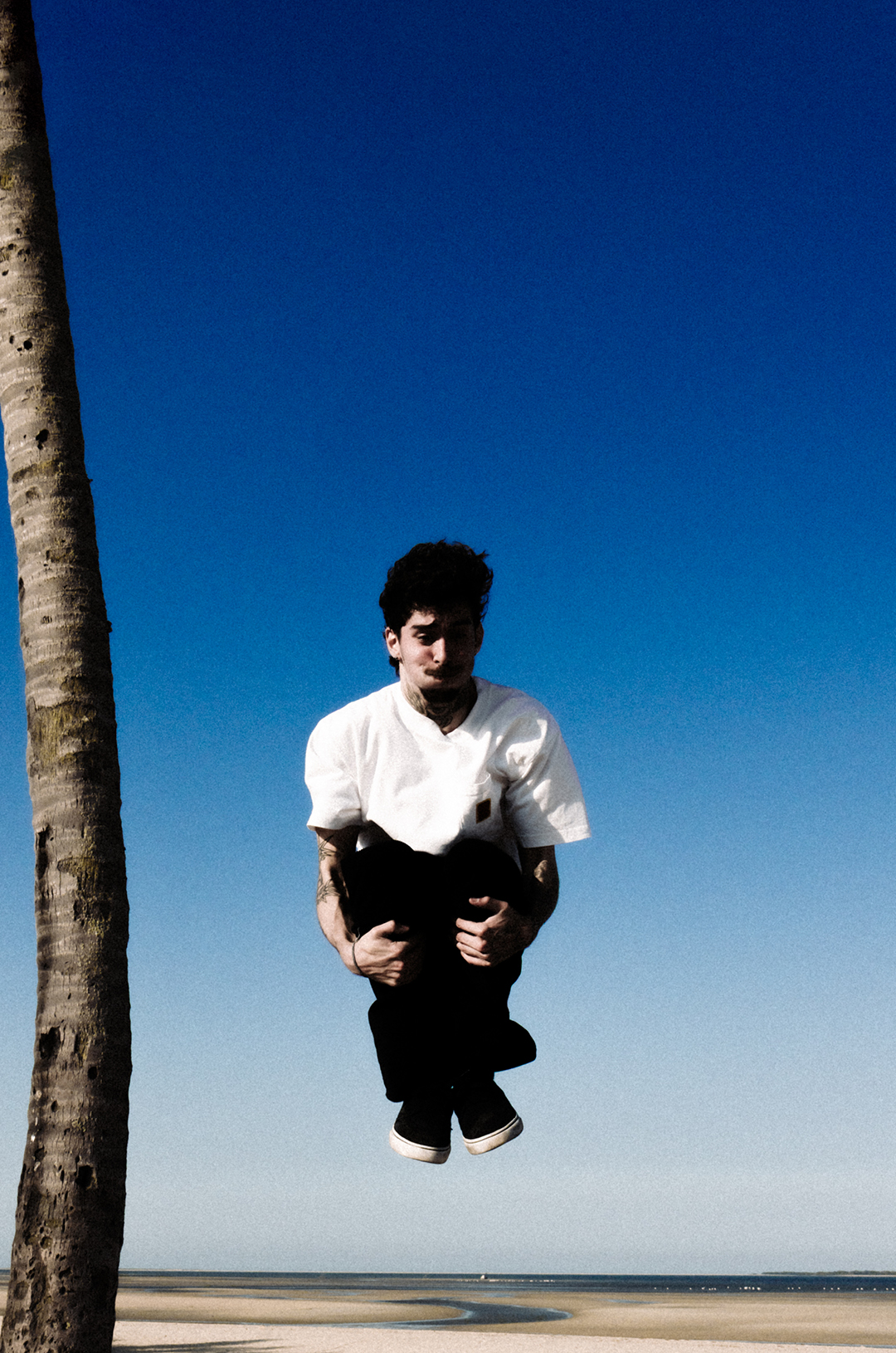
While many house music fans abroad have learned since the release of that track that Africa is not a “deep dark jungle”, as the repeated refrain goes, plenty still wouldn’t think to seek new realities when it comes to Africa’s dance scenes. I asked if Mochakk’s experience of Africa has helped him modulate his own dance philosophy, and how today’s house music might help shift mindsets to a more positive place.
“House itself, coming from disco and being dismantled by rock radios who didn’t want a Black and gay genre topping the charts was always music of resistance or even revolution. Some people called it ‘disco’s revenge’ in the beginning! So it always had a political and social role,” he says. “Music can be a huge tool to make people talk, because the harmonies and melodies are going to touch the core of you, and the lyrics are going to touch your brain in a different way. So your heart is already open to receiving the idea that’s being spoken. When you understand that through your view of the situation, it’s in your hands. The power of the pen has made a lot of difference in humanity. I haven’t seen it being used in mainstream house for a while though, maybe in the underground, and I know we use dance music to have a good time. But dance music can also be brain music, and I think people should try to experiment with that.”
Mochakk’s 2023 ‘Sevilla’ EP could be the best example of the type of creator he is. Illustrating his Brazilian pride, but also his ability to navigate both fresh and familiar sounds with equal care, the rich, thoughtful ‘NO8DO’ and its irresistible ‘Plaza Edit’ (made for his performance at the Spanish city’s picturesque Plaza de España) come with plenty of lore for those who care to look. With a 2/4 time signature essential to samba and bossa nova sandwiching classic 4/4 house, ‘NO8DO’ features vocals by Fernanda Ouro over lush guitars with a clever, catchy chorus. The layered meanings in the lyrics and title are gold, revealing Mochakk’s appreciation for the beauty of Seville’s Baroque scenery, juxtaposed with his feelings of home-sickness that only the asymmetrical, playful, loose and thus samba, could cure. A historically important emblem of Seville, the term ‘NO8DO’ can be seen everywhere across the city, read as "no me ha dejado" and translating to "it [Seville] has not abandoned me”. With this, he expresses his enjoyment of his time travelling the world and trying new things, while never abandoning his ties to Brazil.

The day after the Bridges For Music workshop and MIxmag Lab, we visited the Secretary of State for Arts and Culture, Matilde Muocha, and Belmiro Quive, President of the Department of Cultural and Creative Industries within the Confederation of Economic Associations (CTA). In the breath-taking grounds of the Polana Serena Hotel, they shake Mochakk’s hand in earnest, and ask that he use his platform to do the country justice by taking the news of Mozambique's worth back home with him. It seems they share the same thinking around the power of the pen.
That night, we arrive back at Mochakk’s hotel to be greeted by a long line of leather-clad bikers. A local gang, going simply by Mozambique Motorcycles, have agreed to ride with us in convoy to the final show at ONE Mozambique, hosted by SB Entertainment and Baba Produçoes. One of the members introduces himself as “the best mbira player in Maputo,” flipping his long dreadlocks over his shoulder to mount a bright red Suzuki Hayabusa.
The convoy goes off with the team with revving motors and smoking tires. The spectacle is great; people stop to cheer as the procession rolls by, while Mochakk is sound asleep in the backseat, conserving his energy for the final show.
Upon arrival at the venue, a crowd of thousands gets ready to greet him. Jostling toward the front, festivalgoers chant in unison “hiiiii fudeu, Mochakk apareceu!” (“Hey! Fucking Mochakk is here!”). He spins around to acknowledge the crowd, pointing to his chest to show off Mozambique’s bright red official soccer kit. The boundary containing the front row groans as the crowd responds to his selectiona. In true Mochakk fashion, he gestures toward the audience, waiting for just the right time to thrust his arms to the sky, in accordance with the pyrotechnics engulfing everyone on stage in bursts of searing heat. He drops Todd Edwards’ ‘Shut the Door’ as a fireworks display above rains ash.
The afterparty goes on for several more hours as friends and fans congratulate him on another whirlwind set. Once we’ve collectively had our fill, we all climb into another van set to return to the hotel. There, Mochakk brandishes a tiny bluetooth speaker atop the dining table and invites everyone to sit. He passes the phone around for more requests, after adding Joey Negro’s revival of Zo’s ‘We Are on the Move’ to the circulation. He seems at ease at a job well done, as does Sophie, another team member, who joins in for the chorus and a round of Mozambique’s best local beer, 2M. As the sun‘s judgemental gaze fills the room, I quickly introduce a string of 3-Step Afro house tracks to the mix. Mochakk cues up Sweet Female Attitude’s ‘Flowers’ in response, and suggests that one day we’ll be able to speak about 3-Step Afro house with the same sense of nostalgia as we do 2-step garage. Eventually, fans start sneaking onto the grounds, hoping to spend a few moments with the ‘Respirando’ hitmaker. Dave begins to round up the growing number of intoxicated stragglers outside. It’s clearly time to go.
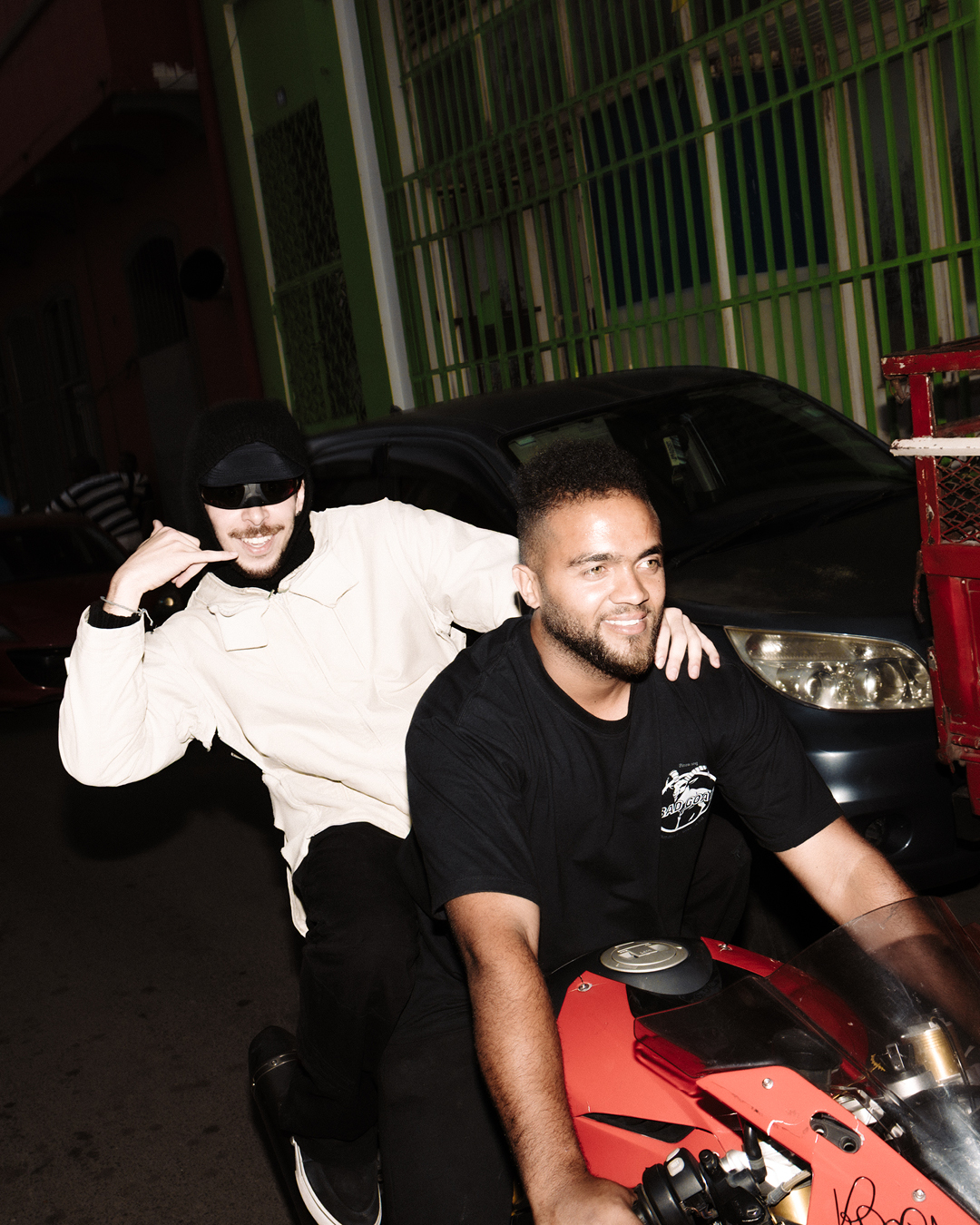
Over the course of the night, it becomes apparent that Mochakk’s artistic motivation is not about being revered or remembered. Music is a medium for channeling and for change; and sometimes for no reason at all other than to help us live outside of ourselves, if only for a little while. This sentiment is on par with the mentality in Mumuzinho’s closing verse, the track he sang so passionately on day one:
“E quando a massa canta com emoção / Abre o coração / Tá pintando sucesso na voz do povão / E quando a massa canta por cantar/ Só de empolgação / Com o tempo se apaga e nem lembra o refrão!”
“And when the crowd sings with emotion / Opens its heart / Success is emerging in the voice of the people / And when the crowd sings for the sake of singing /Just out of excitement / With time it fades and no one remembers the chorus.”
I ask what Mochakk feels he has been “called” to do, and how he’ll know when he’s achieved it. He doesn't take very long to answer.
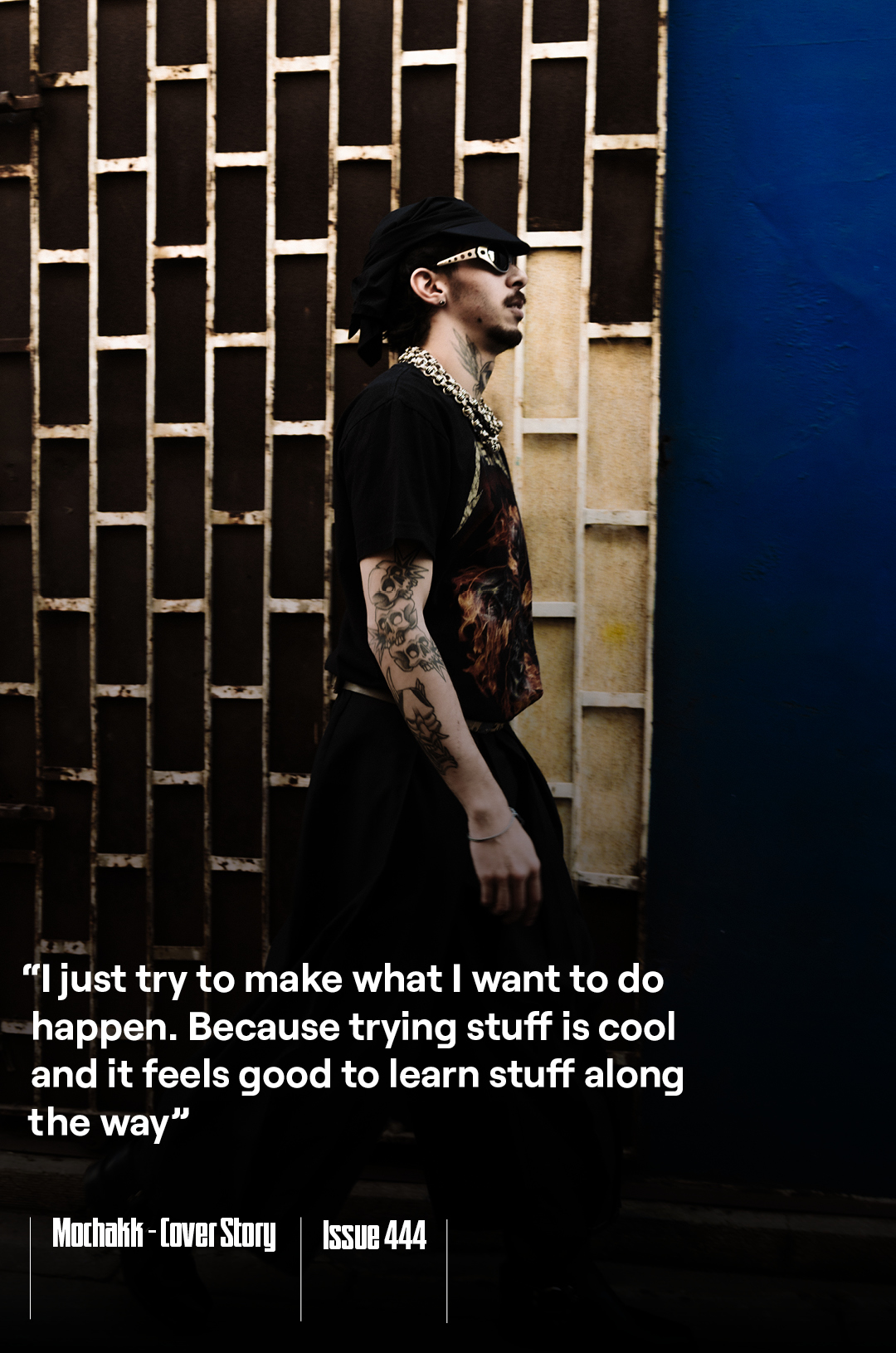
“Even if I’m successful or not, I just try to make what I want to do happen. There’s the part of believing that you can do it, sure, but also the part of just doing it for the sake of doing it. Just for fun. Just because trying stuff is cool and it feels good to learn stuff along the way…” he reflects. Among his various pursuits in musicianship, business-building, fashion moguling and meaning-making, Mochakk seems destined for a long life of boundless creativity. “It’s about trying new things that take you to a new place. I don’t know if it’s my destiny or not, but if it is, let it be.”
Mochakk & Kwengface collaboration 'Legumes' is out on Friday, August 22, pre-save it here
Shiba Melissa Mazaza is a freelance writer, follow her on Instagram


