
 Features
Medaina Festival: Techno tourism at a wonder of the world
After a year postponement, experiential music and culture event Medaina Festival launches in Jordan, bringing affluent, party-inclined travellers to some of the world's most beautiful locations
The ancient city of Petra is an ordained wonder of the world. Hundreds of thousands of visitors are drawn there each year to marvel at its architectural splendour and archaeological significance. In 2019, a peak of 1.1 million was hit — before a sequence of shockwave-inducing events scythed that number in the ensuing years. Against this backdrop, in late May 2025, a new event takes place in the region enticing a different type of traveller: techno tourists. Or more accurately, ‘experiential techno tourists’.
The event is Medaina Festival, a week-long, roving dance music party and cultural experience in southern Jordan. Its debut edition takes place across Petra and the desert wilderness of Wadi Rum, breath-taking locations that are a privilege to experience, with a denouement in the luxury resorts of Aqaba on the Red Sea. Duly, the audience aren’t techno tourists in the traditional sense (club hounds who journey abroad to spend the weekend inside dark basements or on sun-kissed terraces). They’re party-inclined travellers, with Instagram bios self-ascribing terms like ‘nomadic seeker’. Many are Westerners who like to get loose, but when they’re crossing the world in search of the next hedonistic hit, the location needs to feel untapped or exotic. Somewhere so prosaic as a European capital just won’t do. “The majority of our crowd are travelers, they're traveling 30 times a year,” says Sherif Koyess, co-founder of Tithorea, the immersive events company behind Medaina. “If you tell them, 'Hey, let's go to Madrid', it's not gonna bring value.”
“This whole experiential travel concept, I think this audience is craving it,” adds fellow co-founder Shahin Mani. “A lot of them have done so much that they just want something that's more different.”
Mani and Koyess, who are from Iran and Lebanon respectively, met at a house party in New York, where they’re based. The idea for Tithorea was devised in 2020, when yearnings for travel, community and experiences outside the monotony of locked-down life were acute. Over the next few years, they helped to throw events such as Labryinto festival in coastal Costa Rica; Tale of Iele in Romania, where locations included a 16th century castle and extinct volcano; Snjoblom at an Icelandic cave and Viking Village replica; a spring equinox festival in the Mexican city of San Miguel de Allende; and the first edition of Echoes From Agartha alongside Gate Experience in Türkiye’s scenic Cappadocia region. “Tithorea became this concept of going into the new, more unknown locations,” says Mani. “Unique venues, a different programme every day, promote the cultural destination and serve as a platform that can bring people together and also support creativity.”
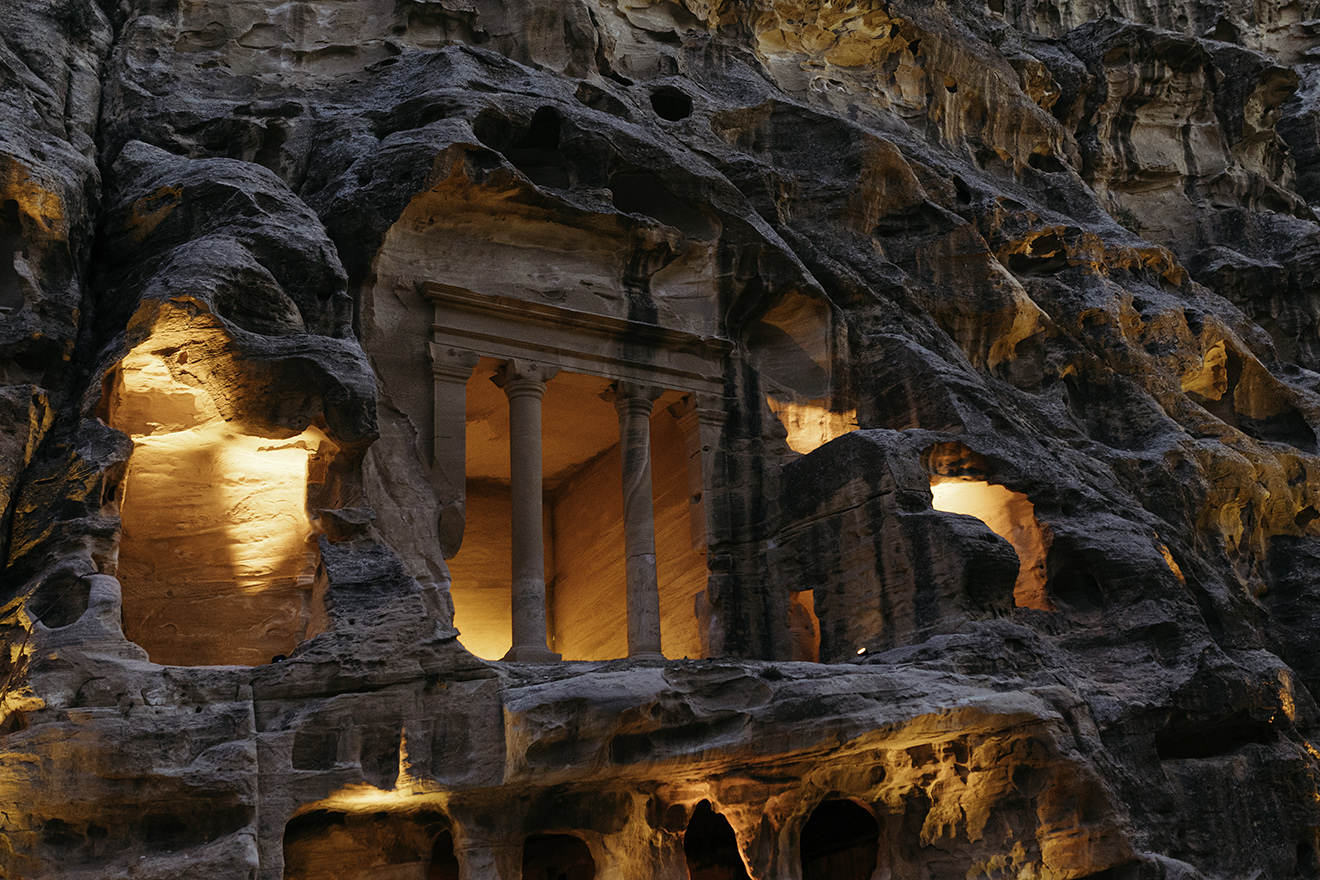
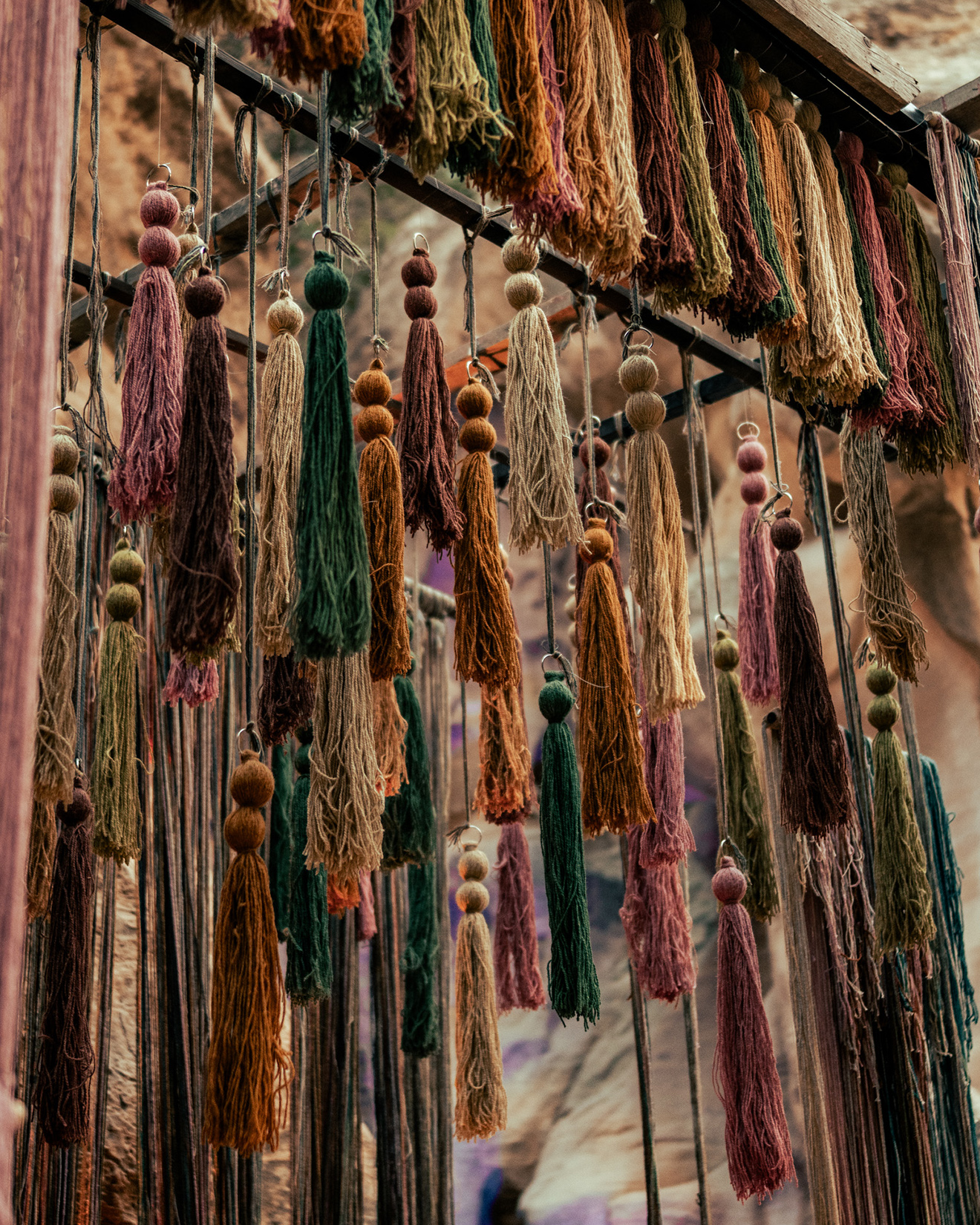
In 2025, Jordan becomes the latest destination in their globe-trotting festival crawl, with a troupe of international party people in tow looking for the experience of a lifetime. They get what they came for. On the two main party nights, global dance music headliners such as Sonja Moonear, HVOB, Rolbac, Âme's Frank Wiedemann and Jimi Jules play thumping house rollers, soaring melodic techno and wonky basslines from night to morning at two of the most awe-inspiring settings imaginable. Even rinsed anthems like ‘flight fm’ take on a new life while reverberating around a sandstone canyon. The soundsystems are powerful, and the production complements the surrounding nature. In Petra, Tithorea’s creative director Melissa Ouellette dresses the section of gorge with locally sourced furniture and beautiful fabrics that nod to the heritage of the loom machine. The DJ booth, and VIP section behind, is crafted from tiered platforms that scale up the rose-coloured rockface, illuminated in bright gold and deep blue hues.

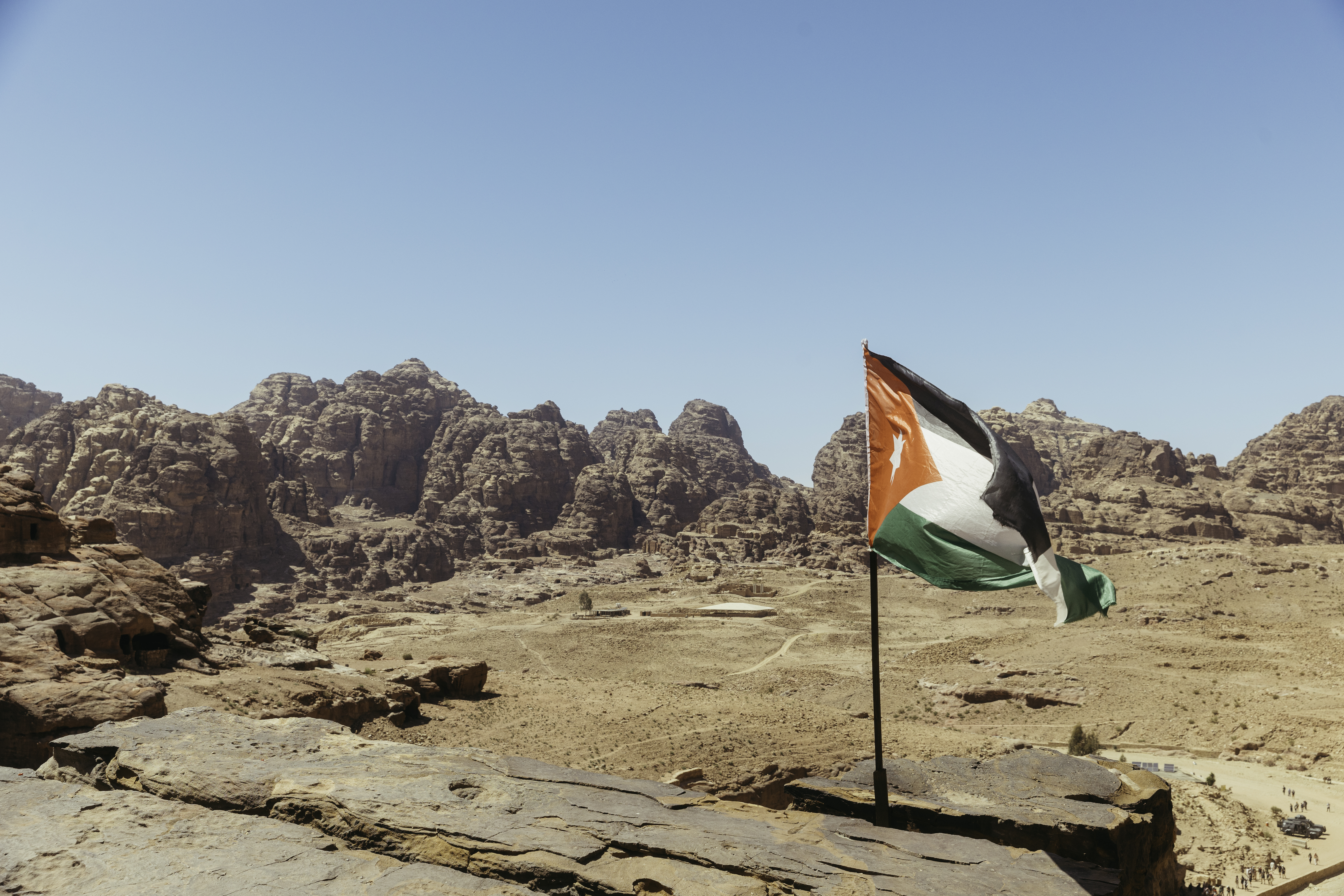
Wadi Rum, also known as the Valley of the Moon, is overwhelming in its beauty. Used as the shooting location for films such as Dune and The Martian, it feels like being another planet, with deep red terrain stretching as far as the eye can see and rugged rock formations towering imperiously. In this setting, the party takes on a more futuristic look. There’s a cosmic pod installation that you can climb inside and relax among cushioned seating and reflective mirrors. Situated below the twinkling night sky of one of the world’s most impressive stargazing locations, the allure of the galaxy beyond is intoxicating. The stage is backed by imposing curved arches decorated with flickering LEDs, while projection mapping casts colourful stained glass-esque shapes onto the sandstone cliff behind. A rope ladder-assisted clamber up an adjacent sand dune allows you to survey the mass of bodies and lasers from above. It’s a sight to behold.
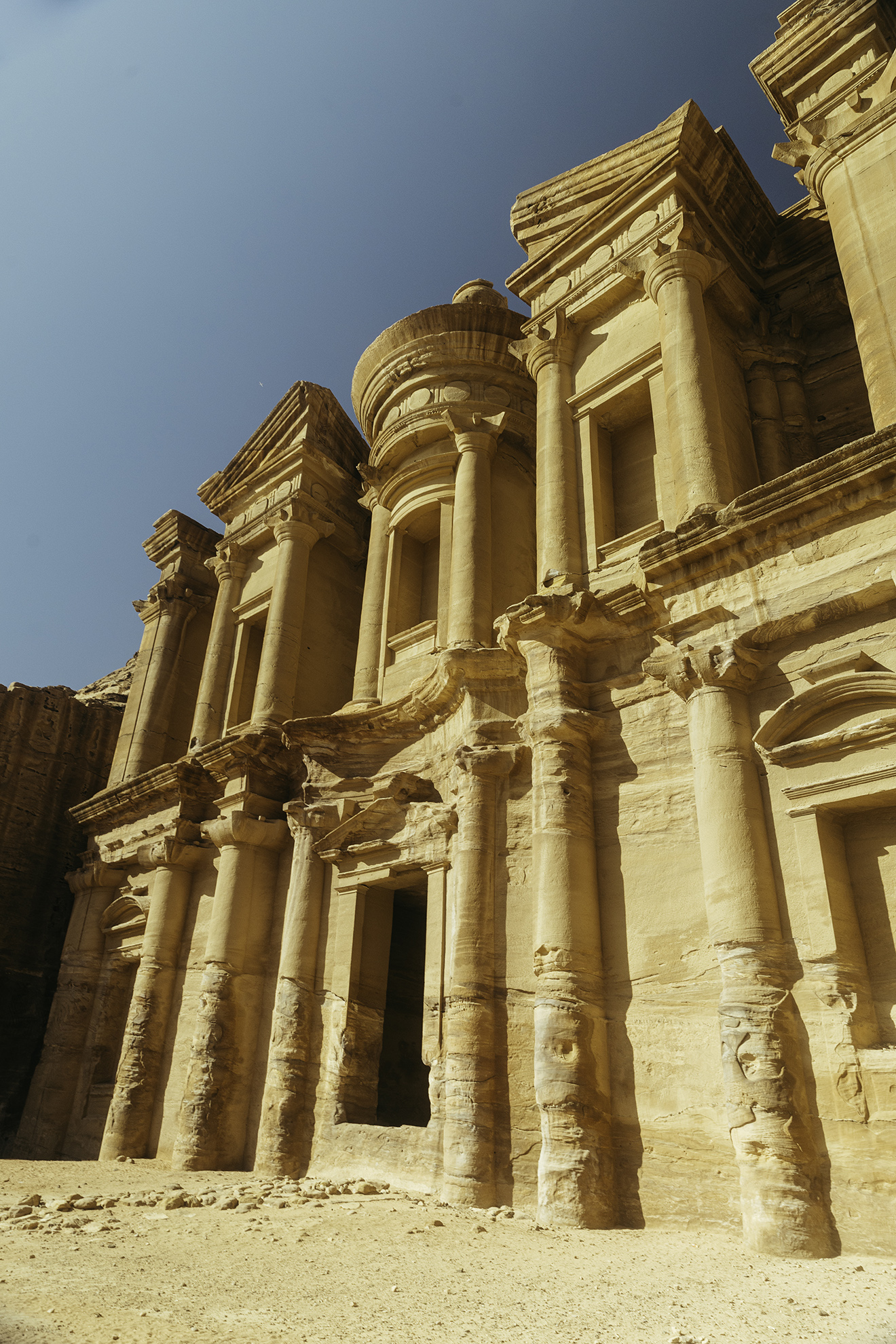
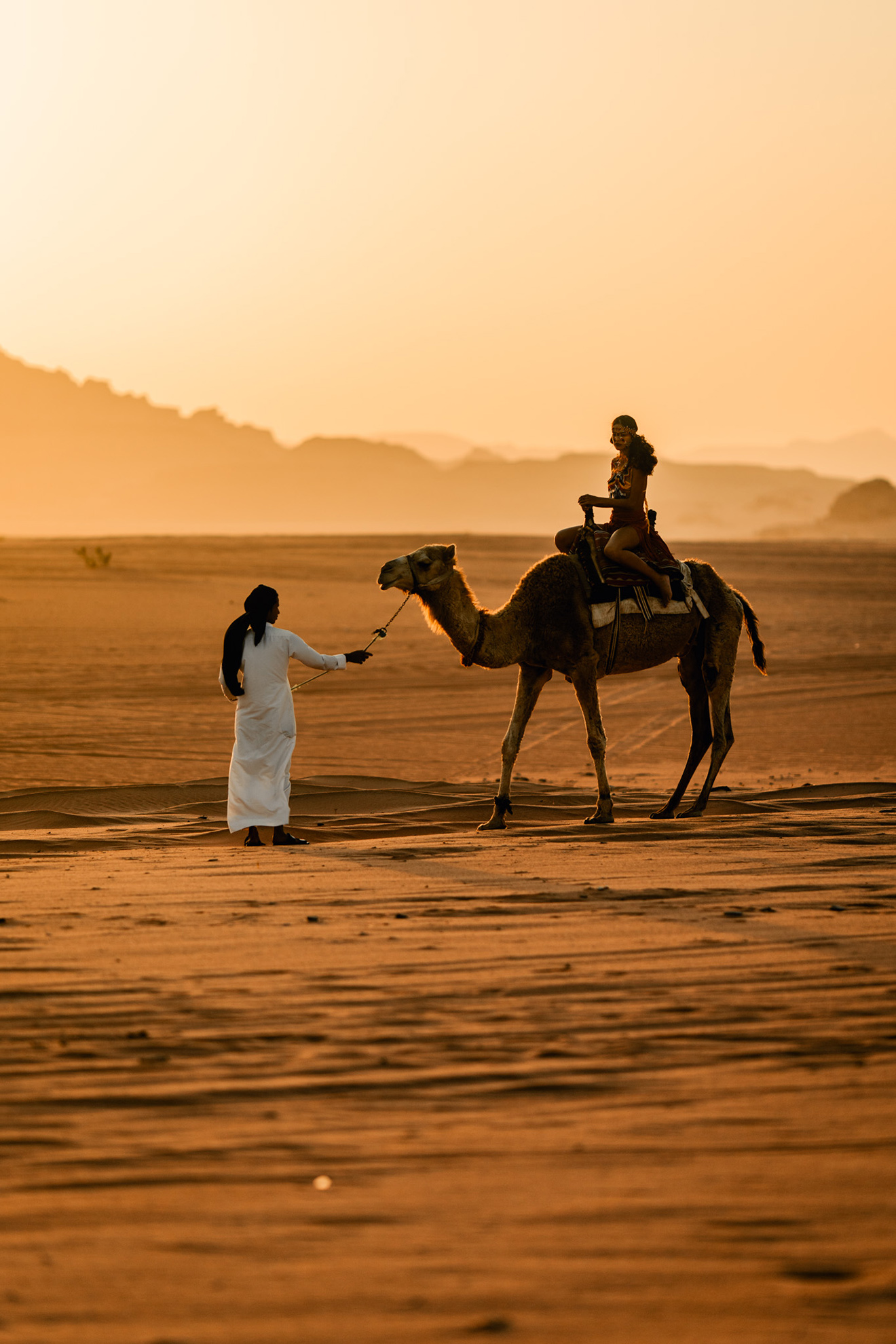
Securing these locations for parties isn’t a simple task. “To get to these venues you have to have a good story,” notes Koyess. “We've built this portfolio for these events, and we show them what we bring.” Medaina is a venture that sells itself as more than a musical festival. The “experiential travel concept” Mani refers to includes pillars of local “music, art, gastronomy, culture and sustainability” they weave into its offering. Between parties, attendees experience the broader aspects of Jordanian culture and attractions. After flying into the capital Amman, you can stop off to explore the Greco-Roman ruins of Jerash; take a trip into the heart of Petra to view the iconic Treasury facade; camel ride through Wadi Rum by day and watch shooting stars from a bubble tent hotel by night; or snorkel through the coral reef of the Red Sea.
“We have a track record of going into countries that are not necessarily on the music scene map and need tourists,” says Koyess. “It's a cultural exchange,” adds Mani. “We present it as a project that's going to bring tourism, support the local economy, and also help to showcase the local talents and craft to the international audience. I think that has become the biggest value proposition for us to start the conversations.”

As a nation, Jordan - which borders Syria, Iraq, Saudi Arabia, Israel and Palestine - is generally viewed as stable and peaceful. The king is a moderate who’s made concessions towards democracy, and does not face significant opposition. Relations between the majority Muslim and minority Christian population are harmonious (with the latter guaranteed overrepresentation in parliament). It’s also not an oil nation and lacks natural resources, promoting high education levels with an economy that relies heavily on services. Tourism is one of Jordan’s top industries, contributing somewhere between 15-20% of its GDP, but the COVID-19 pandemic depressed it significantly, with a 77% decline in revenue in 2020. The need to appeal to a new generation of travellers came into focus, and an initiative called Discover Jordan works to highlight its diverse attractions, from art galleries to eco tourism, adrenaline sports to wellness and relaxation, desert wineries to olive oil groves. Anything likely to attract younger people who’ll make return visits, as opposed to pensioners coming to Petra once for a bucket list expedition, is a plus.
Mani and Koyess were tipped off to this by friends working in Jordan’s entertainment and tourism sector in 2023, who encouraged them to visit. After months of scouting locations, meeting relevant officials and building partnerships, Medaina Festival was announced in July to take place the following year. The demand was instant: it sold out in under three hours.
Three months later, October 7 happened. Hamas launched deadly attacks into Israel, and Israeli forces launched their genocidal assault on Gaza. Despite Jordan’s own relatively safe reputation, the unimaginable horror in the region caused tourism to collapse again. The emotional toll within Jordan, and its significant population of Palestinians, has been profound. In the capital city Amman, the clubbing industry shut down overnight. “People just couldn't bear partying or going out, it just wasn't the time for it,” Amman-based DJ and producer Toumba tells me. Nothing would happen again in nightlife for a year, and Medaina Festival was postponed.
“We had to be mindful of what people were going through and pause the project,” says Mani. “In 2023-24 there was no way we would have even thought about making it happen.” As time passed, and after extensive consultation with local communities, team members, government officials and NGOs, they tentatively got back to work. “It is obviously a very sensitive topic, and we really made sure to talk with all the right stakeholders and do everything to be mindful of what is happening in the region while making the project come to life,” notes Mani. “People felt like this is something that can help the country, because Jordan has been struggling economically due to the instability in the region.”
Declining tourism isn’t the only factor. A significant cause of strain comes from how welcoming Jordan has been historically to displaced people. The nation contains one of the highest refugee populations per capita in the world. Figures indicate there are more than 2 million Palestinian refugees in Jordan, and more than 1 million refugees from Syria. UN organisations have praised Jordan as an “exemplary host, including refugees in key national systems such as healthcare and education”, while perceiving this places “enormous pressure on the country and its host communities.” Entertainment events could understandably feel weird in this context. At the same time, livelihoods and opportunities for joy being derailed by the atrocities of neighbouring tyrants and proxy wars waged by foreign aggressors has its own issues.
For their part, Tithorea made numerous efforts to showcase the local culture and provide support. They partnered with Action For Hope, a non-profit organisation which helps distressed and displaced people through cultural development and relief programs. Vendors at the events include the Microfund for Women, Disi Women's Cooperative, Bedouyat and the Aqabawi Arts & Culture Studio, whose sales of traditional crafts and handmade goods empower women and community projects.
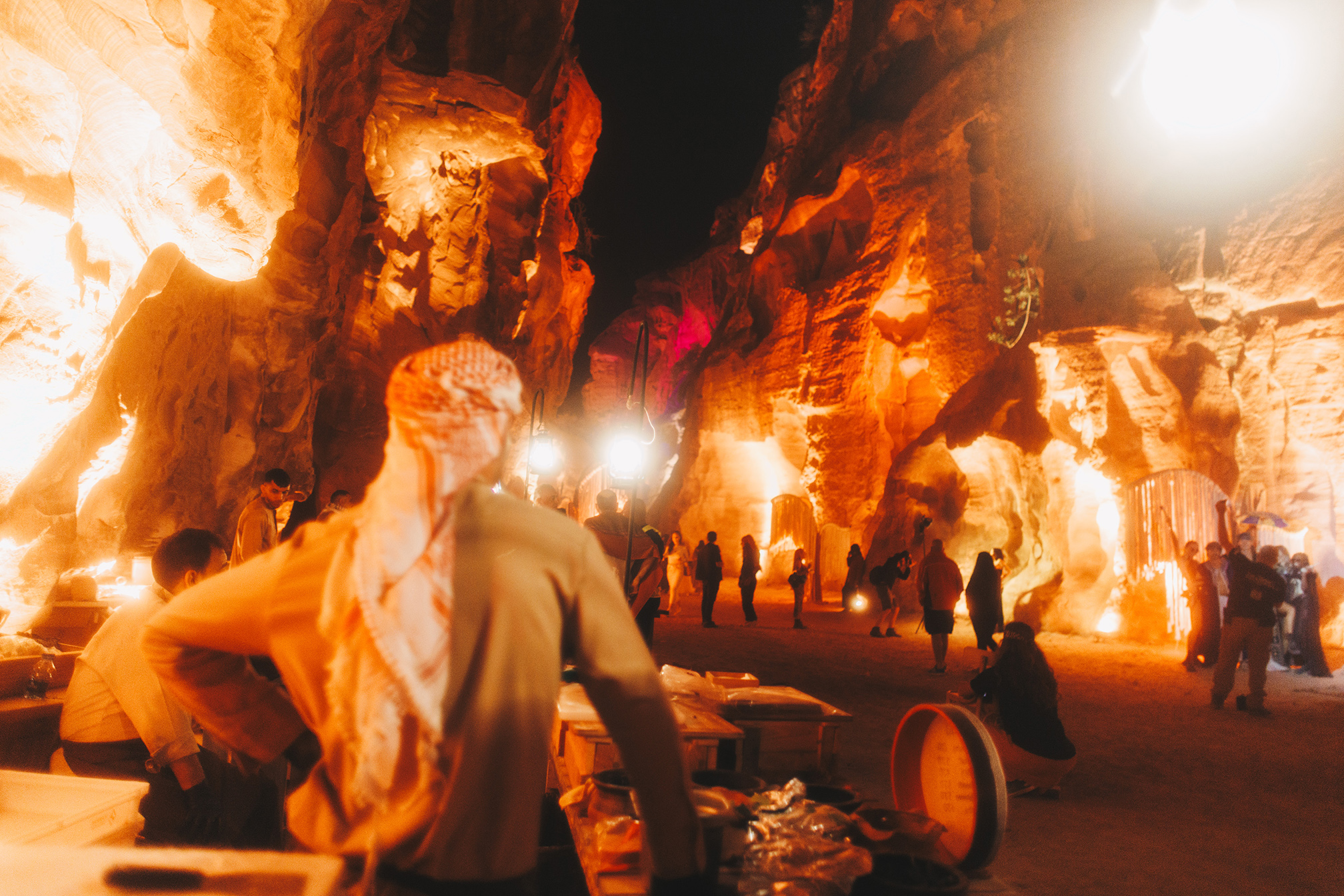
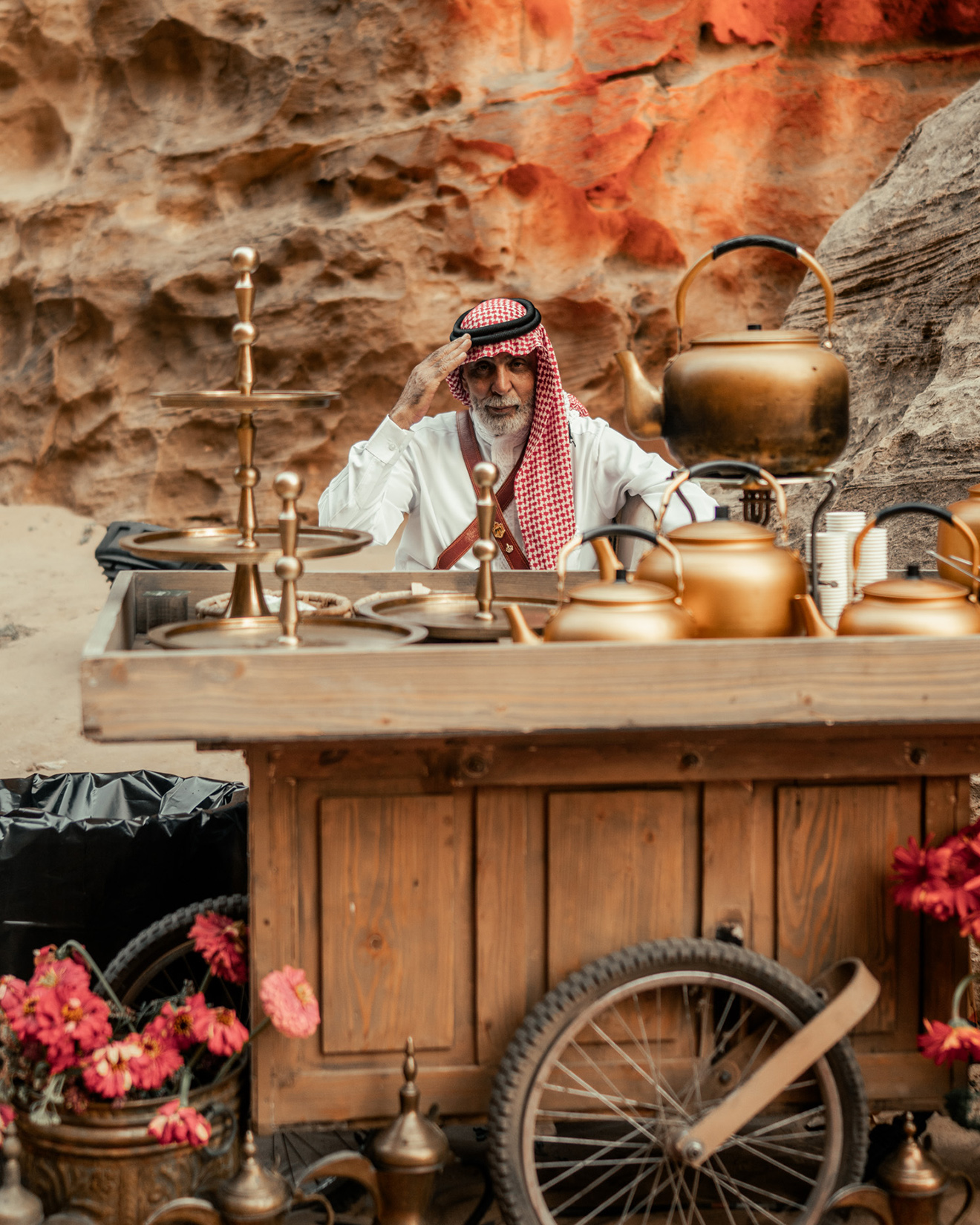
Curation wise, the most notable examples come on the opening night at Little Petra. The entranceway hosts a bountiful feast from local chefs, curated by the Romero Group, with a tantalising range of options introducing attendees to a range of Levantine flavours, from tangy vegan salads to richly flavoured meats. Making your way through a sandy, narrow path between cliff faces reveals the enclosed Triclinium canyon, adorned with Nabatean artistry and architecture. There, a performance from the Majdal Popular Dance Troupe is underway, a Jordanian group whose founding members were trained in the art of Dabkeh dance by El-Funoun, a Palestinian group comprising many refugees. The rhythmic dancers are backed by commanding Arabic folk music with shadow projections of camels and nomadic travellers on the rear rockface, adding a narrative immersion to the cultural expression.
Deeper into the canyon, Jordanian DJ Mayss, who collaborated on the night’s curation, performs a multi-part set featuring live performances from regional singers: Israa Shalaby from Palestine, and Yara Asmar and NÂR from Lebanon. The music is powerful and moving, with resonant vocals booming around the ancient rock, across a soundtrack that shimmers, throbs and pulsates. “The idea behind my segment was to showcase the remarkable talent in our region as well as to pay tribute to the growing movement of artistic unity across the Arab world—a movement reclaiming our shared identity as one people, long before our borders were carved up by British and French colonial powers,” Mayss tells me. Tiithorea had first approached her at a distressing time in her life. Her father was dying, and she doubted her capability to get involved. “But they—especially Shahin—insisted and showed genuine trust in my vision. After my father passed, I realised how supportive they'd been and agreed to take part,” she shares. “I’m super grateful to Tithorea for trusting my vision and giving me the opportunity to come together with these three incredible artists.” When the music switches up to the Western dance music Tithorea books as headliners with a closing set from French house duo Aline Umber, Bedouins can be seen dancing and enjoying the sounds in the cliffs above.

Melissa Ouellette also made sure to study the location and culture in depth before working on the creative direction in order to “express art that pays tribute to the culture here, to the artists here, and to the nature here.”
“We have creative consultants from here to make sure we're not doing something that doesn't make sense or is not aligned with Jordan heritage,” adds Mani.
Hosting an event of this kind in such historic locations comes with sensitivities. These are UNESCO World Heritage sites, lands with time-honoured cultural and spiritual importance to local peoples, and there are rumblings of opposition from some. Koyess admits they encountered difficulties in Petra. “Usually the government would be the issue, the issue here is the people,” he says. “The government is kind of afraid of how the people react, even though what you're doing is legal.”
Disputes of this nature are not unique to Jordan, or even to sites of historic significance. Any public land or property being handed over to private equity or promoters, even if temporarily, tends to be controversial. The very same weekend as Medaina, a series of festivals in South London were nearly called off due to ‘The Battle of Brockwell Park’, a legal challenge from neighbouring residents angry at the public park being taken over by the events. More broadly, the clash of private equity and culture is increasingly felt all over in dance music, becoming especially pronounced in the festival sphere this year with KKR’s acquisition of Superstruct and resulting boycott movement.


Jordan had an election in 2024, and after coming back from hiatus, the package Tithorea had agreed prior was no longer on the table. Previously obtained approvals were questioned, certain permissions denied. “The support that we were going to get two years ago is completely different,” Koyess reveals. There was no direct funding, but help did come from the tourism board, who assisted with equipment permits and media and content creation.
In Wadi Rum, where the Bedouin tribes hold significant influence, Tithorea worked hard to develop a cooperative and respectful partnership. Over a lengthy period of visits, Koyess developed relationships with every tribe and spoke to each head, explaining the plans and gaining their permission. “I can navigate the desert now as if it's Beirut,” he remarks. Their trust was crucial. Dance music festivals are not new to Wadi Rum. A two-day party called Distant Heat ran for seven years across 2003 to 2010, featuring the likes of Armin Van Buuren and Above & Beyond. According to Koyess, “it progressed in a way that kind of bothered Bedouins around, and they made sure to stop it.” At Medaina’s Wadi Rum party, Bedouins are well represented, joining the festivities, getting stuck into the dancefloor, and working the shuttle operations. “I think they understood the value of this, and eventually they became more and more supportive,” says Mani.
The value - a term they use a lot - Tithorea aims to bring is two-fold. For their target audience, who have airmiles to rival commercial pilots and are constantly chasing the next adventure, Jordan is a novelty. And for Jordan, visitors who have money to burn and seemingly endless free time are attractive for a tourism industry rebuilding itself amid crises. Mani calls Medaina a “cultural exchange”, and seems genuine in his passion for showcasing the region to international visitors. “I'm from Iran, so this part of the world means a lot to me,” he says. “You could never do something like this in Iran right now. Bringing a lot of people to support the region and show them the culture is what this is about.” In bar queues, I overhear conversations from visitors expressing how impressed they are by Jordan, how they would never have come otherwise, and are keen to return. At other times, entitled punters are rude to local staff.
Even with the best intentions, you can’t ensure everyone engages with the right attitude. Pre-festival messaging pleads a responsibility of respect for all attendees, with a straightforward demand for festival outfits: “Please keep culturally appropriate.” Not everyone takes note, as the sea of Westerners in Arabic headdresses and misworn keffiyehs indicates. Toumba, who attended the party in Petra, comments on this. “I feel like the country is just used as a venue,” he observes. “It was a playground for rich people.”
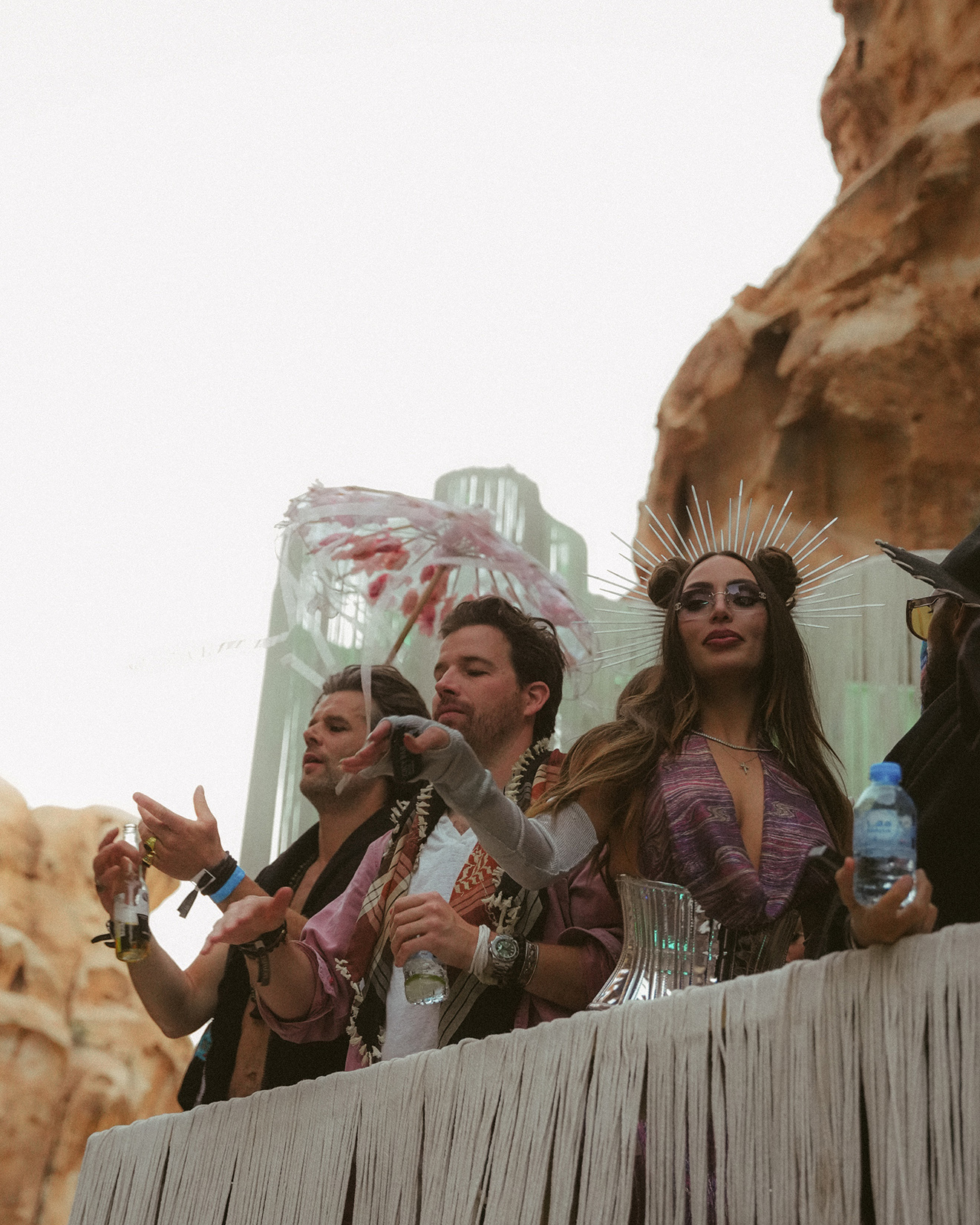
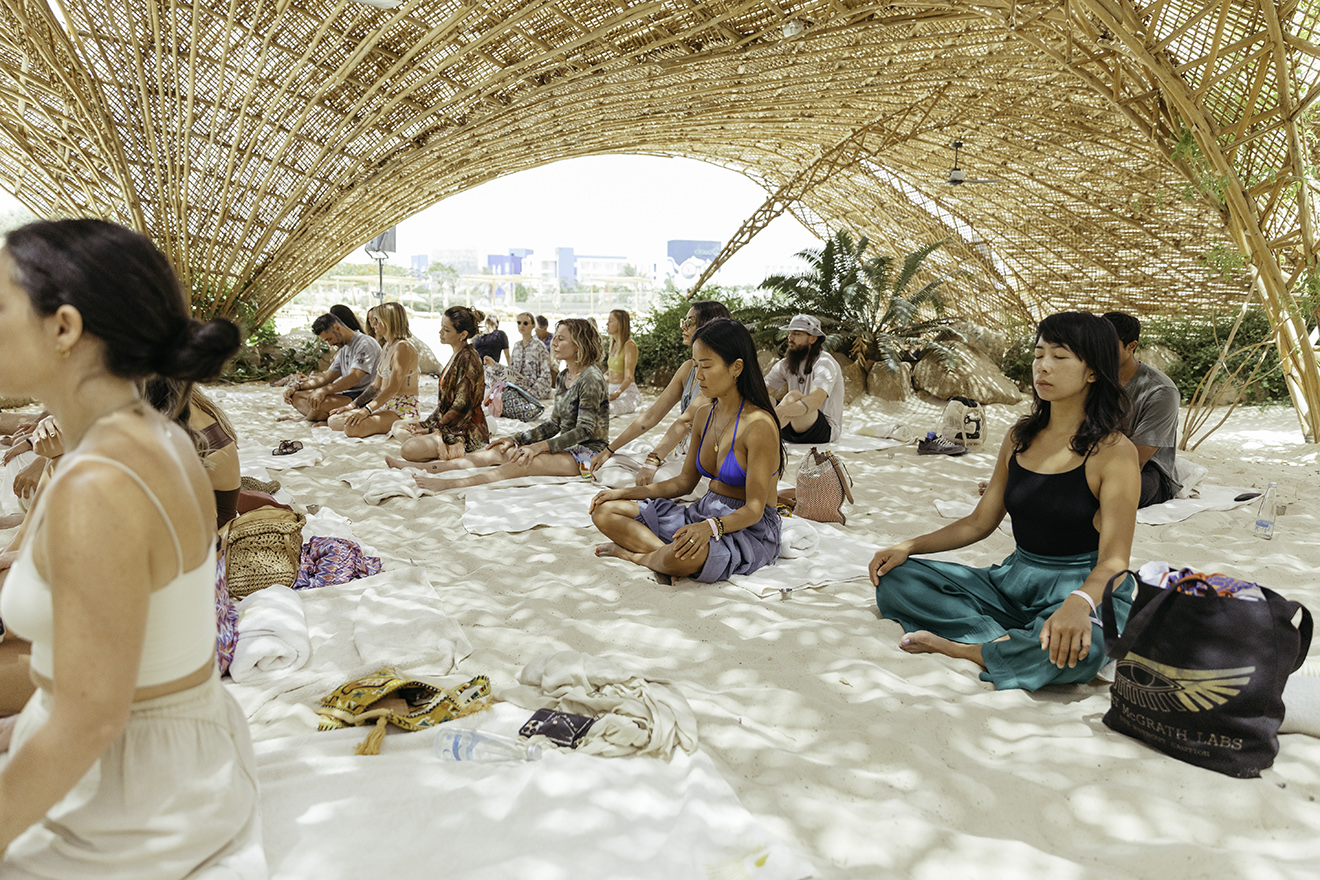
Tithorea is clearly aimed at a certain class of attendee, and image is a big feature. Its socials depict gorgeously shot scenes of luxury from top-grade cameras and drone footage. Sections of the festival site are set up specifically for people to take Instagram photos, with studio lights on stands to hand. Medaina is explicitly not just a dance music festival and so fairly should not be judged on those terms. But its incorporation of dance music into its experiential offering speaks to the wider commodification of the culture. While dance music originated in dark rooms with unseen DJs, Medaina represents the Cercle-fication of the scene, where what you see is more important than what you hear. It runs parallel to why the electronic music business is booming - worth $12.9 billion in 2024 with "festivals and clubs" making up the lion's share of revenues - but grassroots nightclubs are struggling to survive. A certain kind of dance music event has become more about spectacle than sound, and these are the ones that tend to be thriving.
Despite some of his misgivings, Toumba calls the event a net good for Jordan. “If it enriches the local communities that’s obviously a positive thing,” he says. “I was talking to locals when I was there, and they said the quality of people coming in now is different. People dip and go without spending much money, come for specific things and leave. They've taken a major hit from October 7 and COVID, so if it contributes in any way, that's cool.” Though he notes with a tinge of exasperation that locally run electronic music events would never be supported with cultural resources. “For people in the scene here, it's not easy to be sustainable as a venue or an artist,” he says. Crackdowns take place in Amman, he notes, with venues targeted by the drug enforcement agency and attendees harassed by officials. “It's so obvious that they're against it, but obviously when there's money involved then it's fine,” he adds.
Medaina arrives in Jordan at a time where the country needs support and it delivers on this. Pulling off an event of this magnitude across multiple locations is an almighty undertaking and something they nail while working collaboratively with local producers. Through a dance music lens, it’s not doing a lot to shift the needle for Jordanian club culture. Which is expected, it's an experience crafted towards wealthy clientele and the culture of dance music is not a priority. If you want to visit a beautiful country and party in one-of-a-kind locations, that’s what it’s all about.
Patrick Hinton is Mixmag's Editor & Digital Director, follow him on Twitter


