
 Features
Meet IceMorph, the Willy Wonka-type world builders of UK bass
After almost half a decade of buildup, Ice Wing and Benomorph are embarking on their IceMorph project proper with a debut mixtape. Nathan Evans meets the alien-transformer duo as they come down to earth
“Did you get a whiff of that?” asks Benomorph. The more technical half of IceMorph is referring to a new fragrance the duo have concocted out of eucalyptus mint and rosemary. The as-yet-untitled IceMorph fragrance lands somewhere between woody, marine and aromatic notes. It’s one of the many surprises that he and his kindred spirit Ice Wing spring upon me during our conversation, emblematic of their Willy Wonka-type personas and the mad world they’re fleshing out under UK bass.
Much like a fragrance, IceMorph has been kept bottled for years inside a private community of their making. They serve as the public heads of CloudCore, a label best known for swarming Bandcamp’s best-selling section with a limited release every Friday since 2022. With a history that’s interlinked with fellow UK bass avatars Two Shell, IceMorph operate as the good-cop version. Both combine internet technology with the friction of a technological age gone by, but where the Shells have gained notoriety for trickster tactics, obfuscation and misinformation, IceMorph uses it to build community, encourage social engagement and reward discovery. Club labels are currently beholden to playing the social media game, but internet fatigue and passive scrolling habits mean that people are posting less in the public domain anyway. Those seeking out and building deeper connections online are doing so in more exclusive places like DMs, group chats and Discord servers, and CloudCore has charted a course for how labels can use this to amass a community - the real kind, not the corporate-speak version.
Benomorph and Ice Wing are incredibly hesitant to speak about running CloudCore, as though they are a small part of it. “We don’t want it to feel like it’s two egos running a label rather than a community,” they insist almost in unison. When I ask IceMorph about the past year, they don’t display a hint of exhaustion. “It’s been an incredible period of time,” gushes Ice Wing, owing to the shows they’ve played - Panorama Bar in Berlin, and clubs in Barcelona, Stockholm, Marseille and Ibiza. “We found our voice pretty early on,” Benomorph says, “but now we’re working out what we want to say.”

In late 2021, Benomorph attended a club night at Venue MOT which would change the course of his life. “I’m a big Two Shell fan, and got chatting to one of them at one of their nights at MOT,” he recounts. “He said, ‘I’ve got a friend who’s on the same wavelength as you’.” Ice Wing carries on the tale: “Beno texted me, and we started sending tunes to each other on the internet. It became quite clear that we were really aligned on our tastes. We eventually tried writing some music together, only to discover that we were pushing each other to do things we wouldn’t normally do on our own.”
As they worked away on collaborative material privately, the duo contemplated starting a label which would be a home base for those interested in similar music, and miss (or at least, remember) the thrill of internet discovery. They created a release model based on artificial scarcity: every Friday at 12:PM, a new track dropped, available only for seven days before going “offline”, thereafter priced at £999. The effect was a one-week rush to claim the track before its accessibility was hindered. “What I loved about labels was that you were finding the music out for yourself, and I think that got lost along the way,” Benomorph looks down briefly. “A lot of people don’t know about Soulseek, but labels used to press 300 copies of a white label and then upload it to Soulseek. It’s one of the magical things about digital music, but there’s less and less magic in digital music these days.”
Ice Wing, who strikes as the more community-minded half of the duo, was troubled by a lack of literature on online community building in the face of endless guides to ‘doing social media right’, causing him to reach out to lecturers on the topic. “One thing that’s very apparent is that it’s quite challenging to make friends on the internet,” he says. “When there’s so many ways to talk to each other and places where you may not make you feel comfortable to say hello… that first step in introducing yourself can feel so huge. But when you find somewhere with like-minded people, the result can be this huge network of people and friends to hang out with.”
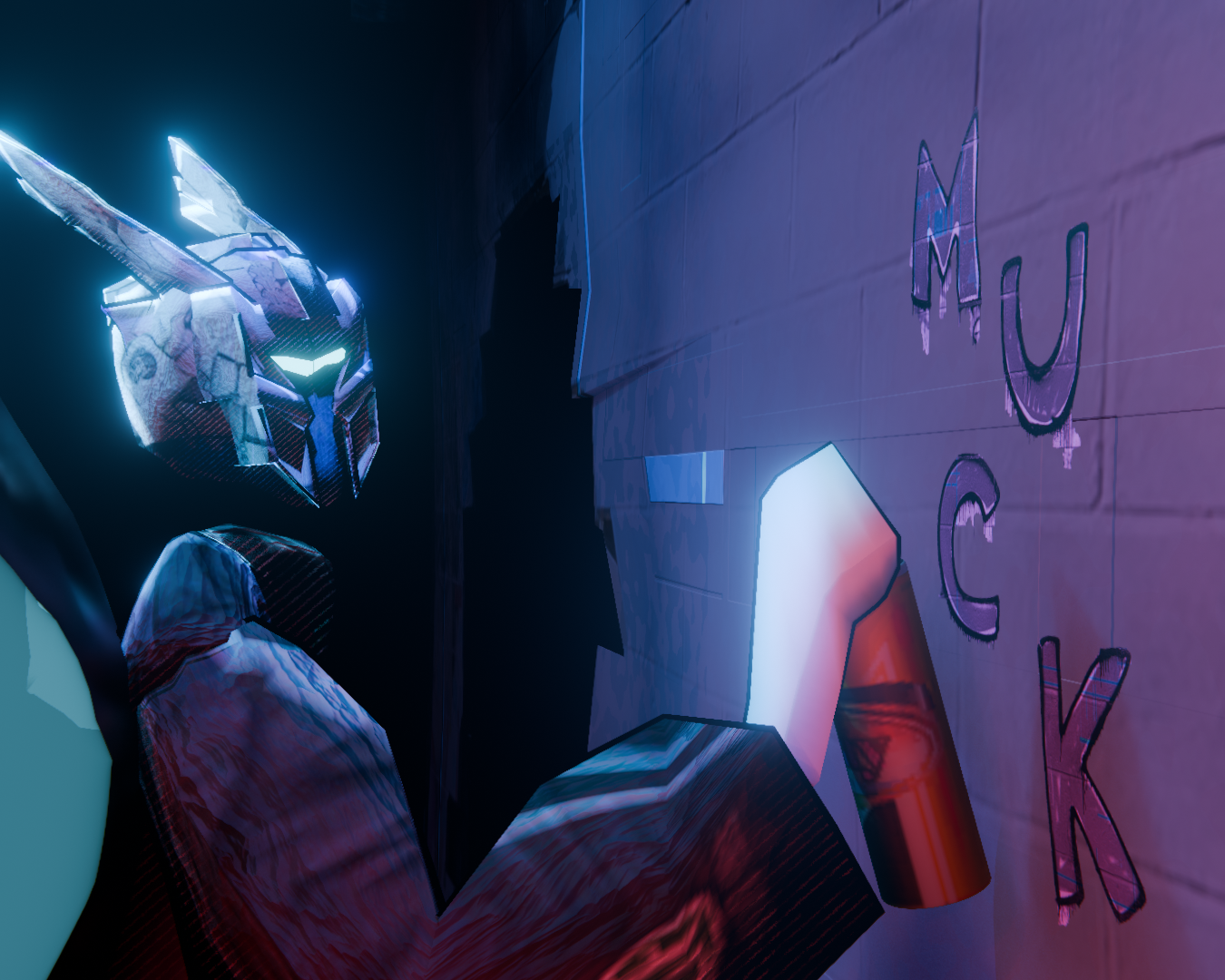
CloudCore landed on January 7, 2022 with Benomorph’s ‘Y-F ∞’, immediately enticing the likes of Martyn, as well as day-one fan Chuan, who is based in Shanghai. “I think, from the very beginning, it was very similar to what Two Shell was doing,” he says. “That post-dubstep club sound that evolved from the Hessle Audio and Livity Sound canon, but into its own thing.” CloudCore’s thing was almost antidotal to the colder, po-faced attitude that purveyed UK bass at the time. “Their music has all of the features I wanted out of club music but found it so hard to find: this emotional sincerity,” says long-standing affiliate Tacit Gleam. “There’s a depth and sublimeness to it that you don’t get out of many club tracks, but it’s still really hard,” he says, punching the air.
The CloudCore catalogue aligns its sci-fi visuals with future-forward sound design that makes use of spaceship transistor hums and the whooshes of teleporters. Even down to the most minute of digital textures, CloudCore communicates an affection for 2000s computer technology. “I think there’s a look towards early digital sounds to evoke the past or some nostalgic feeling,” Tacit Gleam posits, likening it to how Burial uses vinyl crackle to a similar effect. “So you get a load of spectral compression that you might get from MP3s, and I know that a few of us have used UI and menu sounds from computer games as textures and percussion hits.”
It’s another way of connecting to a certain generation that grew up on the same internet that had just as many communities as it did friction - the peak era of flash game websites, early YouTube and primitive mobile phones. It’s no coincidence that this era is reflected on as one of the last of tech-utopianism, before the far more invasive and dystopic reality that lay ahead. “It’s easy to romanticise sharing tracks with your mates when you Bluetooth crappy-quality tracks with your phones close together on the top deck of a bus,” Benomorph adds.

However, listening to the catalogue only grants half the experience. The rest lies in its Discord server, which is where a soft constellation of fans, music writers, coders and label artists congregate to share music, events, thoughts and spark in-jokes, all on an equal plane. Ice Wing notes that the server is taken as seriously as the label’s music, and crafted the experience to guide people to say that all-important first hello with an invisible hand. “The way the server’s set up, it does a lot of things to force you to open up or get involved where you otherwise wouldn’t,” he says. “One of those being the releases going offline, causing you to ask what’s going on.”
With 99% of tracks priced at £999, visitors can either spend approximately £190,000 buying the catalogue on Bandcamp, or ask how to get it. Sometimes even the creator of the tune themselves will tell them to download it on Soulseek, but that stimulation to say hello, to make that first big leap in engaging with a community, is integral. They may be lucky enough to come across a Cloudkey in their download, a special PDF of artwork given to the first 150 buyers which includes a one-time code to unlock a few extra back catalogue tracks. Cloudkeys also incentivise being among the first to download come release day, which is what resulted in hundreds of purchases in the space of a few hours.
When people stuck around in the Discord, they often joined in the regular appointment of a new track at 12:PM to react to the new release, or post GIFs during the livestreamed Nectar radio shows which feature guest mixes from community members with user-submitted skits, often ending with a ‘relic’ from the radio show guest themselves (a track or artwork) as reward for being part of the process. They’ll get to know the community’s weekly shitpost-y Bandcamp comments which display the server’s absurd and verbose humour in a way to spread further confusion to outsiders. One such comment from regular worship_dog under Joe Polar’s ‘3Flake’ reads: “I will never forget when this got spun at the first Roll Through Crew party.. [CloudCore alumni] Debba was pon buttons and when this tune came in the crowd parted and none other than Tom Zanetti cut through and grabbed the mic and just started spitting hard 64s. Gunfingers and girls everywhere you looked”.
With the barriers between artists, creatives and fans broken down, the opportunity to upskill and get involved was not just tangible, but regularly seized upon. Aspiring producers could become label artists in real time, nurtured with the help and feedback from the community through the Track Feedback channel. Tacit Gleam is one of the most revered artists among the community, but he came into the server without any public profile or releases. “One of the big things that held me back from releasing music was the fear of things dragging out forever,” he explains. “But the week I joined, I looked through the track feedback channel and saw S T I N 9’s ‘mi7’, which I thought was great.” That track was released the very same week. Here, he saw the quickly turned-around spirit of dubplate culture that defined jungle and UK garage in the '90s, hastened by the advantages of digital distribution. “It made me realise how different it all was. I knew it could be a home for my music.”
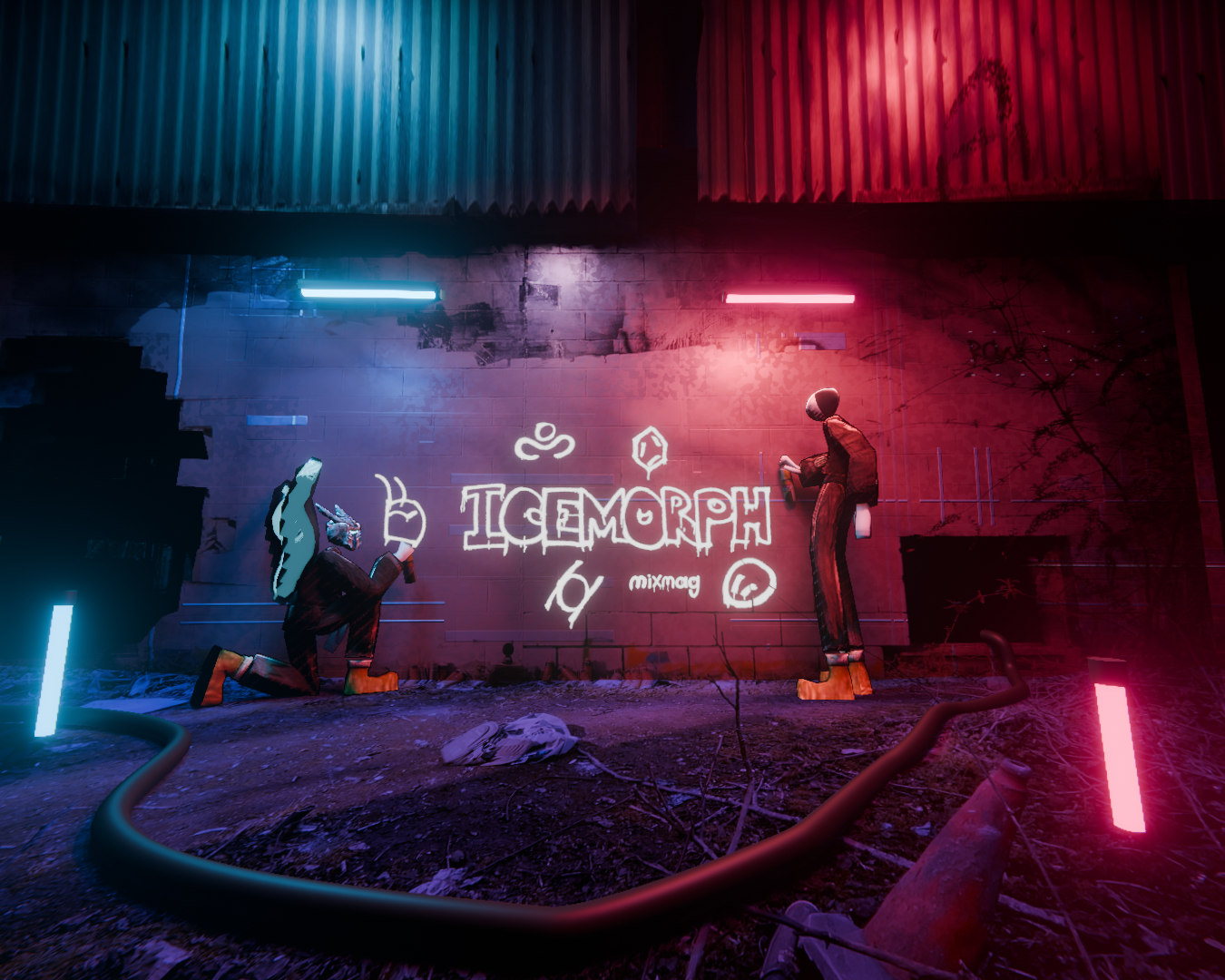
As digital as CloudCore is, physical products were a growing idea but that forced IceMorph to think laterally once again. “It would feel inauthentic if CloudCore pressed an LP, because it’s such a digital community,” Benomorph comments. With how much the label borrows from the logic of role-playing and trading card games - the rewards for exploration, choose-your-own-adventure pathways and remixes packaged as “shiny versions” - they had their answer: trading cards. Rendering the label’s artists into mythical guardian figures with abilities taken from track titles, these cards are the ultimate exercise in nerdy fan service. IceMorph have used the trading cards to engage with fans during their shows, with treasure hunts around the venues all through the night (asking the bartender at Corsica Studios for a specific drink handed you a card, for example).
Additionally, trading cards are wielded to solve some industry issues. “CloudCore and IceMorph are quite against tiered tickets,” Benomorph states, sympathising with promoters who use them to create security ahead of time. “But the effect is that the customer feels penalised for not having the cash on hand when the tickets drop, or for missing the drop entirely. If you go to a CloudCore party, the tickets are all the same price, but the early tickets get a really special trading card, the next tier get a more common card, and so on. So as a consumer, you’re rewarded for being early rather than punished for being late. It’s such a simple way of flipping it around.” In 2024, the cards were expanded into a full trading card game developed by community affiliate Chernabog, playing like a hybrid between Yu-Gi-Oh! and Magic: the Gathering, and laying out the label’s themes, terminology and artists on a playmat.
As much as CloudCore has been designed as a slowly-expanding circle, its success has made many take notice. IceMorph are individually responsible for club smashes like Benomorph’s ‘B4 I Die’ and Ice Wing’s ‘Komodo’ as DJ Hypercubed and ‘⑈’ as Airdrop, played out by the likes of Pangaea, HAAi, Four Tet and Caribou. They’ve inspired similar labels such as Strand Audio from Glasgow and Emoticons. from Japan, who have played with their own ideas of creating digital scarcity to stimulate keen ears. “CloudCore offers possibility,” Chuan says. “That someone can still do something completely DIY from the ground up this fast and succeed in getting people involved in promoting new sounds.”
Nonetheless, with the intensive schedule of managing the label and community, plus IceMorph’s impending breakthrough, something had to give. On January 9, 2026, the label stepped back from weekly releases after four years. “We’ve been finding it harder to share something with you every single week,” the label said in a statement. “We’ve decided to continue CloudCore this year by focusing on releasing music when we have it ready.” Though the Discord is still active on a regular basis, there is a feeling of the golden years having already passed, with some sometimes mourning the loss of the Friday noon ritual.

If CloudCore was an exploration into immersive label theming through Discord-busting community events, the proportions of IceMorph’s new world have taken over its makers’ own lives. “We’re definitely living in an insular world which is folding in on itself,” Benomorph admits. “The real world’s pretty horrible at the minute, so it’s been nice living in this fantasy land.”
They’ve seemingly raided the toybox to create their renegade characters. “We’re both fugitives,” Ice Wing begins. “Ben is an alien who escaped a laboratory, and Ice is a transformer who’s escaped an assembly line.”
“They’re who you’re speaking to right now,” Benomorph affirms.
They stand in a long lineage of electronic artists hiding behind characters. Rather than it being an excuse for anonymity like Ice Wing’s childhood favourite, Daft Punk, IceMorph uses it to plunge to the depths of their creative understanding, going as far as to write their own scripts for music videos which are given polygon-shaped PS2 game visuals courtesy of their 3D artist and CloudCore affiliate Bing. “The imagery comes very naturally when you’re exploring an entire theme,” Benomorph says. “We’re not fully songwriters, but we might put our thoughts down to words and use that to build the song around an actual discussion of the theme, either with lyrics or sound effects.”
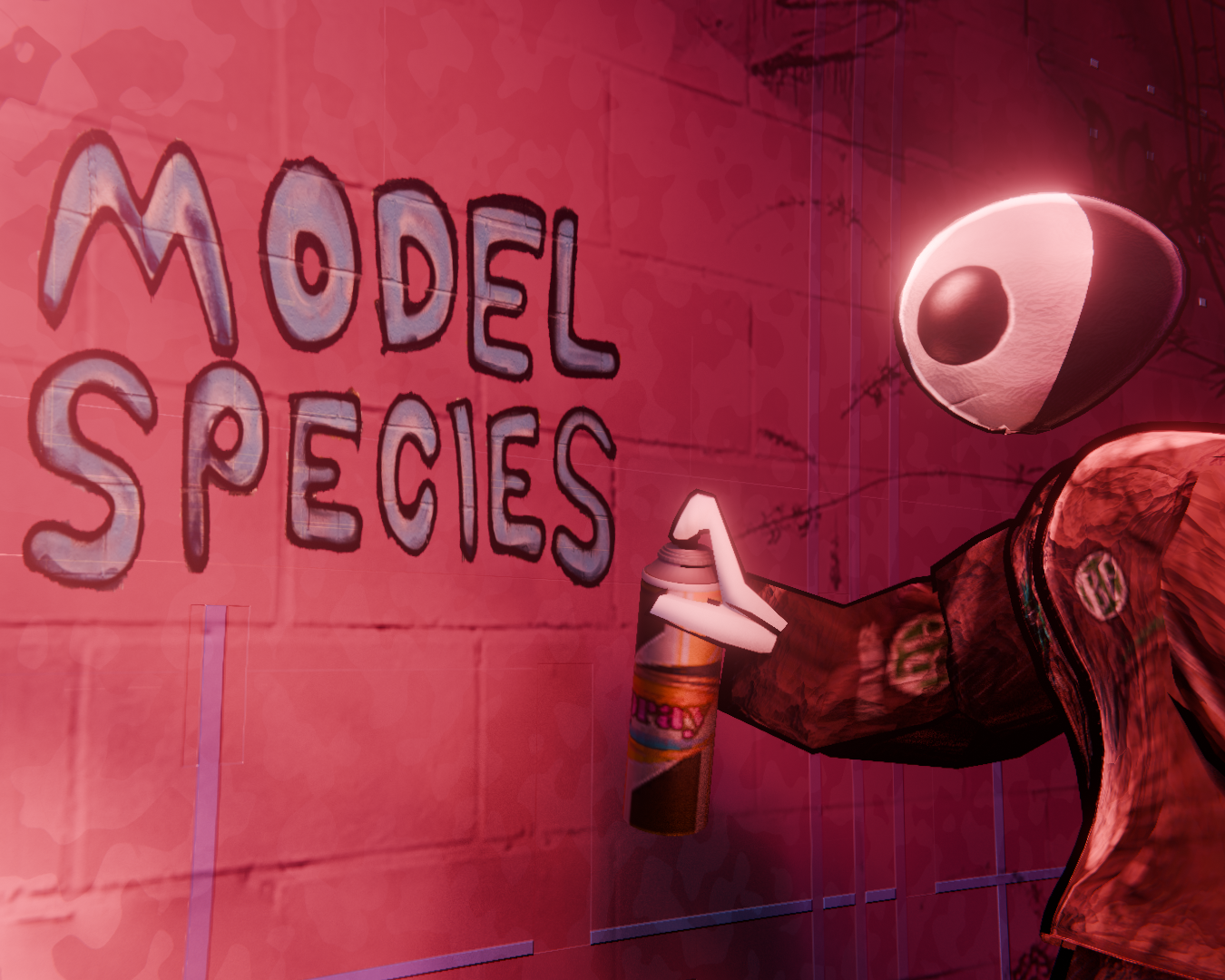
‘We Got This’, their 2024 debut single, is like the theme song to their own Saturday morning cartoon. Synths spray over the track like popped champagne as a twirling vocal is bent into Simlish pop, building up to the titular line that cements the power of friendship. Further singles have tapped their shuffled deck of influences within the language of UK garage and techno, from the explosive K-Pop electroclash of ‘Butterfly’ to the ferocious metal chug that lights up ‘Daysa’, released on Berlin label Live From Earth.
The latter track is a prime example of the sonic gaps they wish to fill in the club, as it sits at a relatively low-velocity 120 BPM but could shake a cemetery back to life. “When we go to the club, we’re always thinking about what we wish we were hearing right now,” Benomorph says. “One of the things we think is lacking right now is high-energy, middle-of-the-night, slow-tempo stuff. So we’ve been drilling down on 100 to 120 BPM trip hop/reggaeton/dancehall tunes that we don’t feel at all guilty about playing in the middle of a set.”
It’s partially why they’re becoming increasingly renowned as a head-turning live act, able to rebuild from another DJ set in the night without dissipating the energy. Using an Ableton Push, a few MIDI controllers, a MIDI mixer and MIDI keyboard, they’ve assembled a show which allows them to be flexible within their tracks rather than concerned for what comes next. They splice off-the-cuff mixing with improvisational elements (Ice Wing often playing the keys) and a vast self-made library of stems and spare ideas for them to augment as they please. “We’ve got access to every effect and the volume of every element of our tracks,” Benomorph explains. “So if something’s grooving well, we can latch that section in place for longer than during a DJ set.” Ice Wing bounces back: “Plus, there might be alternative versions of the track we made when we were finishing it off, it’s really fun to introduce those elements back. It brings in a bit of its past.”

Their upcoming mixtape ‘Prototypes’ has been thoroughly road-tested, but is now being reassembled as the first full deep-dive into their fantasy land. Using the pacing of a DJ set with mixed tracks, IceMorph are currently working on adding a cinematic layer across the eight-tracker. “We’re tying the intros and outros of the songs together with more cinematic foley recordings, as if we’re setting a scene for the listener,” Benomorph explains. “We’d like to be more overt about the theme of the track that’s coming up.” Their respective characters define the sound palette of each track, just as the themes of CloudCore did for the label. “We might start a track and see about exploring a theme within the world we’re building sonically. So we may make an Ice Wing track which will have loads of robot sounds in, or a more Benomorph-leaning track with more squidgy alien sounds in.”
To release a project after almost half a decade of buildup indicates a duo that enjoys the process just as much as the product, and IceMorph have contoured their utterly DIY process into an unconventional way that couldn’t work for any two other artists. “Ben and I don’t use the same software,” Ice Wing offers. “So we have to bounce stems every single time we want to make a change, which is actually really nice.”
“It’s like back when people were committing things to tape, we’re committing early on to the elements,” Benomorph adds. “We’re locking them in as audio files rather than the modern way which is infinitely tweakable.” There it is again - that friction that makes what they do special.
“Personally, I met my aspirations long ago,” Benomorph says candidly when I ask about future goals. “We’ve played at Drumsheds, MOT, Panorama Bar… we’ve been making a living off our own music for the last few years. It’s hard to aspire for anything more.” After being kept as a community secret for so long, they occupy a weird position — still wide-eyed and on the come-up, yet carrying an army behind them. Whether they fully realise their techy-Trekkie universe remains to be seen, but as the wider world gets to know IceMorph, they’ll still be rooted in the simplicity of their origins. “Last year, we got a studio, but then realised we were wasting hundreds of pounds a month because we’re bedroom producers at heart,” Benomorph says. They found they were most effective when they were sitting side-by-side on a sofa, on different computers and headphones, creating a track that the other wants to hear.
Discover CloudCore
Nathan Evans is a freelance music journalist, follow him on X
Bing is a visual artist, follow him on Instagram


