
 Features
How a technology meltdown led Djrum to find beauty in imperfection
Having had ‘Under Tangled Silence’ nearly wrapped up during lockdown, a "catastrophic" IT failure became the unlikely basis for Djrum's brilliant new album which has been six years in the making — he speaks to Megan Townsend about communicating human experiences through music and learning to embrace flaws
It’s a sunny April morning in London and Djrum is mere days away from releasing his new album, ‘Under Tangled Silence’. Despite critics, the scene and his legions of devotees alike all eagerly anticipating the 11-track project to land on Houndstooth, the artist seems to be wracked with trepidation for its unveiling. “I find that scary. It’s a commitment, to decide this is done and I want people to hear it,” he tells me, hands grasping a mug as he squints against the light bursting into his flat. “It helps that I've had some recognition and I know people are keen. But I still second guess myself, a lot.”
It’s strange to hear an artist as accomplished as Drjum, real Felix Manuel, admit to feeling nervous. As renowned for his boundary-pushing, dissonant approach to production as his multi-deck wizardry, Djrum’s penchant for everything-but-the-kitchen-sink sonics with an emotional, narrative-driven core have made him one of the most exciting electronic artists in recent memory. His critically acclaimed 2018 album ‘Portrait With Firewood’ was a deeply personal, experimental project that marked his place as a flagbearer for affecting, hybrid sonics with influence from classical training, clubland cognition and field recordings. Now, six years in the making, ‘Under Tangled Silence’ follows.
Having spent more than half a decade working on the project could go some way to explaining the jitters around finally exposing it to the public, a feeling only intensified by his confessed tendency to overcomplicate things. “It's a battle between conviction and a need to challenge myself,” he says. “I find it difficult to sit in a studio and do something I’ve done before, it doesn’t excite me. I’m always in untested waters, never on dry land — because I don’t want to be on dry land. It’s in my nature, and in many ways, success as an artist is about harnessing your nature and working with it. So, OK, I overcomplicate things, and that can be a real downer in some parts of my life, but it manages to work for me in this context.”
‘Under Tangled Silence’ had been “almost finished” in the early throes of lockdown, however shortly before completion, he suffered a “catastrophic” hard drive failure and lost most of the project. “I wasn't doing back-ups very well, but the back-ups I did have got corrupted, my laptop pretty much melted.” The issue, it turned out, was a power failure - causing his laptop to overheat and destroy everything stored within. Disastrous and aggravatingly mundane, this IT failure and the resulting loss of work form the unlikely basis of what ‘Under Tangled Silence’ would become five years on, in both an emotional and functional sense.
Watch this next: Djrum in The Lab LDN
In the emotional sense, Manuel’s tendency to challenge himself, and maybe just a pinch of perfectionism, meant returning to the lost project to start over felt impossible for some time. "For about a year, I basically couldn't open Ableton at all. It really fucked with me. I started being able to work on new music after a while, but returning to the album and returning to those old files…” he trails off, looking away. “I'd load something up thinking: ‘Oh maybe I'll just look at this old file’ and when I couldn't recreate the sound I'd made previously and get frustrated. I'd end up in tears.”
‘Under Tangled Silence’ is an account of those five years, "it's a reflection of my state of mind and emotional outlet,” he continues. “It all came quite naturally, many of the tracks reflect, quite directly, an emotional state in the time they were made. Even though, the end product is a track that maybe was made over years, from digging it out and putting it down again. Picking up broken fragments and reconnecting them.”
Manuel compares the result to ‘My So-Called Life’, Venetian Snares’ “diary-esque” record where each track was created during the course of a few days: “In the description, he says listening to the record takes him back to that exact moment. For me, there's a little bit of that, but it's spread across many days and years.” He highlights the track ‘Unweaving’, a wild, fragmented piano solo that he created during an improvisation on one night. “The piano is a form of meditation for me. It's a way to process emotions and calm myself. It's a regulating thing. That night, I was in a state, all over the place – scatty, confused, lost. However, when I tweak it and refine it, it still has the essence of how I felt that day. I could edit it and give it a more sensible structure, but no — it needs to stay schizophrenic,” he laughs. “It's a difficult thing when you're working with improvisation, you have the urge to make it clean and perfect — but I need to avoid that, I want the rawness to still be there.”
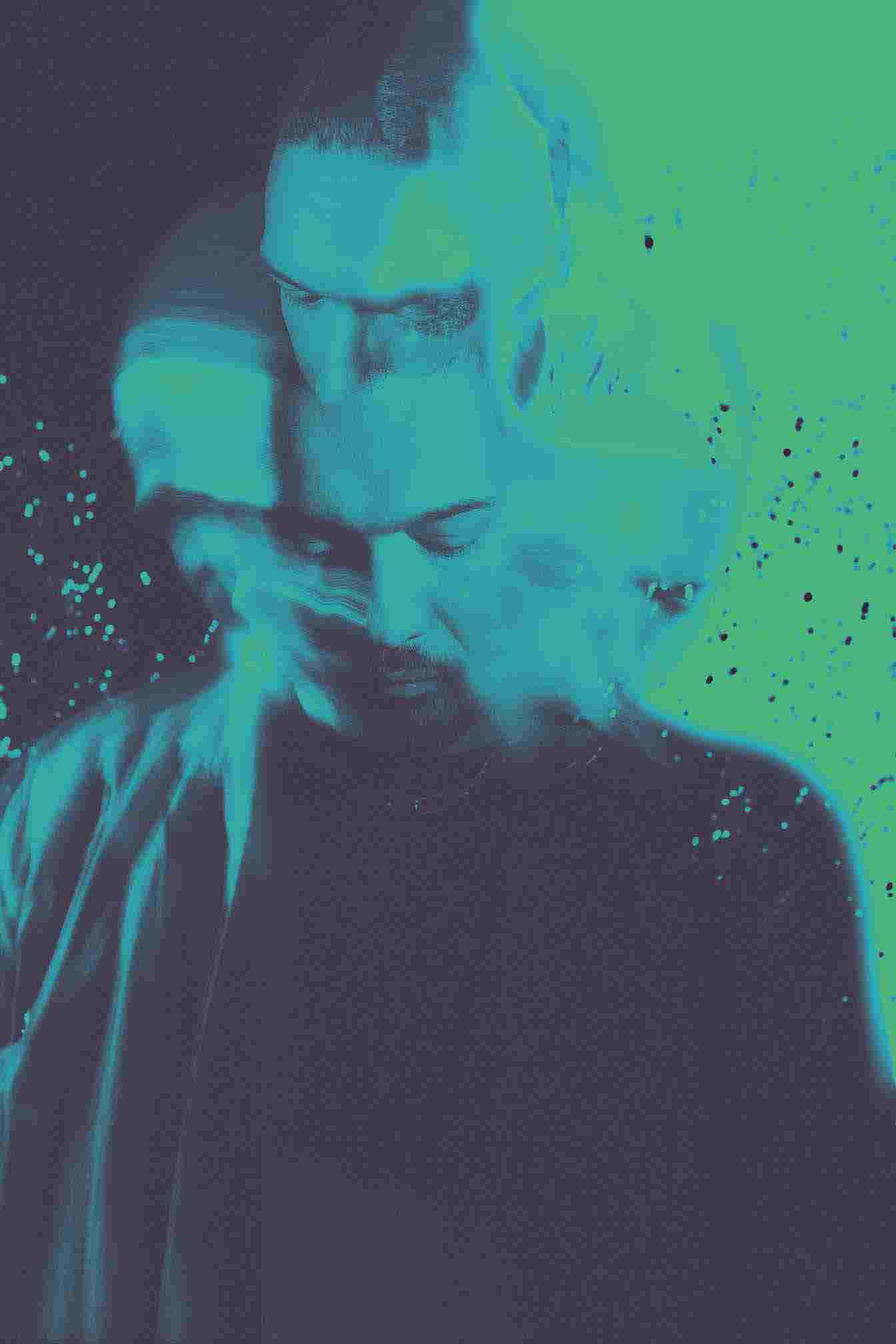
In a functional sense, fragments of the lost project can be found throughout the record: the dizzying glitch heard on the fifth track ‘Hold’, for example, comes from the corrupted audio files taken from his destroyed hard drive, providing an eerie backdrop for his sombre, delicate piano keys. Other tracks sample crude mix downs of the record that he had salvaged from his phone, a result of his tendency to listen back to his in-progress music while going for a walk. “It's funny because I'd already started playing with this idea of the fragility of technology,” he tells me. “We often think of it as being more reliable than a human, more precise. But actually, it's not. They are so dodgy and infallible.”
Despite this, the record isn’t a commentary on man vs machine; instead, Djrum finds inspiration in seeking a balance between digital and acoustic. The piano is his instrument of choice - on this record and further afield - having started learning the instrument when he was a toddler. “If it's in the house, you know, you just play,” he explains, recalling an occasion when a friend of his father’s heard him improvising on the keys as a youngster: “He came rushing in and asked if I was playing jazz, and I was like: ‘I don’t know’, I was seven,” he laughs. “But he taught me the blues scale, so from that point, I could do blues piano. It's been with me always.” He attributes his ability on the piano as a form of fluency, where playing it comes as a second nature. “I can tune out and kind of not think. But with electronic elements, I find myself less fluent,” he says. “It’s quite hard to program beats and MIDI melodies in DAW without thinking. I can play piano with my eyes closed, I can't go on Ableton with my eyes closed.”
Read this next: Does a DJ set have to be perfect?
“I'm a terrible engineer. I think there's possibly a lack of self-belief that is part of that. When you’re self-taught you can have huge gaps in your knowledge about basic stuff, but at the same time have a detailed understanding of something you've drilled down into — it's easy to miss things,” he says. “I find this with engineering, sometimes I stumble on things that others find simple and I'm stumped by it. Recently, I went on YouTube to look up how to do something technically, and I didn't believe that I could do it and assumed that it was going to be a nightmare. I got really stressed about it and in my own head. Eventually, I came to it with a fresh perspective and just did it,” he laughs. “It's mental.”
Although Manuel admits to having a general aversion to keyboards - which he claims “are a completely different instrument and don’t feel the same” as the real deal - much of the piano on ‘Under Tangled Silence’ isn’t acoustic, but from an electronic keyboard, edited in MIDI to sound like a live instrument. “I’d like to think that’s very hybrid,” he says somewhat mischievously. “You may not be able to tell the difference, and sometimes it's both layered on top of each other.”
While an autobiographical record by definition could be seen as something personal, maybe even indulgent, Djrum insists that his urge to do so was not driven by wanting to tell people about his life, but instead to communicate something universal. “If I want to talk about humanity, I should start with the human that I know the best and that's me,” he says, highlighting work by Tracey Emin: “If you think about Everybody I Have Ever Slept With and My Bed, they are very much universal despite being self-portraits.” This need to draw on his own experiences, he says, is what led to his decision to mostly abandon samples, an element that had been prominent in his early releases. On ‘Under Tangled Silence’ there are next to no samples beyond a few drum breaks, “Amen is Amen,” he nods. “I love samples, and I'll always have a huge amount of respect for them and they'll always have a place for me. But it can be quite difficult because it's not so personal, it's harder to make them personal.”
While difficult, he insists it's possible, pointing to Quasimoto's 2000 album ‘The Unseen’ — Madlib's clandestinely released debut solo album, or a 'collaboration' with his animated altar ego Lord Quas — a record that details the process of buying records and sampling them, while doing just that. “There’s a quote where Madlib talks about sampling a saxophone and that makes him feel like he’s playing it,” he says. “Spotting samples sometimes you think ‘that’s a bit of me’ because it resonates with your emotional state or whatever.”
“It's the same thing,” he says. “Tracey Emin can talk about her and her love life, but actually, she's talking about love in a general sense. If someone listens to my music and sees something different than what I experienced, in some ways we're very distant — but I think also, I'm also very conscious in my work in making things multidimensional. In terms of those feelings, it kind of introduces a sense of ambiguity through these layers.”
For Djrum, ensuring his work has that ubiquitous nature comes from that myriad of elements, inviting his listeners to “tune in” to whichever they find a sense of connection with. “A lullaby in a horror movie, for example, can sound sinister with a drone underneath and then all of a sudden, this plinky plonky music box melody makes it scary,” he says.
“I'm always trying to create those layers so people can take different parts from it, but it's all there,” he adds. “None of it is wrong, all those elements are there, it's just what you're filtering out and what you notice. In a way, I am quite deliberate in that ambiguity, I find it richer when there's more going on. So often, in my process there is something and I'll get to the end of a track, I'll have my seven minutes or whatever it is and I'll just keep adding more layers and more layers.”
He mentions a conversation with Skee Mask, who he says is “another person who’s really into layering”, about their ironic love of the minimalist productions of Shed. “They only contain one kick drum, one hi-hat, one clap and one chord. That's all that's required, you don't need more than that. It has amazing utility, amazing economy of sound design. Whereas I solve problems by just adding more shit on top of it,” he laughs. “Shed is like, if it's not working it's the wrong hi-hat, do you know what I mean? I have layers that just disappear into the mix because there's just so much.”
Read this next: Obsessed with precision: MJK's three-deck mixing connects dubstep, grime and techno
He likens this approach to painting, making a mark and going over the top: “That's my approach in music as well: let's get something down, let's make a mark and not be frightened of making a mark because you can just go over it,” he says. “It's OK if you draw in pencil, you can move it and smush it. I make music with a pencil, not a pen.”
“There's something about a fear of making mistakes, fear is a killer for creativity in general. When you make a start it's gonna have good bits and bad bits, but once you have that you can start editing and pushing it around. You can tweak it, you can always rub it out and move it. Come back to it in a year and change it,” he adds.
On ‘Under Tangled Silence’, Djrum’s long quest to salvage his album resounds in all its layers and emotional resonance, his combination of digital and real — it was an exercise in not only accepting things beyond his control, but finding beauty in imperfection. Maybe this wasn’t the album he planned to release five years ago, but its cracks and flaws have elevated it into something more meaningful than he could have ever anticipated.
“It was such a relief when I finally got it done, then I had a moment where I didn't want to engage with it,” he says. “Like I felt after the hard drive failure. [Houndstooth] found that really difficult, they wanted to talk about artwork and how to promote it and I didn't want to deal with it. Trying to be objective about something that doesn't feel like that... in some ways it's been the hardest part of the process, letting it out.”
He then holds up the mug he’s been curling his hands around for much of our interview. “But then, the chip on this cup I find beautiful, or the dent in that wall. This mark makes it a richer and more beautiful object. That’s what I had to do with this record, I had to embrace that concept. Things can have those broken bits, and that’s OK. It’s so much richer for the fact it has all these flaws, these noises.”
Djrum's Under Tangled Silence is out now via Houndstooth, buy it here and view his upcoming tour dates here
Megan Townsend is Mixmag's Deputy Editor, follow her on Twitter


