
 Features
Go bard or go home! Why are UK club nights going medieval?
Hardcore music and medieval aesthetics might not seem an intuitive pairing, but an internet trend and music genre that took off in lockdown has infiltrated the real world via alternative club nights pairing breakneck sounds with Middle Ages themes. But why? Henrietta Taylor reports
Silver chains and synthetic strands of ivy dangle from the low-slung ceiling as the tabard-donning DJ Baptist blares out hardstyle in front of a horde of bouncing ravers. Shadowy figures draped in cloaks and chainmail abound under the twitching strobe lights as sweaty bodies jerk to the racing beats. After a stint of getting involved, my friend and I weave through the tightly-packed crowd to cool off outside. Settling down on a bench, we watch as a guy in his early twenties, clutching a wooden sword, casually cuts shapes into the crisp night air as the beats pulse from inside.
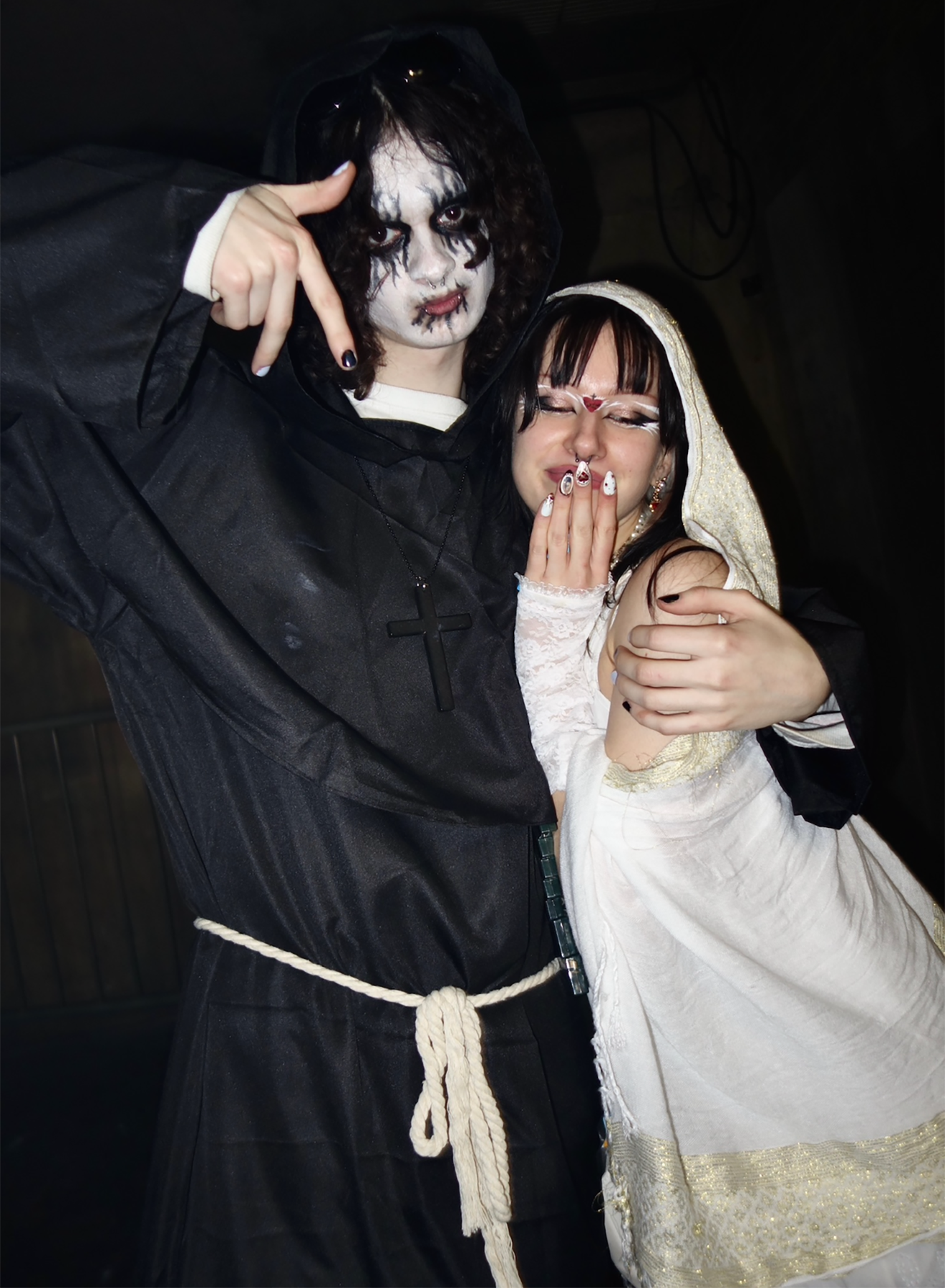
It’s all kicking off at The Cause, where Audible Mania’s The Dark Ages rave is pairing hardcore sounds with an old-timey theme. But aside from the hoods and chains, the outfits on display here are anything but past it, with clubbers in their late teens and early twenties accessorised to the hilt in fingerless gloves, faux fur and fishnets, New Rocks and yeti boots and, in one case, a raccoon tail. Basically, anyone who isn’t dressed to joust is a neo-goth dressed to kill.
“It’s like a masquerade [ball] at 180 BPM,” says Lisa, who DJs as Swordstrance and came up with the theme for the rave alongside her partner, Audible Mania’s founder Remi, or Baptist when he’s behind the decks. “Seeing it all in action was hypnotic. I loved seeing so many different characters in one room, enchanted by the music.” The melding of medieval ephemera (candles, chains, the odd bone) and high-energy hardcore is strangely effective. I feel like I’ve infiltrated a dark yet welcoming sanctuary for fringe beings who love a good dance.
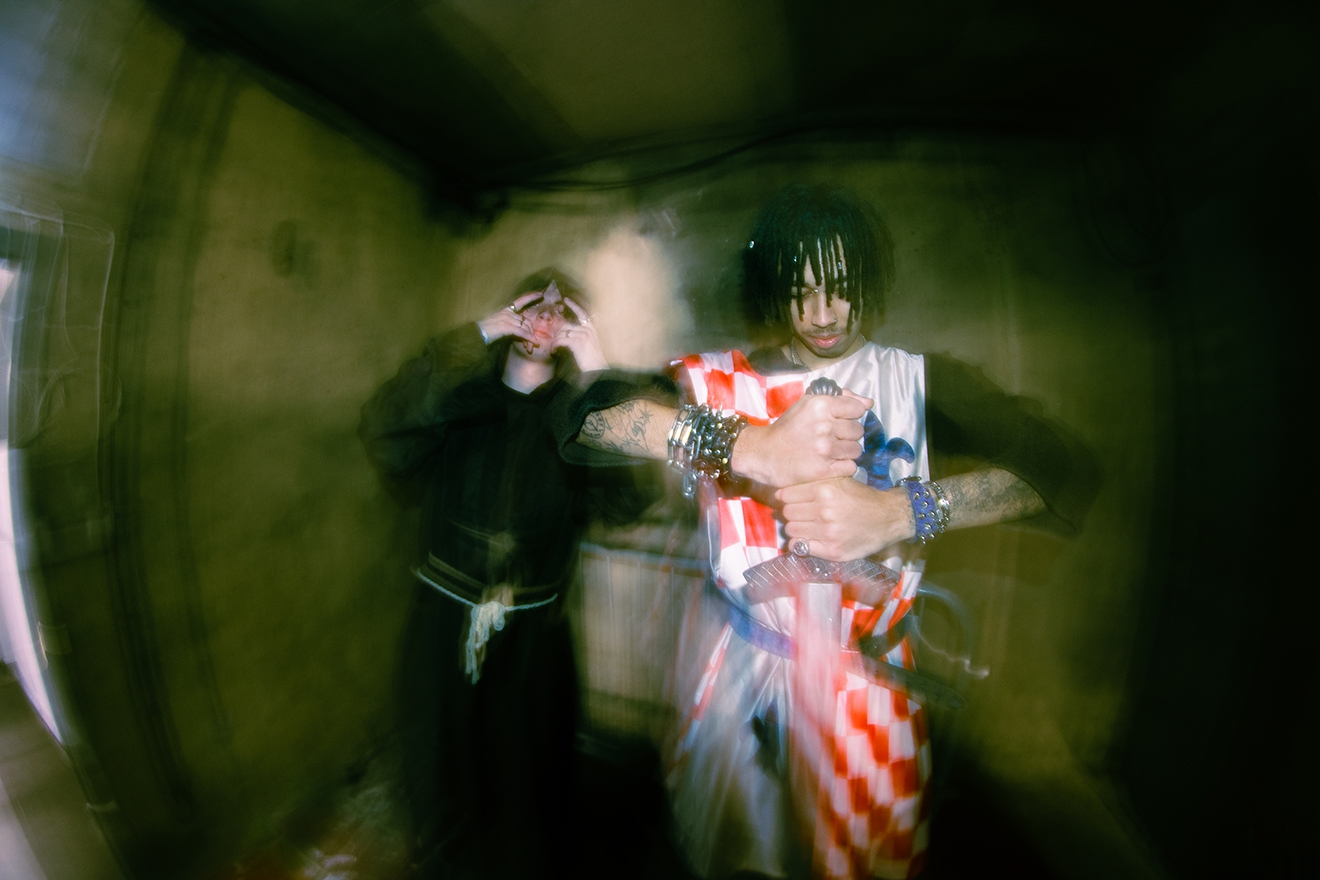
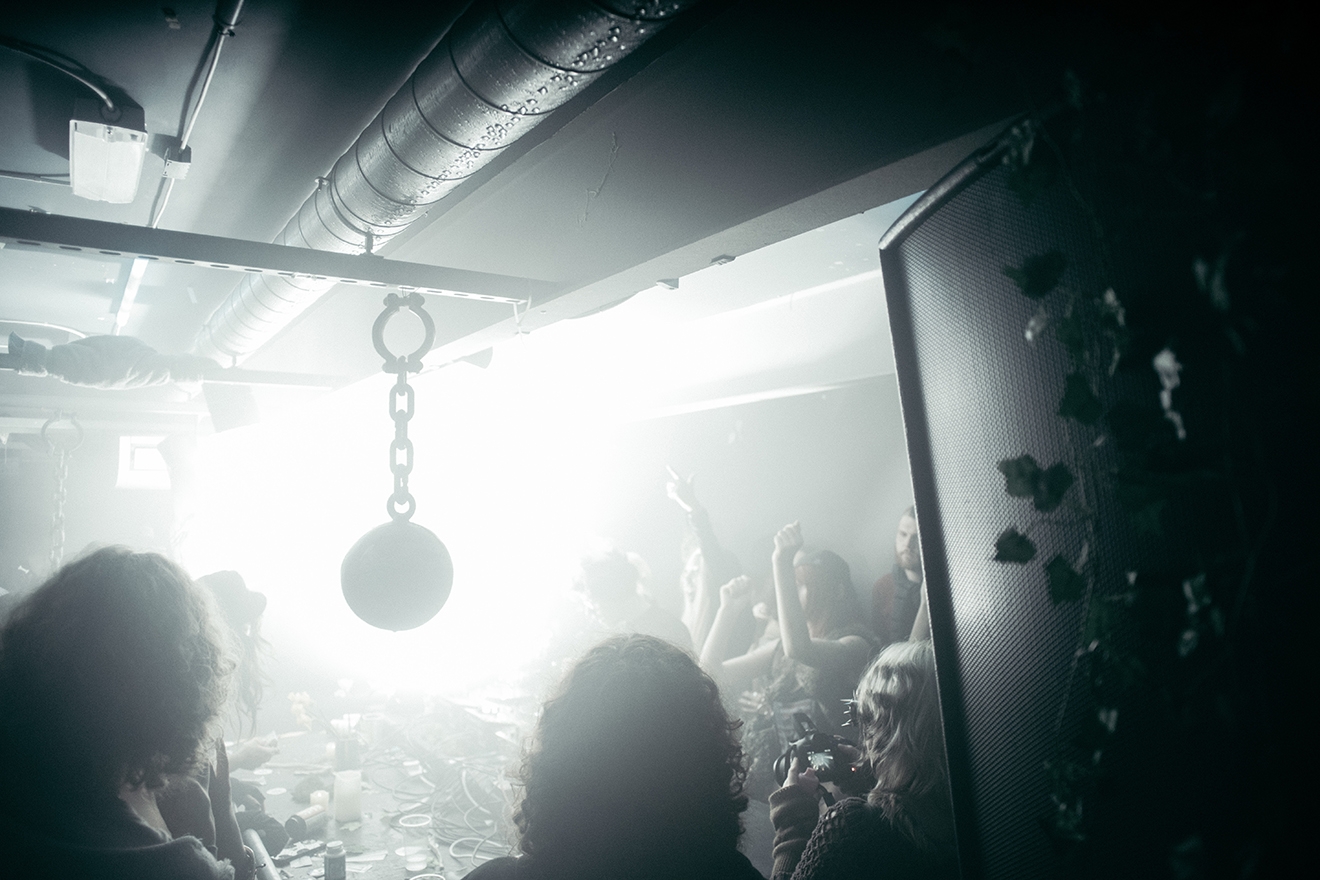
An alternative queer night, Audible Mania caters to a tight-knit circle of ravers. According to Lisa, the aesthetic for tonight’s event is largely drawn from the film Excalibur and game series Dark Souls. “I’d been to medieval festivals as a teen, seeing people dressed as knights, monks and in medieval dresses,” she says, sharing that, as her love of hardcore parties grew, she decided to bring the heavy music and medieval look together. For her, the result was intoxicating. “They oppose each other, but the music blends so well with the aesthetics,” she says. “Both elements are so powerful, dark and mystical that you’re really transported into another realm.”
Read this next: The centaur of attention: horsegiirL is captivating clubland
With 400 clubbers in attendance, Remi tells me tonight is Audible Mania’s busiest rave to date. The turnout for such a niche event stands in contrast to the near-constant news chronicling the UK’s dwindling nightlife. According to the Night Time Industries Association, the equivalent of five clubs a week shut down in 2024. This isn’t surprising in the context of stagnant wages and skyrocketing rent and living costs, which mean that young people in particular are feeling the pinch. It makes sense then, that if they haven’t eschewed alcohol and the idea of clubbing does appeal, they’d opt to spend where it counts — on memorable experiences that offer something a little out of the ordinary. To some that means a night spent raving while dressed like a druid.
So how did we get here? Like a lot of odd new behaviours, the Dark Ages 2.0 (AKA lockdown) is partly responsible. COVID brought nightlife screeching to a halt and young people, who in the past would have been sneaking out to raves in fields, listening to their mates’ sets at house parties or hitting up clubs during Freshers’ Week, had an age-old rite of passage yanked away from them. Instead, they had access to TikTok, which exploded in popularity during lockdown as silly skits and trending dances helped to connect people from afar. While dance music was obviously accessible, it was also stripped of its context - the feelings of euphoria, the community and connection - and, stuck at home, young people were bonding over online culture and memes, not moments on the dancefloor.
Read this next: I spent the weekend raving online
The monotony of it all left us with a short fall in novelty and excitement. We were low on dopamine, leaving us constantly on the hunt for a hit. And with easy access to our phones, short-form addictive nonsense was the thing that offered it. Alongside endless amounts of brainrotty content, the algorithm bequeathed us with bardcore - a microgenre that reimagines contemporary pop songs in a pseudo-medieval style (‘Jolene’, ‘Bad Romance’ and ‘Blue (Da Ba Dee)’ have all been given the bardy treatment), with bardcore producers YouTubers Hildegard von Blingin’ and Cornelius Link leading the charge. They turned out to be bangers, and they were also strangely comforting, infused with nostalgia. The quick-hit memes about slutdropping at the tavern, meanwhile, were unifying in their absurd, but universally accessible, humour.

Hardcore music and medieval aesthetics may not appear to be an intuitive pairing, but Audible Mania isn’t the first to combine the two. Multiple bardcore events have cropped up across the UK, employing punny Ye Olde English and mock-medieval digital posters to promote their events online. In Bristol, the kaleidoscopic bardcore night Ravenaissance: Happy Bardcore has been going strong since 2022, with regular events spinning happy hardcore, breakcore, uptempo, makina and hardtek. Prop and set builder Jonas originally devised the concept with his partner Issy, a teaching assistant, while cooped up during lockdown in the summer of 2020. What began as a medieval tavern party sweetly thrown for a flatmate has since become a fully fledged night out held at Bristol’s Red Lion Pub.
“I had the idea to put on a night and I was going through various different themes,” Jonas says, “and then, because I’d been listening to all those silly bardcore remixes on YouTube, at some point I was just like, ‘there should be a hardcore dance music version of this.’” The lightbulb moment of landing on just the right puns for the event name sealed the deal. A creative by trade, Jonas explains that, having “gone quite hard on theming house parties and doing decor”, designing a party for public consumption felt like a “natural progression”.
From the get go, Ravenaissance was “a runaway success” characterised by “chaos” and “nonsense” - soundtracked by giddy hardcore sets from regular DJs like “Bristol-based Donksmith” Tchaidonksy and out-of-town selectors enlisted by Jonas. For his part, Tchaidonksy (real name Ben) curates setlists filled with self-produced tracks, orchestral-heavy rave music and baroque-inspired tracks and describes the event as “refreshing” and a “release from the norm”. “The tongue-in-cheek vibe has me laughing and boogying all night”, he adds.
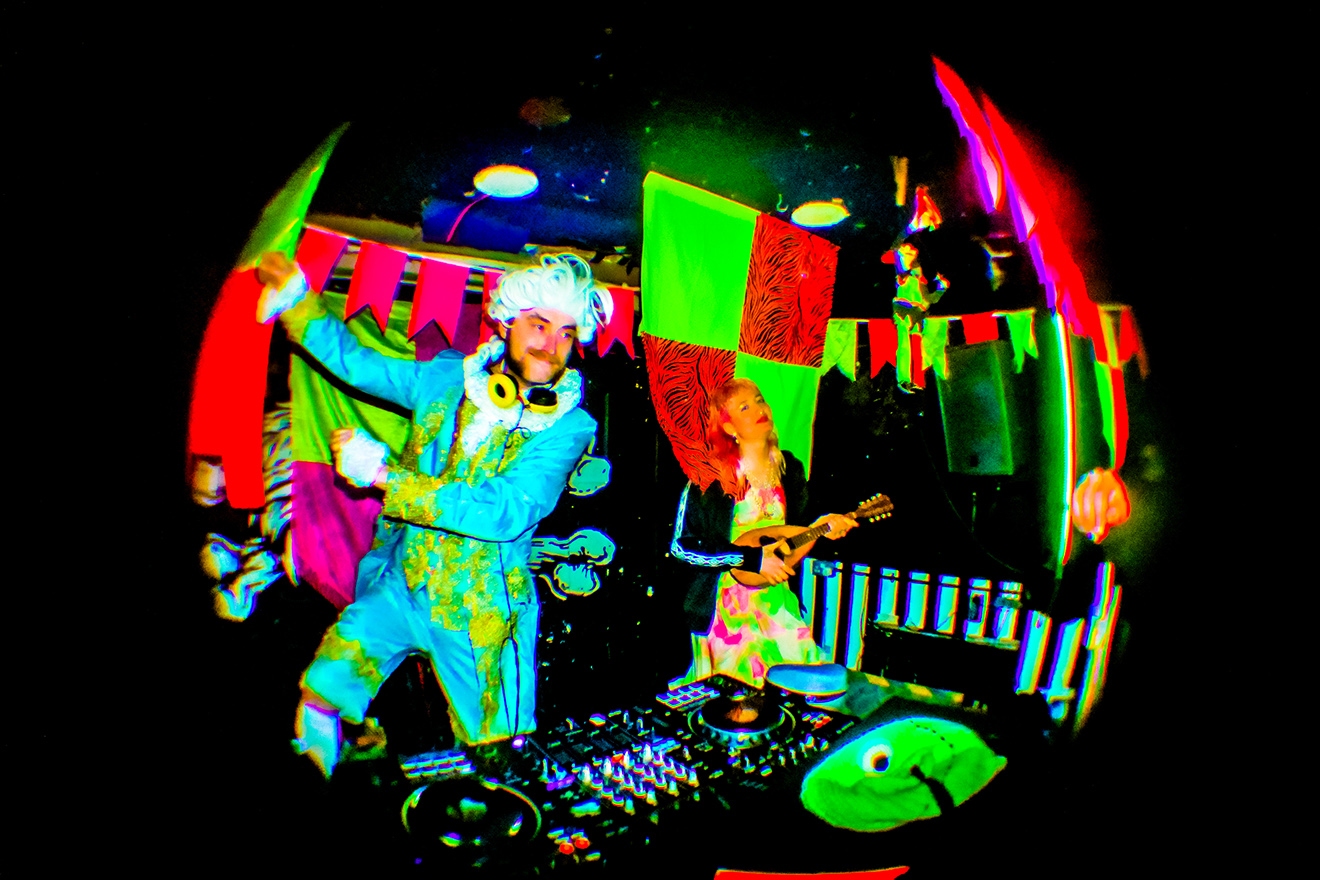
It’s a night filled with smiling faces and good vibes. The look of the party is trippy - a quirky mix of medieval garb and a psychedelic palette, where vivid neon decorations and a giant “melty” castle backdrop the night’s escapades. “The first one we did, me and my partner just moved on to a narrowboat a few months before,” Jonas says. “I remember some really long evenings we had with a sewing machine in this tiny space, just making strings and strings of bunting and big banners and flags filling the boat.”
Read this next: We went to Bangface, the final rave before the world stopped dancing
The appeal of the medieval theme largely lies in its accessibility. Ravenaissance attracts the typical demographic of students and twentysomethings, but older groups and families go along too. “It’s pretty mixed,” Jonas says. “People bring their mums and dads down; everyone can get behind it.” The playful decorations plus the colourful fancy dress create a welcoming feel, and the rave draws a friendly crowd (“no fights, no knobs”) who nonetheless mosh to the “disgusting” music Jonas lines up.
“I think people love the excuse to get dressed up and be silly,” he says. “Someone once brought a little flute and jammed along to the DJ.” These parties are an excuse to return to simpler times, in more ways than one. “I feel like everyone goes through a phase as a kid where they dress up as a king, or a knight, or a princess,” Jonas says. Bardcore, at its core, is playful, encouraging clubbers to feel happy and carefree.

Anecdotally at least, Middle Ages content continues to crop up regularly on peoples’ ‘recommended’ pages online, garnering thousands, if not hundreds of thousands of likes. Take recent examples from TikTok, which include a young man expressing his desire to be medieval peasant “gnawing on bread”, a woman dancing to a bardcore cover of Charli XCX’s ‘Apple’ (or “Lady Carlotta of House XCX’s The Sinful Fruit”) and a series of uncanny, AI-created ‘You wake up in the Middle Ages’ videos. The collective embrace of this imagined medieval idyll means that our concept of the period has transformed from something bleak, muddy and vaguely torture-adjacent into something that’s fun, fashionable - even aspirational.
It’s true that, when people talk about these bardcore raves, it’s almost like there’s something in the water (or, I guess, the muck) that makes moshing in a jester’s hat surprisingly transformative. For Megan, AKA the UK-based hardcore DJ Babiest Baby, getting booked to play Ravenaissance in 2023 paved the way for a new era. “I loved the theme so much I put a specific set together just for that under a new name: Bardiest Bardy.”
Under her third identity, she’s gone on to perform her hardcore and breakcore remixes of medieval pop covers across Bristol, including at the Tory-free dance party Wronguns and Draggernauts, who create immersive fantasy raves. She’s also taken her bardcore beats to UK festivals Balter and Shambala, at the latter of which, a ‘heretic’ was ‘executed’ live on stage and a “tavern wench” stage dancer surfed the crowd while grappling a sword. From behind the decks, Megan plays a recorder and a tin whistle, yelling things like: “Who's getting pregnant at the tavern tonight?” It’s pure mayhem. I ask her why she thinks people are turning up in their droves for events where weird things like this happen. It's simple, really. “There's a lot of horrific stuff going on in the world at the moment and mostly people just want to be silly and have fun with their friends,” she says.
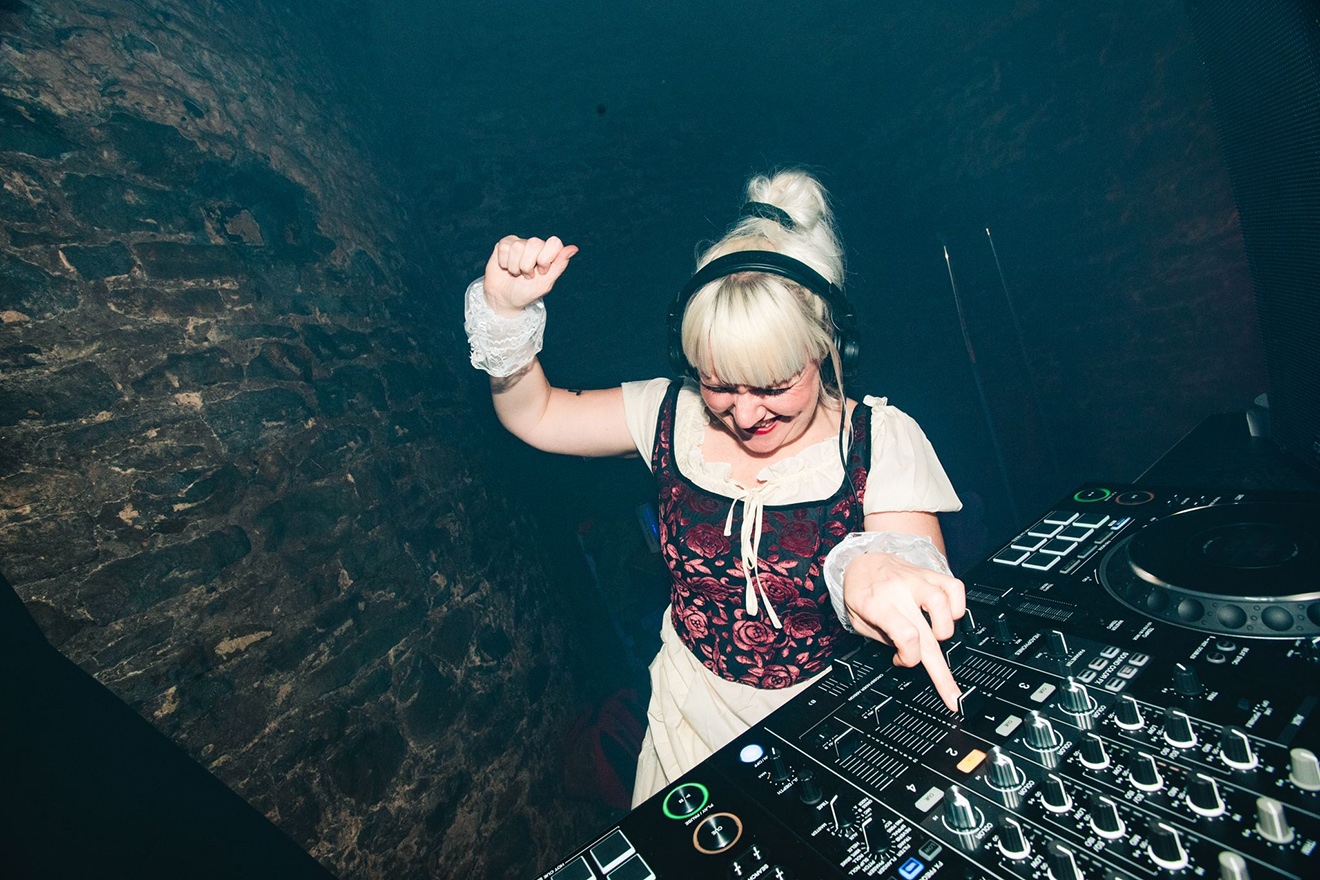
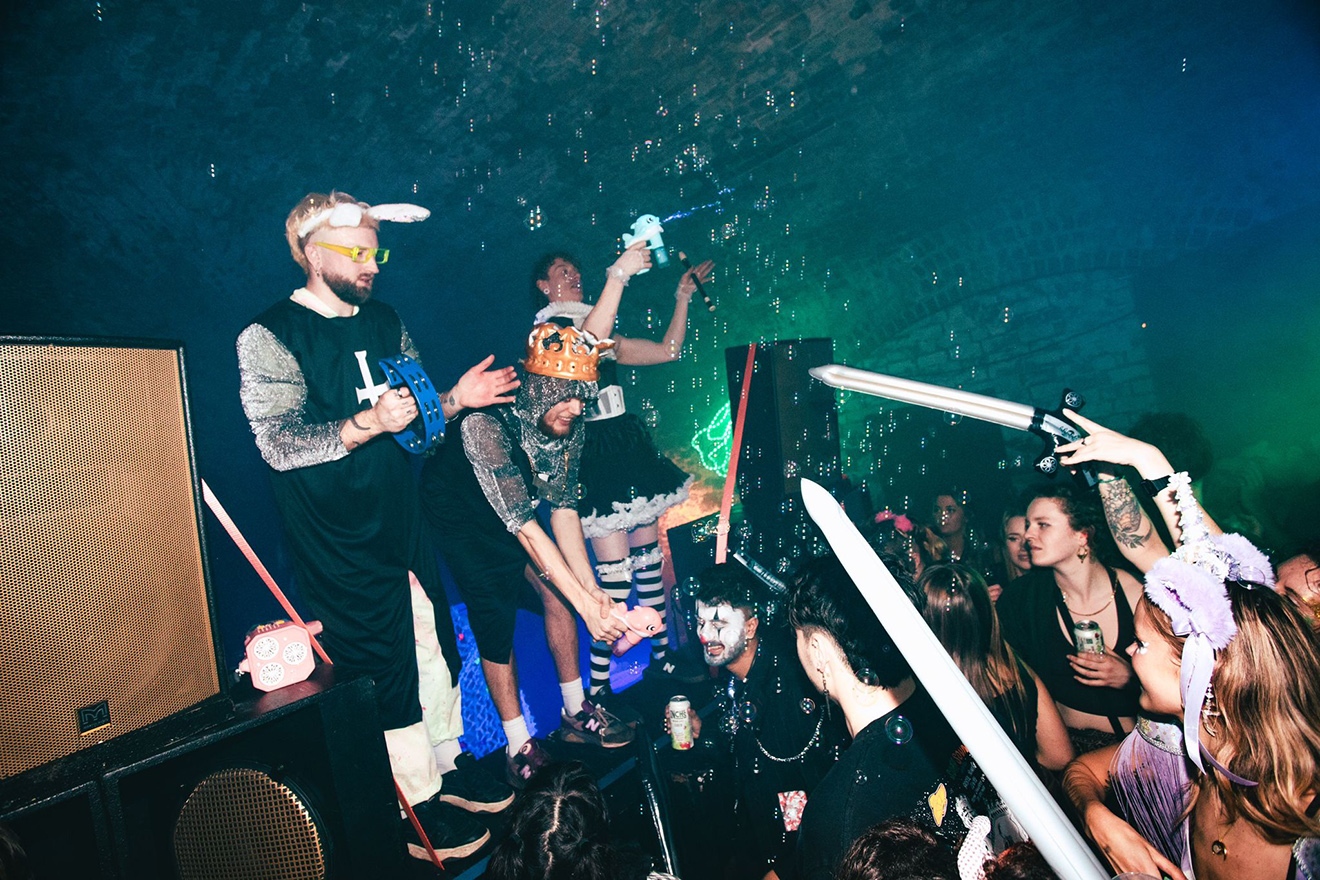
Silliness is a central tenet to a great many of these medieval events. Take a night down in Brighton organised by the queer creative collective Unicorn Baby Slay - made up of friends Grace, Peggy and Sophie - A Night at the Pink Castle, which was held at the Hope and Ruin pub in January, featuring historically accurate medieval music (though I’m not sure who’s checking), bardcore bops, hyperpop and hardcore, with performances from local Brighton prog rock group Van Zon, Oxford band Big Hands And All Gristly, electronic artists Sophie Du Ray and Vascha, and a ravey set from DJ Girlfag.
Clubbers stormed the castle dressed in various kitsch takes on the medieval theme, often involving some form of armour, jester’s hat or milkmaid dress. “How could gayness exist when imagined in the totally parochial environment of the Middle Ages?” Grace poses. “Yeah, that’s bardcore.” Meanwhile, an enormous pink castle adorned with ribbons, badges, charms and emojis was erected to backdrop the stage, while a specially designed USB version of The Bayeux Tapestry - ‘The Slayeux Tapestry’ - created by Peggy was dangled for all to admire. According to the trio, the night went down a treat. “Everyone was popping their pussies to whatever we threw at them!” Sophie declares.
Read this next: Harder, better, faster, stronger: Has dance music got harder and faster?
The team puts on nights with the aim of creating opportunities for non-binary forms of creativity, particularly in club environments. But why the medieval theme? Sophie explains that she dreamt up the concept after listening to her friends’ bardcore covers of pop songs. “I thought it was a really fun fusing of two worlds that we could put our own Unicorn Baby Slay spin on,” she explains. And, as with Audible Mania, everyone looked exceptional, turning up in a frenzied array of felt, chainmail and fur. “The gays love a theme, and so a medieval night was no exception,” Peggy says. “We had the knights of the round table, queens, hags and bards. The three of us were the court jesters who drunkenly played horns, rang bells and read scrolls. The matching polka dot bloomers went down well.”

Grace brings up the notion that social media has put this online, jazzed-up concept of medievalism into our heads, describing the idea as “the intersection between the medieval trope and our very TikTokified perspective”, describing it as “ironic, campy, theatrical” or, alternatively, “Trisha Paytas in a tavern on TikTok”. But another proponent of this version of the period is the fashion industry, with a much-reported rise in medieval-inspired designs hitting catwalks and appearing on celebrities - from Caroline Polachek and Chappell Roan to Julia Fox and Taylor Swift, pushing trends like ‘castlecore’ and ‘weirdieval’ into the mainstream.
“The divas were walking around in metallics, bonnets and horse graphics. It would’ve been hard to avoid it,” Grace says, citing a widely circulated 1997 photo of Fiona Apple in a suit of armour, while the styling of Caterina Barbieri on the Mixmag cover in 2023 is a more recent example. “I followed a lot of new designers like Rosie Evans and Rabbit Baby, who both make stuff with a medieval aesthetic.” Perhaps it’s inevitable for nightlife to follow in the fashion industry’s (long, pointy-toed) footsteps, especially when a trend is proving so pervasive.
It’s clear that, perhaps owing to their wackiness, these events provide a feeling of safety. “Everyone has an eye out for each other,” Grace says. “People want to be able to party somewhere safe and that doesn’t always happen, even in gay clubs. It’s about coming to dance and laugh, none of the pretension or exclusivity of many underground events.”
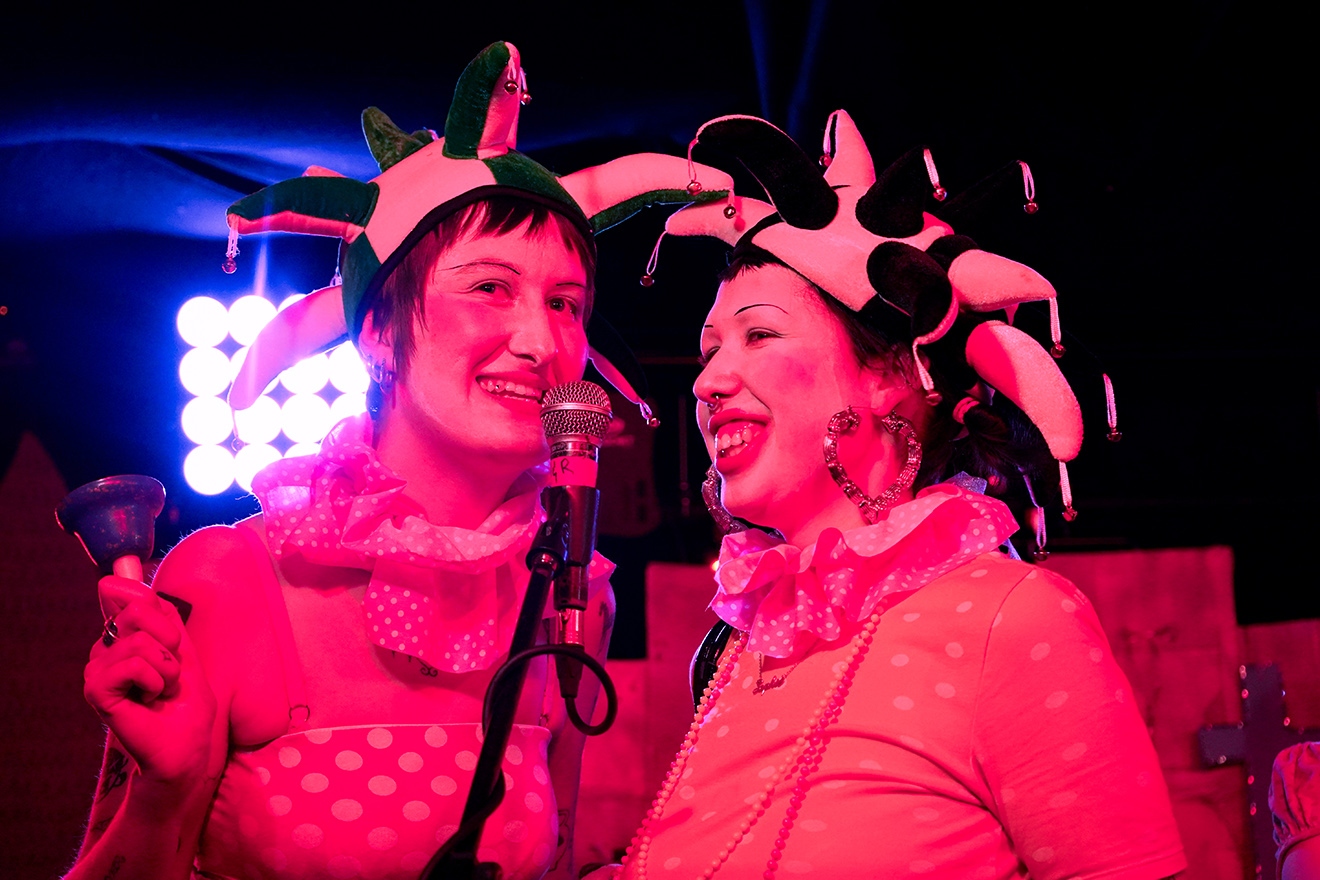
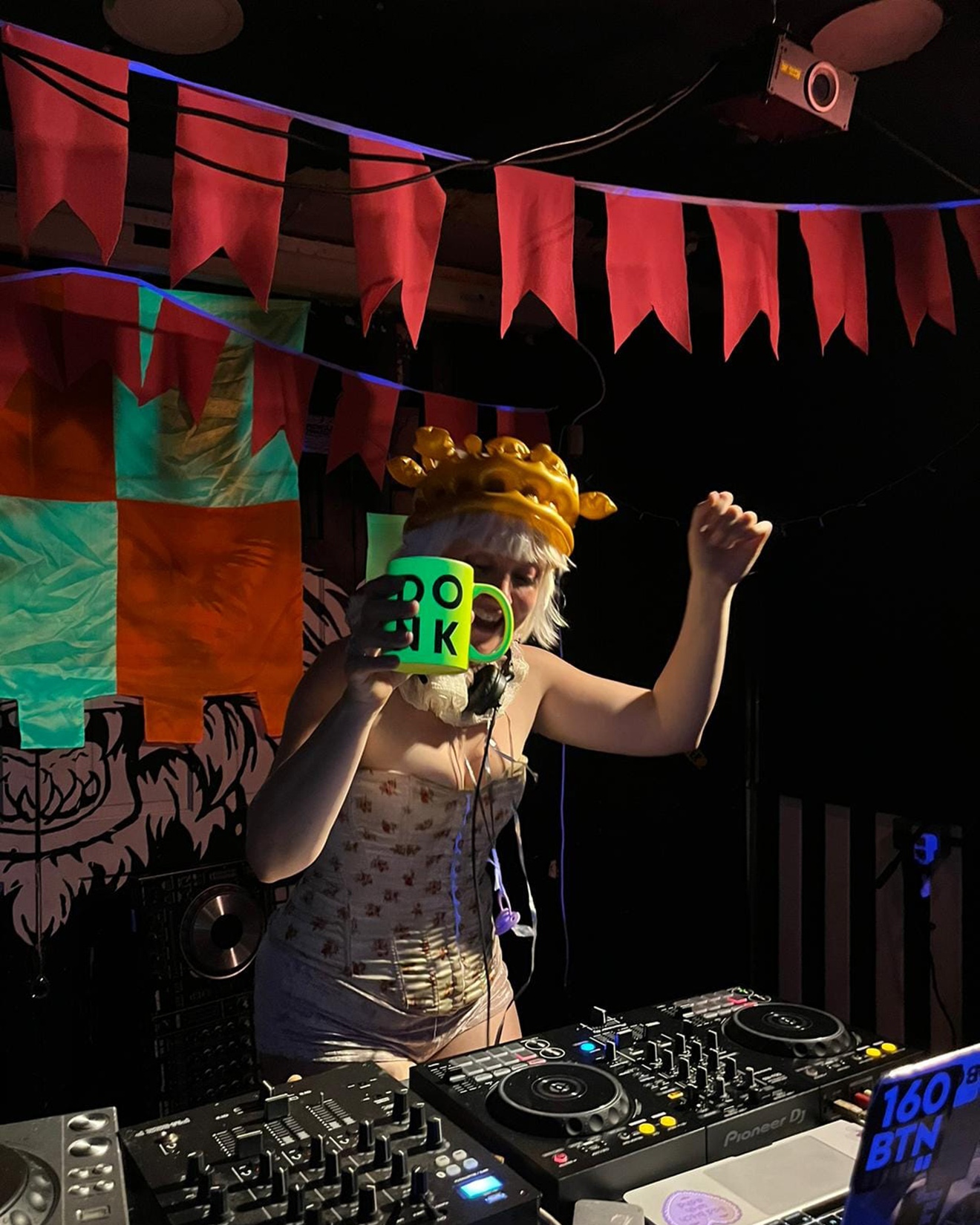
Engaging in weirdo shenanigans or, as with Audible Mania, opening up creative avenues for subcultures to freely express themselves, means that queer clubbers or people on the fringes are in their element. Such an atmosphere also proves an effective barrier against close-minded types who might cause problems. “As much as we say these things, it couldn’t happen without an audience of people who shared these values - everyone comes to have a good time,” Grace adds.
From Sophie’s perspective, there’s a cohort of clubbers who are tired of traditional nightlife and hungry for something new. “I think people still want to go out, but I think they’re bored of what going out means nowadays,” she says. “But there are so many exciting grassroots events emerging. There’s a demand for these unique nights that are a chance for creatives to not only perform, but meet and dance and have fun.” Peggy agrees that, from where they’re standing on the south coast, nightlife is flourishing. “If anything, queer rave scenes seem to be getting bigger and better, more elaborate. There’s always a receptive audience for weird fun club nights.”
That’s the thing. While club nights filled with lutes, chainmail and parodic hardcore music may seem a little weird, at the heart of these events - as with club culture as a whole - is a desire for self-expression and escape. After all, silliness is not new in dance music, nor is it something to be sniffed at. As the producer Royal Tweedy put it to Mixmag for a piece on humour in club culture, it represents “a reinvigoration of anti-establishment values of dance music”. The pairing of hardcore’s absurd sound and a meme-ified medieval aesthetic is great in that it provides pure immersive fun, but it also creates a subversive space rooted in a shared language, one that, in particular, speaks to oppressed groups and young people. It’s just a little ironic it’s the Middle Ages that’s freeing us from the shackles of modernity.
Henrietta Taylor is a freelance journalist, follow her on Twitter


