
 Features
Illuminating experience: The Black Lights invites us to take in Blackpool's forgotten beauty
The debut festival from the team behind Salford's beloved The White Hotel could not have been held anywhere but this iconic slice of the North Sea coastline. Megan Townsend reports on why
An eerie spotlight is casting shadows across the majestic rococo-style stalls of Blackpool's 19th-century Tower Ballroom as it follows Rainy Miller gradually through the crowd. Donning a long black trench coat and jerking his head and shoulders from side to side, the Preston-based multi-disciplinary artist remains quiet against intensifying, atmospheric synths, his eyes fixed on the stage as the audience gathers around him. After a few, drawn-out minutes, he stands before us, curling a single, gloved hand around a mic to declare: “We're in fucking Lancashire now!”
It’s the opening ceremony of The Black Lights, a new festival from the team behind Salford’s beloved The White Hotel, which is taking over more than 20 venues throughout this infamous seaside town across its three-day run in late June. The festival’s programme teases the same experimental-yet-gritty, serious-yet-not-serious approach that the soon-to-be-shuttered nightclub is synonymous with. There’s a set from the BBC Philharmonic Orchestra, karaoke at Pleasure Beach, an immersive installation from father-and-son sound artists Mark Fell and Rian Treanor, a “Mega Pub Day’’ with tombola and bingo, a selection of films curated by award-winning director Gerard Johnson, Chunky letting it rip in a basement club, a one-off performance from musician and choreographer Blackhaine… you get the drift.
You’d be forgiven if experimental music and art don’t immediately come to mind when you think of Blackpool; you’re probably conjuring up images of the Illuminations, kiss me quick hats, donkey rides on the beach, and your mate thinking they are funny by adding it as a location tag on an Instagram story of The Eiffel Tower, right? And you’d be correct, it is all of those things. Upon being announced earlier this year, The Black Lights sold out close to immediately, and while a stellar line-up and a chance to experience a weekend full of programming from a legendary underground institution has probably gone some way in proving a pivotal draw for attendees, it’s difficult not to surmise that the chance to experience this little slice of North Sea coastline is an overwhelming incentive.
Read this next: Manchester's White Hotel is the city's experimental centre
“Blackpool does half the work before you’ve even booked an artist,” The White Hotel’s Creative Director Austin Collings tells me. “You step out of one venue and you’re immediately inside another atmosphere. The Tower, the Pleasure Beach, the Winter Gardens, the old pubs, the arcades, the theatres, the sea – they’re all playing their own tune.” For Collings and the rest of The White Hotel team, Blackpool was “never really a decision” as the location for their debut festival: “It’s one of the few places in Britain that’s still allowed to be excessive. Everything is turned up too loud, too bright or too late. It has this glorious contradiction where beauty and decay, nostalgia and futurism all exist side by side without feeling the need to explain themselves. That’s exactly the kind of landscape where adventures belong.”
I concur. As someone who grew up a stone's throw away, who spent many a weekend here throwing chips at seagulls, hoarding prize tickets, and pulling a strop because my mum wouldn’t let me have a whoopee cushion from a joke shop, the allure of being able to return to these bawdy shores while taking in some of my favourite artists is difficult to resist.
“But, have you been to Blackpool recently?” a family member asks with wide eyes as I unveil my plans for the weekend just hours earlier. I shake my head, before they explain: “You’ll be shocked Meg, it’s really gone downhill.” They are referring to the nosedive in living standards in this town across the last decade or so; of course, the decay and dilapidation seen physically in Blackpool is nothing unique — there are few seaside towns across the UK that have been spared from similar fates since the introduction of affordable overseas travel in the '60s and '70s, with Victorian-era buildings left to crumble in the economic downturn caused by waning visitation. Yet this town in particular has become one of the UK's poorest, with 40% of its boroughs falling within the 10% most deprived areas in England. While it had been able to withstand the changing tides for some time — with ample business coming via the cash-strapped masses from the surrounding towns and cities, seeking a good time in in lieu of a comparatively-expensive package holiday in Spain — tourism officials have reported significant drops in overnight or multi-day visitors, piling considerable economic pressure onto this already shaky donkey's back. Though Blackpool is still the most popular bastion of the British seaside. The reason it has come to epitomise coastal decline feels as much linked to memory as to reality. For those of us from this neck of the woods, the witnesses and stories passed down by generations of its former glory remain, with strong recollections of its once-grandiosity; a place of hedonism, gritty glamour and excess... The Las Vegas of the North.
Despite the warnings and ever-so-slight trepidations, as I exit Blackpool North train station, my first glimpse of that glorious tower, the heatwave sun cracking the flags underfoot, the sound of a cabaret act absolutely butchering George Micheal’s ‘Careless Whisper’ and the thick smell of chip fat dancing through the air, I instantly feel validated in my decision. "People often describe Blackpool as faded, but I think that's missing the point," shares Collings. "It's more like a town that has accumulated stories instead of throwing them away."
It becomes immediately clear that Blackpool's existing infrastructure for visitors, its abundance of cafés, B&Bs and of course, garishly beautiful venues, is a massive advantage to The Black Lights' organisers. Art and music are available to take in everywhere from the 3,500-capacity Winter Garden to the pale, liminal halls of the Houndshill Shopping Centre, and few need to be repeated day-on-day throughout the festival's run. The aforementioned opening ceremony, which comprises performances from Austin Philemon, The Caretaker, Rainy Miller (alongside his recent 'Everything Always Changes, For We’re Truly Here' collaborators 2K88, Lauren Duffus and Bianca Scout) and Klein, is a steadfast declaration of intent of the days ahead, as we take in piercing, atmospheric sounds, leaving the audience to make the choice between quiet contemplation from the comfort of the carpet-lined balconies or to get into the Blackpool spirit by necking a Hooch or a shot at the bar.
After the action at the Tower Ballroom, we simply head up the staircase to The Fifth Floor ballroom, which has been transformed into a gritty, DIY club space. As Mia Koden lays down a dubstep-meets-jungle-laden hour-and-a-half, blending Tim Reaper's 'rise up edit' into Blocklab's 'Hear Us', the distant sound of arcade machines bleeping and cavorting at the back of the room is not distracting, but instead serves to deepen my immersion further.
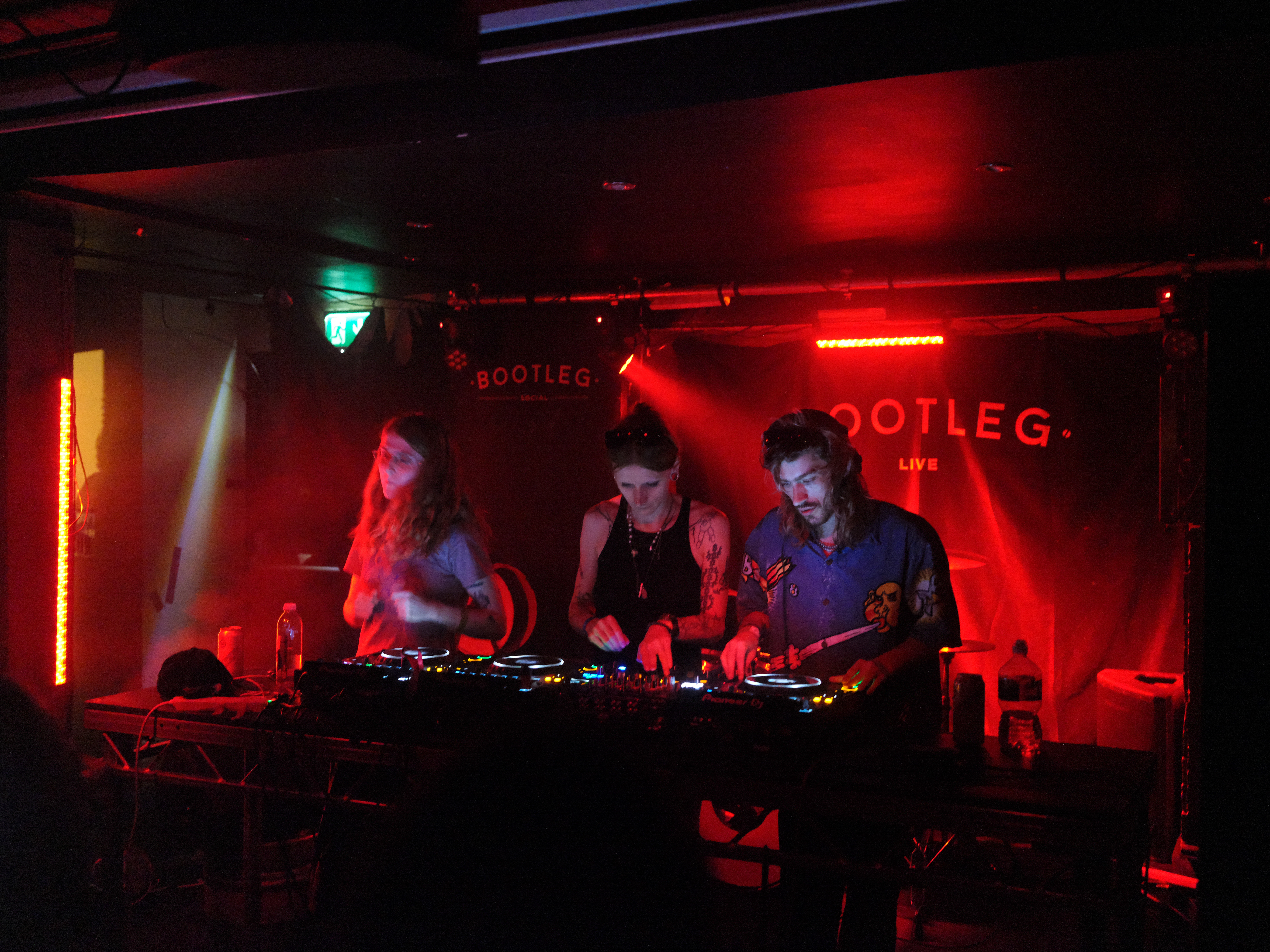
Across the weekend all the venues are generally within a 10-to-20-minute walk from each other in Blackpool's town centre, with the majority of the night-time action taking place across two spots. There's Bootleg Social, where I catch a riotous, breakneck set featuring donk, hardcore and techno from supergroup Microplastics - AKA aya, 96 Back and Jennifer Walton - who are standing elevated on the venue's stage, a trickle of red light flickering across the dancefloor's pillars. The other, a smaller basement venue complete with low ceilings, rough-around-the-edges charm, and palm tree decor on the bar, is the aptly named Bad Habitz, where Chunky and John K's B2B has people lining up to shake their hands and applaud at its end.
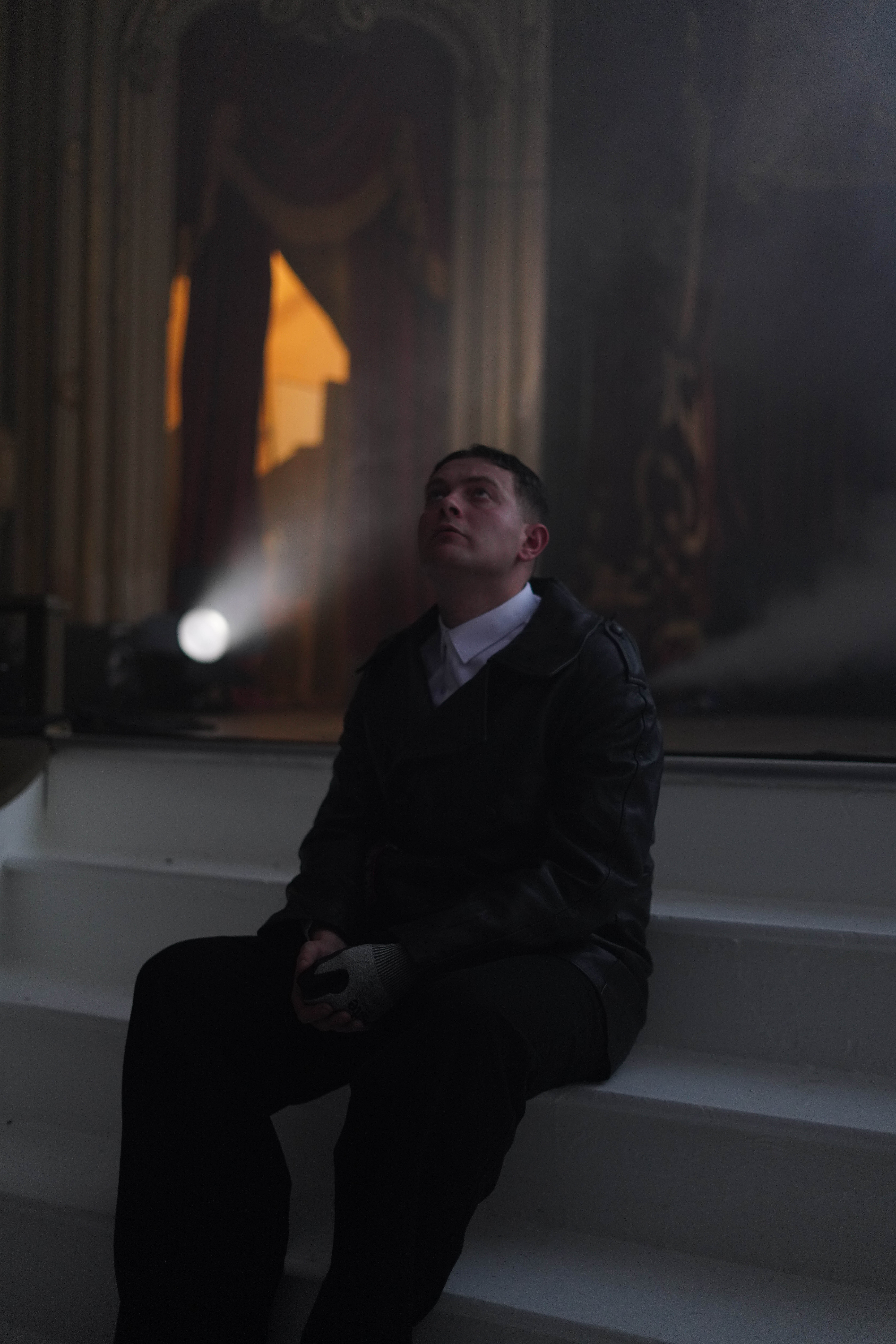
At times, admittedly, the ever-present contrasts do become jarring; leaving the exuberance of Shenanigan's Bar on the promenade - where every day is St. Patrick's Day, donning glittery cowboy hats and screaming Bon Jovi's 'Livin' On A Prayer' - as we head into the lapping synth waves of Klein's 'burn quik' during the South London artist's live set at the Tower Ballroom is a whiplash moment. However, the memory of waiting within Winter Gardens' deliciously tacky pirate themed-bar before we head into Kali Malone's awe-inspiring drone array in the Opera House the next day feels oddly comforting — by the time the minimalist musician employs the delicate move of pairing strobes with bass and smoke with synths, I'm totally and utterly locked in.
There is a clear effort throughout the festival to weave together the experience of The Black Lights and Blackpool. In a subtle sense, the cafés, chip shops and bars are filled with artists and festival attendees. On the Saturday, as England's final World Cup 2026 group stage match against Panama is lurking behind the corner, the three lions-on-a-shirt-donning hoards and the all-black-chain-choker masses are spilling onto the seafront outside Wetherspoons in equal measure, seemingly embracing each other's mismatched vibes. While The Black Lights crowd are sometimes easy to spot, generally being younger and in the aforementioned dark colour palette, that's not to say it isn't diverse – there are bootleg jean dads taking in Kode9 and Tim Reaper's b2b on The Fifth Floor ballroom, lads in trackies with hoods-up at Bad Habitz, and women in glittery dresses throwing up gun fingers to Lee Gamble in the Winter Gardens. Ahead of his set at the Winter Gardens, Evian Christ takes to Instagram to warn that he will be paying the ultimate homage in his set, with a drop of Blackpool rapper Millie B's 'M to the B'. By the time it radiates from the soundsystem in the final moments of his set, the crowd are ready and waiting, screaming out the line "Sophie, yeah, you should stick to singing / 'Cause when you spit, my ears are ringing" in unison with eyes-closed against the strobe lights.
Read this next: Manchester's The White Hotel confirms it will close in January 2027
Heading over to the Blackpool Catholic Club to check out the seven-hour meeting of minds between Manchester-based imprints Red Laser Records and Bakk Heia, I'm greeted with what can only be described as scene from something Da Vinci would have painted had he been born in Chorley not Tuscany. One third of the room consists of people swaying side-to-side, a uniform of sunglasses and bumbags, behind a haphazardly-drawn blackout curtain; another is playing pool, taps aff, beneath stained glass lampshades; and the final third is people queueing at a cash-only bar, moving green upholstered chairs across the thick-printed carpet, with two old blokes struggling to keep up with orders as Downtown Abbey is playing on ITV4 on a bracketed-TV above their heads. Literal masterpiece.
"There's also a wonderful lack of pretension to Blackpool. It doesn't care whether you've travelled across Europe to see an experimental musician or you've just won a giant teddy on the pleasure beach. Everybody shares the same streets," says Collings. "That felt important to us. Festivals shouldn't exist inside a velvet rope. They should spill into cafés, bars, hotel lobbies and conversations with complete strangers. Blackpool is another performer at this festival."
There are, of course, teething problems generally expected for a festival undertaking its first edition. There are queues for the majority of venues, some barely noticeable, some meaning that access to sets becomes difficult. At The Fifth Floor ballroom on the first night, the crowd flow from the opening ceremony downstairs proves overwhelming, with the local team advising somewhat disgruntled punters anticipating A Guy Called Gerald's set that the venue is full and it's time to leave. For much of the day on Saturday, the Winter Garden's biggest venue, Olympia Hall, has been apprehended for a World Cup fanzone, meaning The Black Lights' programming is diverted to a balcony overlooking it — with the temperature outside hitting 30°, the room of course is a furnace, and as we get some fresh air amid a set from One Leg One Eye, the side-project of Lankum founder Ian Lynch, we realise that regaining access will prove difficult as the afternoon queues to catch UK experimental trio Moin elicit a one-in-one-out system before their set begins. Of course, The Black Lights can't control that the festival is taking place during the hottest June on record, and even in said queues, there appears to be a concerted effort from both the venues and the festival's staff to ensure everyone can get stuck-in eventually.
Collings compares the juggling of artists, venues, soundsystems and the impacts of the weather at The Black Lights as like “trying to conduct an orchestra made entirely of cats.” Though the biggest challenge was less about logistics and more about identity, “we wanted to make sure the festival belonged to Blackpool rather than simply happening in Blackpool,” he says. “We never wanted to parachute culture into the town as though we'd invented the idea of imagination. Blackpool has always generated its own myths, its own music and its own energy. Our job was simply to tune into that frequency rather than drown it out.”
Of course, with the news of The White Hotel's upcoming closure in six months' time, there is already chatter among the audience about whether The Black Lights will host another edition, motivated both by their experience at this festival, but also for The White Hotel's unique approach to continue in some form once its Salford home is shuttered. “We're still letting the dust settle. Or perhaps the glitter,” Collings shares when I put this question to him. “Artists are getting in touch wanting to perform, musicians are suggesting collaborations, and audiences are already asking when the next one is. The ambition has never been to build the biggest music festival in Britain. It's to build one that people remember years later, beginning the story with something like: 'I went to this extraordinary weekend in Blackpool where the whole town seemed to be humming.'”
As I depart, a dreary train back to London ahead of me, I keep coming back to one moment in my experience at this festival. In the Tower Ballroom, between live sets - as artists descend from the stage and various set-up changes take place - the lighting team kept the room dark but for a pale light outlining an inscription above the stage that reads: “Bid me discourse, I will enchant thine ear.“ It’s a line from William Shakespeare’s poem Venus and Adonis, which roughly follows the titular goddess’s attempt to seduce the object of her desires, Adonis, a human who would rather go hunting than submit to her affections and later perishes after being killed by a boar. It was written when Shakespeare had been forced out of the theatre due to the plague, and often, this iconic line is read as not only the appeal of an unrequited lover, but of a frustrated entertainer, yearning for the return of his audience.
I later ask Collings where this decision had come from: “It felt right for The Black Lights - which was an audacious and mischievous undertaking - so it was important to highlight that to audiences to set the whole weekend up in the right way,” he tells me. “To seduce and impress audiences but also instruct them that they had to play a participatory role in that too.” While cleverly highlighted by The Black Lights, this inscription is one of the longest-standing parts of this room – having featured above this very stage since it first opened as Tower Pavillion in 1894. Throughout much of the last two centuries, this phrase has stood above everything from US jazz musician Duke Ellington in the 1920s to Queen Elizabeth II, from teen girls going wild for Busted and Take That to the annual Strictly Come Dancing final. Sure, this phrase is applicable to The Black Lights, but its difficult not to also see how it applies more widely to Blackpool as a whole; the need to entertain is built into its very foundations, it's in everything from the street lights to the clip clop of morris dancing shoes in the town square, it's in the chippies, the outrageous claims of celebrity customers from fortune tellers, the grind of the penny pushers and the enthusiastic-pointing to the crowd by drag acts at the pubs just before closing time. This isn't a town that is meant to be quiet, and if you give it the chance, Blackpool will enchant you.
“The best part came afterwards,” Collings tells me. “Artists stayed longer than they needed to. Musicians who'd never met were making plans together. People wandered between venues as though the whole town had become one enormous conversation. There was a lovely feeling that nobody was simply attending a festival. They were inhabiting it. For one weekend, Blackpool seemed to reveal a version of itself that had always been there waiting for the right soundtrack.”
“Quite a few local people told us they were glad to see ambitious work happening in the town without trying to apologise for being there. There wasn't this underlying assumption that Blackpool needed rescuing. It just needed believing in.”
Megan Townsend is Mixmag's Deputy Editor, get in touch with her here.


