
 Features
Tremor is the world’s most remote, and perhaps best, experimental music festival
On an Azorean island 1,500km away from mainland Portugal, there’s a quaint music and arts festival that puts its unique location at centre stage. We travelled to Tremor to find out what makes it so special
After a short but endurance-testing hike through luscious tropical terrain, myself and a group of onlookers are confronted by a man, back turned, standing barefoot on top of a mossy stone. Twigs and branches are protruding in different directions from cuffs on his wrists, extending his arms to the grass below. He begins to belt towards the trees in front of him, a sort of emotional, primal cry that blends a raw style of flamenco with powerful vocal projection, interjected occasionally by the call of a peacock sitting just metres away from a gathering crowd.
No, these aren’t the opening sequences of a fantasy film – this is the scene that plays out at one of the first soundtracked walking tours hosted by Tremor, an annual experimental music and culture festival bringing a far-flung spread of artists to the Azores, one of the world’s most remote group of islands, situated in the middle of the Atlantic ocean. Sitting almost 1,500km west of what locals refer to as “mainland Portugal”, Tremor takes place across multiple locations throughout São Miguel, the largest of nine islands in the volcanic Portuguese archipelago.
“We're always looking for ways of surprising the audience, and surprising ourselves. Doing a festival for 13 years, you’ve got to change things up,” explains Joaquim Durães, one of Tremor’s four founders, when we meet amidst this year’s festivities. Tremor is taking place for the 13th time at the tail end of March, with a purposeful choice to host each edition in the “off season” outside of the tourist peak of summer to boost the economy on this relatively small island. At a time where it feels like overseas festivals, particularly those run by out-of-town promoters, can have a negative impact on the places they’re held by taking over essential third spaces usually used by locals and employing few regional staff, it’s a very welcomed approach.
Tremor began as an idea from co-founder Luís Banrezes Kitas, who lives on the island. I’m told that before the festival began, few planes or ships would run to-and-from the islands, making it an isolated and, for those living in Portugal, curious place. “The prices were really high to come here, and the weather changes often so people see it as a risky place to visit,” Joaquim explains. After being invited by Luís to visit with a group of artists from Porto, where he runs the record label Lovers & Lollypops, Joaquim accepted. “There was no money involved for fees, but I told the artists: ‘We have this proposition. You haven't been to the Azores – no one has. So let's do this’.”
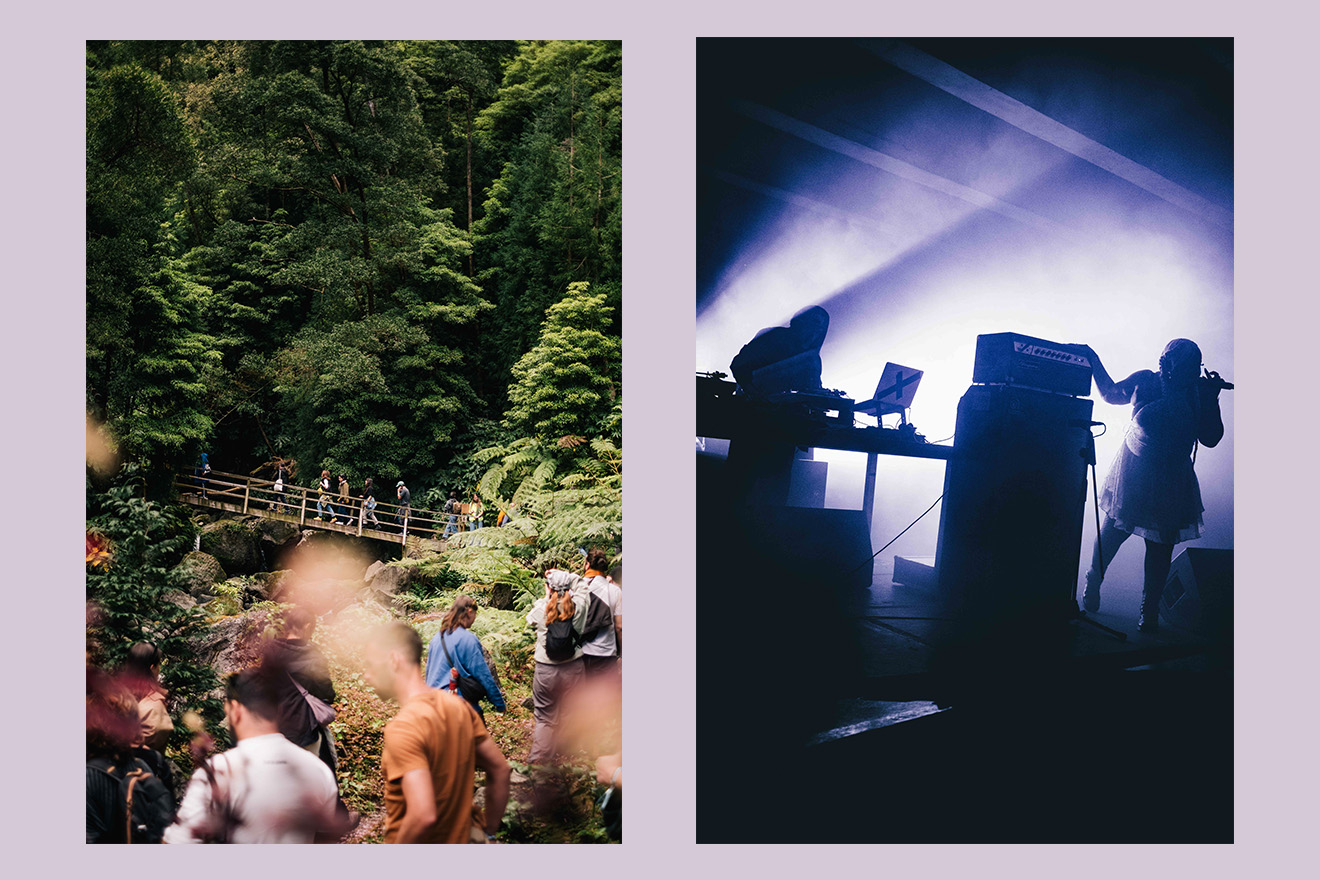
“The first years were really beautiful, we were trying to figure out how many concerts would be possible with the amount of artists we had. We used a lot of improvised sites and things started to grow,” he says. Today, the concept remains the same. Tremor uses a spread of locations across the island, from art museums to churches and theatre halls, where dozens of concerts are hosted throughout its five-day programme.
Outside of daily shows in the main host location of São Miguel capital Ponta Delgada, a fan-favourite element of Tremor’s programme is the aforementioned walking tour, taking place multiple times daily in two locations, each ending in an artist performance. Though there’s never quite telling what you’re in for, this year’s excursions took festivalgoers through hot springs and forest toward Curro Rodriguez's stirring flamenco performance, or up a steep hill and into a small, white chapel to witness Vera Morais’ guttural vocal show.
Once a day, Tremor also offers a special off-site “secret show” named Tremor na Estufa. In a similar vein to its walking tours, these experiences see punters ferried off in droves by coach toward an unknown location, which change from day-to-day, year-to-year. This year’s sites are nothing short of spectacular, as with its past lakeside or snug valley locations.
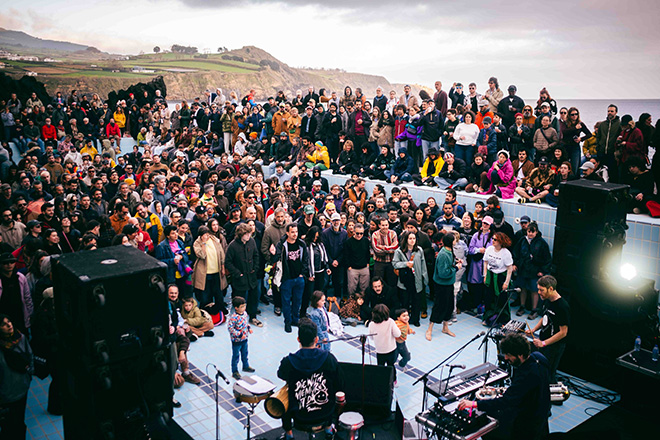
In a theatrical performance from Brazilian rap artist Jup do Bairro, crowds gather in the mountaintops as dusk settles over the first day’s secret location, while day two sees a similarly picturesque setting in an Olympic-sized swimming pool next to the ocean, where more psychedelic offerings come from Belgian-Iraqi trio Use Knife, followed by a straight-to-160 DJ set from Tanzania’s DJ Travella, who draws for kuduro and cinematic breaks with just a laptop in tow, against a seaside backdrop. Day three’s secret location takes punters to an open-complex food court, where an angsty femme-fronted post-punk group named aMijas throw crowds into a small riot.

“We have a network of location scouts who work with us during the year,” says Joaquim. “In the beginning, we could do it in small spaces, but now we have around 1,200 people coming to the festival each year, so we have to think about the logistics. After all this time, we’re still discovering these amazing places. We've been lucky, because the island is really resourceful.”
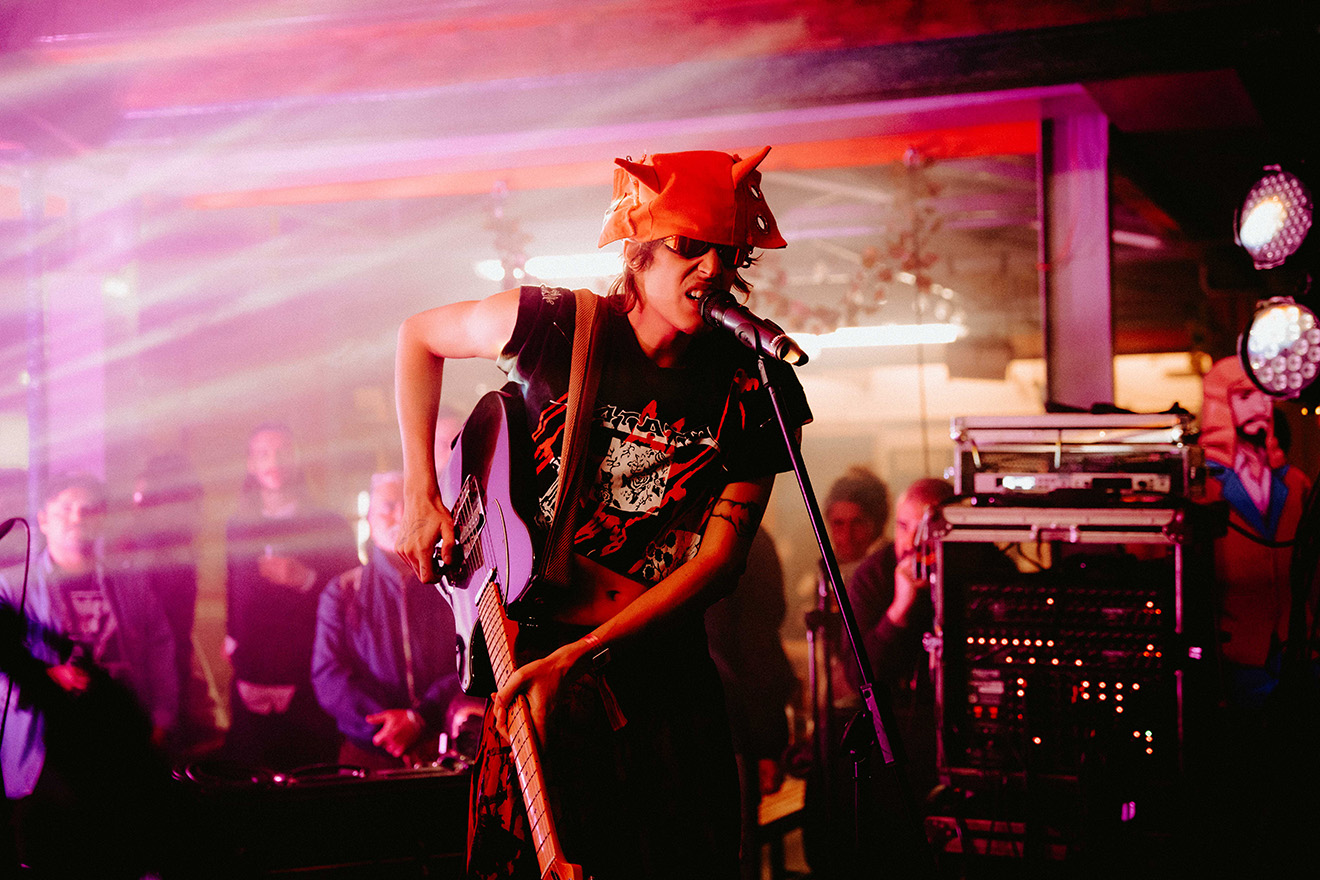
As for Tremor’s music programme, which is curated between its four founders who joke about having radically different tastes, there’s certainly a lean toward experimental and emerging talent. While Joaquim says that the festival doesn’t have the means to book big main stage acts, the ones it does pull make this event so unique. Across the weekend, there’s artists like George Silver, an experimental drummer who builds anticipation with his steadily quickening kicks inside a gloomy room at the festival’s main by-night site, or Huddersfield-raised aya, who treats the same room like a playground, running and jumping over a procession of keys and synths, occasionally providing whispering or crooning vocals.
Then there’s The Bug, who links up with Warrior Queen in a rare collaborative show to deliver room-rumbling reggae and bass with dub-licked live vocals, and Chicago grunge rap duo Angry Blackmen, who close out the festival with a self-described “era-ending” show to finalise their recent tour, stepping in and performing amongst a rowdy crowd. “The people were feral,” they muse after their show. “It was phenomenal, we can tell people genuinely had a great time.”

Even beyond Tremor’s expansive music, hiking and gastronomy experiences — the latter inviting its punters to dine at locals’ houses or take farm tours to learn about food culture surrounding the festival itself — its art programme is an equal standout. With several exhibits showing throughout São Miguel, there’s also a one-off immersive exhibition in the bare-brick basement of the Arquipélago Arts Center, a sensory experience connecting the island’s scenery and nature to physical experiences like 360-soundscapes and an invitation to touch plants and stones from the island.
Adjoining the gallery is a performance from experimental Texan group Water Damage, who are paired for one time only with The Orquestra Modular Açoriana (OMA), an ensemble of all musicians across the Azores who own modular synthesisers. When I meet the dozen-strong groups after their lengthy six-hour noise performance, they’re in good spirits. “Everything was quite free-flowing. As long as there’s a beat or bassline holding it together, it sounds good,” Water Damage say. A member of OMA chips in: “When you moved around that space, you could hear completely different things from when you’re in amongst it.”

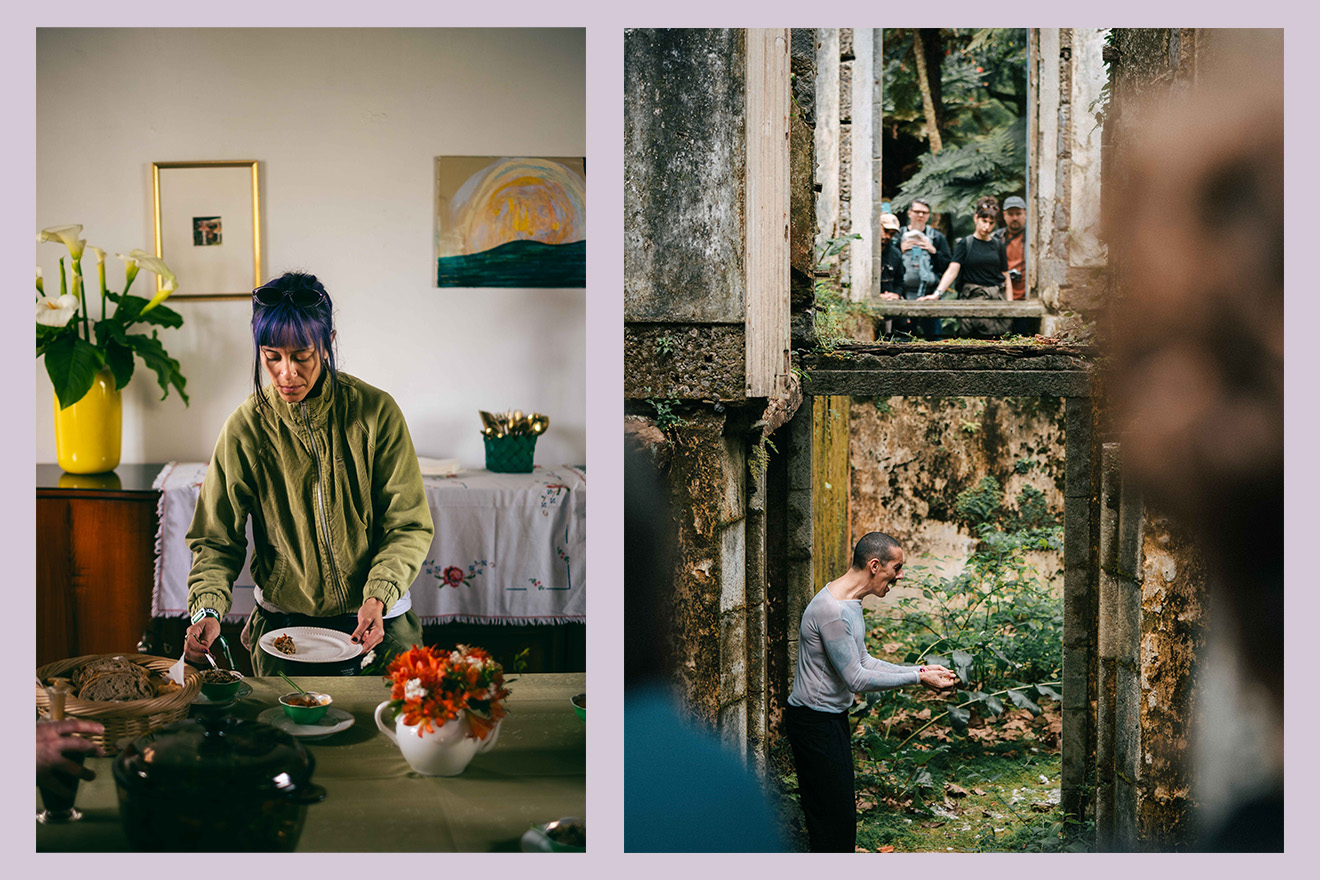
Most importantly, Tremor is a festival that gives as much as it takes from the island. Encouraging locals to not only take part but thrive at the centre stage, whether that’s hosting dinner parties or performing music, is an endearing quality. “One thing we’ve noticed over the years is, nowadays, there's a lot of new music coming from the Azores,” says Joaquim, who remembers the days when just a few cover bands populated these islands. “Of course, it's not just because of the festival, but people come to the festival and get inspired. They see artists playing and pick up their own instruments.”
“We don’t want to be this alien festival that just happens for five days without any relationship with the island people, we want to connect with the Azores,” he adds. Tremor does that exceedingly well, joining the dots between all parts of Azorean culture — a place teeming with interesting history, great music and surreal landscapes.
Gemma Ross is Mixmag’s Associate Digital Editor, follow her on X


