
 Music
Music
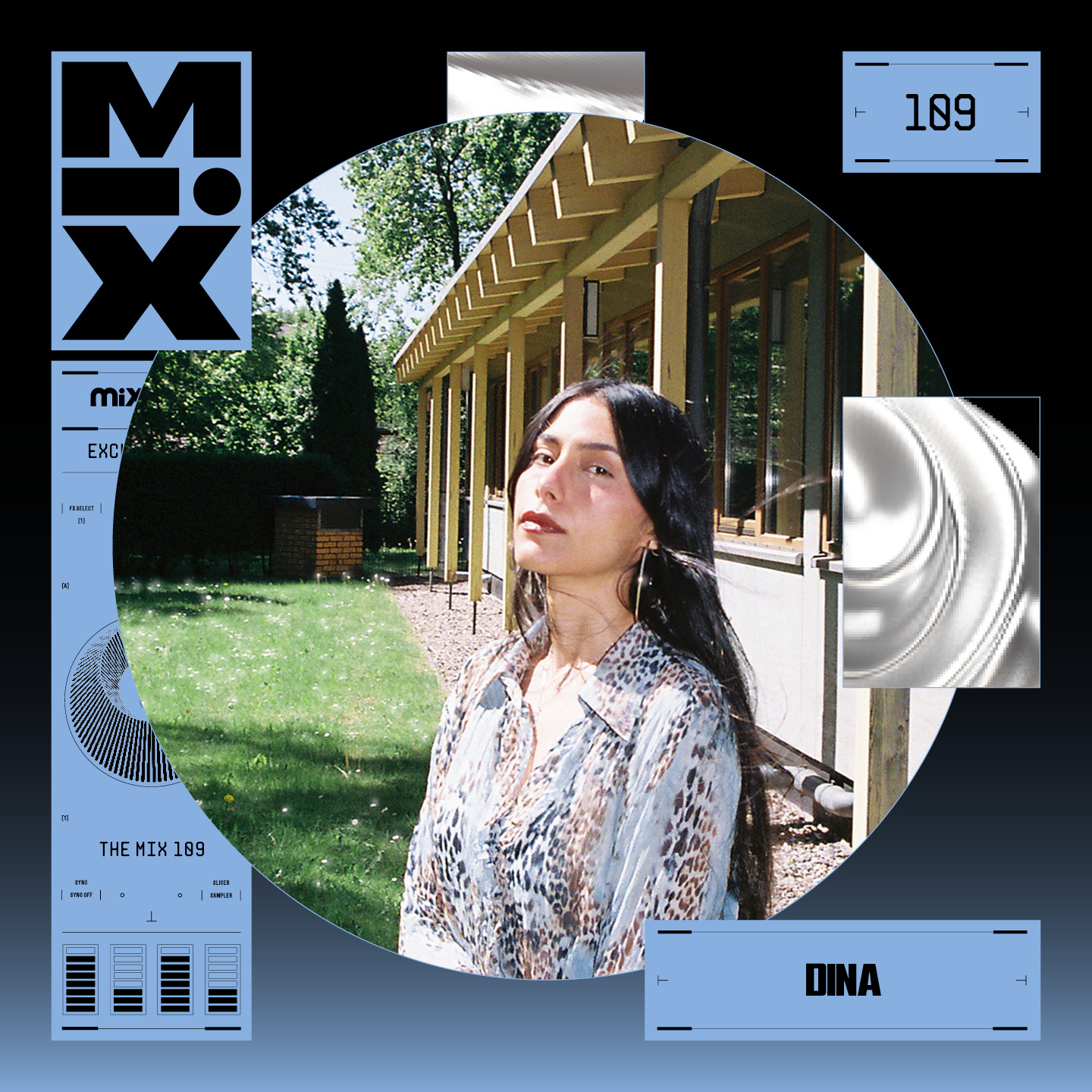
The Mix 109: DINA
Connecting the dots between the global trance underground, the Berlin-based producer creates a sunshine-tinged atmosphere for The Mix and speaks to Megan Townsend about community, finding inspiration in disparate scenes, and moving trance away from its white male-dominated past
Wherever DINA goes, trance seems to follow. A genre she fell in love with while living in Cairo as a child, taken in by the atmospheric euphoria via plays on Nile FM as a child, followed her to Toronto, where she founded Nachtcrew, the women-led audiovisual collective, and later label, with her sister Nadia in 2017, and then, to Berlin, where she became entrenched within the city's club culture as both an artist and audiophile, founding her latest venture – the ambient listening event series, Super Devoted.
With such a passion for the genre, its no surprise to learn that the Iraqi-Canadian DJ, producer and label head has a ceaseless urge to discover new sounds that fall beneath trance's sweeping, synth-laden umbrella – a search that has led to her becoming a flagbearer for its burgeoning, global underground renaissance. Whether DINA, real name Dina Khashan, is hosting the airwaves on Toronto's no10.as and Berlin's Refuge Worldwide; hypnotising crowds from behind the decks at Club RAUM, Berghain, RSO.Berlin, Circolo Amelia, RADION and more; putting out releases on Slash, Amniote Editions, Live From Earth, Space Trax, and her own Nachtcrew imprint, the mission appears to be the same – bringing dancefloors into fold of mind-bending trance appreciation.
Read this next: The 15 best mid-90s trance tracks
Following a contribution to DJ Python and Anthony Naples' 2022 edition of Air Texture's compilation series - in which New York-based label head James Healy enlists artists to curate selections from up-and-coming artists - DINA was approached to curate her own compilation by the imprint; true to her mission, 'DINA presents Rituals' features artists from Switzerland, France, Denmark, India, Finland, Poland, Australia, Sweden, Japan, Norway, Austria and Spain, with contributions from the likes of DJ MARIA, Audrey Danza, Alpha Tracks, Agata and many more.
Ahead of the release of 'DINA presents Rituals', which will land via Air Texture on June 12, we spoke to the trance aficionado about stepping into the curator role on the compilation, the "red thread" that connects the global scenes currently churning out trance's next wave, and the double-edged sword of Berlin's expansive creative circuit. Read the Q&A and listen to her sunshine-tinged edition of The Mix below.

You’re gearing up to release your ‘Rituals’ compilation on June 12. Can you tell us a bit about when the process started on putting together the compilation?
So it all started in summer 2024, two years ago, when James Healy, who runs Air Texture, reached out to me and asked if I would be interested in curating a compilation, and I was thrilled and honoured because it's an illustrious compilation series and many of my personal idols have curated one. I actually released on the series when it was curated by DJ Python and Anthony Naples a few years ago, and that's how I was introduced to James. On that compilation, my track was pretty trancey. I'd say it was the odd one out. I was kind of embarrassed, like oh wow, I really missed the mark [laughs]. But then James reached out to me and said he was really interested in this new wave of trance, and these new producers that are coming out of Europe and other parts of the world. That's when the curation process started for me; it's kind of a big line-up, so I started to think of artists that I love, whose music I play often, especially people in my immediate community and circles. I think that was also a priority for James, highlighting underground and up-and-coming artists, which was super important to me, too. So I started to collect demos, and it just came along organically. It was really hard to narrow it down; this scene is not short of artists.
Did that feel like a full-circle moment? Having already released on the compilation series?
Definitely.
What was the core mission behind ‘Rituals’ — what did you want to achieve?
I really just wanted to cover as many different pockets and sounds within trance and psychedelic music that's being produced right now. When people hear psytrance or psychedelic music, even trance, there is some preconceived notions and bias towards some vilified genres. But I think, in the past couple of years, there has been a resurgence, and trance has popped off in so many different ways. So my priority was to showcase the different communities that I'm part of, and it's really interesting because everyone on that compilation kind of knows everyone in a different way. It was also important to showcase productions from queer people and women. Trance was dominated by white men in the '90s and '00s. Obviously, that wasn't the only trance music being made then, but It was what was given attention. I think it’s important to demonstrate how the genre has moved away from that and to highlight the incredible music from women and queer producers.
What was the thinking behind ‘Rituals’ as a concept, can you tell us a little bit about the “red thread”?
While we all may be located in different areas, a lot of music coming from the trance community feels like its working towards the same thing. It's DIY and community-based collaboration — whether it be via parties or releasing music. There's a common thread between all those different communities and subgenres, and you can hear those elements in the tracks, but at the same time, you can feel those different iterations of trance, different influences. A lot of these communities work in audiovisual work too, and especially with psychedelic music, it can span different genres, you know? You can have the techno side of it, the hypnotic side of it - like DJ Maria - or you can go for someone more on the slower side like Peachlyfe and Audrey Danza. I think it's really cool that the common element is the trippy side to it.
Do you feel like the underground trance world doesn't get the attention it deserves?
It's definitely overlooked. I think maybe because it's not the most marketable or popular genre, and a lot of the artists who exist in that realm also exist offline and reject those capitalist notions on that side of the industry. I think a lot of people in the underground trance community reject institutions and mainstream coverage and things like that. But at the same time, it does get overlooked by journalists and platforms, because it's not necessarily the thing that catches on. It is still a very niche world, even though it is vast and is growing. But you do see some aspects of trance “going viral”, that draw does exist. But in the more niche parts of the genre, things aren't really platformed. But then, it's great to see artists like DJ Maria putting on their own festivals, getting involved in the wider scene. Also, Jeku, who's from Finland and is involved with Solstice Festival, a really prominent underground festival right now. So as much as these producers exist in their own communities, they still have their own projects going on.
Is it important to showcase new, underground psytrance ? Do you feel the genre has gained a bad rep?
Yeah, also to situate the genre in club music as well. I think the introduction of trance is not necessarily new... it happened with Fast Forward Productions in Copenhagen in 2018-19, and trance veterans like Mama Snake, a master of weaving trance into club sounds. You also have Alpha Tracks, who, through his Bandcamp, has created a subscription-based service and every month you get releases and he offers up remixes from so many of the artists in the trance community. I think it's really important to create those strong bonds and collaborations within the community, because you have so many genres and subgenres intersecting. We aren't necessarily having to invent the wheel, but we are presenting a modern take on what we play – but then, a lot of the artists in this community do play old school, '90s, '00s prog trance, prog house and psy. That's what I really admire about these artists: it takes a lot of skill to weave through eras and decades, and still have it blend seamlessly with what I guess is known as contemporary trance now.
Did you expect to have been able to gather so many artists, from so many different places around the world, together on this compilation?
I mean, it was an intentionality to have a wide-range of artists from different parts of the community, to show as wide a range of sounds as possible. It is such an honour to have curated this compilation, and it was really hard to narrow-down who to include — but at the end, I was counting the artists, I was like “whoa”. It surpassed my own expectations. But then I do have a personal relationship with every artist on there; we exchange music all the time, so it was really organic. I have so many artists that I'd have liked to included though, if I could do a second volume, i'd be ready [laughs].

Was it important to connect so many far-away, global scenes on ‘Rituals’…. do you feel the “combining sounds with places that connect harmoniously” concept applies to your own background?
Yeah, I think having moved around a lot, having met a lot of people and having been exposed to many different music scenes... It's really destabilising, but also really cool, you know? I'm really glad to have my base here in Berlin now, but because I've lived in so many different places, I'm constantly looking for different things and different sources of information. I've mastered the art of going somewhere and digging into the scene, trying to find my niche and work out what music I like. I still do that as a DJ, while travelling or on tour, it's such a privilege. So whenever I go somewhere, I try to connect with the other artists on the line-up, try to meet up somewhere outside of the club, and let them show me the scene through their lens. It's really cool to have access to all those different cities and scenes. I think this is definitely a culmination of all those experiences. I met a lot of artists on 'Rituals' while being on tour. And, while our scene keeps getting squashed more and more, as clubs close down and there's little funding for niche genres and nights and stuff, there are still a lot of events and collectives that invest in our communities and scene, and book us all together.
You can see my upbringing, I think, through how I work — how I like to work. I think diversity has always been at the forefront of my mind, especially being a woman of colour in this industry. So I definitely focus on it.
Has there been a time recently, when you've been travelling to a different city or scene, where you've felt inspired?
Yeah, actually, I played at Kaiku in Helsinki recently, and that's where I met Jeku. I hadn't heard of him before, and he was playing a really nice prog house vinyl set. He just had the best records, and I was really impressed by it. He stuck around for my set, it was the first time he'd heard me play as well, and we've released on the same labels, so it was an instant connection between us. Kaiku actually have Post Bar, a mini-club in the same building where the residents can go and play for the after-hours party. He was playing with one of the bookers for Post Bar, and they played a vinyl set... I usually tend to go to sleep after my set, but for that I was like, no...
You were out!
It was the beginning of the afters for me [laughs], and I was on the dancefloor like: “Oh great and now I have to go to the airport.” But it was really cool, once we met, music was such an instant connection, and I got to really experience the Finnish scene, mingle with the crowd and see what people like.
Definitely going to add that to my list.
You should!
How did it feel to step into the curator role for this release? Considering your experience with Nachtcrew and a broadcaster on n10, did it feel like the natural next step?
I guess it is the first big label curation. But yeah, I have been curating in a lot of different ways through events; now I run an ambient/psychedelic listening session called Super Devoted, which involves showcasing music, but it also features an art installation, and we invite a chef to curate a menu. It goes from day into the night, we have around 3-4 DJs, and you can either walk around and take it all in, or just melt on a bean bag. So I do love planning, I am a bit of a control freak [laughs]. I love a mood board.
But it definitely was a challenge to pull together 17 artists, because let me tell you, artists are procrastinators. I can say that because I am one myself [laughs]. You don't want to pressure artists to be on a time limit because that's not the creative process; you want to give them the time and space to make something that they feel proud of and feel comfortable, on their own terms. But at the same time...
It has to go out, right?
Yeah! Exactly. But the fun part is pulling together so many talented and creative people, for them to put that trust in me is something I value deeply. Even the artist who did the artwork, Noah, she's one of my good friends from Copenhagen, and she's incredible. She donated the work; she didn't even ask for a fee. Then also working with a master and an engineer who is a friend of mine. It was so amazing in that sense, but yeah, still really hard to get everything together. It was so gratifying when it all did, though.
With over a decade in the music scene, you have seen things change a lot… how do you feel the scene in Berlin has changed in the last few years? Has it become more difficult/easier to navigate?
I think it's easier in places where there isn't a lot of saturation. I'd say Berlin is very saturated when it comes to events, which is a double-edged sword – it's a great thing to be living here, but it's also a challenge as a promoter. In past years, there have been a lot more new collectives and parties, which is great; we love to see new, independent collectives come up, but that also creates an imbalance in the supply and demand. More clubs are closing, and the existing ones are raising their fees because rent is going up. So it's a push and pull.
With Nachtcrew, we shift our priorities as our interests and the climate changes. When we started 10 years ago in Toronto as a women-run audiovisual collective, there was a gap at the time. We maintained the policy of booking local and underground artists, not having a headline slot. Now, through the years, there's been a shift in how we do things — we stopped doing parties like that, and now we have label nights or takeovers at different locations, once a year or twice a year. Ultimately, we want things that feel genuine to what we do, what we want to do. Once we lost interest in the hamster wheel of throwing monthly events, it felt like the right moment to switch over and throw something a little more sporadic.
What is coming up next for you?
I just reissued a track of mine, all the proceeds will be donated to Lebanon and LARA - a support network for victims of sexual assault. We also just created some merch with an art studio in Oslo, which my sister drew, and we scanned it. Which was really cool. So, our work continues.
Can you tell us about The Mix?
I recorded this mix on a hot summer afternoon after playing at an outdoor party with my friends the day before. I think it captures my energy pretty well.
'DINA presents Rituals' will be released via Air Texture on June 12. Pre-order it here
Megan Townsend is Mixmag's Deputy Editor, get in touch with her here
Tracklist:
Jeku - Rite
Assimilated - Totem Collapse
Fabel - The Bear
Kohra & Midnight Traffic - Mukti
DINA - Broken Rings
Anders Hajem - Just As
DJ MARIA. - Move
McKeown & Bassiray - Flat Surfaces (Kohra Remix)
Sindh - Hecate
Nikos - Spine
Midnight Traffic - Salahãlu
Kohra - ISRO
KennyKrazyWorld - Pollyx
Oprofessionell - Brain Drill
Jeku - Rhythm Ciruit
Solma - Fungal Network
Narcotik - Blue


