
 Music
Music
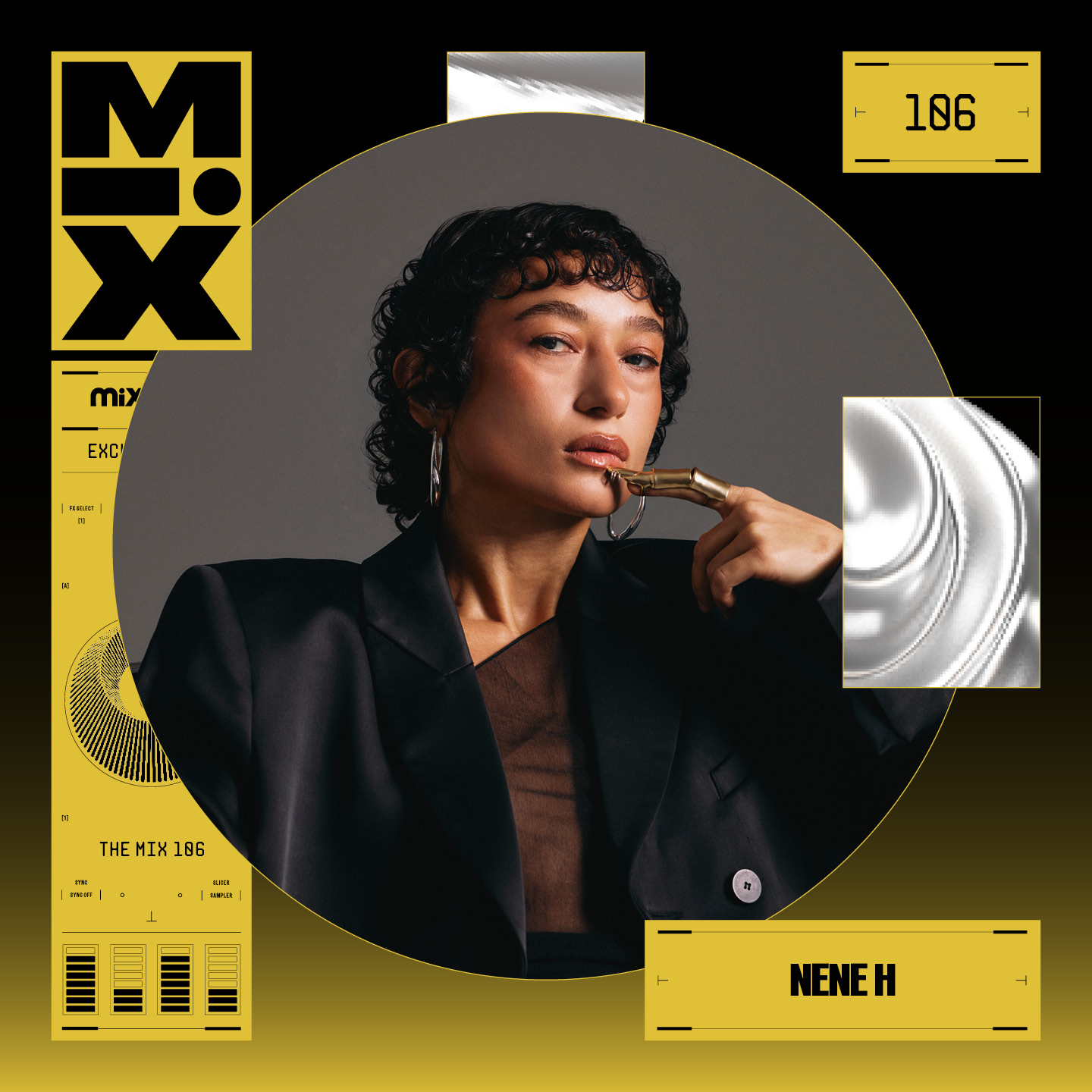
The Mix 106: Nene H
Nene H shares their version of a house music set, recorded live at UNFOLD, and speaks to Sophie McNulty about the significant life changes that are explored on liberated new album 'Second Skin'
It’s a bright sunny Tuesday when I meet Beste Aydin, the DJ and producer Nene H, in their top-floor apartment in Berlin. The sun streams in from three sides of their open-plan living room-kitchen, bouncing off the white walls and illuminating a large glass Nazar amulet; the ultramarine Turkish eye, a good luck charm and protection against bad spirits. Colours pop from the furniture; electric blues and racing reds next to mellow yellows, baby pinks and lilacs. Atop a large table in the corner is their modular synth setup, from which an equally colourful nest of wires sprout and snake in all directions. Aydin has just returned from a whistle stop trip to New York, where they flew the previous Friday to play and stayed for the weekend. “I met so many cuties” they smile, recalling how impressed they were by the younger people at the party, noting their embodied sense of self for being in their early twenties.
This isn’t the first time Aydin and I have met. We spoke in 2021 around their debut album, ‘Ali’, when they lived in a different top-floor apartment elsewhere in Berlin. On ‘Ali’, Aydin dealt with the grief of losing their father, an important figure in their life who encouraged their passion for music. The album cover shows baby Beste in their father’s arms, duotoned in black and blue, denoting the music inside, which shrouded familiar sounds and motifs from techno and hardcore in thick electronically generated textures and sounds from their native Turkey. Beste’s approach on ‘Ali’ was serious and experimental, reflecting their musical trajectory until that point. Aydin moved to Berlin in 2016, after attending conservatory for classical piano in Southern Germany. By 2018, they were accepted onto the European platform SHAPE, which saw them play at some of Europe’s most respected festivals for experimental and deconstructed club music; think Unsound, CTM Festival and Atonal. When ‘Ali’ came out, Aydin was 34 years old and about to get married to their former husband. They were also experiencing a certain peak in their career but, as they reveal in our conversation, they weren’t happy.
Now, five years on, Aydin’s life looks rather different. Their sophomore album, ‘Second Skin’, out on their own label UMAY, tracks that journey. It feels like they’re having more fun than ever, both in life and music. That energy translates into the mix they provided, which is their take on a house set; a genre seasoned fans might not necessarily associate with Nene H. They’ve reached a point in their life where they’re experiencing things from a more embodied standpoint. They’ve broken free from the mirage of external perception and brought power back to themself. We talk about this and more in the conversation below.

Your new album is called ‘Second Skin’. And the opening track is called ‘Where Was I?’, which is a pretty self-reflective question. What does that question mean for you?
That first track actually has motifs in it from the ‘Ali’ album. It is actually two questions. ‘Where was I?’ let me pick up from where I left off with ‘Ali’. But also, what the fuck have I been doing? You know? I have been putting on a personality that I thought was necessary for my family. My family is Muslim and I’m over 30, so I felt like I needed to be a certain way. This is why I got married, but I was not being authentically me, I was trying to be someone else for other people. When you're not living your fully authentic self, it comes back at you at some point. I'm so happy that it came back at me because, if it didn’t, I would have been living this other personality that I thought that was expected of me. This chance has been given to me now, that's why it's a second skin. But when I’m questioning ‘what the fuck did I do?’, there's also a little bit of grief for all these years that I wasn't myself.
‘Ali’, your previous album, was about grief after the death of your father. This album follows the break-up from your marriage. There are also aspects of grief involved in a break-up…
Yes and there’s a lot of questioning about why I went the way that I went. I’m trying to understand and learn how to really be me without taking on everybody else’s wishes around me, such as my family and the expectancies. There was so much ignoring of who I was and I learned it from childhood. Growing up where I grew up, you have to look out for everyone else. It's a cultural thing that you think of others before you think of yourself. There was also a lot of shame around being attracted to women and hiding it from my family. And now I'm 39, I’m like…whatever! I tried. I really tried. You think you make it easier for yourself by hiding things but you don't. You just add more layers on top.
Now, I reached a point where I want to learn how to be stable. How do I learn to be thankful and just create from that? Not from a place of lack where I’m panicking. With fear-based motivation, at some point you have to break the circle. And the body remembers, you know. It's a survival thing when the body is in stress, it remembers.
How would you compare the headspace around ‘Ali’ to where you are now?
I was an unhealed version of myself where I didn't really love myself. I didn't know how to love myself. I was very tough and unkind to myself. Now I try to remind myself everyday that I'm okay and I don't have to be in control, which is so important. This rigid control comes from trauma. Now I’m like ‘no, relax, surrender!’ Life turns out how life turns out. I trust that, whatever comes, it will be okay and I’ll be able to deal with it. It's just about how you frame it in your head. Now I can share my experiences, be myself and just do what I do. I also don't have to be happy all the time. I have moments of grief. I have moments of anger towards myself and everything, but I try to feel it. I'm in a much better place. My relationship to my dead father is also completely different. We are having our good and bad moments. The grief has changed over the years.
I guess that’s the thing with growth, things change by default…
Yes. I was super political and very activist. Now, I believe that activism comes from small communities. I realised that on a big scale, I don't have any control over it. This was one of the reasons I was so burnt out and feeling helpless. I was feeling like whatever we do it’s not going to be enough. It doesn't matter how many times you go out on the streets, nothing will change, in the reality of it. Understanding that I can't change some things was good motivation for me. I want to mentally and emotionally thrive so that I can be that person for people around me. They can be positively affected by that energy, which already changes something, even though it is small. If you’re sitting at home depressed the whole time, that is not helping anyone either.
This is a little bit of Islamic thinking but, your body is given to you and you need to learn to cherish this and take good care of it. Otherwise, it's a present given to you and you're just throwing it away. This is in your body, your heart, your mind. Everyone is here for a reason. Everyone has a lesson to give or to take. With this gift that we have, if you behave badly towards it, you're pulling bad things towards yourself also. It tells us so much.
That brings me nicely onto my next question. Your artist name, Nene H, is a shortened version of Nene Hatun, named after a female freedom fighter from Turkey. In another interview, you talked about how you feel you’ve “been fighting for my musical freedom throughout this whole electronic music project.” What does musical freedom look like for you right now? And what does it mean for this album?
Now it’s not coming from this place of fight. There's no fight anymore, it's just surrender and love. I don't have to prove anything to anyone. I think this is the ultimate fight, learning not to fight. This is what I'm working on. Now, when that fight or flight mode comes on, I’m like ‘no, we’re not doing this anymore’. There’s this fearlessness that it brings. Everything dissolves when you're just your fully evolved self. This is where I'm heading towards.
With ‘Ali’ I was fighting for my life! Fighting on a day-to-day basis. Fighting with the world. Fighting with Germany. Fighting with myself. Fighting with my music. Everything. There was no sense of safety within myself and within who I am. That work is separate from success. It is not related at all. It needs to come from somewhere else, to feel really, really safe with yourself. Success clearly did not bring this for me!
Around ‘Ali’ you were experiencing a certain peak in your career, right?
I was successful. Super successful. I was playing all the major festivals and stuff, but I felt miserable because of this fight or flight. Your whole system is not there yet when you are this unhealed person. I even went to therapy then, but this growth is completely different. The best part of it is that I realised it's just not related to anything that I do or don't do, it's just about me working on myself to be okay. It's also a privilege to be able to do that. I came to this privilege at the age of 39!
You mentioned you were going to therapy still back then. Did you change the type of therapy you were doing? What influenced this switch of thinking?
I think the most important part was the breakup. It was this moment where I was like “Fuck, I am not aligned.” I wasn’t living. I had been cosplaying a version of me that I thought was expected of me. I wasn’t happy. I hadn't been happy for a while. When you can break out of that, it’s the first step, but it’s really hard. After that I could actually recognise my patterns and how things were the way they were. It's a long process.
Back then, I only did Behavioral Therapy because I didn’t want to go deep into my childhood. I just wanted to change my patterns because I had anxiety. I learned breathing exercises and stuff, which was also great and it worked 100%. I did that for one-and-a-half years and it really helped me, but the real deep work is only starting now actually. It's not easy. You have to face up to a lot of stuff. You have so many memories that are so suppressed and you have to feel so safe within your body for them to surface back up. I'm slowly coming to this phase where things are popping up in my head that I haven't thought about for 20-25 years. Like, wow?! You get the discomfort and the sadness and everything, but this is actually good. It means that my brain feels safe to work on these things, which is so nice.
When you go through these big moments in life, where there are a lot of big emotions, it’s like a storm. You don’t really have any perspective on it until you’re through it, but it’s important to have a support system while you’re riding it. I’m wondering now, looking back, where you found that support system?
The queers really came through. The six months where I produced this album was right after the breakup. I moved in with a friend of mine and he had also just divorced his husband. We were both divorcees coming together. I made the album there until I found the place that I'm living in now. I just had a small room with only a bed and a desk. I just made the music at the desk and that's it. I felt like I had nothing and I was starting fresh. In a small small room in a WG [shared housing], just like when I first arrived in Berlin 13 years ago, where I only had a bed and a desk to make music on.

It certainly feels like you’re having more fun on your new album. The vibe on ‘Ali’ felt far more serious, in line with the experimental background you came from. On ‘Second Skin’ the genre palette has fully expanded, which might be a surprise to some people. What triggered this shift? Is there an element of reconnecting with your inner child there?
Absolutely. 100%. That is such a valid read, actually. There’s a simplicity to this album. It's so minimal in a way that the motifs are just coming and going. There's nothing much to it, actually. But I'm not scared to make easy stuff. I don't have to over complicate things for people to see my artistic worth. I'm just like a kid doing a puzzle. It's just me. It was such therapy for me in those first six months making it, every track was a story of something. I was making music in a joyful way, without this Westernised ideal of it ‘has to be good’ and ‘well produced’.
This is something that I hated with classical music as well. This idea of being superior and deciding what is good or not. This attitude is devaluing all the other genres of music in the whole world. They’re saying one genre of music is more valid and important because they are playing it in concert halls than another person who is just playing their sitar in a village in India. Isn’t it about communication on a deeper level? If that person in India is bringing it to me, that person's music is more valuable in my opinion.
What are your listening habits outside of making music?
Only when I go out or if I'm with people. I don't listen to music myself because I’m either making music myself or I'm digging music. When it's quiet time, I want to listen to podcasts. For me discovering new music always happens outside of my home or by digging. I like to describe music in two ways: Inwards and outwards music.
Inwards music is the one where you’re like “Don't talk to me. I'm with myself now, I'm dancing.” That was me in my beginning phases in Berlin, with no one else around me, I was just there to deep dive into myself. Outward music is the one where you get sexy with people and you want to talk. It’s more like “rise and shine motherfuckers!” I used to hate that, but now I love it. And if I love that, then why not play it? Why not create it? It has also become so normal, everybody is playing everything now! Thank god we don't have to stick to only one genre! It also happened in a more homogenous way. Someone can play something completely different and it's cool. Before you would feel like you couldn’t play anything else because you had to deliver. If a person has good taste, it’s more possible that the other genres they want to play will be in good taste as well. It’s just going to be good music.
The accompanying text to this album says that you have “an enduring infatuation with the emotional complexity of sound.” Can you tell me what that means?
There's so much to say about that. There are layers to it. Before we [humans] spoke, we were connecting and communicating through sounds. Sound is survival. Sound lets each other know if we are safe or in danger. Sound is singing. Sound is flirting. Sound is everything. So much can be transferred without saying words. It's literal magic that we evolved with. Sometimes I think language was a fatal error for us. With language comes lies and deception, but sound itself can never lie. It gets right under your skin.
Then there’s also this experience of having sound wash all over you, which can change a human's life, 100%. It’s interesting that when Karlheinz Stockhausen put speakers on stage for the first time in Germany, people were booing and asking why there were no live musicians. It was seen as such a negative thing and now it’s so implemented in everything we do. It’s interesting that there is this technology added on top of this thing that nature has given us. For example, your phone is technology. But speakers feel like something different. They feel like nature! It’s fucking magic.
‘Second Skin’ is your second album, but in the time since ‘Ali’ you also put out a mini-album with Live From Earth called ‘ISSA SCAM’. This was a very ironic piece of work where you took inspiration from memes and digital trends. It was quite a contrast to the serious vibe on ‘Ali’. Can you tell me about that?
It was definitely a phase. I was so inspired and in awe of Gen Z and all of these new trends that were happening so quickly after COVID times. These [young] people had so much trust in doing whatever. We [older generations] were so much in our heads about everything and they're just fab, going and doing this and that, no fear. The work I had to do for 10 years, they don't even have to do it. It was so inspiring for me.
I loved that funny part of it all after COVID time, but it was also short-lived for me. I was interested in that music and there were festivals that booked me for this high-energy sound, but after a couple of times playing it I missed my own thing where I’m experimenting with sound. That is where I find true freedom and I can be my full self. Every track I make is a different genre and I always let that happen. I never blocked myself from doing it. There are bookers that tell me “you should make a techno EP!” It's never going to work for me. That's not who I am. Music, creativity, what I do at home, it's my true form. It’s my experimentation. It's my learning. My first tracks were very rowdy and raw, so that's how my career went. I embraced it, but now a lot of ambient stuff is coming up. I’m just doing me.
Would you say you’re someone who spends a lot of time online?
I would say it’s less than it used to be. I still spend some time on it looking at TikTok. I'm interested in funny videos, cooking and self-improvement. Now I'm doing more educational videos for Instagram because I'm just tired of DJ content. One thing I can do is teaching, so I also have a Substack. I thought maybe I can build a small classroom there in the future. I love teaching. I’m slowly working towards doing some online courses and so on. It’s a way to give back to the community, which is also something I really love doing. The algorithm doesn’t favour people like me, so I have left these things behind. I don’t need it to be someone. With this situation, whether we like it or not, we are in it, so it's more about how we handle it and use it to our advantage in a way that works for us.
In the future, I don’t know how it will be in terms of promoting because AI is coming in more and more. I hope the future is going to be more about human connections and less internet presence. Generation Alpha is going to be a lot less online because they see Generation Z doing all this online shit and they think, cringe! Social media is clearly a drug. It’s clearly addictive. The best thing to do now is build communities and strong foundations. In the future, what is going to give you gigs if people are not online? You need some kind of personal connection. This is my positive thinking. Honestly, I want to have a connection [with younger generations]. They are a lot more mature than me in many things where I am just a baby. There are also things I’m very mature about that I can give knowledge on too. What they have to say is very interesting.
The mix you shared with us is a recording from a recent set at UNFOLD in London. It’s your version of a house music set. Can you tell us about that night?
It was such a good party. Everybody was twerking and having the best time. I played the slot before the closing, eight to ten. They close at 12:PM, it's a daytime party. Some friends of mine came with me from here and it was their first time in London because they're also Turkish and both got their German passports. It was one of the sets that I'm really happy about. Sometimes when I do mixes for magazines, I'm just too much in my head about it. This is just me playing. There are people around me and I'm playing on this great soundsystem. I was feeling it for sure.
‘Second Skin’ is out now via UMAY, buy it here
Tracklist:
Florentino feat. Shygirl - Pressure
DJ Double Oh! - Tidal-Skinn
Some Guest - Hooligana
William Kiss & Luke Alessi - Rambla
Dual Monitor - Left/Right
Zombies in Miami - The Rhythm (Factory Setup Remix)
jtamul - Hop Drum
Not The Norm - Move Ya Body
Darius Syrossian & Jamie Coins - Fever
Demarkus Lewis - Body Tonic
petrus.wav, Novin Yarp - FILHA DA PUTA
Strafe, Avision - Party Started (Set It Off)
Not The Norm - Love Not War
INVT - AZOTE
DJ JM - Scard
Villaseñor - Trade
Coffintexts - Vamos Al Club (feat. Le Poodle)
Elbio Bonsaglio - In The Club (Extended Mix)
DJ Sliink - Serbian Dancing Lady
FLOWFAT - Hot
Ken Ishii - Extra (Dave Angel Remix)
Mochakk - Jealous (Extended Mix)
jtamul - Ce Eh
Ultima Esuna & Destrata - Semillas y Clavos
Teklow & Gettoblaster -ALL MY GIRLS
Davide Mazzilli - The Beat
Dana Lu - Another Guatauba Edit (Dana Lu Riddim)
Wicked Wipe - Rock Da House (Ian Pooley Remix)
AnG - COG
Not The Norm - La La La
L D V – Climb The Wall (Club Mix)
DJ Bboy - Bebe Com Calma
Ian Pooley - Chord Memory
Peder Mannerfelt - Pumping Plastics


