
 Music
Music
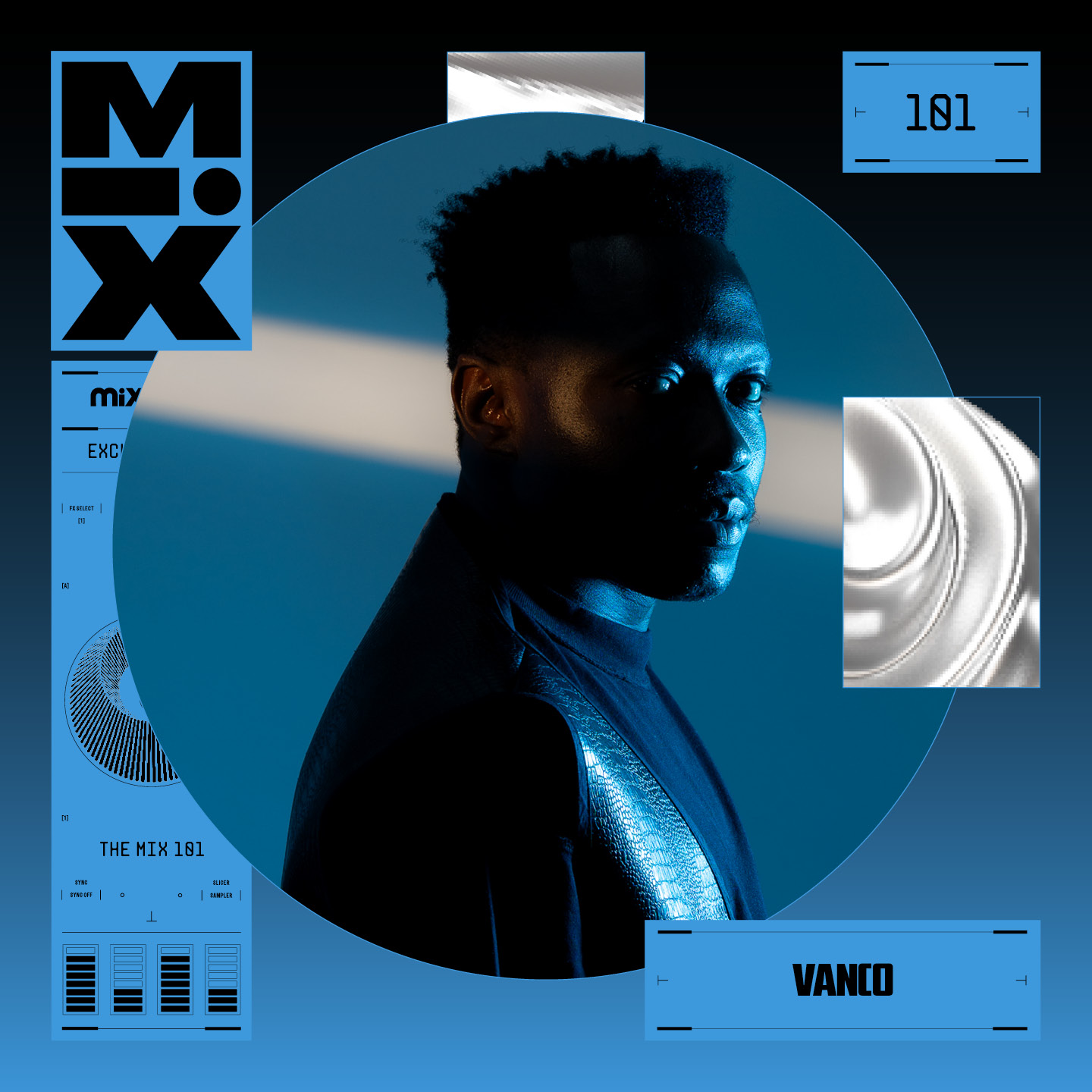
The Mix 101: Vanco
Having released a stream of well-received tracks and played international tour dates for almost a decade, Vanco is now at the height of his powers, riding the monumental success of 'Ma Tnsani (Yalla Habibi)', with more major releases, including 'Repeat' feat. DEELA and a Skepta and Asaka collab, on the way. He takes a moment to share an emotionally-led mix and chats in-depth with Shiba Melissa Mazaza
On the morning of our conversation, Vanco is late. While delays and no-shows are not uncommon in this line of work, my curiosity is piqued about the South African producer responsible for the number one most Shazammed song of Ibiza’s 2025 season. Even surpassing viral tracks by PAWSA, the Keinemusik crew, Calvin Harris and Hugel, Vanco’s 'Ma Tnsani (Yalla Habibi)' featuring Kuwaiti duo AYA has racked up more than 80 million streams, sparking both curiosity and conversation around who the man behind one of the most infectious Afrotech beats to come from the Global South really is.
Appearing across many textures of Afrotech and Afro house for the better part of the last decade, including a set in the Mixmag Lab Johannesburg back in 2019 among a busy schedule, but has kept his opinions on the state of the scene close to his chest. The Johannesburg-hailing artist, real name Kudzai Blessing Mawoyo, continues to slink between sets and cities across the world, often seen brooding behind a pair of darkened sunglasses. As he dishes out his due from behind the decks, every so often, a profound smile shatters the enigma to reveal the unadulterated joy he derives from each moment spent on his craft. Paying as much attention to constructing solid interpersonal foundations as he does appraising his musical interactions, Vanco has been biding his time. Clinical in his technical choices and courageous in his exploration of tone, Vanco has become the dancefloor’s expectation-defying dark horse, riding tracks such as 'Regeneration', 'Yana Pula' and 'Lutho' toward the pinnacle of his career so far.
Get in The Mix: Shop the Mixmag range here
His 2025 edit of Tyla’s 'Water' couldn’t have helped us on the day we spoke for the first time, as the temperature climbed to a crippling 33 degrees. 20 minutes after our start time, I was ready to count this one as a no-show. As his press manager Mikey rescheduled our call, I decided to take up a conversation with CLEIDO of Sondela Recordings, with whom Vanco released 2021’s 'La Ville'. “He’s a really solid guy,” CLEIDO stated confidently. “Trust me, he’s not the type to keep people waiting for no reason.”
Some time later, while apologising profusely, Vanco would dedicate two hours to our conversation with considerable insight, depth, humour and humility; well over our allotted time. I’d then find out that, as the plastic waste bins melted on my city's curbsides (Cape Town), his city was experiencing unprecedented heavy rain, in which he was trapped driving his young nephew to his aunt’s house.
Born in the leafy suburb of Douglasdale in Johannesburg and raised there by his mother, the last two years of life have seen Vanco touring constantly, to the point where he is able to make it back home merely three times a month, at most. With so little time to spare, a quiet moment with family is a cherished non-negotiable. Set to release another heady club anthem with Lagos-born, London-based vocalist DEELA, as well as the long anticipated Asake-Skepta collab 'Aloe Vera' in the coming months, his career success might see him in constant motion, but creatively, mentally and spiritually, Vanco has never lost sight of home. Read his thoughts and listen to his mix below.

Where are you in the world now, and where are you internally?
I’m blessed enough to be living my dream. In my head, I’m like ‘hey chief, you are exactly where you’re supposed to be.’ I create everywhere, and I do have my moments, but most of the time I’m just having fun, so my creative energy is always high. There’s positivity around me. Physically, ukathala, you get tired, yes – but I have a balance. I’m active at the gym and if I’m not on the road, I’m with family and friends. I have other activities I do when I need to turn away from the music; I took up interior design and real estate as a hobby, since that’s what was my bread and butter before all this. So I’m good, I have very few struggles.
We know that in African communities, names carry a lot of weight for the person you’re destined to be. You certainly seem to be blessed right now! Can you tell us about your given name and why you went on to choose Vanco as a stage name?
I had a few nicknames before. One of them was ‘Somnyama,’ which means ‘Black.’ And then also ‘Sniper,’ because [I look like] Wesley Snipes. People used to call me that but I hated it… it didn’t sound sexy or ear-grabbing. So on a random day I was watching a narcotics movie and there was a character called Blanco, so I started going from A-Z… Ganco, Tanco etc. I got to Vanco and I decided, that’s my name. Vanco Sniper. Then eventually, just Vanco.
And Kudzai Blessing Mawoyo – am I right in assuming this is a Zimbabwean name? Do you feel like you’ve lived up to that sense of destiny or is there yet more work to do?
I’m Tsonga, but yes, my name is Zimbabwean. Kudzai means “respect” and Blessing came from my grandparents who are very big on spirituality, so I guess they saw me as a blessing to the family! I’m not very deep into these types of things, but I do believe that as a human being you need to leave this place better than you found it, whatever that means to you. All of us will always have work to do, but I live by these principles: be kind and show up for one another. That’s my best form of living. Before [music], when I was a real estate developer and quantity surveyor, I used to be involved in projects where we would build schools and hospitals for kids in rural areas who had to travel very far to learn, and that fuelled me. But I also worked on renovating some of the bigger malls in Sandton that people use daily, which fuelled me too. Some people say that the music I make heals… so it’s all about what people value, and that’s always relative. Creating value, being loving and showing up for people will always be part of whatever I do.
Read this next: Listen to a playlist of Vanco’s musical inspirations
Community is a really important aspect of the house music scene too of course. You’ve mentioned in previous interviews though, that you grew up “alone”. What did you mean by that, and how did it shape your music?
Yes, I was the only grandchild for the first 10 years of my life, so I was a bit of a loner with no cousins and other kids to play with. I came to enjoy my own space, and I always ended up finding a way to be creative, entertain and cheer myself up. I grew up super soft! I never went hungry, I was exposed to a lot of travel and I had everything I needed and wanted. My mom is my superhero, and to see her go through her own struggles and still make things happen was important. When she said she was going to do something for me and my brother, she did it. That said, music is part of our culture. You’re born into it and can’t run from it. Music is everywhere and in everything. I took public taxis every day, ones that were old and broken down, but always had the best soundsystems — probably more expensive than the taxis themselves. Your helper at home was probably a DJ, and so was your uncle, or your neighbour. Even when your mum is spanking you, there’s rhythm to it, you see? And we would take the things our elders would say to scold us and put them as lyrics in our songs. So I’ve always known that I wanted to be an artist, even when I was a pantsula dancer as a kid, eventually joining a crew doing twalatsa, watching Jika ma Jika and all that. So by the time I was 16, I planned to go to Gauteng instead of Limpopo, prioritising my mum who wanted me to go to school there and become self-sustaining. I studied quantity surveying to the Honors level, then I opened a company and continued to further my education toward real estate (all this while doing music on the side, by the way). I became a real estate developer, got my Master’s degree and started a practice, but I didn't feel connected to it; I felt like I had a deeper calling than just that. So I carried her energy, made things happen for my mum and my little brother, all I wanted was to know that my mom was satisfied and at peace with who I became. So when I checked all those boxes, I said “cool, now it’s my time.”
So you put your dream on hold all these years, essentially, waiting for the right time to concentrate on it unhindered? What are the most impactful memories for you from back then?
Yeah, even as a pantsula dancer, I couldn’t see how I could live off it. There were no examples of people around who were able to make it into a sustainable living, and I wanted to be able to live off music. One of the examples I did have was DJ Cleo. I lived near his manager and I would see them rolling together, so I’d sneak out as a teenager to follow them to see them play at a place called Montecasino. There used to be a club there called [Cafe] Vacca Matta, and some of the biggest DJs in house history had residencies there, which were my first encounters with successful musicians who were in it for the long term. They had beautiful ladies around them, they looked good, had nice cars, and they weren’t young, but they were still going. In my first year, we went to Orlando and I’d see people like Louie Vega or Black Coffee perform too, and suddenly I could picture living off DJing. That’s what I wanted. Those days changed my life. The next morning, I was the first one to wake up, even though my two friends Tuto and Marco and I grooved until 5:AM. I woke up at 8:AM and said “guys, I’m gonna be a DJ.” As kids we joked about how I would be friends with those people one day, and today, like I said, I’m living that dream.
Now that you’re here, what are your thoughts on where the Afro-scenes are at the moment, since having witnessed it back in Vacca Matta’s heyday?
I’m not very opinionated about these things to be honest, I just happen to be in the spotlight right now, and I thank God for the people that brought me here. I’m not here to judge the game or tell people how to do things or how to feel. What I can say is that before me there were musicians, and after me there will be musicians. Music is a free space to express yourself. Just like with you as a writer, this is a space to express yourself too. If people like the way you, Shiba, write, then you become the example in the spotlight. There have been amazing writers that came before you and the ones that come after you will feed off of what you’ve made. So it’s like that. Music is more of a feeling than just verses and choruses and adlibs, and I used to take the depth and structure way too seriously. Now I don’t like to have too much seriousness in the sense where we go into the studio having everything planned, the same way we didn’t pre-plan this conversation, and I appreciate that. Beautiful things can happen when we just connect and say ‘let’s talk, how was your day?’. In us having a chat, maybe something better can come of just that. That's how I’ve been making music lately.

Speaking of making music, language and conversation, you have a lot of powerful textures in your vocal collaborations across your catalogue. My personal favourites are 'Hoya' feat. Tunde International which is Yoruba, yes? Then 'Keladi' feat, Ahmed Sosso which is in Wolof and 'Khumbaya' feat. Muneyi. Is that one TshiVenda?
Yes, correct! I love trying things out. In South Africa there are certain things we like that speak to us. But being exposed so early to the wider world, I’ve grown to become more open-minded, and we need to be open to hearing other people’s stuff. There are so many mother tongues in songs that cross over even though people don’t understand each other, but we can feel them. 'Hoya' was my first Yoruba track with Tunde, who I met through my manager; Tunde is his uncle. He is a big-time barber with a shop in the UK who cuts hair for some cool people, and he just sings there in the shop while he’s working. Growing up listening to Tunde sing stuck with him, and now that he’s in the music game he wants to explore what he could do with it. He sent me a video of Tunde singing in the shop, so I sent him a beat, and Tunde just freestyled another beat singing 'Hoya' on top of that. I could have been happy with just that, but I wanted to dive deep and digest the vocal; I wanted to figure out what it meant for me, even though I don’t understand Yoruba. It took me six months to digest, reconstructing another beat around his vocals that felt right for me.
As for Muneyi, this is in the top three of my favourite songs I’ve ever made. I’ve always liked Muneyi’s music… he’s quite a different, alternative artist. You need to see him perform to appreciate him even more because he turns TshiVenda into the most amazing sound! You hardly hear any TshiVenda on house tracks, and back then I didn’t have an identity sonically, I wanted to be different. I asked myself, “what would I want to consume? It’s time to own up to what I want.” So I reached out to Munyeyi.
The same with 'Keladi' and Ahmed; music should be an art piece… there should be an identity to it, and you should already know when you engage with it, who it belongs to. They have that and I wanted that. I wanted people to say “this is a Vanco track” even when the vocals changed.
That’s right, one can certainly tell which tracks are yours by the energy, even in your collaboration with DJ Lag on 'Iza Ngamandla' with Sykes. DJ Lag’s sonic identity is tough to walk beside, I imagine, and yet…
Yeah, me and Lag share quite a lot of mutual friends, but I connect with him deeply, he’s my bro. He supports what I do and I’ll always support what he does, there’s no ego involved which is what I like. And that time we were both doing a lot of stuff away from home but we’d always go watch each other perform if we were around. People don’t talk a lot about it but back then he was doing some crazy stuff with Beyoncé, but I felt like the appreciation for him and what he does wasn’t there. So when he reached out and said he was ready to do a track together, I said yes! Then he sent me this 3-Step beat and I was so, so rigid about it at first! That’s not what I make. But it turned into a beautiful thing, he opened me up to it. I can tell you right now, he really took me out of my comfort zone! Sonically, there’s so much to learn. I’ve spent the last two years in London quite a lot, because tracks like 'Water' before 'Ma Tnsani' helped me to expand my footprint around the world, so this next one coming with DEELA and the work I got to do with Skepta while there has been really cool to explore.
Read this next: 3-Step: Why Afro house’s latest evolution is more than a sound, it’s a movement
As if that wasn’t enough, 'Ma Tnsani' really brought you and AYA into the spotlight. We’re living in some really interesting times, especially folks living in Kuwait, where they are from. How do you feel that the loose, fun, spontaneous way that you guys made the track can help us counter the tense energy that we’re experiencing today, especially considering music and dancefloors as places that can help us express, de-stress or escape?
There’s always a political aspect, and I feel like in the grand scheme of things this kind of political instability, wars and differences have been happening throughout history, since before we were born. But music, for me, connects people from different cultures, languages and religions. 'Ma Tnsani' blew up in Europe, the Middle East and Africa, and it’s quite interesting to comprehend how different people who don’t understand each other could consume it. But I guess that’s what music is supposed to do! We can’t control it. For all we know, the same people who are fighting against each other in the war both like the same song. If there was a one world concert, and we dropped 'Ma Tnsani', all the people from different regions who are supposed to hate each other would be dancing to it, posting it, sharing it. Maybe even in the office there when they’re deciding to send a missile somewhere, they’re probably listening to that song, and on the receiving end, too… I wouldn’t know. There’s no way to know or control how people receive the music, but it connects us. So even if it feels like it’s out of our control, my job is to drop music that has love, respect and acknowledgment, and hope that bonds people together.
You’ve hit the nail on the head there, because there are some artists whose songs are being used to soundtrack propaganda during this war, and they were never made aware, like R.E.M., Jack White and even Beyoncé. Speaking of which, I’ve just read a book called The Invisible People by Nhleko Putuma, and he talks about how in 25 years, one-quarter of the human race worldwide will be African. Let’s do a quick “quantity survey” then. What is it going to cost us to make sure that as Africans, we have a better experience of the world? And do you think that with AI being what it is now, we’ll turn back toward live performances, live instrumentals, etc., and make a full circle journey back to the things that brought us here, because that’s the only way we’ll know for sure that music is human-made instead of generated by learning models?
In 2050 I’ll still be rocking! I’ll be 58, but I only want to retire after 70, so I’ll still be rocking this. But to answer your question, our music will reflect whatever society needs at the time that it’s being made. It’s hard to say what that will be. And as for AI, let me answer you in phases. You’re a writer. There’s no way in 2026 people could say that you’re legit because you use a typewriter. Or that only people who have suffered enough, or seen enough, are legit as opposed to people who live in a world where technology is sophisticated and convenient. You’re recording this conversation, you’re not using your memory, you know? So the world will always progress. Musicians used to have to go into the studio and actually play the drums, pianos, guitars and record. Now we have all of that in software. I’m part of that generation and I do play what I want to hear on the piano, but not everything is live. We use organic elements too. There are still some elements of technology there in live recordings, though. There’s still a human element to it when we use a prompt rather than spending 10 years cracking some skill. So it’s all about how you use these tools and when. If we had to say no to AI, then we have to go back and say no to Fruity Loops, no to Reason, no to Logic. Also, no sound engineers. And you, Shiba, can only use a typewriter. Or even go back to using ink and looking for some sophisticated paper with some good handwriting. It’s impossible now, you see? We have to evolve and adapt.
Right, and speaking of adapting, we also know that in some cultures, we have things like griots who could memorise long histories and pass them down generationally without needing to write or record them, but that skill was only entrusted to people who knew how to make sure they didn’t change or forget these stories. I suppose that’s why people come to you specifically for music or me for writing, as opposed to other people who write or make music. With modern griots, musicians, writers and with any technology, the human touch still matters because it takes using AI with integrity as well.
I agree with you, we need to tell our stories in the right way, irrespective of where you come from. We need to save our stories and keep our cultures. But kids of today? We can’t use the same key to pass down information with these kids because of the way they consume information. Before, you could sit for hours and hours around a fire and say let’s talk here. But if you try and sit a kid down today away from his iPad to tell him a story, he’ll get bored, thinking he needs to text someone! The tools we use have adapted to how information needs to land too. So I’m not here to tell people how they should pass down their information from generation to generation, but our stories need to be passed down properly, without being diluted – and it’ll be done the way our society needs it to be done.
In that case, let’s take a look at the story of your mix. What can we learn?
In the midst of my travels I was excited to jump off straight from the plane, head to the studio ; and put together a spontaneous mix, shaped by shifting emotions and made with pure passion.
Vanco's ‘Repeat' feat. DEELA is out on April 16
Shiba Melissa Mazaza is a freelance writer, follow her on Instagram
Tracklist:
1. DJ Satelite, Dj Gálio, Seres Producoes, Lucas Moreno SA - Long Time (Extended Mix)
2. Patmogh, Azarro - Baseline Hits (Extended Mix)
3. Vanco, Tresor - Selina
4. Jäger - Reach
5. Robin M, Robin Michelangelo - Battle
6. Vanco - Wolf
7. Tyla - Truth or Dare (Vanco Edit)
8. Chris Arna, Buya - Stop N' Listen
9. Themba, Vanco - YELE
10. RE\MIND, Kgzoo - Chased
11. &Lez - The Side Face
12. Vanco - Repeat Ft. Deela


