
 Music
Music
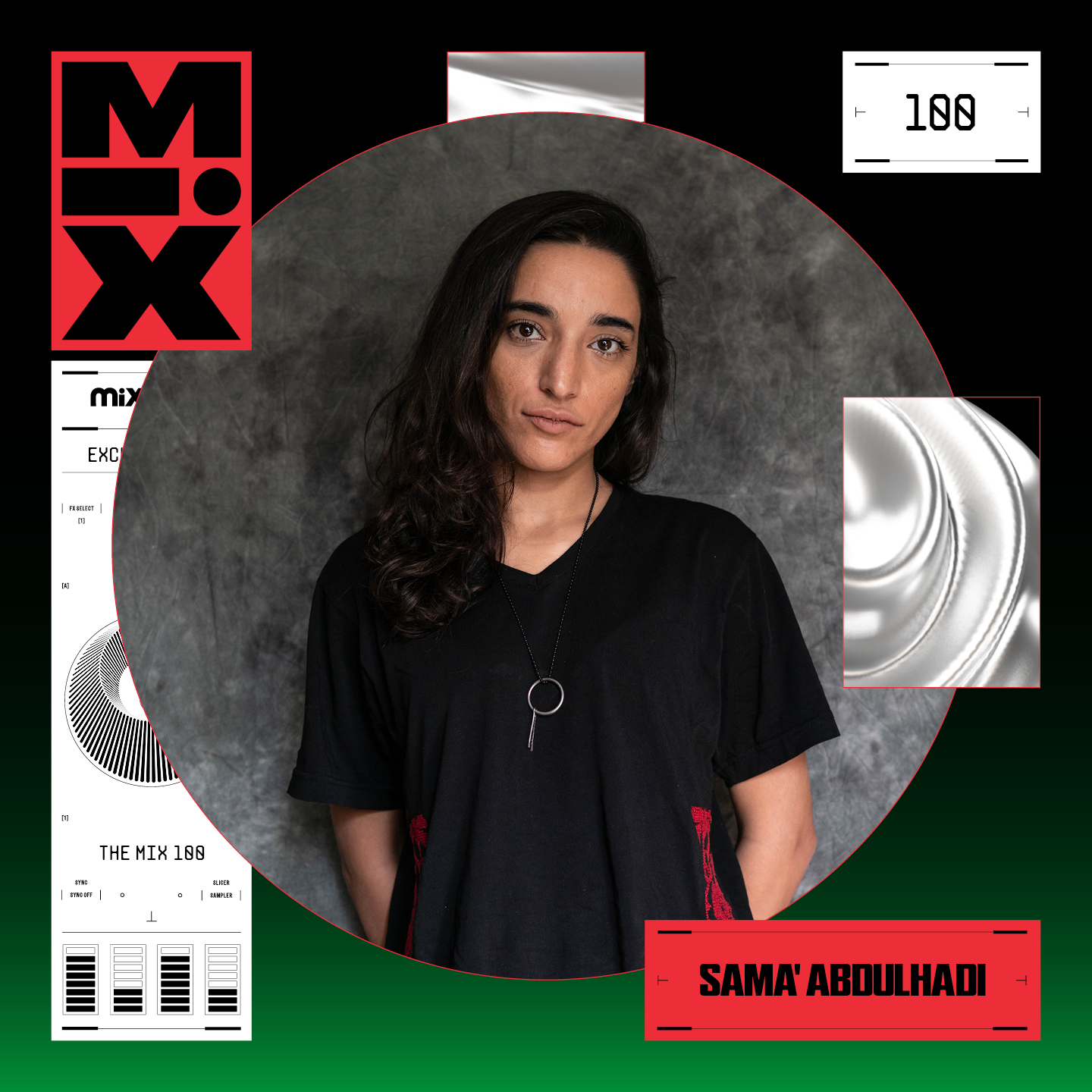
The Mix 100: Sama' Abdulhadi
The 100th instalment of The Mix comes from one of the most vital artistic voices in dance music
For the 100th instalment of The Mix, we welcome a genuinely peerless artist to the series. Designed to showcase both DJ sets and in-depth interviews, there’s no one more appropriate to helm this milestone edition. Whether expressing herself through music or words, Sama’ Abdulhadi is always worth listening to.
The best known, most visible Palestinian in dance music amid the ongoing genocide, she’s become a figurehead standing up for her people among a scene that’s supposed to care about ideals such as collective humanity and liberation.
Persecution has been a constant in Sama’s life. The last time I interviewed her was during the height of the pandemic, where the Palestine-raised musician spoke about growing up under curfews and lockdowns, relatively unfazed by being stuck at home. This time when we speak, she is unable to go to her hometown of Ramallah, with travel restrictions now caused by violence in the region.
Subjects such as these are inescapable for the Jordan-born musician, whose tastes formulated around Arabic hip hop and rap during childhood, later moving to Beirut and developing a love for powerful, pulsating techno while immersing herself in Lebanon’s nightlife. Now based in Paris she stands as one of the world’s best DJs, earning bookings at high profile clubs and festivals following a breakout moment in 2018. These days she sometimes loses those hard-fought wins due to matters of politics and identity. Despite this, she is uncompromising in her beliefs. A living embodiment of the fact that dance music and politics are inherently linked. “It's always been political. People need to research, people need to read more, be more informed, be more active,” she states. A strong sense of conviction translates into her music, with productions and DJ selections that throb with intensity and meaning. If you’ve ever been on the dancefloor at one of her sets you’ll know what it feels like to be truly moved by music. Often there’s poetry samples or recordings of Arabic instruments that electronic synthesisers cannot replicate, as she delves into sounds that resonate on a deeper level than the average club tracks.
It’s a privilege to hand this instalment of The Mix over to such an accomplished and vital DJ. It travels across genres, from soundsystem-geared bangers to traditional music from her home region. Sounds beyond techno are becoming a more regular source of inspiration and exploration for Sama’ Abdulhadi. Previously she felt supported by the techno community, who had rallied around her when she was arrested in 2020. Now that speaking up against Palestinian persecution comes with a greater perceived risk to an artist's career, the fall off has been noticeable. The weight of it all hangs heavy. But Sama’ perseveres, refocusing her interactions with the industry to work with events and communities committed to making a difference, honouring the music’s roots, and hoping that leading by example will inspire others to follow. Hear and read what the DJ has to say via her mix and accompanying interview below.

Thanks for your taking on this milestone instalment of The Mix. How did you approach it?
It’s always very hard to find words to explain a mix, I feel like I express it in the mix itself. Most of the tracks are my favourites that came out in the last couple of months from all over the world. A special one would be the track by Alsarah & The Nubatones as she is one of my favourite singers from Sudan, and the exchange with the Egyptian artist Rami El-Aasser led to the band talking about Nubian songs of return and modern migration patterns, which very much resonates with what's happening today i guess. I usually start mixes very chill and build up, this time I tried to do it differently by starting a bit harder. I hope you like it
When you helmed a fabric mix in 2023, you described the curation saying: “Every track I have finally selected here is like a poem; a scream; or even a slap in the face.” Does your approach to studio mixes and DJing in the club differ, or is it always just a matter of self-expression in the moment?
It’s hard to say. Usually I’m choosing tracks that resonate with me the most and have a meaning in them. I don't resonate with bland tracks, they get boring. I always look for a story in it, or melodies that make me feel something. And yeah, mostly I am screaming lately, especially in the past two years. Screaming is the easiest thing to do, and being angry is a constant. With everything happening back home, it's constant anger, anxiety and helplessness. It became like a state of living right now. Since I am expressing myself when I'm playing, it turns out to be that.
What qualities make for the perfect DJ set in your view, what should it communicate?
It depends on the person, because at the end of the day, DJing is an art. You're taking from other artists and creating your own thing, so you need to resonate with the people that are producing those stories, the sentences they're saying. I like saying something. That's what I always expect from artists — when they stop feeling, I really don't get why anybody's on stage. The fact that people pay this much money to come and watch you do this thing, you have to give it your all. You can't just half ass it.
How about your approach to production, what are you tapping into when you create music?
I love sampling. Other people's art inspires me. It's easier than a blank page, usually. It's been hard to tap into anything with my brain going everywhere in the past two years, that's why I haven't really released anything. But I just finished music for a film about Jenin refugee camp and The Freedom Theatre there. Now I'm working on a couple of remixes. They're mainly remixing Palestinian artist songs, so it's either a rap, folk, or jazz track. My mission for the next couple of months is producing these.
What do you look for in the samples that you want to include in your music?
Either natural sounds or poetry or instruments. As an electronic music producer, there are some instruments that you cannot synthesise, especially Arabic instruments. They're really hard to recreate, and Arabic music has a lot of quarter notes, which synthesisers don't have. I try to sample that to be able to use it, whether it's from instruments or the way they use the violin in the Arab world, kamanja, buzuq, these things. I really like sampling and just mixing these elements with each other.
From its birth techno has been a music aimed at revolution and imagining new futures. What energies and meanings do find in the music that draw you towards it?
Well, in the beginning, that's what drew me towards it, then I got into it and I started seeing the problems.
When I was arrested and the whole techno community stood by me, I felt that, even my parents felt that. They came and they told me: “It is what you were talking about. It is really a community that would stand with each other in sickness and in health.” But then when the gun came to the head and stuff happened in Palestine, the silence that happened broke my heart a bit. It really hurts.
So — in the way I'm working, whether it's who I'm working with, festivals I'm playing at — I'm trying to speak out more now, because I feel like there's so much silence. And if I speak out, and I'm able to speak out, maybe it will encourage other people to do that as well. Especially because it was very one-sided, and people were not open-minded about researching and checking out other narratives, or what is really happening.
Would you say that the music you play and are drawn to has expanded further beyond techno in light of feeling betrayed by people that you consider peers in that scene? Has it changed the way you're expressing music?
I think I became more expressive and more vocal about things. I never used to wear a keffiyeh, the Palestinian scarf, for every show. Now I make it a point to wear it every time. I felt like there's more weight on myself to speak up. With the silence and the fear, a lot of people say they're afraid of losing work or losing jobs. I find it really weird. If I'm speaking out this much, and I am Palestinian, and I'm not… well, I'm losing jobs, but not that many, I'm still working, I'm still surviving… then maybe it will incentivise more artists to speak up. Even with the repercussions, there are still good people in this world, and you work with those people. You don't need the people that are bad, you don't need them for money.
I never really used to play tracks from big artists in general. I like unique tracks that nobody else has. But I'm more aware who I'm working with and whose music I'm playing. Trying to get more Arab artists' tracks or Latin American or Asian tracks, more than the silent community.
How has this been to deal with? That feeling that due to a lack of vocal opposition to the genocide of the Palestinian people, your relationship with the wider techno community has changed.
It has been a heartbreak, but a wake up call as well. We've always felt alienated in Palestine, we've always felt alone. I thought I found a safe space in techno, and then that space kind of disappeared. But it's good to be awake and not be living in a utopian, surreal world that doesn’t exist. I felt a bit abandoned, where everybody just looked away and didn't care; or they would just check on me, but they only care about me, not everybody else, that didn't make sense to me.
It’s perhaps a reflection of how, decades on from techno’s origins, the scene has grown into something much bigger and more commercialised. Terminology about liberation and freedom is leaned on as platitudes at times.
Yeah, especially when people are constantly using this sentence of "separate techno from politics". Techno is political. It's always been political. People need to research, people need to read more, be more informed, be more active. Messaging their MPs, donations, speaking out for the people that cannot speak out. Being an echo to the voice, in a way. Even just listening to their Arab or Palestinian buddies with understanding, without judgment, or telling them "breathe and let it go". When you live it everyday, there's no letting it go — you have to live with it.
A lot of people feel helpless and the situation is bigger than we are. But we are all part of humanity, and we are all part of this messed up race, the human race, so might as well all play our part, no matter how tiny or big it is. It can all affect, it all leads to a bigger thing. We're all collectively one. And this could happen to any of us, anywhere in the world. It just doesn't only happen to Arabs, obviously. Europe just came out of World War Two. We need to be voices for everybody, because otherwise injustice will keep continuing, and the power will stay with the people with money which we don't like, because we're all suffering, and we're all going through so much struggle in everyday life. If things keep going this way, then the struggle will get bigger and it will continue for everybody.

Ways you’ve taken a stance is taking part in boycotts. In joining the KKR protest movement, you took time to make demands such as dropping sponsors which were met, then still ended up pulling out.
Techno is a place of freedom and safe spaces. So how come the biggest investor in it is a weapon manufacturer? It isn’t an excuse to go play a festival for the history of it, because the history was just bought. It's not about the name of the festival, it is about the line-ups. Most of the festivals that ended up being partners with KKR are against KKR in a way. When workers don't like the working situation they're in, they can strike. When KKR starts losing money, then they will give up this endeavour, because all they care about is money. We could buy it back. We need to figure out a way just like Sziget just did.
I know that the prices range in a big way, and there are ones that really cost a lot to get back, but we are a collective of so many people, and we can do things if we just put our hands together just how techno did when this all started. It's going to be hard, but we are built tough, we do all nighters for weekends. If we're able to dance for four days in a row, we are able to take our spaces back.
There's lots of energy to be redirected there. Since there’s so much money in techno now, are there any good causes or organisations you’d like it to see funds directed to?
In every country there are NGOs that are active and working, and we need to check that they're active and working before giving to them. In Palestine, there's the PCRF and there's Taawon Foundation. We now have close to 20,000 kids that have zero relatives in the world. They're alone in this world, so they're taking care of these kids. There's Choose Love that works with refugees around the world. There's definitely ones in Sudan, Ukraine, Egypt, Venezuela, Cuba. We just need to find them. Not just follow any link, make sure that they're active. Do our research, do our due diligence as human beings.
Right now, sadly, there are human beings, but barely any humanity. We need to give more to rebuild for all of us to feel safe. Nobody feels safe anywhere now, because the war is right there, and it can spread anytime. Everywhere is under the threat of a crazy person coming to power, people are under that from their own government. We need to take our power back, because we are so many and the ones in power are so little. We can. I really think we can. We just need to remember how to be human again, and not lost.
It is really inspiring to see the new generation not taking shit. It really gives me hope. The marches that are happening in the US right now, the standing together that is happening in Palestine. We just need to reconnect with our soul and do the right thing so that we can sleep with a good conscience at night, and actually feel grateful for our existence in this world, because otherwise we're all just a waste of oxygen.
We've discussed boycotts. On the other side you’ve lost work against your will, there's been campaigns targeting you. How does that feel to be on the end of that persecution?
I do worry a bit, sometimes, about completely losing my job. I'm a bit shocked that I still have a job. But getting canceled from a gig is nothing in comparison to what my people back home are going through. It's the price to pay for being outspoken. I love working with people that want to do something and be active, and that's where I find the people where we speak the same language. We're yelling about the same thing, so it feels like a group hug instead of a fight on stage.
You have your own platform Resilience, what are you looking for in the artists you involve?
With Resilience, it has been a bit slow. I have been too lost with the genocide, so I wasn't really getting the energy or time, I was constantly in a downer. But now we're kind of recharging the energy. The whole point of it is working with artists from resilient places, giving them a platform, showing up for them, bringing them out to the world. I'm constantly looking for young artists from different places that don't have a stage, and try to amplify their voice.
I really want to start doing more workshops. I think the only reason why anybody has knowledge is to give it away, and pass it on. I try to help as much as I can, because obviously a lot of people helped me to reach where I am.
We’ve spoken about the wider techno community, but how have your interactions with the Palestinian artist community been during the time since October 7, 2023? Is there support for each other, does your connection with home keep you energised?
They do keep me energised, honestly. They keep me wanting to do what I'm doing and not giving up. Because there are so many times I told myself, okay, no, I just don't want to do this. It's not worth it. It's not making a difference. But helping some artists from Palestine, or even just being connected with them, is something that keeps me going. Because I got the privilege and the luck to actually leave and represent them in the scene, I have to keep doing that for the sake of the people, even if I'm dead tired, if I'm burnt out, even if I barely can walk, even if I'm depressed, I have to do that journey because, you know, I just got lucky, went viral, and boom, all of a sudden I'm the one that has to do it. If Palestinian artists are supported, if we become a lot, then I could maybe take a break! It would stop being shocking for people that there's a Palestinian DJ. They have a lot to say, when you play their music, you actually feel it.
We just did the Mastery event in London, and it was me and my two really good friends that we started the UNION Collective together [DJ Dar and DARBAK]. They played amazing. One lives now in Berlin, he was having crazy travel problems because he has a Palestinian passport, he got the visa like two days before and jumped in. The other one has an American passport, but he's living in Jenin, which is hell right now. To get out of Jenin to Jordan, to UK, took him forever. The fact that they made it was such a legendary move. So when they played, they played from their hearts. They were yelling at the world, "I can't believe I did this! I can't believe I'm here!". I couldnt believe they made it either, and honestly they played such amazing sets.
That role of being the visible Palestinian in dance music must be a heavy one. You don’t have the luxury of just being a DJ. I’m conscious I'm questioning you about your life outside of music, it's become this position you've taken up. How do you manage and keep going?
I don't really manage. I kind of crawl in a way. The sets make me feel better. Most of the time I'm dead, but the second I'm on stage I get re-energised by the music, by the crowd. This weekend, I played in Paris for six hours, at some point I could barely stand up. But, I don't know how, the people at that moment would scream and it would pick me up and make me be able to do more.
What keeps you hopeful?
Seeing the unity of people, that's where I reconnect with humanity and with energy. People chanting, waving flags. Growing up in Palestine or living abroad and watching the news, Israel is constantly trying to make us give up and surrender, daily, every minute, stepping on our heads. We have to keep standing up, otherwise we won't exist. So: thinking of back home, thinking of the people still enduring this, that pushes me to tell myself”: “Nope, stand up, we have to keep it going.” When we're free, I'll go to sleep. For a week maybe.
Be the first human to go into hibernation, it will be earned.
We will all become sloths.
Listen to The Mix 100: Sama' Abdulhadi below
Patrick Hinton is Mixmag's Editor & Digital Director
Tracklist:
Bailey Ibbs - Message For Creatives
Innervoix - We’re not alone
Junior (TR) - I See Light
Alex Stein, Victor Ruiz - Human Robot (Gonzalo F Remix)
ZEREN - Waste No Time
Hasegawa - It Happens
Sabura - When the Bass Goes Up
Flug - Sincrodestino (Chris Liebing Dub Edit)
Kofia - Leve Palestina (Aaron Thomas Rework)
Frank Biazzi - Fusion
Tunga - Technofeudalism
Alsarah & The Nubatones - Nar
Laura van Hal - Dripping
Bervon - Beyblade
Spectra Sonics - Tribes Of Trance (Extended Mix)
Avalon & GMS - Machines
R.Korner - Fury
Nino Blink - Glasgow Growler
Franc Fala - Panic


