
 Music
Music
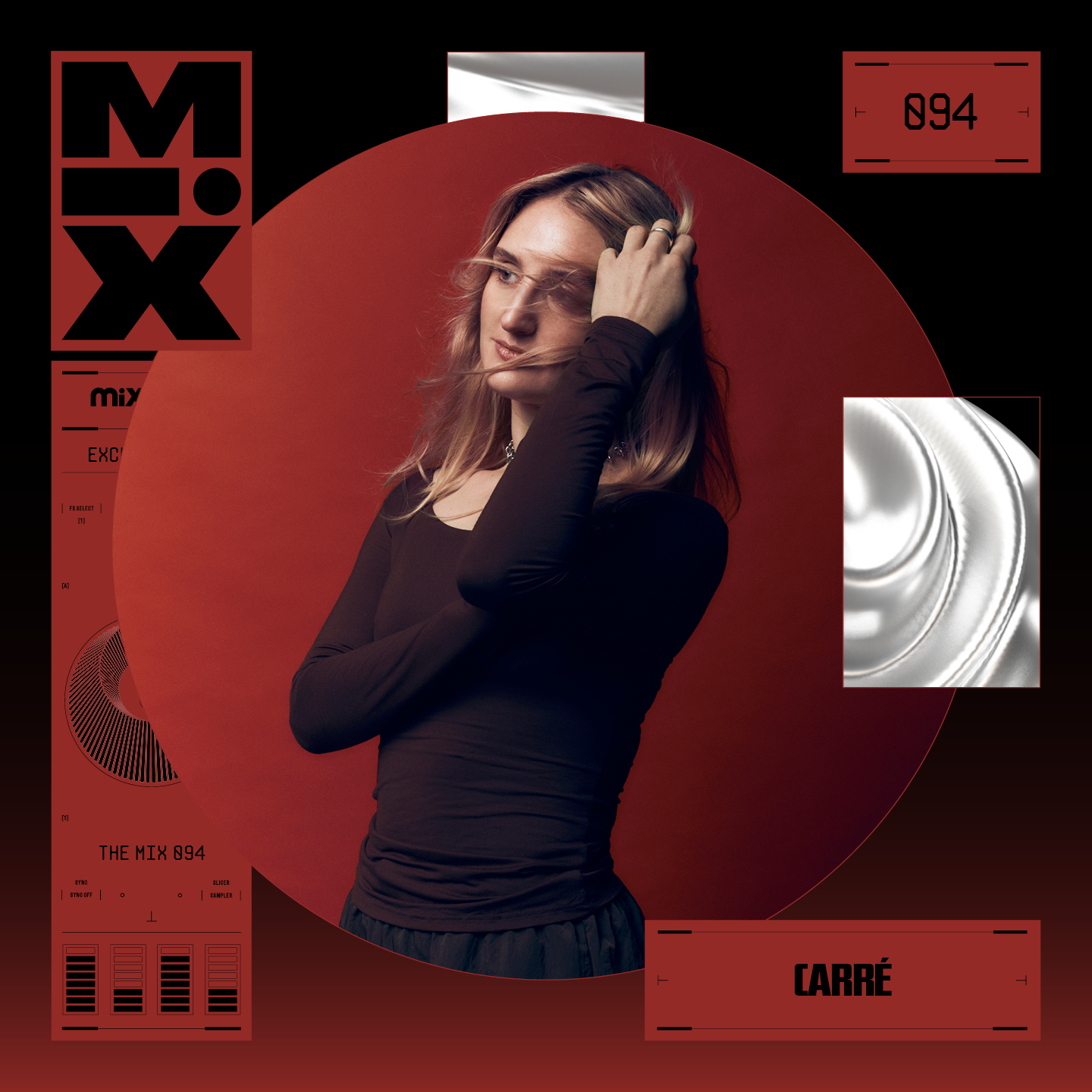
The Mix 094: Carré
California-hailing, London-based DJ and producer Carré explores the spectrum of 140 BPM and speaks to Nathan Evans about LA's growing taste for minimal dubstep, throwing warehouse raves and her new release on Tempa
Wonders never cease. In the same maximalist city which spawned Skrillex’s purist-peeving brostep, an appetite is growing for minimal dubstep, and California-born DJ and producer Carré is part of the reason. She's one quarter of the team behind LA rave Fast At Work, which has overcome the city’s expensive club infrastructure and police shutdowns to bring the likes of INVT, Maara and Priori to the City of Angels for the first time. Founded in late 2021, Fast At Work has joined the growing underground giving LA something to shout about post-pandemic, blasting away its reputation of being behind-the-times when it comes to club music. Now, it holds its own against the parallel city on the East Coast.
As a DJ and producer, Carré focuses squarely on dancefloor efficiency. Her Goldilocks approach to production carries the precision of techno, leaving plenty of room to process each sound and its echo. It’s a round and light-sensitive sound that digs down to the shadowy core of dubstep with a few key elements, stretching its legs and, more often than not, lulling you in a loop just long enough to change the room’s climate with a surprise switch-up. Listen to how ‘Soft Fascination’ fashions into a simple triplet rhythm across the halfstep before breaking into a double-time bounce, or the unexpected juke crossover on the Addison Groove collab ‘Shapes In Real Life’.
Get in The Mix: Shop the Mixmag range here
Growing up in Humboldt County, in the Northernmost part of California, Carré slid downstate to LA in 2014 via San Francisco and an overseas study in London, where she developed her taste for techno and dubstep through seeing the likes of Objekt, Actress and the Hessle trio. In LA, she rarely found her perfect community of dubstep heads, often going to tech-house parties because, while far from her tastes, “at least there were girls there!”. She’s elated that things have changed, and that in LA, “you can have a room of 200 mixed people, not just dudes” playing UK music.
And yes, full disclosure, she is a former Mixmag staffer, but the journalist who pitched this interview is not. Neither is Tempa, the bass institution who released her ‘Body Shell’ EP last year. It’s a quick ascent to the legendary label that has happily provoked both parties to keep a good thing going with another EP. ‘Hibiscus’ finds an emboldened Carré creating new links between soundsystem culture and West Coast rap with its title-track a collaboration with Inglewood's Bbyafricka. The team-up brings a unique rhythmic interplay between her typically Cali ahead-of-beat rapping and the slouched halfstep of the instrumental – one that brought the rapper out of writer’s block.
Carré is just the latest example of the new school of dubstep being spearheaded by women fronting prominent dubstep parties and labels, including SPE:C’s Darwin, Bait’s Beatrice M. and Woozy’s EMA. These names all come from outside the UK, and that includes recent Mixmag cover star Introspekt too (not to mention UK names like Mia Koden and Lou Nour, formerly of the duo Sicaria Sound). Now living in London, Carré is loving being in dubstep’s home metropolis, even appearing on the line-up of the newly-reignited FWD>>. But it does present a new set of challenges, such as how to navigate the wave of momentum she finds herself in, and how to straddle the Fast At Work party between continents.

I’d like to dive into your family history, because you must have some interesting parents to name you Carré…
I grew up in Humboldt County, which is an off-the-grid-type place. My dad lived in LA and moved up there in the '70s when all the city kids moved up there, and my mom is from Pacific Northwest Oregon. I like to tell people the names of kids I grew up with, because I didn’t even have the weirdest name. My brother’s name is Jiro, and my cousins, who are like siblings to me, are named Blaze, Rio and Cannon, so we’ve been rolling around as a family of weird names.
My parents have always been music people, really into arts and appreciators of things that are different and unique. They got the name from Carré Otis, who was a model in the '90s. My mom was pregnant with me when my parents saw her in a film, and decided to name me that there and then. It was very '90s to be named after a supermodel!
Did you get to experience the ‘golden era’ of LA’s club scene in the 2010s? Parties like the King King, Catch One, B-Side, Juke Bounce Werk, RESPECT, all the underground raves…
I moved to LA in 2014, so I went to Catch One during the era where every time a UK artist would come to LA, it would be for Los Globos or Catch One, because those were the weird and cool spaces at the time. The warehouse spaces weren’t really popping at the time. It’s funny, because when I moved to LA, I mostly went to clubs. By the end, I was only going to warehouse raves.
I remember going to Juke Bounce Werk and seeing DJ Spinn there. It was strange that this music that’s from the US still wasn’t hitting in LA. It’s definitely not that way anymore. LA definitely caught up.
Read this next: Too soon? In defence of brostep
What changed? For such a maximalist city to take to minimal dubstep? From my perspective, that’s like trying to make bald men take to hairdryers…
I’ll preface by saying, it’s still a risk. The scene is still small, but there is one. You can have a room of 200 mixed people, not just dudes. I think people had just come out of the pandemic and maybe had been discovering more music, and wanted things to feel different. That’s the reason I wanted to start throwing parties. It became the rise of people valuing local scenes again, not just flying in international DJs who leave straight away. And from that, people start to trust the party, and trust that no matter what night they go, they’re going to hear something new. It’s little things like that that make people more open-minded. Now, there’s no, ‘oh, LA doesn’t know what’s up.’ LA’s just as on-it as New York.
It’s rare to see a party move location, let alone continent. Now with you living in London, how is the process of straddling Fast At Work between LA and London?
When a party is built around a city so much, it’s hard to see what it is that your party is bringing. It is a work in progress, and I think the label does a good job of connecting the sound of Fast At Work to all these different places. We’ve talked about it a lot and do think it’s important to keep LA as its primary location.
Me moving here, and my artist career growing, it’s challenging to figure out how to do both. Because I really do care about both. I love London, and don’t miss living in LA, but I feel very attached to what I know we can do in that city.
When you lived in LA and got to know its party scene, you witnessed helicopter shutdowns and even a shooting. Is the London scene more predictable by comparison?
People over here find the fact I do warehouse raves very cool. Yeah, it is — when you pull it off. I think it’s so much more satisfying than a club show because it’s so much work and risk, you’ve popped up a club overnight. But over here, it’s still really hard to make money, because it’s higher fees plus ticket prices being lower — the math doesn’t really add up.
Your first parties in LA were techno parties with artists like Objekt. Do you think that has influenced your approach to production?
I love Detroit techno, I went to Movement Festival in Detroit every year. The first year I went was after I did a year in London, and it got me to really understanding the roots of American techno. Having these two sides of loving Detroit techno and Chicago footwork, and the UK stuff, when I started making music, it’s what came out. The amount of time that I’ve spent on these dancefloors, that comes out in my production.

Often when producers are starting out, they copy a particular song to gain their production chops, what song did you try to copy in your early production days?
I remember when I made ‘Tilted’, I was listening to INVT’s ‘GÁS’, that EP. It’s 160 BPM halftime dubstep with a 4x4 thing. That was my reference track. I don’t know if I’ve ever told the INVT guys that. I thought their early EPs sat somewhere so interesting in the middle. I booked them for their LA debut.
Tell me about your approach to arrangement? How do you manage to assemble a setup and a switch-up so coolly and effective each and every time?
I learned how to arrange music in a very dancefloor-driven way. I think about what I want to hear on a dancefloor. Early on, I was writing so many different parts that putting it altogether was such a challenge. But that free-flowing energy you have as a beginner, I don’t ever want to lose that.
When it comes to gear, how much of your tracks are made using analogue gear vs in a DAW?
I use a lot of native Ableton stuff. I was advised when I was being mentored by Danny Goliger that for the type of music I’m making, I just needed to learn some light FM synthesis and learn how to use Operator really well to make a lot of the bass sounds I want to make.
When you think about how old dubstep was made, it was made entirely in the box using simple plug-ins. It’s about not overcomplicating it. I’m not going for elaborate sound design, I’m going for space and songwriting, so I feel like I don’t need a lot of gear for that. Someone once said to me, ‘your limitations are your sound’.
Read this next: The best 13 mid-2000s dubstep tracks
You’re one of a number of female dubstep producers on the scene, each individually bringing an aspect of the femme experience to dubstep. What do you think you bring?
I don’t think the way I make music was trying to make it femme or sexy, but that’s the interesting part, just making this music from our own perspective, I do feel the femme perspective in it and do see more femmes connecting with this new wave of music, and you can see it on the dancefloor. Something I’m really interested in is more femme vocals.
Which brings us perfectly to working with Bbyafricka on your new single, ‘Hibiscus’. It’s a very leftfield choice, so what was the reasoning?
I’ve always used warped femme vocal samples, so when the conversation for this next EP for Tempa became about getting vocals, while I could have had a UK MC, that’s not really my sound. So, I went with someone who’s right for me, storywise and musicwise. I was really into Bbyafricka’s sound, and the first draft she sent in became the first verse and hook. When you work with vocalists, you don’t know what you’re gonna get, but I got the vocal and it was perfect. The references in the first verse are just so perfect with me being from LA. When I sent over the beat, she said she was going through writer’s block, and that brought her out of it, which is so nice!
Having these historic names in your genre, Tempa and FWD>>, tap you up so early, how does that feel? What do you think it says of the genre as a whole?
I’m still not over it! But it shows that there’s momentum in this “revival” that’s not really a revival. Things feel new, even if they’re tied to history. It’s all moving somewhere.
Can you tell us about this mix?
It’s an exploration of the 140 spectrum, old and new. I put this together by instinct, selecting songs that felt right at this moment. It’s the same way I make music, trying to fit all of my ideas into one shape, and it's really nice when it works out.
'Hibiscus' comes out via Tempa on February 20, pre-order it here
Nathan Evans is a freelance music journalist, follow him on X
Tracklist:
Carré feat. Bbyafricka - Hibiscus [Tempa]
Youngsta - Velvet Rooms [unreleased]
Wintour - ID [unreleased]
Carré - ID [unreleased]
Cosmin TRG - Harajuku [Tempa]
Jay Duncan - Quantum [Trule]
Beatrice M. & Tim Reaper - Green Park [unreleased]
Danny Goliger - ID
Skream - Tapped [Tempa]
Solma - Kensar [Blue Night Jungle]
Carré - Ride It Out [Tempa]
Versa - Udah [unreleased]
Kamoun - Ganousch [Sketchy Lines records]
Slimy Ape - Terror Cell [unreleased]
Henry Greenleaf - Shivers [Dime Shift]
Pugilist - Sanguine [Ruff Trax]
Wz - Leleah [Strictly 140]
Oliver Prince - Subtle Deception [Freddy Street Records]
Andrea - Sarec [Ilian Tape]
James Blake - Give a Man a Rod (2nd Version) [Hessle Audio]
Carré - Mercy [unreleased]


