
 Music
Music
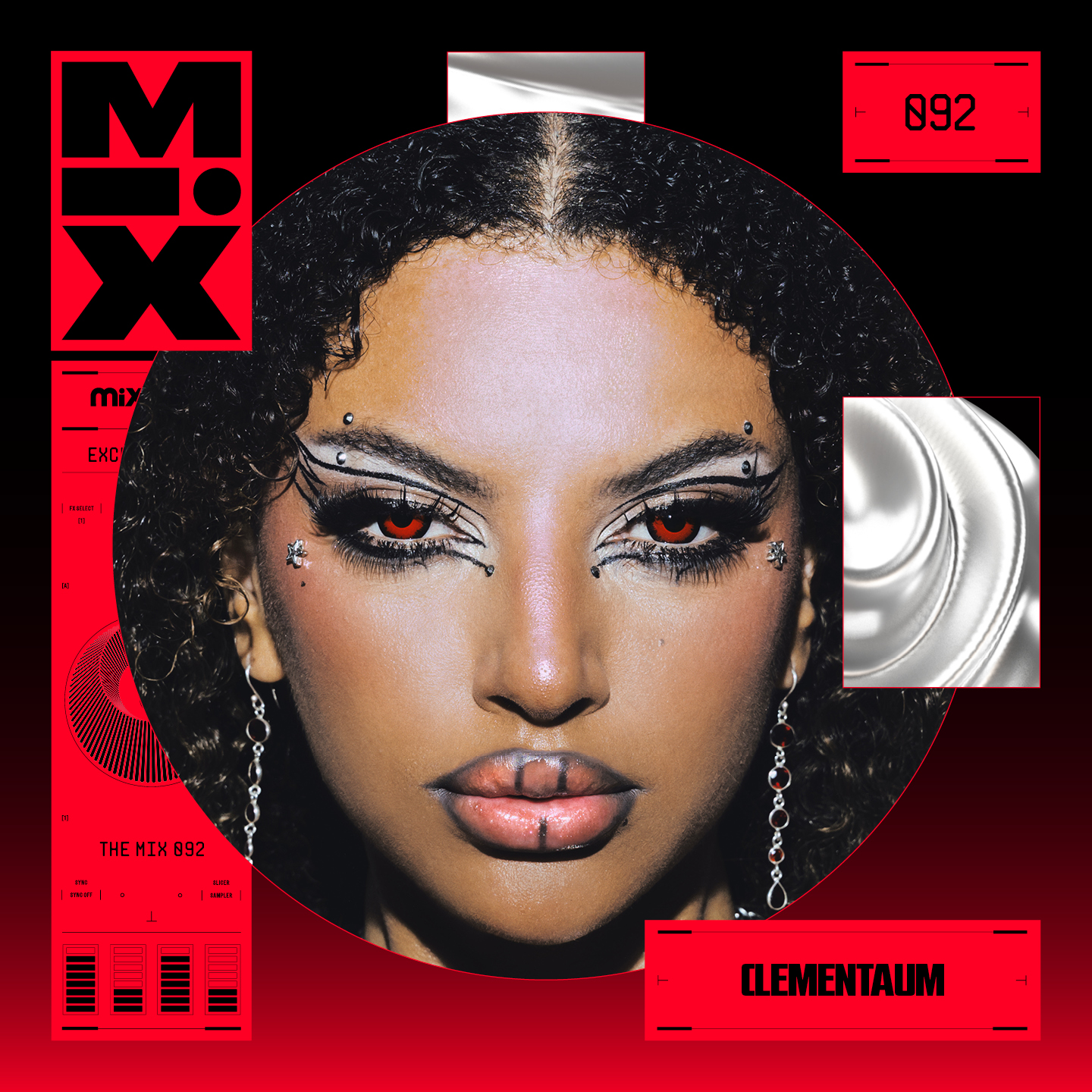
The Mix 092: Clementaum
Brazilian force of nature Clementaum delivers an 100% production mix and speaks to Patrick Hinton about representing queerness and femininity in Brazil's funk scene, the power of vocals, and the meaning behind her nickname LA MAYOR
When it comes to inspiring a dancefloor to move, Clementaum leads by example. The Brazilian DJ has that indefinable and all-important quality for electrifying clubs from the booth to the back of the room — she’s a total vibe. Sometimes waving a fan, always with a sparkly purse by her side, Clementaum sets the pace in a flurry of waving arms, pumping knees and full-body spins, executing propulsive blends from a flow state of constant motion. The sounds she unleashes are simultaneously experimental and irresistible, fusing Brazilian funk with Latin rhythms from guaracha, tribal, raptor house, reggaeton and dembow, turbo-charging this heady mix with an emphasis on vocals and influence from vogue beat to pop. The effect on crowds is like mainlining adrenaline.
Born Gabriella Clemente in the southern Brazilian state of Paraná, some of Clementaum’s fondest childhood memories involve heading to the local park on Sundays where people would load weighty soundsystems onto cars and blast out electro funk (a Brazilian funk subgenre powered heavy bass and electro house influence, now known as mega funk). Her sister was a baile funk dancer and a major inspiration for her music tastes, raising Clementaum on the sounds of that scene as well as pop divas, and taking her to parties as she grew older. Becoming a club regular in the state capital of Curitiba while at college, she soon began working in nightlife as a hostess, before starting to DJ in 2017. Initially trained by vinyl aficionados and cutting a focused figure behind the decks, she developed her larger than life stage presence while playing lockdown live streams, noticing on playback that she wasn’t conveying much energy while in the zone. “If I want to see the dancefloor vibing and jumping and being happy, I need to show that myself,” she notes.
Read this next: The UK loves baile funk — but does it understand it?
While the pandemic was initially a “big hit” due to lost gigs, the time it afforded her to build an audience online helped accelerate her career coming out the other side, growing her fanbase “outside of the Curitiba and Paraná bubble.” In 2022 she moved to São Paulo which marked a major turning point, finding a music community who encouraged her experimental inclinations and compelled her to mix more of the Latin rhythms she’s drawn to into her sound. Those have been a staple since she started producing her own music, merging with her dance and pop references to form high-octane tracks. Her latest release ‘VAI DJ + FORTY’ is a ferocious outing on influential Mexico City-based imprint NAAFI
Since her first production arrived in 2021, Clementaum has collaborated with major stars such as Pabllo Vittar, Nathy Peluso, Ms. Nina and Pedro Sampaio, as well as fellow underground heroes like Caio Prince, Slim Soledad and Rafael Rosa, the latter accompanied by an acid trip of a music video. Clementaum’s tour dates tell a similar story, with a packed schedule over the past couple of years including major European festivals such as Primavera to the nicher bills of Unsound Kraków and Draaimolen. There’s been sets at gamechanging parties at home and abroad from Mamba Negra to Baile Trama too, plus institutions like Berghain and Nitsa.
With ballroom culture also being fundamental to her time in nightlife — playing vogue beat since she started DJing and getting involved in the nascent days of the ball scene in Curitiba, now holding the title of ‘Overall Princess’ in her House of Harpya — Clementaum is a figurehead for injecting queer and feminine energy into Brazil’s funk and club landscape, and fuelling Latin American music’s international popularity. Now a resident on London’s Rinse FM, she uses it as a platform to promote peers and underrated artists from the Global South.
Clementaum’s contribution to The Mix is an exhibition of her rip-roaring sound, comprising entirely of her own tracks, collaborations and remixes. In the accompanying interview, she discusses the power of vocals, future plans, and the accidental etymology of her nickname LA MAYOR.

I read that doing DJ live streams during lockdown made you more performative in the way you play, because you saw it was more eye-catching. How was it bringing that style of performing as a DJ through to the post-pandemic time?
When I started out, the people who taught me how to DJ were people who had been in the clubs for a long time, they were playing vinyl and they were very serious about techniques, so I was usually very focused. But during the live stream era, when I was looking at myself on the camera, I saw that I was a bit shy and a bit too focused on it. So I was like, 'hey, I need to let go a bit’, because I'm very much about the performance side of things. I love pop divas. I grew up with those kinds of performances, so I wanted to bring that to the DJ space too, because my music is also very performative, very happy, very upbeat. If I want to see the dancefloor vibing and jumping and being happy, I need to show that too, myself.
Brazilian funk was often labelled as masculine and dominated by the male gaze in its original form, but that’s changed as the sound has evolved and expanded. Is it important for you to represent queerness and femininity in that world?
I'm very happy to notice that in the community as well. It's very important to me because those identities — women, queer people — they have always been in funk for a long time, but they've always been in a place of being underrated or undervalued. I'm happy to be a part of that changing, and very glad to see me and my friends get recognised. It's very important to see other ways of living within funk, because the people going to the parties are not just cis men, so it's important to see the representation not only on the dancefloor but in the music as well.
It’s always been a politicised music, with attempts at silencing by politicians and police. How does that history impact your music? Do you feel the music you make is politically charged?
I haven't been personally affected by that because when I started to play things were a bit more open, but that repression gets very internalised in the way that people make music and in the way that people make parties, especially in Brazilian funk.
The competitive ballroom scene is an integral part of your roots in nightlife, how have your experiences in that world shaped you?
When I started DJing, a big part of my music research was focused on vogue beat. And then I started to meet the people who were already a part of the community here in Curitiba, Paraná. At the time, it was nothing official, but they started experimenting with doing balls, having the first balls in Curitiba. Those people from the community embraced me and I started being a part of that. It's very fundamental to my career as a DJ because when you're part of the ballroom scene, when you're part of a house, it becomes a part of who you are and how you act. I even got some titles in my current house Harpya, I'm considered the “Overall Princess Harpya” because of all the things that I have done for that community.
Strong title. I also saw that you have the nickname LA MAYOR, what's the significance of that?
So LA MAYOR started out mainly because of my fans here in Brazil. When someone's very big and they're, like, doing it, you say "Maior! Maiorzona!" [meaning “the biggest” in Portuguese]. But I wanted to mix a bit of Spanish into it for a Latin influence, so I was like, "I'm not just gonna be maior, I'm gonna be LA MAYOR.” But at the time my Spanish wasn't so sharp, and I later found out that LA MAYOR means "the oldest one"... It also fit because I've been doing this for a long time! But that's how it started, it was mainly my fans and mixing Spanish and Portuguese. I speak Portuspanish!
Get in The Mix: Shop the Mixmag range here
Vocals play a significant role in your music. What do you appreciate about the energy or meaning vocals bring to a track?
Here in Brazil, vocals are culturally one of the most important parts in music. Even if I'm doing a song that's not a Brazilian rhythm, even if it's something like 4x4, very straightforward, I want to bring vocals to give it some variety, to give it some rhythm. A lot of times it's the highest point of the song, because for us vocals are very important, especially Brazilian funk vocals.
One of the other sounds and scenes you've become associated with is tribal, and you've blended funk into that. What draws you to that combination?
At first I wasn't very much a part of the tribal scene, but I started playing some tracks and mixing it into my sets, and the people from the tribal scene embraced me. But not really the more mainstream scene — because in some places like circuit parties they can be a bit more heteronormative — but especially at pool parties and more queer events that focus on tribal house, they really embrace me. I was already following a lot of DJs from that scene before I started playing their tracks, but they ended up really embracing me. Dance is also a big part of it, because at the tribal events that I play, there's a lot of people who we call "pipokete", which is a play on the word popcorn, because those people seem like they're popping off all the time, and that's very important to me. I'm very honoured to be welcomed in this space.
It's similar to ballroom in a way, in the sense of having dance styles associated with the movement, with the pipokete and other styles like sarrinho.
Since I started playing in more tribal parties, I play a lot of guaracha also, which is also a Latin rhythm, and I started noticing that whenever songs were more heavy on the horns and brass instruments, people would dance a lot, they would clap their hands. So now when I go to produce a new track, I always think about, 'Hey, what are people going to be dancing like, when are there gonna be fans clapping here', you know? So that's how the dancing influenced my music. I started seeing people dance to my tracks, so now when I go to produce, I'm always thinking about how people will dance to it.
Here in Brazil, there's kind of like a rift in the tribal scene. Some people will say they do more like a 'fine tribal', which would be more refined, more light, and I would be considered more like a heavy style, because I'm more heavy on the percussion and on the dancing and the brass instruments.

Last year you were featured on the Latincore compilation on Headroom Records, which is a movement that’s also taking those Latin club sounds you’re inspired by into a new world with a playful and humorous approach. What are your thoughts on Latincore and has it inspired you?
I've always played that type of sound, but for a long time I didn't know how to name it. Latincore would be something more recent and I usually consider it to be a bit more fast-paced. I wouldn't always describe my songs as Latincore, but it is important to have that, and it's a good thing to put a name to the types of sound that me and other people were already playing. Because, either way, having a hashtag and having a genre tag on Spotify helps people find each other and build a community and build an identity around it.
Latincore figurehead CRRDR is someone you've collaborated with, and you've also worked with artists like Ms. Nina, Nathy Peulso, Slim Soledad, Pabllo Vittar. How do you find collaborating with other artists?
Pabllo Vittar literally changed my life, because getting invited to be a part of the Pabllo remix album was something that gave me a lot of visibility. That also was my connection to Nathy Peluso, because Pabllo invited me to remix a track that she had done with Nathy afterwards. So Pabllo was very instrumental in making me more known, especially here in Brazil, and I hold Pabllo very dear, because a lot of pop artists here in Brazil are not looking at the underground. So it's very important to have someone who's looking at that and who's including DJs and other performers from the underground scene into their art. More recently that also happened with Pedro Sampaio, who is one of the biggest DJs here in Brazil, he invited me for a collaboration and that also brought a lot of visibility. I even went on TV here with it, so that was very important.
I've known Slim Soledad for more than 10 years, we weren't even DJing or making music when we got to know each other, so we've had this friendship for a long time and I'm very glad to have some music out with Slim now. I enjoyed collaborating with CRRDR because we were already friends on the internet before we got to know each other in real life and make music together.
I like collaborating with people from all over Latin America, because that connection with other Latin American countries is very important to me.
You played in Europe a lot last year, how was that? How did you find the European crowds were responding to your music?
It varies a lot from country to country, because Europe's so big. For example, in Berlin, people usually want me to play more heavy tracks, and I'll usually play more like Latincore sounds or heavier, more electronic Brazilian funk tracks. But in Spain, I can bring more Latin rhythms like guaracha, and people there are a bit more upbeat. They're a bit more happy, more summery, so it depends a lot on the country. I try to always keep the same essence, but the genres I'll pick to play in each country will vary a bit because of how people respond to me.
Read this next: How sounds from the Global South stopped club culture stagnating
Here in London you're a resident on Rinse FM with a show called 'Pra Fritar e Rebolar' (For Frying and Shaking). How did it feel to join the station and how does that title reflect your style?
I'm very glad to have the residency at Rinse because I can use it as a platform to present artists that I admire to the rest of the world. I'll usually try to invite racialised people — Latin American people and I've had guests from Africa also — because I want to give those people a platform and I'm like, 'Hey, I admire this person, you should listen to them as well.’ Once in a while I'll do a solo episode, but mostly it's with guests who I admire and want to give a platform to. If you go and look at the line-up of guests that I've had on Rinse, some people will be known, and some people will be completely underrated. I think it's very important to have this platform to give space to those people who are still not as known, especially racialised people, so they can be known more internationally.
I saw that you run your own events called Showmentaum. What's the concept?
Whenever I had a show somewhere I started saying, 'Hey, I'm not doing a show, I'm doing a Showmentaum'. And then a company that produces parties reached out to me and was like, 'let's turn this into a party.' My idea is that it's a friends reunion, so all the people who play at Showmentaum are my friends, and I also try to bridge the gap a bit between the tribal circuit scenes and the underground scene with my guests, because I have a lot of friends from both of the scenes, so I try to combine that and it's a very friendly atmosphere. Some people are like, 'why do you only invite your friends to play at Showmentaum?'. Because that's the idea! I wanted it to be, like, Clementaum friends.
What are you excited about in the future?
For 2026, I want to tour a bit less and focus more on making music, because I have a lot of tracks that are already pretty close to finish. I've already released a lot of singles, but I want to put together a more complete and cohesive piece of music, maybe an EP or a mixtape. So that's my plan for 2026.
Since I started incorporating my own vocals into my music, I also want to start doing live shows where I sing in addition to playing. I want to present a new show for festivals later in the year.
How did you approach your mix?
This mix blends the energy of Brazilian Carnaval with everything I picked up on my latest European tour, where I played Berghain, Nitsa, and Baile Trama. It’s full of my own tracks, collaborations and remixes. I wanted the energy to feel so strong that you can’t help but get up and dance wherever you are. After all, in Brazil the year doesn’t really begin until after Carnaval.
'VAI DJ + FORTY' is out now, get it here
Patrick Hinton is Mixmag's Editor & Digital Director, follow him on X
Tracklist:
Clementaum, LAZA, RKills - Unreleased
Clementaum - Unreleased
R2POT, Clementaum, MARITZA - Balança o Peito (Club Edit)
dry, Clementaum - Unreleased
Adame DJ - Conflito (Clementaum Remix)
Clementaum, ALYX - Unreleased
Clementaum - Unreleased
Clementaum, LAZA - Unreleased
Slim Soledad, Clementaum - Mapoas Only
Clementaum, VBRANDO - Unreleased
Katy da Voz e as Abusadas - GORDINHA MAS TÁ BOM (Clementaum Remix)
Clementaum, RKills - Unreleased
Clementaum - VAI DJ + FORTY
Bruna Strait - Samba (Clementaum & RKills Remix)
CyberKills - Cadê o Loló (feat. Kalef Castro) (Rafael Rosa & Clementaum Remix)
Clementaum, MALO2K - Unreleased
Clementaum, RIANRIOT - Unreleased
Salvyan - Vamo Sambá (Clementaum Remix)
Sykors, Clementaum - Unreleased
Vita, Manu Calmet, Clementaum - Unreleased
Grag Queen - Mau Contato (Clementaum Remix)


