
 Music
Music
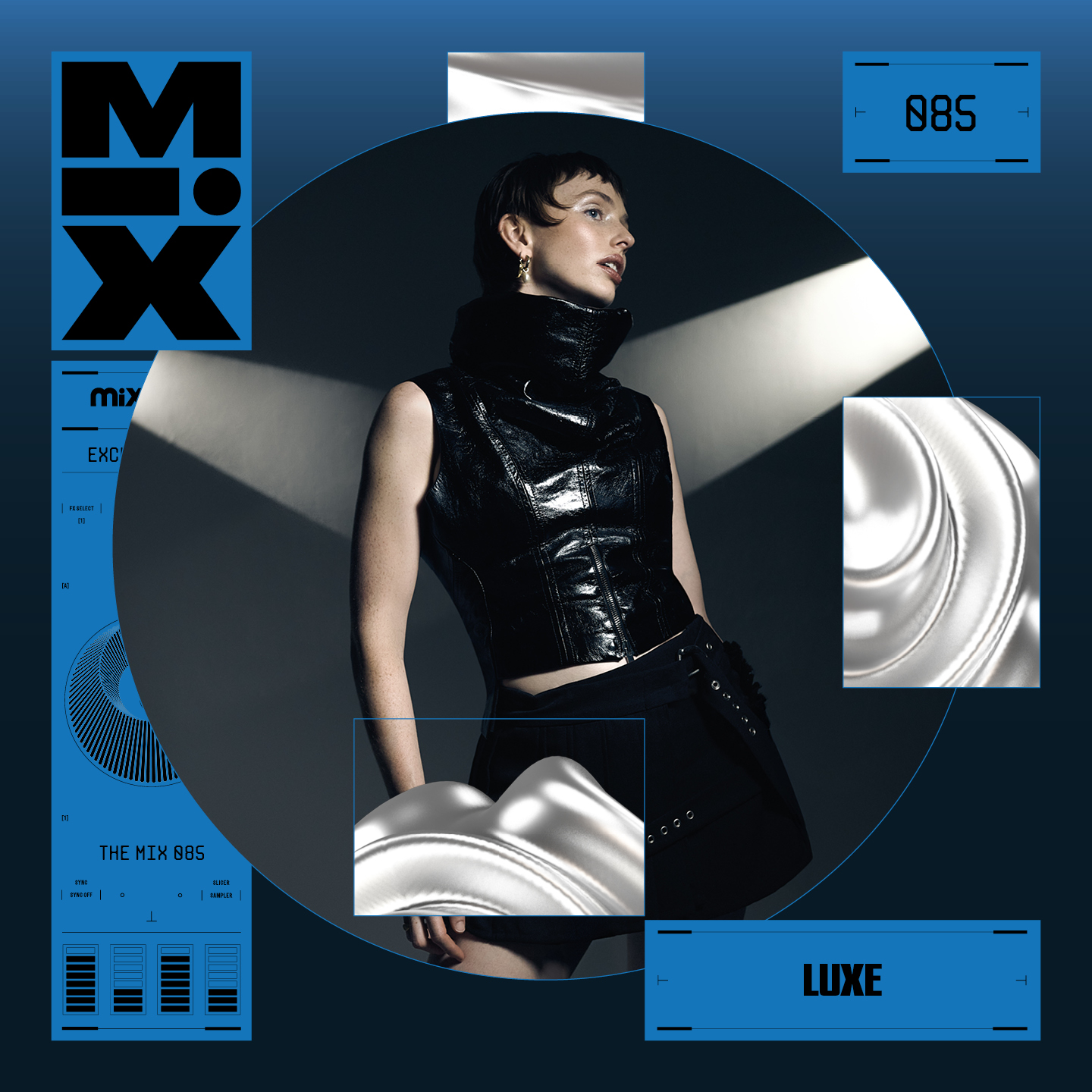
The Mix 085: LUXE
A slow but assured move to consolidate her classical roots into UK bass music has made LUXE one of the most intriguing artists of recent years. She speaks to Gemma Ross about that journey, and delivers a mix packed with club pressure
When LUXE’s name first began doing the rounds in early 2022 after the release of her debut EP on HAAi’s Radical New Theory imprint, she seemed to have it all on lock. A sound that reflected the quick ascent of UK bass at the time (and the new wave resurgence of UK garage), and a breakout signing on a respected record label put her in good stead for the years ahead. And while it did set the pace for her next moves, it didn’t bind her to the sound that she was rapidly becoming known for. By 2024, LUXE made a natural shift to something more experimental with the release of a “trilogy” project titled ‘tides’ – a hybrid of compositional work and dance music that sounded ethereal, haunting, and danceable all at once.
Since then, LUXE’s formative practices as a classical musician have seeped into her work as both a DJ and producer. “For a while, I couldn't get my head around [classical and dance music] ever colliding – they felt like very separate worlds,” she explains. "Then, I guess I did make a conscious decision to start refining how I wanted to express this sound in my own way." This new route even informed her latest live project playing alongside a queer, all-female ensemble, which she’s even taken to London’s ICA with a show that reflected on her experiences with Premenstrual Dysphoric Disorder (PMDD), and incorporated an array of live instrumentation, club music, improvised vocals, and on-the-spot production in a live setting.
Get in The Mix: Shop the Mixmag range here
Just last month, LUXE took all of those ideas and littered them through her latest single, ‘Silk Wound’, a track she says feels both “intimate but sharp around the edges”. It’s a careful embroidery of her classical sensibilities and background in bass music, and the start of a larger project via avant-garde record label Mercury KX that hopes to completely join her two worlds together, and give the music that she’s been working on with her ensemble “a proper life beyond the stage”.
We sat down with LUXE to discuss her classical-club music crossover, her “ambitious” forthcoming project, and the expanse of her new live show. Check it out below alongside a new mix packed with club pressure.

Talk to me about your start in music – I know you play a lot of instruments and have from a young age. What were you inspired by when you first started making music?
I grew up in a musical household – my parents aren’t musicians themselves, but I was encouraged to explore the interests I had from an early age, so playing instruments was a central part of my childhood. I started with piano and flute, then also sang and studied opera and old English choral music into my teenage years. When I first started creating my own music, I was at school and composing in music lessons, but also taking it away and writing in my own time, and this was how I started to develop my style. At this point, I was obsessed with early English opera like Purcell, and 16th century choral, like Thomas Tallis and William Byrd. I was overcome by the sort of melancholy that sits underneath them – that and the early electronic stuff I’d find online. Bristol dubstep sounds like RSD, old skool garage, bassy breaks and darker stuff. I loved the tension between something very delicate and beautiful, and something slightly unsettling. That contrast has stayed with me in how I write now.
When you first came up in UK dance music, you were making a lot of bass-leaning tracks rooted in 140/breaks – but it feels like you soon pivoted with a more multidisciplinary approach to production that now brings in your composer sensibilities. How did that trajectory happen?
It wasn’t straight away a conscious pivot so much as all my worlds slowly bleeding into each other. I came up through 140 and breaks because that scene felt open and experimental and expressive, an energy outlet space for hyperactive extroverted introverts like myself, but also slightly introspective. By this point I’d spent some years studying, composing and arranging, many hours of practice and performance, so eventually those instincts started to creep into the club side of what I was making. For a while, I couldn't get my head around them ever colliding and they felt like very separate worlds. With the classical music scene I felt like the kooky club kid, and then in some electronic spaces, people noted that I came from classical and maybe that made me feel like I was coming to it from a different world. Over time, something clicked and I realised my musical experiences and passions didn’t need to sit in a binary, and then I guess I did make a conscious decision to start refining how I wanted to express this sound in my own way. This is something I will continue to refine and change forever – yes, I've found a sound and it feels like home now, but there’s always more to experiment with, and I know that will be a lifelong discovery for me.
Read this next: Post-club: Why DJs and producers are leaving nightclubs behind
You just released your latest single ‘Silk Wound’, which incorporates a lot of those early compositional techniques and sound design. What was the idea behind this track?
‘Silk Wound’ came from wanting to make something that felt intimate but still sharp around the edges. I was playing with these light, almost whispered motifs and then countering them with heavier, textured electronics. I wanted the string automation, arrangement, and use of extended techniques to feel completely immersed in the electronic writing, with a sense of tension between them, but also wrapped up in one another.
You said this single is “rooted in a very personal place of reflection, growth, and quiet excitement for what’s to come” – could you expand on that?
I wrote it at a point where a lot was shifting in my life, creatively and personally. There’s softness in it, and also a sense of stepping forward with a bit more clarity. The track holds that tension which feels true for me.
The single is said to be the first of an “ambitious” new project. Can you tell us more about that? What can we expect?
It’s the opening chapter of a larger body of work I’ve been shaping for a long time – a chance to finally bring into the world the pieces I’ve been performing with my ensemble over the past couple of years. It feels like the right moment to give that music a proper life beyond the stage and to build a home for it, which I will be doing on Mercury KX, releasing a series of records containing the archive of music where my electronic style meets instrumental experimentation. I want the people who listen to my club music to be able to connect with both my worlds, all at once…
Alongside that, I’m starting to grow a home for all of this which is called Tapestries. It’s a held space where I can gather people to connect, experiment with the collaborators, players, and listeners who’ve become part of the live project and connect to people of all ages and backgrounds. I dream of creating a world where the composition, the club energy, the live experimentation and expression, and the people around it can sit together and evolve as one over time.

What did your early learnings in classical music teach you about your practices in dance music? Are there similarities in the way you create and play music?
Classical training taught me discipline and how to think about structure, harmony and narrative amongst many things – the sense of creating a journey that is at the core of the show or performance. In dance music, those ideas can translate into tension, release, and how you handle space, colour, mood, and energy. The underlying messaging feels similar to me – you’re guiding people with you through a moment or feeling, whether they’re in a concert hall or a club.
You’ve created a really interesting live project that has been compared to a sort of chamber concert. How did you come up with the concept for those shows?
The live show grew quite naturally from wanting to bring the classical world and the club world into the same room, without diluting either discipline. I wanted something that felt like a contemporary chamber ensemble stepping into my electronic universe. So I built the show around the cycles and themes in my work – lunar, body, emotion – and let the instrumentation reflect that. The show at the ICA was built upon my reflections of lunar and menstrual cycles in parallel. I dug pretty deep and reflected on personal experiences of PMDD. I’m currently brewing and reflecting to work out what’s going to inspire the direction of my full live ensemble show at the Southbank Centre in the Purcell Room. It’s evolving into this hybrid performance that sits between ritual, concert, and club expression – I’m so excited to share this iteration.
The show also features an all-female and queer orchestra. How did you curate the ensemble involved, and what can fans expect when they watch this show live?
The ensemble was formed through my connections and collaborators on the project. I’ve known Thea, who plays double bass, since we were 12 in the National Children’s Orchestra. My technical creative producer Ali Welsh also helped cultivate this environment. I’ve been lucky to be surrounded by brilliant female and queer artists and musicians from all angles and disciplines, so the ensemble came together through lots of people from different backgrounds and experiences too.
For people coming to watch the show, it’s a very live show – the arrangements aren’t always bound to score, there’s room for improvisation. The players and I respond to each other, and the electronics hold everything in a wider, atmospheric space. It feels intimate, a bit raw, and designed to make people feel connected and stimulated, a spectrum of human emotions.
Read this next: Carl Craig has turned his back catalogue into an orchestral masterpiece
What’s next for you? Where do you go from here?
Touring and playing DJ shows which carry the momentum for my calendar. I’ve been loving the continued club exploration in new places, new crowds. I’m focusing with a lot of passion on bringing Tapestries to life. I’m planning the release of my archive of hybrid electronic works spanning from club to ambient, then bringing the live show to more spaces – one of note being in the Southbank Centre’s Purcell Room in London on March 28 – and continuing to attempt to blur the boundaries between classical composition and club culture. I’m also enjoying writing for, and with, other artists, and doing more curation and intersection with other mediums such as fashion and film. I feel like an open book creatively, and like personal shifts have developed my attitude towards myself and my art in a way that’s feeling really good.
Tell us about your mix…
Club pressure, compositional detail, voices through time, instruments, synths and energies drifting and swirling together. It feels like a kind of dance through my influences far and wide, held together by key cycles that keep it grounded. Miles Davis phrasing laid over dubstep textures, impressionistic debussy harmonies drifting into old skool hardcore flavours. I like the idea of parallel universes being layered over one another, and that’s how this one came out.
LUXE is playing at London's Southbank Centre on March 28. Grab your tickets here
Gemma Ross is Mixmag's Associate Digital Editor, follow her on Twitter
Tracklist:
Debussy – Reverie (Apfelblim & Second Storey rework)
Aqua vybe / waterboy – Soundboy (the freestyle g0d mix)
Skeemask – VL1
Pépe – Medium
Miles Davis (ft. John Coltrane & Bill Evans) – Blue in Green
Yo Van Kao – Swimming Whales (Plant Power Masters)
Umfang – Force
Pumpspringers – Relative Movement (Nitefreakman Version)
Caroline Polachek – On the Beach (Timefall Mix)
upsammy – Vacate or Annihilate
LUXE – ID
Acid Jesus – Faith in Acid
LUXE – Skin
Ability II – Pressure Dub
Rino – Closer
SOPHIE – Is It Cold in the Water?
LUXE – Silk Wound
Pablo’s Eye – That Night Together With Her


