
 Music
Music
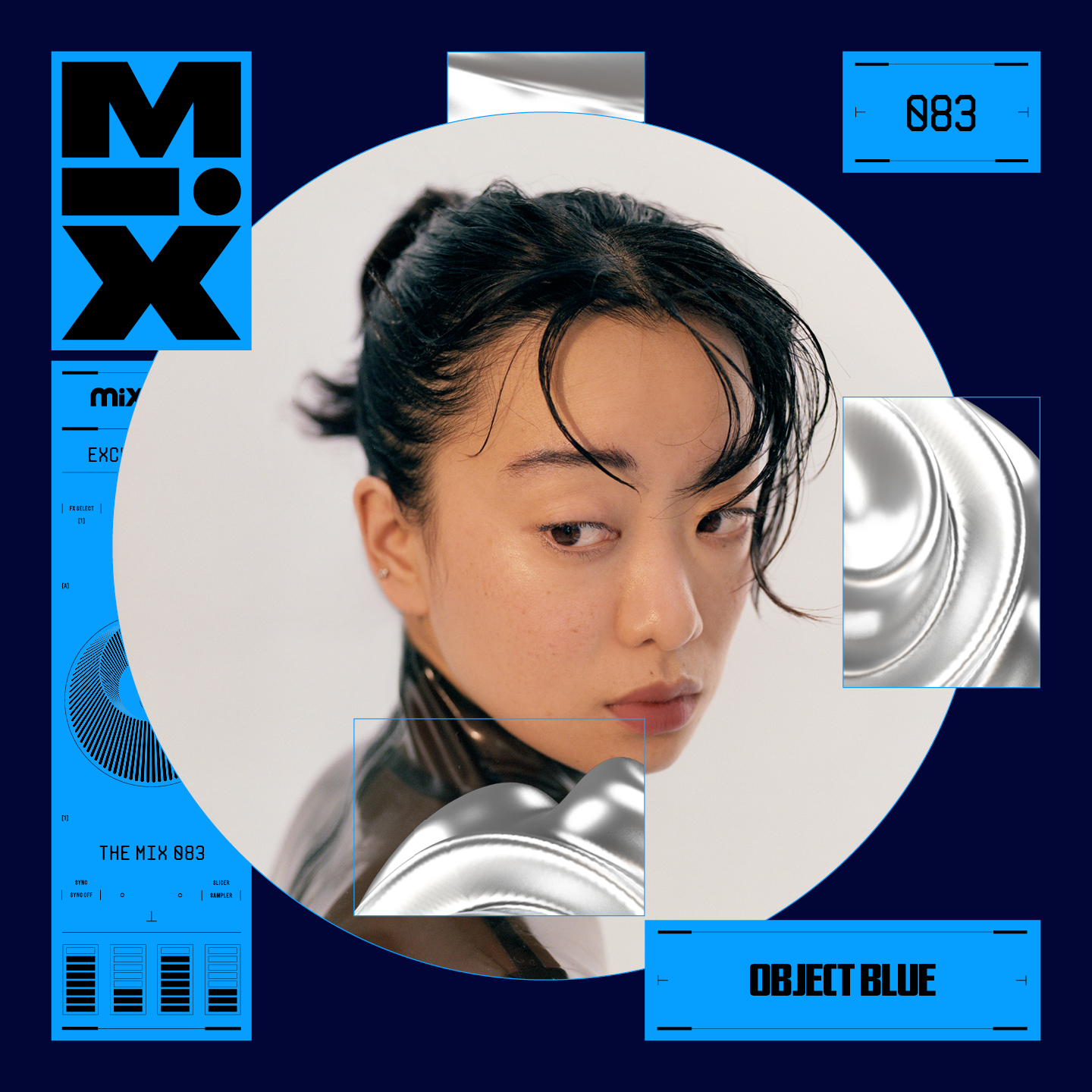
The Mix 083: object blue
Three years in the making, object blue is about to release her debut album ‘what resembles the grave but isn't’ on TT. She shares a mix of dark, heady beats and speaks to Patrick Hinton about the gruelling process of the LP's creation and the industry conditions it arrives in
The concept of the ‘difficult second album’ is a cliche in the music industry. A pressurised lens on any artist or band who finds success with a debut LP and is due another, now facing the fresh concerns attention brings. These days, though, culture has shifted; if anything, it feels like the ‘difficult first album’ is more the zeitgeist.
The notion of a ‘second album’ as an assured rite of passage now seems kind of quaint. Singles and playlist placings rule the roost. Legacy music publications run articles asking “Who Listens to Albums Anymore?”, and stats support a decline in long form listener habits. Even artists getting signed to album deals is no guarantee, with their fate at the mercy of sales, engagement stats and execs. An underperforming single can turn a record deal from a lifeline into handcuffs.
When it comes to dance music, the ‘difficult first album’ rings especially true. It’s historically a singles, one-side-of-a-12"-designed-to-tear-up-a-club based culture. Artists in that world deciding to go longer form tends to feel like a big step or statement, and is usually a climactic moment in a building career rather than a debutant launchpad. Even then, the gap in listening stats between singles and album tracks for some of the most hyped DJs in the world is vast. Commercially, albums aren’t as important as they once were. Artistically, this only makes them feel more significant.
All of this context feels inseparable to the moment we’re celebrating with our newest instalment of The Mix, which comes from London-based DJ and producer object blue. A standard intro to this interview could rattle off biographical info and salute her career highlights to date (read our previous profile from 2019 if you want to brush up.) But this time around, the release she’s about to share with the world - her debut album ‘what resembles the grave but isn't’ on crucial London imprint TT - has been so all-consuming that the music and format feels as tangible a subject of the interview as the person who made it.
This has very much been a difficult first album for object blue. Years of self-doubt and existential dread have been in the background of writing the record, featuring tears, the impulse to quit music entirely, and a threat of divorce. But she persevered and the resulting eight-track album is a masterpiece, showcasing the wide, vivid world of all of object blue’s tastes and influences, channelled through radical sound design, tonal beauty and some club beats to boot.
Get in The Mix: Shop the Mixmag range here
Leading up to the point where she started writing the album in 2022, things had been going swimmingly. Her debut EP, ‘Do you plan to end a siege?’ also on TT, felt like an underground hit in as much as any leftfield, sound design-rooted record can be — Bandcamp users lavished praise, it got club play from tastemaker DJs, and was reviewed well in prominent publications. From there she began to tick off key milestones on the DJ success trajectory: there were more EPs, including a rowdy collab of club tools with floor-wrecking fav TSVI; bookings all around the world at revered clubs, two Mixmag Lab sets, a Boiler Room, and a Rinse FM and then NTS residency. All the signs of an established clubland fixture were bubbling, with all the co-signs you could possibly want.
Then she began work on a debut album. To say there’s been toil and torment to get to the point of release three years later feels like an understatement. Object blue herself will admit the hours and agonising she’s poured into it has impeded her music career. As she shut herself away to focus on this envisaged magnum opus, all that momentum began to stall. Even in her private life she retreated from seeing friends and going out due to a sense of guilt that she should always be home working on the album. But that part of her life had always been a vivid source of inspiration, so rather than knuckling down productively, she found herself spiralling and unstimulated.
The confusions about what an album is — or is for – anymore contributed to her creative block. As a younger millennial — “unfortunately the last generation that grew up listening to albums,” she says – albums are a cherished format and staple of musical education, so she cared deeply about the project. At the same time, she was aware of the machinations of the modern music industry, and wracked with anxiety about needing banger singles that would cut through and regain those diminishing DJ bookings. Another pressure was industry folk making grand, unconstructive advice like “get on TikTok!” while she knew little of the platform and found the notion of trying to make her “weird, obscure music” (“that I don't consider weird or obscure at all, but everybody else does apparently”) go algorithmically viral faintly ridiculous.
In a cruel or liberating irony, depending which way you see it, the agonising, procrastination and delays persisted until object blue felt so removed from the industry that she dissociated from feeling like a career musician. Deciding she can’t rely on music as her only source of income — something she casually mentions mid-sentence in a matter-of-fact tone — allowed her to regain the sense of freedom to make the exact music she wants to make.
Of course, her music career picking up again would be a happy outcome. And ‘what resembles the grave but isn't’ deserves to firmly thrust object blue back into the spotlight. But talking about the album, how it sounds and how delighted she is to have created an authentic work that she’s proud of is what matters most. Having heard her describe fixating on it almost to the point of sabotaging her career, while simultaneously recognising albums aren’t as important to the average music consumer nowadays, is refreshingly uncynical — and asserts that this is music as artistry not marketing. So go listen to object blue’s album. In full. Buy it. Luxuriate in it. And check out her mix and interview - which goes into more depth about the music and its creation - below.

Your debut album is completed. How does it feel?
Oh, I feel so free. I feel strong and free. I'm really glad I managed to get it out in the way that feels the most authentic. Because a big part of my procrastination and struggling to write it came from [thoughts] like, “I guess it should be club friendly”, “I guess I have to find an economic-social good spot for some of the tracks, because no one's listening to albums anymore.” And every time I thought about these things I just couldn't write.
I had this pressure on myself that it has to be a step up in my career. After COVID, everything kept slowing down. I went through two/three more years of retreating further and further away from the club scene, getting booked less. It was really scary. Whenever I would talk about, “Oh my God, I don't know what I'm gonna do, I'm getting less and less bookings”, people are like, “Why don't you just drop a short EP of club tools to tide yourself over?”. But I can't do that. I don't write that much music compared to other producers. I don't have this arsenal of demos ready to go in the background. Labels would approach me: “What are you working on? Do you want to release with us?”. And I'm like, “I'm really sorry, but I am working on something, and yes, it is the same thing I told you two years ago when you asked me, and yes, it's still not done.”
It was a very uncertain and lonely time for me. But in the end that helped me arrive at a point where I was like, “OK, here are eight tracks that sound the way I want them to sound.” I'm proud to put them out. I finally arrived here.
That initial wariness of a socio-economic element of releasing you mention, that means you were worried about it needing to be something that would help you get bookings — to have club bangers — but then you transitioned away from that?
Yeah. I know singles like 'Act Like It Then' got played out a lot in clubs, but I'm not sure if I'm a consistent banger-maker sort of producer, as much as I love good functional club music. I think you can tell because when I play DJ sets I really don't ever play my own music. So I think I already kind of misshot by being like, “When I put out an album, I have to also make sure it's going to get played at clubs and festivals.” Clubs and festivals now look completely different anyway.
People were always saying, ”'How are we going to survive in the social media landscape?”. I was like, “Oh, it's got nothing to do with me. I make experimental music.” But you know what, everybody was kind of right. People kept saying, “You should get on TikTok.” And I was like, “How the fuck am I going to make my weird, obscure music — that I don't consider weird or obscure at all, but everybody else does apparently — how am I going to get that on the algorithm?”. And people who discover music on the algorithm, are they even really going to like this kind of music?
I realised I'm not gonna work out whether it's going to get views and clicks. I don't want to worry about this, because then my music suffers. And that's the main thing about my music, I have a very unique sound world and it's very true to what I want to hear. I'm quite a niche musician that luckily had a lot of interest in the past, and I know the kind of people who enjoyed my music in the past are probably going to listen to this anyway.
For a moment I thought about finding a new audience through TikTok or whatever, but then I tried and it was so boring. I was just like, fuck it.
When did you start writing the album and how have you found the process?
I think that the first file that ended up on the album is the second track 'galalith', I believe I started it in 2022. I remember making it when I was being filmed for a course on Virtuoso. They rented a tiny studio somewhere, and then were like, “please produce!”... I didn't want to just open my old folders and pretend. I started slicing drum samples and arranging them.
The other old track is 'nacre'. I modelled it after the M.E.S.H. remix of Tomás Urquieta's 'Anatomía' which came out on Infinite Machine in 2016. I find structure and arrangement the hardest part of producing, so I did what I learned in music school which is that you listen to a model track and you write down everything you notice about every different element. I wrote notes and a diagram of how the track works, and then I started piecing together 'nacre'.
I made the sounds on Opal by Fors.fm, and then I started arranging it using the notes I made. Being like: this revolving percussive sample comes in here, then returns here, blah blah blah. I started out in 2022 and took until this July to finish, because I was like, “It needs something, almost a melodic thing, but I can't write it.” And then I went back to my earlier productions and took some stuff from it. I ended up taking this exact same bleep from Alva Noto's 'Transvision' EP that I used in '(time to) WORK' from 'Rex’. I remember there was a Twitter thread maybe like eight years ago now, and people are like, “Oh, it's so hard to make a good beep, how do you make yours?”. And I was like I just sample Alva Noto, he makes it for me. 'nacre' only came together after I put the beeps in.
A lot of the tracks have been like that, starting work on it in 2022 and then my procrastination period of, “This is not really easy listening, is it? This is not going to be popular, I don't know what to do.” And then I escape by getting into gardening and playing Tetris on my phone. My wife [Natalia Podgorska] asking, “Why are you not writing your album?”. And I'll be like, “You don't understand, it's hard!”
There were so many moments where I was like: maybe I just can't write music anymore; maybe it was just a short run and that was it; maybe I should just stop; maybe I should just forget about all this and put object blue to rest. So the garbled speech at the beginning, I say, “I don't hear the music anymore.” When people used to ask me, “How do you know what to make, how do you know what to put next?'”, I was always like [puts on mocking voice] “it just plays in my head because I'm a genius!”. And then I was like, “Oh my god, I don't hear it anymore. What am I going to do?”.
I would hate myself if I couldn't make music anymore. It feels like a life or death situation, which is why also the album is titled 'what resembles the grave but isn't'. I really wish I could confidently, relaxedly make music, but it's very, very tangled up in my sense of self-worth.
My wife lives with me and she's seen this. She was like, “You're so miserable without writing it. You pretend, ‘Oh, maybe I just don't write music anymore, maybe that era of my life is over. The world has changed, I've changed.’ But if you really felt that way, I don't think you'd be so upset about it.”
So there's this span of 2022 to 2025. How much has the music changed and evolved during that process? I saw before a gig in March you said you were: “excited to show you what I've been making & chiselling & destroying over the last few years”.
I would say the one that changed the least is 'you're all I wanted'. You came to me opening fabric a few years ago [2022], didn't you? I played a peak-time set, I could tell people wanted it, and apparently after me it was like an ambient synth improvisation — I felt really bad about that. But anyway, I started with that tonal sound [from ‘'you're all I wanted']. The rest of the track was still yet to be written, then I started writing the melody that comes after. That's probably the one that sounds the most similar to my first iterations, but I did make some changes.
The best thing I did, in order to come out of the hole that I thought was my grave but wasn't, to finish this album, was I finally let two friends hear it: Rob [DJ Pitch] and James [Hesaitix]. Because I mean it when I say, I don't really care if loads of people don't like my music, especially now that I've decided I'm not going to try to make music my only source of income anymore. But also just artistically, you can't please everyone and that's OK. But there are a handful of people whose opinion I care about, and they are two of them. I felt like I was like jumping off a cliff when I showed them. And then, it was so helpful. The only thing I changed about 'you're all I wanted' was, towards the end, the percussive hit off, it's a very blown out sound. That used to be more like a machine gun ricochet kind of sound, because I really liked the stark contrast of something that's very vulnerable and beautiful and something very hard and brutal. And James said the ricochet thing doesn't fit. And I was like, “Well, that's the point! It's supposed to bite.” And he was like, “Don't be afraid to let things be beautiful.” I realised, "Oh my God, maybe there is part of me that's like. 'You think I'm a little girl, but I'm not! I'm tough and I like hard bass music! I can stand my own in this UK bassline culture!'”. Maybe I was imposing that sort of expectation on myself.
One of the things I have to keep learning and learning, because apparently I forget all the time, is I can't have this external pressure in my head, because that really fucks with my music writing. When Rob was like, “Your tracks sound like they're from different worlds, you know you could resample your own stuff.” There’s this blown out, almost glass bottle whistling sound in 'galalith', which is one of my favourite moments of the album, the drums are going and it goes brrrrrrr... so I sampled that to use and I was like, OK, cohesion! There it is.
Read this next: DJ Pitch is a catalyst for the progress of experimental music
What’s your set up like? Do you just produce on your desk at home or do you create on the move?
I used to create on-the-go, and I think that was actually a really good time for me to make music. You know, I play gigs and then I'm waiting for my stupid bus from Luton Airport, so I'm sitting in Pret with my laptop open. The mixtape I released during COVID I started in Luton Airport. But then I started playing less and I was always home — not only because of COVID but because I'm very much a homebody. I also really restricted myself physically, like: “I can't go out because I should be working on my album. I can't go to dance, I can't hang out with people because I should be working on my album.” I really shot myself in the foot by doing that because I feel the most inspired after I see live music. I really should have just been going to gigs and listening to music more. I swear if I kept doing that, this album would have been finished two years ago.
My wife also had this astute observation. I think I handed in everything at the beginning of August, but around June I was struggling, 12 hours a day nonstop. At one point, I got off my chair, fell to the floor on my knees, and was like, "I think I might have to cancel this album". She's like, “why?”. And I was like, “Because I don't think it's good enough to come out. I'd be embarrassed.” And she said, “If you cancel this album I'll file for a divorce. You must be fucking joking me. I watched you torment yourself over this for the last five years and you want to cancel it? I don't care how bad it is, you have to get out of this. Unless you put this album out, you're never going back.” I said that I feel like I can write better music than this. And she was like, “Well then write it for your second album! But you know what, your second album can only be written when you have your first album out.” I realised, that’s true.
She also said, “I think you have impostor syndrome because you don't gig that much anymore. When you were gigging all the time, of course you were stressed but you have this confidence, like, yes, of course I'm a musician, that's what I do.” Then slowly by retreating I started questioning myself if I'm really a musician still? If I play something in the forest and no one is there to hear it, then does it exist — that sort of question.
I saw you say in another interview that to make music. “I have to be comfortable, and I can’t have anything ugly around me”. Why is that important to your creative process?
I am very much an aesthetic-inclined person. I love my home and I'm a very domestic person. I collect trinkets and when I work at my desk, I see a trinket and I'm like aww — that's really important to me. If I'm in a studio and then see ugly landlord decor that just kills my vibe.
It sounds like the fact that it was an album put a lot of pressure on the feelings you've had about the music. How did it being an album - your debut album - influence the creation and the sound? Did that make you more perfectionist?
It had good sides and bad sides. I put way too much pressure on myself. I was like it has to be perfect! I'm never going to learn this I guess, it's never going to be perfect. I was listening to the masters yesterday and I was like “this bassline should have been a bit louder”, but you know, I have to let it go.
What really appeals to me about albums — other than the fact that we are unfortunately the last generation that grew up listening to albums — is you can explore so many paths. I like a lot of different kinds of music and I think that comes out in my production. I really did want to just unapologetically write things with no clear time signatures, or things that are completely undanceable. But that's not all that I do. I wanted to catalogue and collect and curate and sit back and be able to say, “Yeah, this is what my music is.” Which is why there's only three tracks out of eight that have strong beats. If I was making a dance EP, obviously I'd want it to be three club tools. But the album is to capture my sound world, everything around it, everything I like that I can make.
That's why it's got, like, fucking strings, because I've always wanted to write pieces for strings, and I can't just bang that in after a banger three-track EP, you know, it doesn't make sense.
You put out the single ‘chaos discoideum’ last year, saying it didn’t fit on the album. Why was that?
I love this track. It's just from a very different world. That track was comprised of many things I wrote for my live sets, especially the show that I was touring with Natalia where she made these visuals and we titled it Biome Vice, because it's got the trashiness of Miami Vice but she builds a lot of biomes. For me, that track is full of a rainforest sort of atmosphere, this hot humid air. It just doesn't fit.

The first time I interviewed you, you said you don't use music to convey emotions or messages or anything like that. Is that the same with the album, the linking of the tracks is just a sonic thing? There's no narrative themes?
Mainly at the time, yes, and consciously, yes, But now that I look back, I can listen to each track and see I was probably affected by something happening in my personal life at this time.
One of the most important things I went through between 'Grotto' and this album is I did two years of Lacanian psychoanalysis. You talk about the unconscious and how it has ways of making itself known even though we're not aware of what we're feeling down there. And so for example, I sample Isabelle Adjani's monologue from Possession in ‘transgression’. I love that film, and I recently read something that said probably no one can really say what Possession is about. Which was like, thank God, because I've watched it four times and I have no fucking idea what it's about. Andrzej Żuławski [the film’s director] said that it's about a divorce, but it's also about a woman having sex with an octopus, you know? When I was writing 'transgression', I was definitely influenced by some of the conversations I've had with my wife during our marriage. It's a film about a married couple, the difficulties of a relationship.
But musically, and consciously, it was influenced by 'YES.DJ' by Simo Cell, one of my favourite tracks ever. I was like, I want these basslines to hit and I want there to be a blank space that really strong rim hits fill. I want there to be this twinkling, ominous little synth line.
The release notes say the album closes with a "revelation of identity and endurance" for the final track 'all the world's a stage'. Is that something that you can expand on?
It was actually a completely different track before it was all synthesised. But I knew it felt like a stage, ballet sort of music. And actually it is, because one of the tricks I've been using, so that I don't have to write tonal stuff myself, is I bung something into Ableton and then I make Ableton transcribe the media for it. It's never accurate but it's very interesting what it comes up with. What I used for that was a movement from Stravinsky's ‘The Rite of Spring’, one of my favourite pieces of music ever, so it is literally made from a piece of ballet music.
Something James said during the feedback was, "You know I can tell this is stage music. Why don't you push the campness of it more? Instead of making this dark synthesised sound." And I was like, “You know what, I love strings. I probably listen to strings way more than club music in the last five years of my life, I'm gonna lean into it.” And then there's strings and there's a piano, then they’re playing together, then the strings wind down and at the end, the piano has a solo passage. And I know who wrote that: 17-year-old me wrote that. Because I was playing piano a lot back then. As much as penciling in MIDI for an electronic music producer can be a very simple task, when I wrote that I was thinking about playing it on the piano, imagining where my fingers are going, and I got the melody from that. That's the 17-year-old me that was like, “I really want to make my own music, but I don't know how, and I was just anguishing at the piano like, 'I can't write enough of a piano piece to convey everything I want to do'", which is why I moved into production. And so she gets her little moment on the stage there.
That's cute. The album title references an Anne Boyer poem. How does that relate to the music for you? Did it feel like you were falling into holes that resembled a grave but weren't while making the record?
Yeah. But I wasn't and I came out, and that's why the album exists.
I'm always very wary of preconceived notions for music. That's why I chose the name object blue, I wanted no preconceived information of my gender, age, race, cultural background, because I wanted people to hear the music as it is. So I was really wary of calling it something like 'what resembles the grave but isn't', because it mentions a grave, it's pessimistic already, and then people are always like, “your music is so dark and scary” — to me it's not! — and I don't want you to go into my music being like, “This is going to be a sad, dark album.” For me, I think 'transgression' is a very sexy track. It's so sexy. `But then people are like, “Wow, it's very scary, what the fuck.”
But I'm a fan of strong titles, I love poetry, and I really liked this phrase, I think it fits. Even in July, it was called 'working title LP1', and in July, I asked my wife: “Listen, you know my stance on not hinting at any pessimism for my music, but there is this poem that I love, I'm going to read it to you. And I want to name my album after it. What do you think?” And she listened and said it’s great and I should do it. It felt right.
Originally it was going to be something about the process of pearl cultivation, which I still reference in the album art. I went to a pearl cultivation museum in Japan like 10 years ago and it really mesmerised me, the violence and the eroticism of making something so beautiful, but it's an act of survival. It's a very invasive thing for an oyster to go through. There's this hard shell, and when that hard shell is ruptured and an irritant is inserted into this soft, sweet little oyster who's just minding its own business. It tries to survive this by again and again secreting a substance that's soft and thin at first, but again and again it happens and it makes this pearl that it manages to live alongside. Of course, a lot of the oysters die in the process. I thought that was such a beautiful and painful and poignant process that really resonated with me, because life feels like that, right? And music-making feels like that to me also — that it's something that I have to do.
The poem has a stream of consciousness style. Does that relate to how you feel about your music, as part of your consciousness being expressed?
Yeah definitely, except, you know, for a fucking track I have to slice and arrange and edit things, which is really hard.
A stream of consciousness style of poetry gives this relentlessness. You just have to keep going, and that was very much my album process for me, I just have to keep going. I can't stop. I mean, I really tried with mobile games and shit, but I just had to keep going.
Something that really touched me was, in psychoanalysis, my analyst was talking about how it's painful when your subjectivity is ignored, when you as a person are not recognised — seen through the lens of being a daughter, a foreigner, a partner. She was like, “You might have contemporaries who make similar kinds of music, but only you can make your music. It's a very true expression of your subjectivity.” I realised that's why I need to do it in order to survive. It really fell into place for me. Only that single oyster can make that single pearl.
Read this next: “A fundamental voice for little-known internet music”: 10 years of TT
You've set up a Substack, which you're going to do a bit of writing around the album. You used a screenshot of Isabelle Adjani in Possession to promo it on socials.
That's just such an amazing image, that deranged smile.
What inspired you to set that up, what do you want to use the platform for?
'transgression' is the first single to come out, and obviously that's the Isabelle-sampling track, so I was going to write about the inspiration behind that track. Going into what I told you before about how, now that I look back on it, of course I sampled a movie about a marriage when I was going through my own marriage experience.
I was also going to say, when I listen to this, some scenes play in my head. Some of it is the scene from Possession, some of it is me journaling and crying over my desk, some of it is when Charlotte Gainsbourg watches someone burn down a building towards the end of Nymphomaniac. I'm really sorry to drop Lars von Trier, he's a terrible person, I hate him, but his films are good unfortunately. Anyway, I wanted to write something about that.
I'm just a long form person. I really hate this trend of "Here's a little secret trick to make the best track ever." I don't believe in that. That's certainly not the case for my music, so I wanted to have a more long form way of exploring my music and engaging people, cause I personally really like when I get to read about the music that people write, and it goes in depth.
The album is coming out via TT, who also put out your debut release. How important have they been your musical journey and getting to the point of releasing this album?
Without TT, object blue would not exist. They've always believed in me from the beginning. When I was telling Rob [DJ Pitch] I'm thinking about starting to write my album, he was like, "We'd be happy to put it out." And I was like, “You haven't even heard it yet!”. But it's nice to have that sort of blind support.
Also musically it makes sense. I didn't even approach, let's say, Hyperdub for this. If I were to put it out on Hyperdub, I would worry that there are not enough beats in it. But with TT I don't feel any of that. I can write anything and I know it'll be a good home for it.
We're doing everything DIY which is very cute. If I still had management, I know they would say like, “We have to go big, we have to do a press campaign, we have to do a launch party at, I don't know, Dover Street Market, we have to have photo shoots with brands." And I'm sure that would have been good in a way. But this definitely feels way more authentic, and it's just a very authentic album that I could only write after giving up on marketability.
You are doing a launch party at Spanners, and you've got James [Hesaitix] and Rob [DJ Pitch], who are two people that you said were quite involved in the feedback stage. How are you feeling about that party?
I'm very happy. Everyone knows James is my favourite producer ever. It would be wrong to not have him play my album launch, especially now that he lives in London.
They were involved in the late stage, because I didn't let anybody hear what I was working on for years. But the advice they gave me was so crucial. I love their music so much and I also really like them personally as people, so it feels right to have a little party.
You've still got your NTS residency, the Make Believe show. How have you felt having that as an outlet for DJing? You've talked a bit about not playing in clubs as much.
I am alive by the grace of NTS! This imposter syndrome and self-doubt that I've really struggled with in the last few years, I can't imagine how much worse it would be if I didn't have this. I really enjoy curating it.
I've been really lucky, I have fans from that show that are not all from the club circuit. A trombonist from America is a fan. He came when I played at Space Talk, this listening bar, and was like, “I was in London and I really wanted to come see you because I love Make Believe.” I was like, whaaat? And then in Japan, there was an NTS sticker at a café and my friend was like, "she's on NTS as well", and the barista was like, “What's your show called?". I said Make Believe, and he was like, “Oh my God! I love that show." He didn't even know who object blue was. He gave me a free cookie. It's been nice to have listeners that are not from clubland as well.
I heard there's plans for a live tour of the record next year?
If anybody will book me. Sometimes people are like, "Oh you've decided to not tour as much." And I’m like… no, they decided, I won't tour as much — hello, please book me. Everyone's like, “Once your new album comes out, the bookings will come up, that's how it always is.” With this abundant material I wrote for the album, I think it would be great to tour live, because like I say, when I DJ I don't really play my own music. so it would be nice to play this stuff live. Hopefully it'll happen.
Can you tell me about your mix?
This mix focuses on tracks or styles that influenced me during the making of the album. It's not bangers, but it's not calm either — think dark, heady beats filling up a small Room 2, slowly climbing up the BPM. I can't live with myself if something is pure nostalgia, however, so I've thrown in a few new/unreleased demos I've listened to recently.
‘what resembles the grave but isn't’ is out on November 13 via TT, buy it here
Patrick Hinton is Mixmag's Editor & Digital Director, follow him on Twitter
Tracklist:
jjjacob - GREAF
Peder Mannerfelt - The Great Stink
Klahrk - Interference
Wahono - Perbatasan Tanah
TOGO - Kinky City
Eter Dex - Utterglass
Sáccea - Enigma en altura
Hesaitix - Subdermal
bad zu - PRAY WITH ME
noRecall - Warp
Mana Dealer - Tankard
Donjia, Yes Stanley - Electrolux 2.0
Hedo Hydr8 - Afterlife VIP
Muskila - YARAO
Rizio - Hyperobject
Ozwald - Hammer & Steel
Carré - Crawler
Simo Cell - YES.DJ
Dijit - Hasheesh
Chud God - Michael Drift
Tomás Urquieta - Anatomía (M.E.S.H. remix)
Malesa - Gigante
Saskia - Biophoton


