
 Music
Music
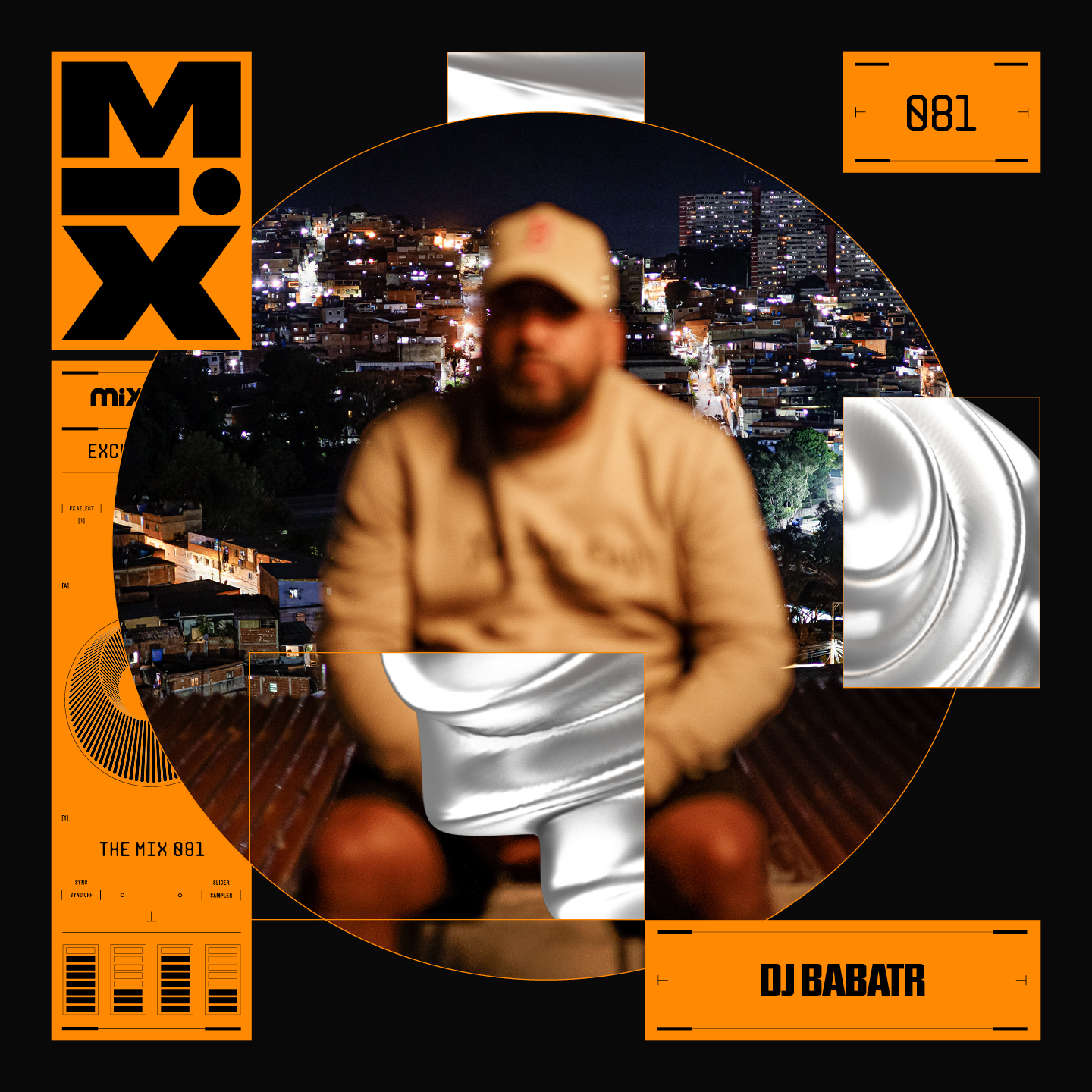
The Mix 081: Dj Babatr
After facing years of derision and social stigma at home in Venezuela for his fierce raptor house sound, Dj Babatr has now found international success and rightful acclaim. He shares a mix of raptor house in many forms and speaks to Charis McGowan about artistic resilience and his new album ‘Root Echoes’
Raptor house pioneer Dj Babatr isn’t reliving the past. While his new album, ‘Root Echoes’, is a selection of tracks from some 20 years ago, he insists that this is no second-coming. “This isn’t a revival,” he clarifies from his studio in Caracas, Venezuela. “And you know why? Because people never knew raptor house. For them, this is new.”
Raptor house is defined by its Afro-Venezuelan percussion decked with barking synths that build to cutting drops — it’s as fast, frantic and wiley as its reptilian namesake. At the helm of the madness is Pedro Elías Corro, AKA Babatr. His musical journey has been as jagged as the sounds he commandeers, pioneering the genre back in the early 2000s, before retiring from it in 2008, exasperated at the way his style was demonised and ostracised.
Born 1976, Corro is from Lomos de Propatria, a densely packed neighbourhood of west Caracas where small brick houses topped with corrugated steel sheets run up the hills in a twisted riddle of streets. Raptor house is intrinsically tied to this place - it’s a sound of resilience, grit, perseverance pushed through with joy and the desire to dance. Just like the raptor, the music is intelligent, fierce and cunning — capable of biding its time, waiting to advance. And now, 20 years later, the ambush is nigh.
“When [people] hear it, they say ‘this can’t be from 20 years ago’. Some producers have told me that I was way ahead of my time,” says Corro.
Get in The Mix: Shop the Mixmag range here
Raised in his grandmother’s house, Corro grew up listening to salsa and merengue acts like Angel Canales and Fernando Villalona, alongside his auntie’s love of '80s punk-tinged rock like Men At Work and Van Halen. He later discovered New Beat through the radio, and grew hooked on tracks by Gino Latino, Technotronic, and Plaza.
All of these influences are felt on Dj Babatr’s latest release, ‘Root Echoes’, a selection of some of his most emblematic tracks that date from 2003 - 2007, with a few more recent numbers thrown in. The album serves as a quintessential snapshot of the genre’s range: ‘1234 Ladys on the Floor’ is decked by synths that drill into the track with mind-denting force; ‘You I Wanna Bass’ takes a Eurodance feel, with horn-like blares that’ll make you think the Venga Bus is coming; and ‘Notre Danza’ revs and whirrs with the force of a Tagada fairground ride blasting happy hardcore. Underpinning the record is the booming syncopated beat, cut from Babatr’s expansive collection of live Afro-Venezuelan drum recordings.
We’ve asked Dj Babatr to helm The Mix to mark the release of ‘Root Echoes’, celebrating the blazing renaissance (or long-awaited international arrival?) of raptor house. Listen and read our Q&A below.

I see you’re in the studio, where you’ve been working on The Mix. Are you still based in Caracas?
Yes. Many people are surprised to hear that I’m in Venezuela, but I have kids, a wife, and my grandma is 95 years old. Above all, [I’m here] because of family. If not, I’d probably live in Amsterdam. I feel very comfortable and identify with the electronic music scene there. In the past two years, I’ve played loads in the Netherlands, Le Guess Who?, DGTL, my best sets. I feel, in my opinion, that there is less racism than other countries too.
You’ve also got a deep love of Eurodance and club music, so I imagine you have some musical affinities that come out of there?
Phew, there’s loads. Randy Katana, Richard Durand, Chuckie, Gregor Salto. I have memories of the music that was there before EDM. Those sounds of tech-trance, Latin percussion, they influenced me a lot, especially Randy Katana.
Many of those artists are connected to the Dutch Caribbean, whose tropical elements share some similarities with raptor house….
Many say that I sound tropical, but hard, very danceable. My music forms part of the transitions of many DJs’ sets, there’s this techno, trance vibe, but tropicalised. I keep the hardness of the synth. I have a lot of influences, as a Venezuelan raised listening to salsa and merengue. My sound is very tied to the tambor venezuelano — Afro-folkloric Venezuelan drums.
Read this next: The Mix 031: Entrañas
You’ve said that 1989 was an important year musically for you, as you discovered New Beat.
Technotronic’s ‘Pump Up the Jam’ is what hooked me. But really, all those Belgian and German [and Italian] groups - Gino Latino, Plaza, Venus. I loved the New Beat sound. Then came acid house - I must’ve been 14 years old, how was I gonna know about what a raver was? I had no idea. Those acid sounds - the ‘wah-wah’. I still am, but as a kid I was a feverish music addict of the whole late-’80s vibe. I’m talking like ’89-’98. I lived to buy vinyl, cassettes, CDs…
How were you discovering music at the time? You were young, so I imagine you weren’t in the clubs…
First of all, I’m still young. Forever young [laughs]! For context, the Venezuela I grew up in is totally different to the Venezuela today. It was a Venezuela flooded with music, access to things! The first time [I went out to hear] the music was when the municipality threw a party with a miniteca in a plaza, which is a Venezuelan soundsystem. At that time they played acid house, I was around 16, 17 years old. The soundsystems played electronic music by European artists - house, techno, acid house, new beat. We called it ‘changa’, all those genres, simplified into a single name. It was a different time, they were very prolific from around 92’ until ’01.
Now that we’re touching on the aughts, let’s get into ‘Root Echoes’, which is a selection of some of your raptor house tracks from ‘03-’07. How did you pick which tracks made the cut?
I didn’t select them myself, Nyege Nyege Tapes and Hakuna Kulala did. In total I have about 600-700 demos saved in Acid Pro, but I gave [the label] a selection of about 70 songs. They picked, and I arranged the track order.
How does it feel listening back to these songs as a consolidated project?
This compilation represents my beginning, my start. This music was very rejected by a divided sector of Venezuelan society. But in the barrios, it caused a furore — the way of dancing it, the expression. The barrio finally identified itself, at last, with a sound that belonged to them.

I understand these songs were also born out of a sense of frustration with the class and racial divisions in Venezuela?
We did this — I say “we” because it wasn’t only me, there were other producers — we did this for love of music. We believed in music, and we believed that through music we could be free, or we can be free, because music really has no skin colour, no social status. Music is rebellion; it’s whatever you want to express with it. Through it, we were free. And without meaning to, many young people also felt free, happy, to dance until exhaustion.
This album represents resilience — what it means to insist, persist, and resist. Before the pandemic, in 2019, I thought no one remembered me. But that was the moment when I started receiving emails from people around the world wanting to know about what at that moment everyone called changa tuki.
I’ve seen the term raptor house used interchangeably with the term ‘changa tuki’, could you talk us through its meaning?
Changa tuki is changa, which is everything that encompasses electronic genres from the '90s, and tuki, which is a character who is stigmatised, denigrated, and mistreated by society. Being tuki means, in its pseudonym, being a thug or from a gang — an antisocial. Changa tuki. That’s why I’m very reluctant with that word, because I lived it.
You stopped making raptor house and focused on your career as an automotive painter. Can you tell me about that time?
I lived social stigma from the Venezuelan public. People said that my music was garbage, that I should stop it, it wasn’t going to get anywhere, etc. I collapsed. I reached 0% self-esteem.
I continued my life as a worker. I was never ashamed to say that I am Dj Baba the Raptor, but I have lived quite effusive contempt for my work. Currently, the people with money in Venezuela are the ones who most appreciate my music. But for a particular reason: they appreciate it [because I’ve found success] abroad.
Read this next: How sounds from the Global South stopped club culture stagnating
You’ve been releasing new music, ‘1234 Ladys on the Floor’ is from last year. How has raptor house evolved since you first started making it?
All new music is reinterpretations of music that has already happened. I just interpret things the best way I can, it’s just that now I’m more mature and I can manipulate certain things much better. The feeling, the harmony, the way I produce - I’m still aggressive, but I’m serious, less juvenile. ‘Root Echoes’ is a young sound.
I work with the same sounds that I’ve had for a long time, I have a very large gallery. From 2000 to 2020, I just saved, saved, saved and saved. Many of my samples come from vinyls; even though there is so much digitalised, I keep my way of working. I have always made sure the percussion comes from recordings of real tambores and congas, from real instruments, even though I work with machines.
Can you tell us about The Mix you’ve been working on?
It’s very danceable. A lot of percussion, for people who move their hips, coming from the old school style of raptor house. An hour of strong raptor house isn’t easy to digest, so I have to also make it so people can understand the sound in all its different forms. I hope you enjoy it.
I can see there’s a dinosaur toy behind you in the studio. The name raptor house was coined after you watched Jurassic Park III in the early 00s’ - do you still feel a connection with the raptor today?
Till’ the end of my days! It has been with me from the start, part of my formation, my beliefs, my way of seeing the music. A kid doesn’t think the same way as an adult — now the dinosaur rests, is less aggressive — but it’s still the raptor, intelligent and voracious!
‘Root Echoes’ by Dj Babatr is out now via Hakuna Kulala, buy it here
Charis McGowan is a freelance writer, follow her on Bluesky
Tracklist:
Dj Babatr - La Marihuana (Tribe Edit)
Dj Babatr - The Tribe (Baila)
Dj Babatr - Africando
Dj Babatr - Now Shout
Dj Babatr - Mix Metro
Dj Babatr - Lets Do It (te-te)
DJ co.kr - Pika (Dj Babatr Remix)
Dj Babatr - Notre Danza
Dj Babatr - Street Rhythm (Go)
Dj Babatr - TO-K
Dj Babatr - Drag Queen (Reborn Mix)
Bjarki - Rave Daddy
Dj Babatr - POSE 48
Dj Babatr - Antena
Dj Babatr - The Journey
Dj Babatr - Sunshine Tribe
Dj Babatr - One Noise (Venezuelan Drums)
Dj Babatr - Call Space
Sinergy - Discurso Mágico
Malaika - Malou
Nick León - Xtasis (Feat. DJ Babatr)


