
 Music
Music
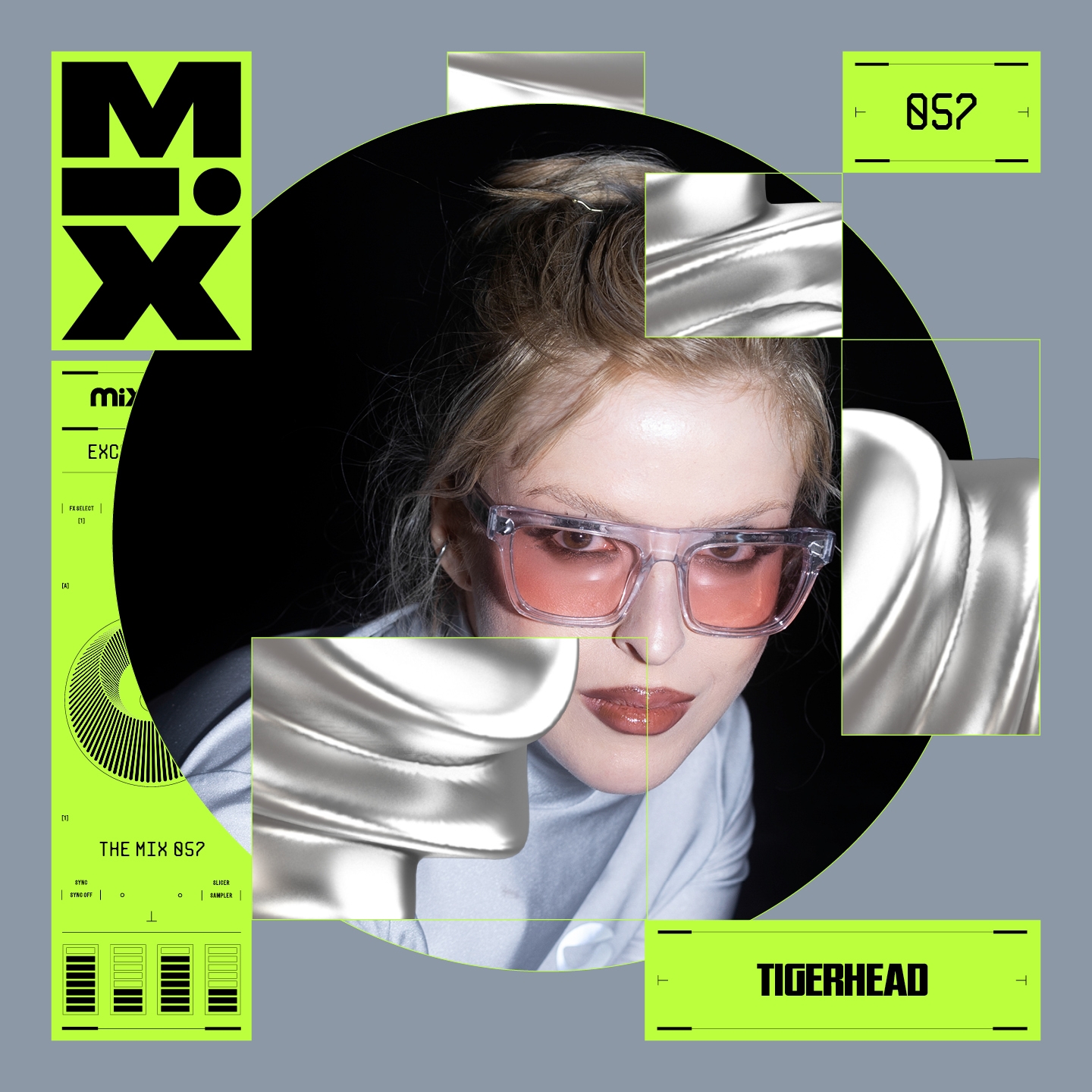
The Mix 057: Tigerhead
Tigerhead showcases a fresh approach in a mix that focuses on rhythm and precision, and speaks to Niamh Ingram about growing up in an artistic household, dropping painting for music, and diving into the ‘techno trap’ of Berlin
“I just pretty much believed in my instinct,” Tigerhead grins wistfully about 10 minutes or so into our conversation. It feels the perfect line to open this interview with, I think at the time; the rightful trust this woman puts into herself is a crucial factor contributing to her longevity and validity in the techno space.
I’m sitting in the UK, sipping on a hot chocolate so I don’t freeze on a chilly Wednesday morning. She’s in Berlin (likely also pretty chilly – it is Berlin, after all), Zoom-operating device placed among her various musical tidbits from over the years.
Spontaneity, underpinned by a hearty sense of determination and drive, are the defining characteristics of Tigerhead. Born to artist parents - her father a painter, her mother a curator and artist also - there was an inevitability in the Czech-born musician entering the creative space down the line. And while swayed for much of her youth towards painting, something just never fully clicked.
Read this next: New book captures the 'temporary utopia' of Prague's rave scene
“I found my identity in music,” she reminisces. “There was always something missing when I was just drawing and painting, there were kids with more talent than me, and it was very competitive. But when I started to sing, when I wrote songs, when I played guitar, and when I started to compose music - or even listen to music - a whole new dimension was unlocked for me. That was the thing I was supposed to do. This was the form of art. Because of the background I come from, it was pretty clear I would become an artist because I didn't know anything else. It was just about which form of art and which form of language I found, and for me, that was music.”
These days, she’s a fully-fledged musical artist, who has continually found herself drawn to techno over the years. Now associated with a raw, high-energy yet always unpredictable approach to her DJ sets and productions, she’s commanded dancers at Berghain, Griessmuehle and RSO in Berlin and Fold in London among others internationally, having released music via BPitch, Exhale, HET, HEISS and more.
Alongside a no-holds-barred mix, Tigerhead temporarily indulges us her into her world including - but absolutely not limited to - the ‘techno trap’ of Berlin, a studio encounter that changed everything, the social media versus electronic music paradox and why she enjoys vinyl-only DJing. Dive in below.

Firstly, you win the title for best DJ name. I’ve always loved it.
Thank you so much! It wasn’t even my idea. It came out very spontaneously and naturally. I think it was 11, even 12 years ago when I moved to Berlin. I was new in town and didn't know anybody, so I started to work in some bar, and there were a lot of DJs back then. I liked music already and I just wanted to get into the scene. I got friendly with one in particular; he had a great wife and family, and I told him about my dream of becoming a DJ. So he asked me, “do you have a name?”. I didn't know that names were important. I thought that talent counted more, and you know, the work behind; name comes after. Once, he came to the bar where I worked, and he said “hey, what's up, Tiger Head?”. And I was like: that's it! That's my name. I was very spontaneous, very random. I think people assume it's much more, a much deeper story but no, very, very random and spontaneous.
You've always been a very creative person, would you say that's correct?
I grew up in an artistic surrounding, in visual art, mostly because my father is a painter and book illustrator. He illustrates books for children, and paints everything possible, from abstract art to nature and animals as well. He can paint hyper realistically. Animals like tigers, for instance.
My father was the Bohemian part of our family, the open-minded person. My mum is an artist, too. I mean, she can paint very, very well, but she was working as a co-creator in a modern art gallery. She was taking care of the logistical side of that. So I basically grew up in all forms of visual art. I'd say it definitely influenced me as well in my music. The way I grew up, I used to watch some super surrealistic art and movies, I didn't watch Disney, and I read super strange books. I'd been told about art history and stuff. I thought it was completely normal. I was sort of different from everybody back then, and I think this also about my music. I always try to be different – well, not necessarily try, I feel like I just am different. I don't necessarily follow the rules, because also with visual art and with painting, depending on what kind of style you do, you don't have to follow any rules. You can just be free. And this freedom is very, very important in music.
When did you decide that you were going to throw yourself into music, then?
I remember very well. I knew I had a talent for painting, and my father always told me to use the talent, follow his roots and the family. Until I was like 10, 11, I thought I’d be a painter. So I was just painting. I was just drawing and then, when I was about 13 or 14, I went to high school, and I started painting there. But I was a teenager, so there was this question: who am I? I didn’t know if I was a painter or whether I wanted to be a painter. It had just been put into my head. In my nature I'm much more wild, I have a lot of energy. I have a lot of temperament, and this didn't click necessarily with being alone in the studio and painting a picture. I was also very extroverted.
When my father was painting, he always used to listen to music – all kinds of music, but he loved classical music. There were always sounds around, and music is also a form of art. So for me, it was very, very natural to switch from painting to music. I actually started to sing and learn musical instruments on my own. I learned to play piano. I learned how to play guitar. And in high school I met a lot of influential people and a lot of very, very cultured people in music and arts. I started to listen to things like post punk, trip hop, and my biggest influence was PJ Harvey. I saw myself back then as some sort of guitarist, singer and songwriter in a punk band.
Read this next: Canada's first 36-hour NON STOP party is at the heart of Montreal's nightlife revolution
So how did that materialise into electronic music? I love how you say that when you moved to Berlin you fell into the ‘techno trap’.
At first, I was not into electronic music at all. There was no electronic music culture in my hometown. But our band used to tour around the Czech Republic, and I had so much fun. When I was about 16, an electronic music producer from Prague noticed me, and he was like the Czech Kraftwerk. He was searching for singers. He was a very, very good musician, and I was only supposed to be his singer. I went to his studio, and it was great, full of all of the synths you can imagine, the 808, the 303s, everything possible. He was older, around 50 years old and the studio had everything he’d collected throughout his life. I just fell in love with this studio. I was so fascinated by the way he was making music - electro - and I thought: “I don't want to be his singer. I want to be him. I wanna be this.”
From that, pretty quickly, I started collecting records. I went to university only for one year, and there I was already calling myself a DJ. I still continued studying contemporary art back then, but I was in a bigger city in the Czech Republic compared to where I come from, so there were already some techno clubs and drum ‘n’ bass clubs. Even with that I already felt pretty much at home. And so studying was just a backup plan for me already; I had to study because obviously my family didn't support me in my music career at all in the beginning. I was ‘wasting my talent’ for painting and drawing, so it was very disappointing back then. I was always meeting bands and DJs, and went to studios. Studios were the most interesting to me and I met an electro pop band who were finishing their masters studies at the university and leaving to make a career in Berlin. I said “okay, I’ll come with you”. It was just my first year in the university, but I knew that it wasn’t something I wanted to do. And because I was 18 or 19, I thought it was clear, I was gonna make it in music, it’s written in the stars. Why should I study? You know? Why should I?
That spontaneous sort of instinctive behaviour follows me until now and it’s never disappointed me.
When I told my family that I was moving to Berlin to follow my DJ and music destiny they were completely in shock and there was obviously a clear no [in response], so I tricked them a little bit. I said: “Okay, I'm coming with the band. They're good friends. I just wanna live, have new experiences in life, and in a year I'm going to come back to school and finish university or alternatively I’ll start to study in Berlin and finish there”. So yeah, I went to Berlin, obviously never went back to the university, never went back to the Czech Republic. I followed my musical career and fell into the techno trap of Berlin. It was one of the best eras, because I was around 18 or 19. It was just pure, pure techno.

What is it, or was it about techno that just sits right for you?
It was just automatically techno. I started to collect techno records. Obviously there was house music, but I didn't feel it. It was too slow and too chilled for me. Mixing techno was just perfect. It was something that was meant to be. Like I said, I’ve had a musical background. I listened to a lot of Chicago house. And I’ve tried to educate myself in music as much as I can, but I was always techno 14 years ago, and it still is now. It still gives me the same chills.
How do you think that social media has influenced the perceptions of techno these days, particularly amongst younger generations?
Social media is a big, big subject in techno nowadays, or in music or things in general. I'm lucky that I come from an era where there was no social media - only MySpace! - and then obviously Instagram came, and Facebook. After COVID, it all got much, much more intense. It’s social media versus music. I don’t want to be too negative, and I try to use the right terms for it. But I would say social media has pretty much destroyed, or is about to destroy the soul, or the origin of, techno and electronic music in general. It shifts the focus. Techno is about freedom. Techno is also about politics, and techno is about the music and getting lost in the music. Obviously, this has nothing to do with phones, photographs, videos… After COVID I believe that many people were lost, financially lost. There was sort of a connection of our job and the job of influencers and that's against the meaning of techno music. I believe younger people see it differently. As I get older, I see that there are much, much younger audiences. They're probably only used to this sort of raving and this sort of partying, which is maybe just time evolving, but it doesn't correspond with the true meaning of techno and true meaning of music. It's more about performance and visuals than about music. There’s a chain [of importance] and music is at the end of this chain.
I get you. I've noticed that you're sharing a bit more about yourself online lately but in a very conscious way. Why?
I mean, I have to go with the flow, right? I used to say I would like to become known for my music so that I don’t have to use social media for my self presentation, but I'm not there yet. It's a long journey. This part [social media] is pretty much forced for me. I'm too old for it, so I just go with the flow, but I still think I don't post anything too personal.
Read this next: Work camera flash: How Instagram has changed DJ culture
I must say I love the videos when you get your cats involved!
There's gonna be much more animal content, I’m considering buying a dog!
I also think it's important to mention that fortunately and unfortunately, at the same time, I get more likes for my visuals rather than my music. This says more about the whole social media stuff and being a female DJ. There are a lot of pluses about it, but also a lot of minuses. The social media thing doesn't fit with the idea of the moment. To be at a party as a DJ or as an audience, it’s about the feeling, the good moments, the transitions, good mixes… about the trance and the flow. How could you even capture that on a video? It doesn't fit. It doesn't make sense… so what people present on social media is actually completely something else.
And on that talk of immersing yourself in the moment, I hear you’re focusing on going back to mixing vinyl again?
Personally, it brings so much more. It has a drive, and it's something you can touch. It's something you can work. There is a lot more action on stage, and that is the kind of performance I can offer to people. I'm also pretty busy mixing vinyls, obviously, because it's never easy. So I don’t have enough time to think if I'm good enough, or if I look good enough, or if people actually like it enough. But mostly when I mix records, I believe they do, because they also appreciate the work that goes into it. They also see the work on stage. Obviously there’s the beat matching, but it's also about finding the right moment. You see no sound wave in front of you. There are so many aspects of it. It's also for personal reasons; when I do a good job, I get much more pleasure from it, because I know how much work is done, and how many hours of preparation I put in. It’s a completely different job. If I prepare a digital set, it's just me and my laptop and I’m in my studio or at the airport or in the hotel, but when I prepare a vinyl set, it always starts in my studio. It starts at home. It starts at searching through many of my records because I always like to go to the past. I always like to rediscover my old records, and I’ll pre-prepare 50 or 100 records, and from that you have to put them into one or two hours. You put one record on, and then you try to mix the other one, and then you're noticing if it doesn't fit with the key or if the groove is different. It's hours and hours and hours of work. You always have to prepare to be on stage.
But there's a different appreciation from me, and also from the audience. There's also the other part of it, which is the technical part. As many of the promoters are even younger than me, they're much more used to digital and it's very hard to have the perfect setup, because the setup is half of the work as well. Once there's feedback, or even if the needle [starts] skipping and jumping, you can't do anything. It's very frustrating, and the hours of work you put in before are lost.
You've just released a batch of merchandise. How was that experience?
It was actually very natural, because I had a great team of people helping me. I mean, this was the fun part. I didn't grow up in a fashion environment. But fashion is definitely something I like and follow as well. I just came out with the idea very, very spontaneously. And it actually was based on a track I produced, ‘I Like Him’. It’s also a pretty memorable phrase and it can also be connected to all genders, so I wanted to connect this track with merch. I had the idea, I had the design in my mind… I wanted to be a little bit different. I didn't want it to be only black and white, and I didn't want it to be too hard. I like the combination of techno music, raw, dark techno music with the colour pink. I don't know why. So I put the idea together. I wanted to produce caps and T-shirts at first, and I had a great team of people who liked the idea and made it come true.
Can you tell us about your mix?
This mix brings a fresh approach, shifting the focus from heavy drops to a deeper sense of groove and flow. I aimed to blend records and digital seamlessly, keeping the energy alive without overloading. It’s a statement in simplicity: less is more. Expect a fluid journey that prioritises rhythm over spectacle, precision over flash.
Niamh Ingram is DJ and freelance journalist, follow her on Twitter
Tracklist:
Jonas Kopp - LIM 3A
Alexis Aitour - Yin
Gaston Fiore & Yenkov - Cutting Corners (unreleased)
Askkin - Fata Morgana (Original Mix)
Alexis Aitour - Ondina
Benza - Ahyep
Benza - Spore Spreader
Lola Kay - Run Lola Run
Luar - Night Train
Marthial - Detroit
Sole Dosi - Subspace Stop (Original Mix)
STIPP, Alec Dienaar - Ciara (Original Mix)
Sapyr - Portal
Askkin - Urban Land
Seigg - Thermal
Voodoo16 - Lola Kay
keepkeep - With You
Gaston Fiore - Do You Feel The Same (unreleased)
ValaV - Infinite Beats
PTU - A Broken Clock Is Right Twice A Day
Tigerhead - Unreleased
Tigerhead - Outro (unreleased)


