
 Music
Music
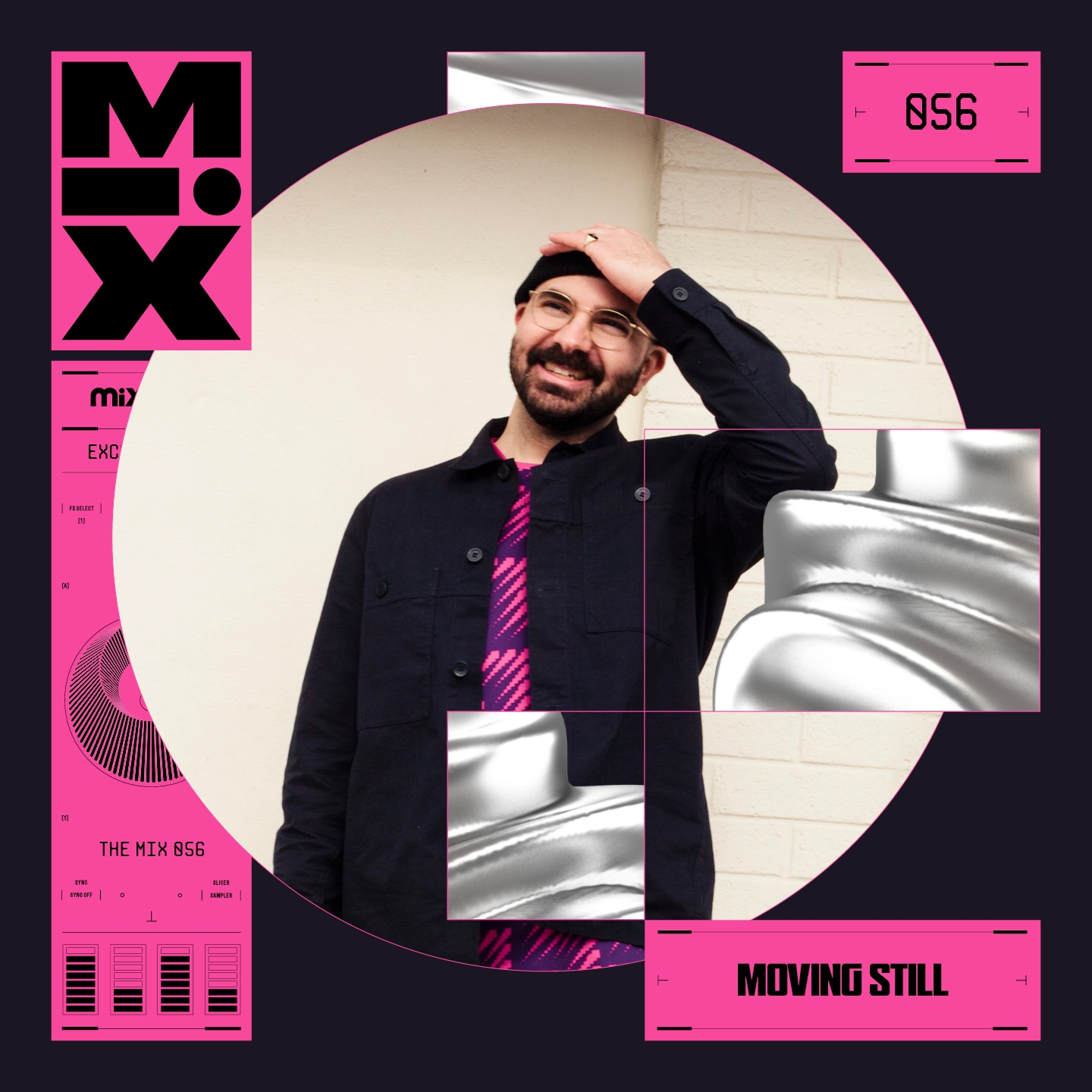
The Mix 056: Moving Still
The Jeddah-born, Dublin-raised DJ seamlessly melds his dual heritage in an hour-long mix, and speaks to Gemma Ross about hunting long-lost Arabic music, reconnecting with his roots, and how the birth of his daughter influenced his latest EP 'Close to the Shams'
“Over the years, I’ve worked to embrace both sides of my heritage — Irish and Arab — and music has been the space where I’ve processed all of that,” explains Jeddah-born, Dublin-raised DJ and producer Moving Still. Born Jamal Sul, he moved from the Saudi capital to Ireland at the age of 14, and now unites his dual heritage in his sets, productions, and work as a promoter and curator. Jamal’s sound explores the meeting point between East and West, a unique blend that aims to give visibility to SWANA sounds, and paints a picture of both his Arab and Irish identities.
“The image of Arabs I grew up seeing in Western media was so distorted,” he says. “You start to internalise that shame, and it distances you from your own roots when you live in a Western country. For me, music became the way to unlearn all of that — to rewrite that narrative, not just for myself, but for others too. It became a space where both sides of who I am could exist together, fully and proudly.”
Jamal’s efforts to reconnect with his heritage carries through from his work as a DJ and producer, curating an online series coined ‘Ouddy Bangers’ where he unearths long-lost Arabic dance music gems on social media, which has since extended into a series of compilations of the same name compiling these discoveries. Inspired by oud, a fragrance deriving from the Middle East, there’s a sensory element to Jamal’s work that has an effect almost like synesthesia – paying vivid homage to his childhood, his family, and his motherland. Now in his adopted hometown of Dublin, Jamal pays it back to his roots from afar, founding a platform named Sukar – taken the Arabic word for ‘sugar’ – celebrating Arabic heritage, and a series of club nights across Dublin under the name Klub Sukar giving a platform to artists with “diverse musical heritage”.
In his latest release, ‘Close to the Shams’ on Bordello A Parigi, Jamal explores themes of memory, identity, and renewal across four tracks, from piano-led Arabic pop to warm, textured electro. Inspired by the recent birth of his daughter, ‘Close to the Shams’ brings together “all the emotions you get from being at one: love, euphoria, excitement, fear, exhaustion,” Jamal explains. “I tried to channel all of that into the EP — to capture what that time felt like and to honour her, and the love I have for her and our little family.”
Moving Still delivers a new mix marrying his dual heritage over the course of an hour, and speaks to Mixmag about hunting long-lost Arabic music, reconnecting with his roots, and how the birth of his daughter influenced his latest EP, 'Close to the Shams'. Check it out below.

You took some time off gigging last year to welcome your daughter into the world, how are you finding parenthood?
Yeah, we were lucky enough to welcome our beautiful daughter into the world, and it’s been really special. Her big brother absolutely adores her, and she lights up whenever she sees him — it’s pure magic watching them together. I’ll be honest though, I was nervous before she was born. Our son’s birth was quite tough, and being new parents back then, we were just trying to figure everything out as we went. But second time round, you do feel a bit more grounded. It doesn’t make things easy, but you’re not completely in the dark.
One thing that really surprised me was the love, I had this overwhelming love for my son, and I genuinely worried I might not have that same intensity for another child. But it’s wild how naturally it comes. It’s not about dividing your love, it’s like your heart somehow expands. At the same time, I’ve been very conscious of making sure our son still feels our presence and knows that he’s just as loved. That balance is something I’m always thinking about. Of course, it’s not all smooth sailing — we have our chaotic days, like any young family, but those little wins and moments of joy really carry you through.
Your new EP, ‘Close to the Shams’, was inspired by the birth of your daughter — how did that influence the direction you took on this one?
There were a lot of emotions swirling around when I decided to call it 'Close to the Shams'. She was born in midsummer, just a few days from my own birthday, which felt like she came in and cheekily stole it — that’s her energy already! It was also right in the middle of festival season, which I couldn’t be part of this time around. But in a way, her arrival felt like its own kind of festival — all the emotions you get from being at one: love, euphoria, excitement, fear, exhaustion. I tried to channel all of that into the EP, to capture what that time felt like and to honour her, and the love I have for her and our little family. It’s like a soundtrack to a summer that didn’t quite happen, but one I’ll never forget.
On top of all that, having the record come out on Bordello A Parigi, which has always been a bucket list label for me, made it even more special. I only submitted the demo in November last year, so seeing it pressed and out in the world so soon after was surreal. It meant I got to experience the release while the music still felt fresh and close, while I was still living in the emotions that inspired it.
Can you tell us about the inspiration behind the name of the EP?
I should probably clear the air about the name, 'Close to the Shams' comes from the Arabic word 'Shams' (شمس), which means 'sun'. It’s pronounced as one quick syllable — shams, rhyming with 'lamps'. Funny enough, I didn’t realise until after choosing the name that shams is also Irish slang for 'chancers' or 'messers', which definitely wasn’t the intention, though it gave a few people a laugh!
The real inspiration was to capture the feeling of being close to light, warmth, radiance, which is what my daughter’s name actually means. Without revealing her name directly, I wanted the EP title to reflect the essence of her, and as she grows, she just has one of the brightest smiles you will ever see.
You’ve said that ‘Close to the Shams’ explores themes of family, nostalgia, heritage, and renewal. Can you tell us a bit more about that?
This EP came from a really emotional place. Around the time of my daughter’s birth, I found myself reflecting deeply — not just on fatherhood, but on how far I’ve come in terms of identity. Over the years, I’ve worked to embrace both sides of my heritage (Irish and Arab) and music has been the space where I’ve processed all of that. That journey wasn’t easy, but now I can see the impact of it on my son, how naturally he embraces both cultures, without the conflict I struggled with growing up. It makes me excited for both him and his sister, knowing they’ll grow up with the language, the music, the scents — all the pieces of who we are.
'Close to the Shams' is a reflection of all of that: family, memory, identity, and love. It’s got very personal scents running through it, like the use of Luban, a fragrance that brings me straight back to my childhood. Fragrance has been part of my musical storytelling since 2018 — taking something nostalgic and giving it new life. And honestly, none of this would be what it is without my wife. She was the biggest fan of this EP while it was coming together, totally passionate about every single aspect of it. We work as a team when it comes to music, even down to the gigs. She’s always involved, always there, and that’s how we balance it all. We’re not just supporting each other; we’re catching each other. If I’m running on 20%, she’s at 80%, and if she’s low, I pick up the rest. That kind of partnership makes raising kids — and navigating this life — really meaningful. We’re constantly learning from each other, and that’s where the themes of family, nostalgia, heritage, and renewal really come alive in this record.
In your Ouddy Bangers series, you hunt for lost Arabic dance music gems — what’s your process like in finding old and undiscovered music?
With Ouddy Bangers, the goal has always been to find overlooked or under-celebrated Arabic tracks from the late ’80s and early ’90s — songs that maybe didn’t get their flowers at the time, but absolutely should have. A lot of the music I find is tucked away in old cassettes, CDs, or random YouTube uploads with barely any streams. I’ll go deep into label catalogues, or find myself down a rabbit hole triggered by one track or a comment in the video. I’m especially drawn to tracks that have disco-inspired arrangements or catchy female-led vocals, something that makes you feel like you’ve known it forever, even if it’s your first time hearing it.
From there, I flip it in a way that works on a club system, but without losing the essence of the original. It’s important to me that the edits respect where the track came from, while also giving it that extra lift it might need to shine in a different context. The name Ouddy Bangers says it all, really. It’s about finding that rich Arabic scent in the music and letting it hit hard on a dancefloor. The hardest part is patience, it can take ages to find tracks that feel right. But when one clicks, it feels less like I’ve found it and more like it found me.
Growing up in Jeddah, what were your early experiences with dance music like? Was there a scene for it, and what does that look like today?
I left Jeddah when I was around 14, so my early exposure to dance music actually came more from my mam than from anything happening locally. Anytime we visited Dublin, she’d come back with the 'NOW Dance' compilations or 'Now That’s What I Call Music' CDs. I still remember 'NOW Dance ‘93' — that one had me hooked. As a five-year-old, I was obsessed with 'Do You See The Light' by Snap!, 'U Got 2 Let The Music' by Cappella, and 'Wind It Up' by The Prodigy. That CD changed everything for me.
Of course, growing up in Jeddah, we also had Arab pop constantly in the background with artists like Ragheb Alama, Amr Diab, Sherine, Najwa Karam, Nawal El Zoghbi, Guitara — all the Rotana Gold hits. So even though there wasn’t clubs or anything like that, I was absorbing so many sounds, both Arabic and Western, through the house, the radio, TV, and family.
At that time, I wouldn’t say there was a visible dance music scene in Jeddah, or at least not one I was aware of. Hip hop was more dominant, and there was a small rock scene bubbling up, but everything was underground and invite-only. Parties happened, but they were secretive, private, behind closed doors.
What’s happening now is honestly incredible. The shift has been wild — from a place that, in my memory, felt quite closed-off to something much more open and expressive. I’ve stayed in touch with a lot of people who are part of that growth, who are now running parties and pushing the sound over there. I haven’t played in Jeddah yet, but I’d love to. I imagine it’ll be a bit of a culture shock walking into venues and scenes that didn’t exist when I was a kid.

Now you’re based in Dublin, do you find that you pull inspiration from your surroundings and the scenes in Ireland?
Absolutely. Dublin has had a huge influence on me, not just musically, but in terms of the people, the energy, and the sense of community. There’s a rawness to the city that I really connect with. It’s not polished, but there’s so much drive and heart, and that comes through in the music scene too. You have to remember that Dublin is tiny, so the fact that so many people are doing amazing things here is even more impressive, and it just seems to keep getting better. It’s very collaborative — everyone’s helping each other out in some way, whether it’s running community-based parties or supporting each other’s projects to get things off the ground.
I always hoped I’d get to a place where I could plant my feet and run my own thing here. Thankfully, I’ve managed to do that, and now I can use my platform to put on nights that showcase newcomers, while also bringing over artists that I love and respect. That’s what Klub Sukar is all about — a dancefloor-focused extension of Sukar, where I can celebrate SWANA sounds while also giving space to both local and international talent.
Building something from the ground up has meant I can give people here a window into the sounds I’m passionate about, while also creating opportunities for others. That sense of freedom and support has been key, and being surrounded by people who are passionate and constantly grafting, whether it’s in Tengu, Hen’s Teeth, or other spaces, keeps me constantly inspired.
How does your dual heritage drive your sound, and the messages of liberation that you embed into it?
My dual heritage is at the heart of everything I do. Growing up between Irish and Arab identities, I often felt like I had to hide one side of myself, especially my Arab background. The image of Arabs I grew up seeing in Western media was so distorted, whether it was in films, cartoons, news headlines — it was always negative, violent, or just a lazy stereotype. That takes a toll on you when you're a kid. You start to internalise that shame, and it distances you from your own roots when you live in a western country.
For me, music became the way to unlearn all of that — to rewrite that narrative, not just for myself, but for others too. It became a space where both sides of who I am could exist together fully and proudly. I could sample Arabic records, bring in Irish influences, layer in club sounds from across the world, and it all made sense. It felt honest. It felt like freedom.
Making space for Arab identity in club music is about reclaiming visibility, showing that we belong here, not as a sample or an aesthetic, but as the voice behind the decks. Especially when our identity is so often misunderstood or misrepresented, just being present and unapologetically ourselves carries weight. Embedding those messages — whether through samples, names, scents, or stories — is my way of pushing back. I want my music to help reshape that deeply damaging image, and if it helps even one person feel seen, or more connected to their own heritage, then that’s everything to me.
You’re actively platforming voices and musicians from around the Middle East through your music, is there anyone we should be keeping an eye on right now?
There’s so much talent right now, and it’s been amazing to see more artists owning their sound. A few people I’ve been loving lately are Yasmeen Selectress, Nora Moon, DJ Karmawi, Ebla, Leila Moon, Misty, Chamos, Cheb Runner, Glitter 55, Rami Imam, Pablo Santos, Sahana, Tara Kumar, Ambient Babestation Meltdown, and Sami Galbi — each of them bringing something fresh, whether it’s through their selections, production, or the spaces they’re creating.
I also want to shout out the Shimmer DJs crew here in Dublin, they’ve been doing great things and building such an important energy in the scene.
I’m always on the lookout for new talent, especially here in Ireland, so please don’t hesitate to reach out. I’d genuinely love to hear from you.
As an activist for the people of Palestine, what do you think the music industry could be doing to make a change in light of its current bombardment?
I think the industry needs to stop sitting on the fence. What’s happening in Palestine isn’t complicated, it’s a brutal, ongoing military occupation and ethnic cleansing. It’s just pure horror unfolding in front of us with no accountability, and not enough action from governments by far. The music industry is usually quick to speak out against injustice, but when it comes to Palestine, the silence, or the fear of “getting it wrong", ends up being complicity. Silence is complicity.
As an example, someone sent me a track, and certain phrasing in the press release rang alarm bells for me. I asked: 'Are you pro-Palestine?'. The answer was too vague, and that was enough. Because who we platform, book, and repost all adds up.
I have two kids. Seeing videos of children who look like mine, crying out “baba” — it breaks something in you. That’s why I’ll keep using my sets, my platform, and my voice, because I’ve been watching this injustice since I was ten years old. I’m terrified that by the time there’s a global realisation, it might be too fucking late. Staying neutral in times like this isn’t neutral at all — it’s a choice.
What’s next for you?
Gig-wise, I’m excited to keep the momentum going with Sukar and Klub Sukar. Both have really grown into something special, and that’s what excites me most: building something with community at its heart. Sukar is the broader project, it's more than just a party, it brings together SWANA music, art, and food under one roof. Klub Sukar, on the other hand, is purely dancefloor-focused.
If you don’t know Klub Sukar yet, we’ve got Nooriyah coming over for her Tengu debut on April 19, alongside some serious local talent. That one’s shaping up to be proper. The next Sukar event is happening June 7 at Hen’s Teeth — I can’t wait to bring it back to that space.
Festival season’s also around the corner, and I’m buzzing for that. There's loads of great shows coming up and I’m ready to bring the energy.
On the music side, I’ve got a new remix on the way for the duo Tales and Ahlam, and I’m really excited about that one. Beyond that, I’ve been slowly working on an album. No idea when it’ll come out, but it’s something that’s been building over the course of nearly ten years. It feels like the right time to start pulling those pieces together.
Can you tell us about your mix?
Over the years, I’ve fallen in love with so many tracks that honestly, I’m probably more sad about the ones I couldn’t fit in. But I really wanted this mix to represent as much of my musical world as possible, it's a journey through the different sounds I love and play. It pulls together favourites from gigs I’ve done over the last few years, with a particular tone inspired by a really bananas back-to-back I did with two humble humans, Joy Anonymous. I generally love B2Bs, but usually you know the person you’re playing with or at least have a sense of their energy. I’m not gonna lie, I had no idea what was going to happen with this one. That organic energy really lit something up in me and brought out tunes I’d forgotten I even had.
I think for a while, there was an assumption about what I play in my sets, but the truth is, my sets change all the time. Every party has its own energy, its own crowd, and there’s just so much music out there that deserves to be heard. This mix was my way of showing that range, from emotional and unexpected moments to heavier club gear.
I love blending tracks you wouldn’t expect to go together, and I’ve always seen the dancefloor as something that moves like a wave — it builds, dips, swells again. It can’t just be bangers all night, even as a punter, I don’t have the energy for two straight hours of going full tilt. With any live set, I’m reading the room constantly, feeling things out, and adjusting as I go. This mix mirrors that same mindset: moving through genres, testing out ideas, and adapting.
I ended the mix with a track from my childhood, a song that’s taken on a new meaning over the years and now reminds me of my family, and the love I have for them. It felt right to close on something that holds that kind of weight. A quiet moment to bring it all home.
'Close To The Shams' is out now, buy it here
Gemma Ross is Mixmag's Associate Digital Editor, follow her on Twitter
Tracklist:
Abel Paz – Tokyo N2O (Moving Still Edit)
Man/ipulate – Fractional
El Sawareekh – Kol El Nas
Rami Imam – Bombay Sundown
Guitara – Ya Ghali (DJ Danjer Remix)
Persona RS & Macaulay – No Pare (Martin Noise & Della Remix)
Ruby – Leih Beydary Keda (Rainmann Remix)
Chamos – Kurdish Flute (ft. BIJI)
Sherine - Sabri Aalil (MK3 DUBZ Bootleg)
Ashee – Frisbee (Original Mix)
Ambient Babestation Meltdown x Borai – Replication
Marvellous Melodicos – Sing, Oh! (Zagalo Mix)
DJ HABIBEATS & Felukah – Hayati
Hatori Hanso – I’m a Taker (Original Mix)
Kasbah – Noria (Unreleased Remix)
3Phaz – Big Feels
Hassan Abou Alam – Mesh Mafhoom
Thys – BANANANANANANAS
DJ Ciderman – In the Heat of Passion
??? – ???
Sully x Tim Reaper – Windswept (Sully Fader Mix)
Tamer Hosny – Shams (??????)
Xcultures – Sudanese Dance
Naka – That’s It (House Piano Mix)
Kubus & De Sluwe Vos – Trak__1
Mandalus – Arcadia
Moving Still – Close to the Sham
Omar Souleyman – Wenu Wenu
Dombresky x Amr Diab – Nour El Ain (Baroud Edit)
Ebla – Aywa Aywa (Misty, Dish Dash Remix)
Akul – Ever Felt Like This
Fatima – Douz-Douz (Sibu & Joe Nagall Edit)
Elissa – Ajmal Ihssas


