
 Features
At Skyline Festival, Los Angeles’ thriving rave underground is given space to shine
In something akin to a full circle moment, Insomniac showcases its boldest programming to date at Skyline Festival's Arts District stage in Downtown Los Angeles
The streets are alive in Downtown Los Angeles. Screeching tyres shriek through the air as a low-rise sports car pulls donuts and revs down a side street, leaving the crack of an exhaust in its wake. A more guttural noise throbs from a nearby biker gang, a dense crowd dressed in leather chaps and steel chains, presiding over pulsating West Coast Choppers. A woman cuts across our path walking with a dog, a surprisingly alarming sight, because her pet is a Boston Dynamics-style machine. More robots skulk by as cars without drivers transport unfazed passengers. More leather is visible as scarcely dressed ravers skip down the sidewalk. On one side they’re flanked by evangelical hate preachers proclaiming the message “homo sex is a sin”, on the other is a hippy handing out kandi raver bracelets with rainbow coloured beads. The sun is radiating warmth from above, and though it’s barely lunchtime, the moon is out as well, bright and almost full. Everything is happening all at once. That’s LA, baby.
It’s here, among the hustle and bustle, that Skyline Festival has found its new home in 2026. The two-day dance music festival has been nomadic since its first iteration in 2021. Run by events giant Insomniac under its Factory 93 sub-brand, the name was first attached to an event in Orlando, Florida, before crossing coasts the following year to Los Angeles. An annual event since then, there’s been a year each at Skylight ROW and Exposition Park, then two years at Gloria Molina Grand Park. Now it sits along the LA river at Ace*Mission Studios, an industrial warehouse complex founded as a distribution centre for Budweiser, but more recently repurposed into production studios for film and TV. It’s on the edge of LA’s Arts District, where a diverse rave underground throws illicit parties every weekend. Many of the key players are on the festival’s bill.
The sensory overload outside the gates is par for the course. There’s a lot more going on in this city than the uninitiated tend to realise. LA is both the most known and unknown city in America. It’s the home of celebrity and Hollywood, little dogs and superfood smoothies, plastic surgery and Selling Sunset, high-end imagery that’s projected to the world. That part exists. But ask locals and you’ll hear a different story. About a culturally diverse, working class city where creativity blooms in harsh conditions. With an underground party scene that can hold its own against any other in the world.
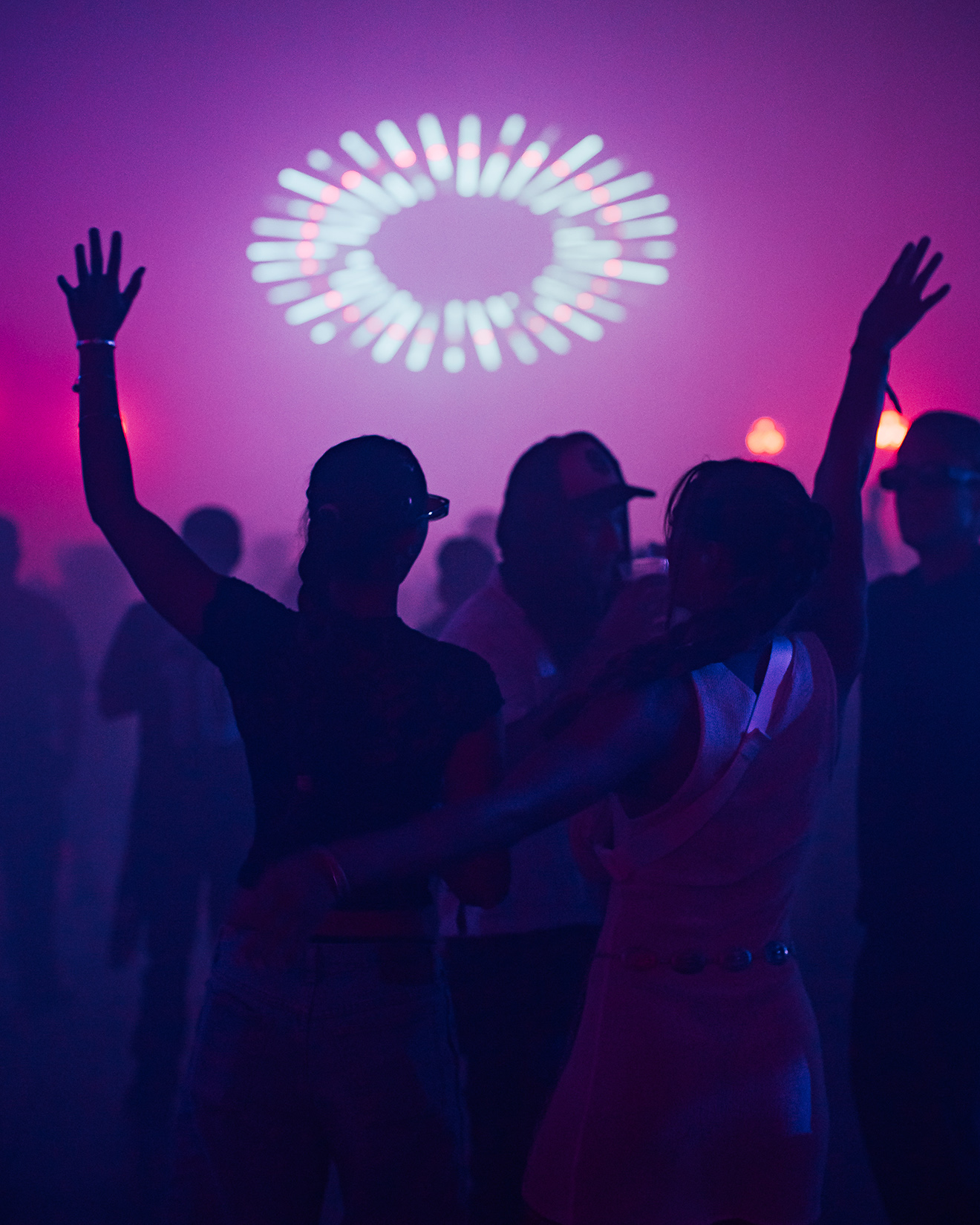
Historically LA’s scene hasn’t received the same attention as the likes of New York, London and Berlin, but it’s always been there. Strict alcohol laws mean anything above aboard has to close at 2:AM, so late-night parties find illegal solutions. Operating on a need-to-know basis by design has kept things under the radar. Everyone knows Tresor, fabric and Paradise Garage, but there are no anchor clubs to mythologise around here. Even now, visitors to the city, or locals who don’t fall in with the right people, can struggle to find what’s good. It’s still true: if you know, you know.
Insomniac is an outlier when it comes to LA nightlife flying under the radar, having achieved global notoriety. These days the promoter is best known for running large-scale EDM festival Electric Daisy Carnival, which summons enormous crowds with brash music and blinding visuals, however, its roots trace back to illegal parties in LA which began in 1993. It was a turbulent time in the city. The previous year saw the Rodney King riots erupting across five days of unrest, in which 50 people were killed and many thousands arrested. The heavy police response extended to the illegal party scene, which was thrown into turmoil by shutdowns and dodgy promoters. “The only parties that were still going were a few grisly afterparties where drugs like crystal meth entered the scene.” recalled Insomniac founder Pasquale Rotella in a 2014 interview. That year, he took an inspiring trip to England during the peak of its own rave culture, and returned home intent on re-professionalising the scene and helming his own events.
Rotella threw his first rave in 1992 at the age of 17 under the name Unity Groove, before the debut Insomniac party took place in a warehouse on Crenshaw Boulevard in October of 1993. It went well, attracting around 300 people, so he turned it into a weekly event, gaining access to vacant lots via a contact who worked in real estate. This soon swelled to 1,200 each week, then 4,000 at the one-year anniversary party in 1994. When the crowd numbers grew, so did the entrance price. Pursuing this path gradually took Rotella into a more commercial world of event promotion and production, winning accolades like #1 Most Powerful Person amid the EDM boom, and expanding Electric Daisy Carnival from a 6,000-cap LA event into a multinational festival behemoth with editions held across four continents. But in 2016, it appeared that the EDM bubble had burst. Meanwhile the more niche genres (at this time in the US) of house and techno showed signs of resurgence in popularity in the nation where they were invented. That year Insomniac responded by launching Factory 93 with a series of house and techno parties at 1756 Naud Street featuring DJs like Solomun, Hot Since 82 and Richie Hawtin. It was both a return to Insomniac’s LA warehouse beginnings and a muscling back in on the action of a budding market.

Founding a festival, a major part of Insomniac’s modern operation, was a natural step. Remarkably by today’s standards, the first LA edition of Skyline Festival in 2022 featuring names such as Carl Cox, Anfisa Letyago and Marco Carola was seen as a risk at that time. But it sold-out, emboldening the Insomniac team in the strength of this direction, and steadily they’ve kept on getting bolder with the bookings. Where 2023 had names you might also find at EDC like Diplo and Dom Dolla on the bill, in 2026 the likes of Verraco, Sedef Adasï and Quest are all playing an Insomniac event for the first time, with the biggest names on the bill being respected figures like Richie Hawtin, KI/KI, The Blessed Madonna and Chris Stussy. And as the bookers have diverged from more commercial names, the festival itself has expanded. Starting off with just two stages, the East Side and West Side, there’s now four. Downtown is new for 2026, a stripped-back concrete yard featuring powerful sound and those aforementioned debutant names, as well as the likes of Avalon Emerson, Ryan Elliott, and Nick León. The third addition, the Arts District, was launched in 2024. Devised by a born and bred Angeleno on the team, it’s dedicated to those DJs making moves in LA’s rave underground.
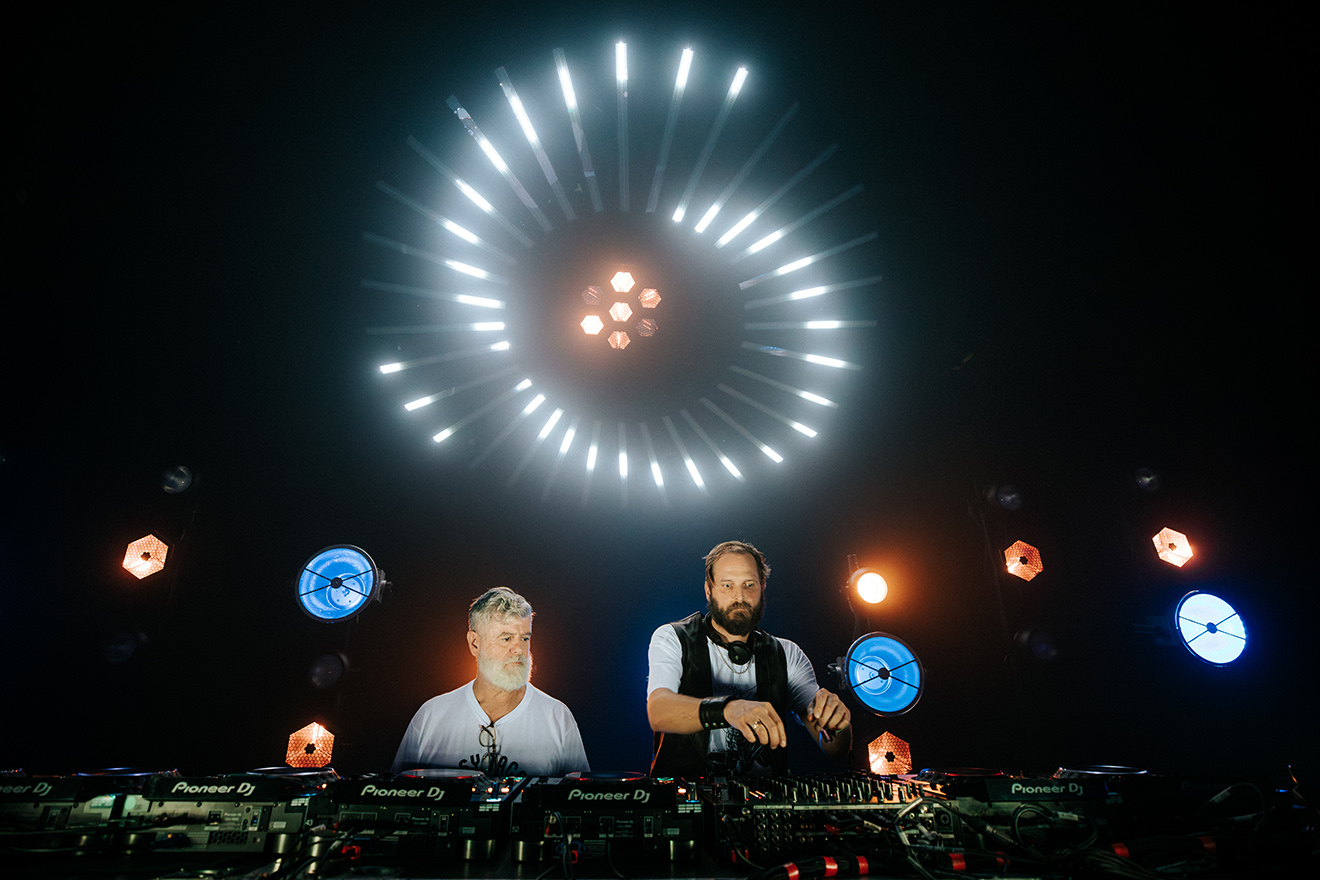
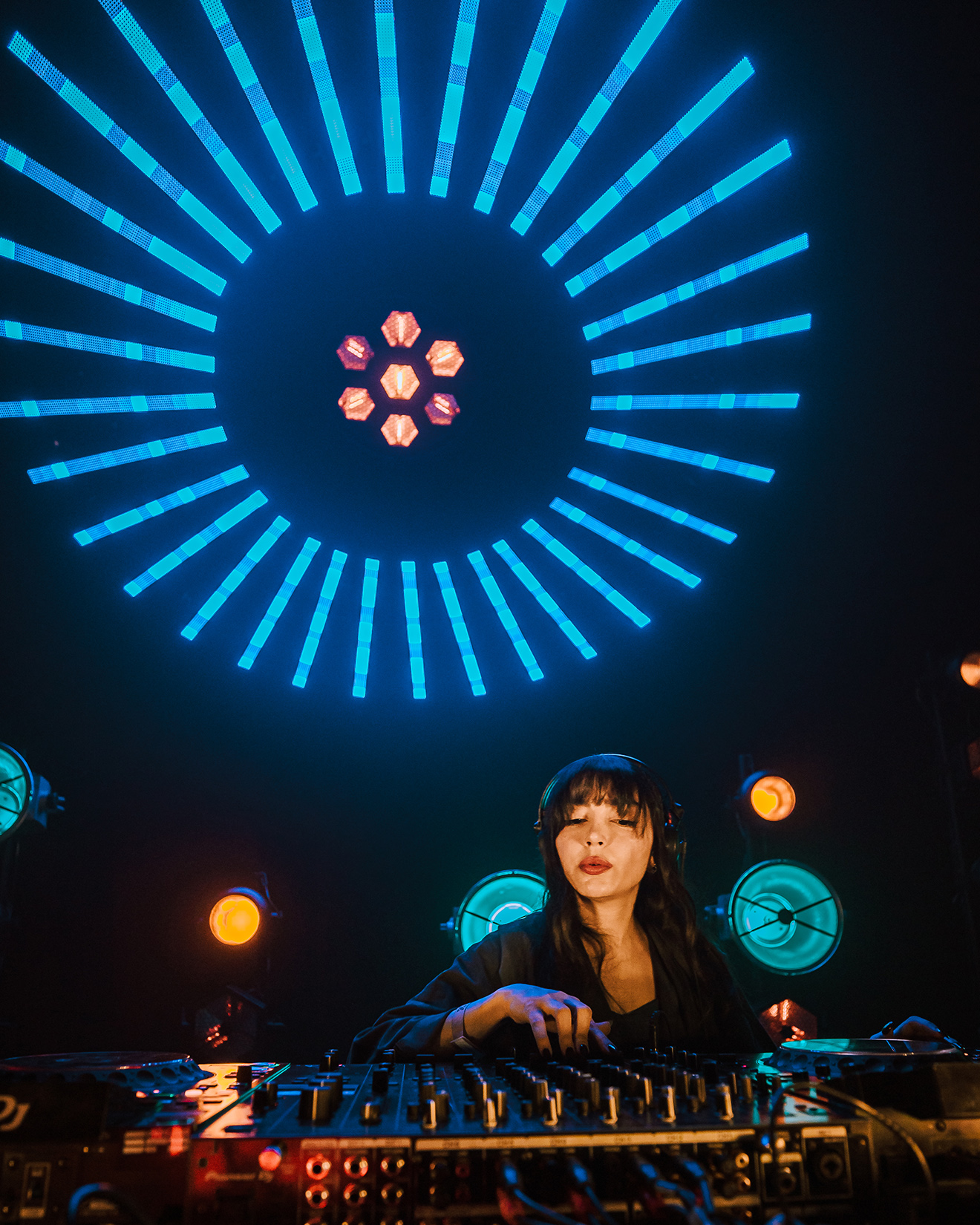
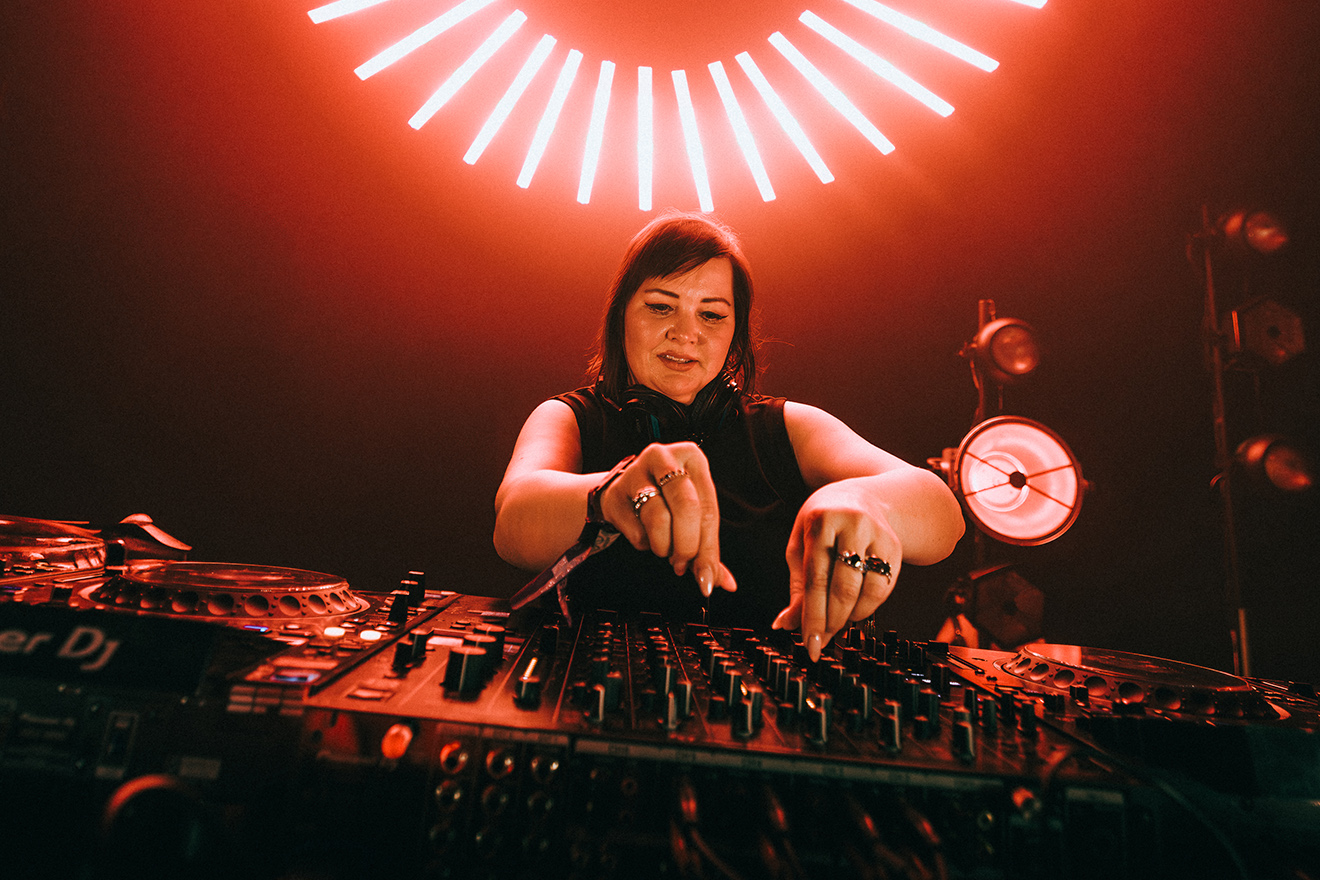
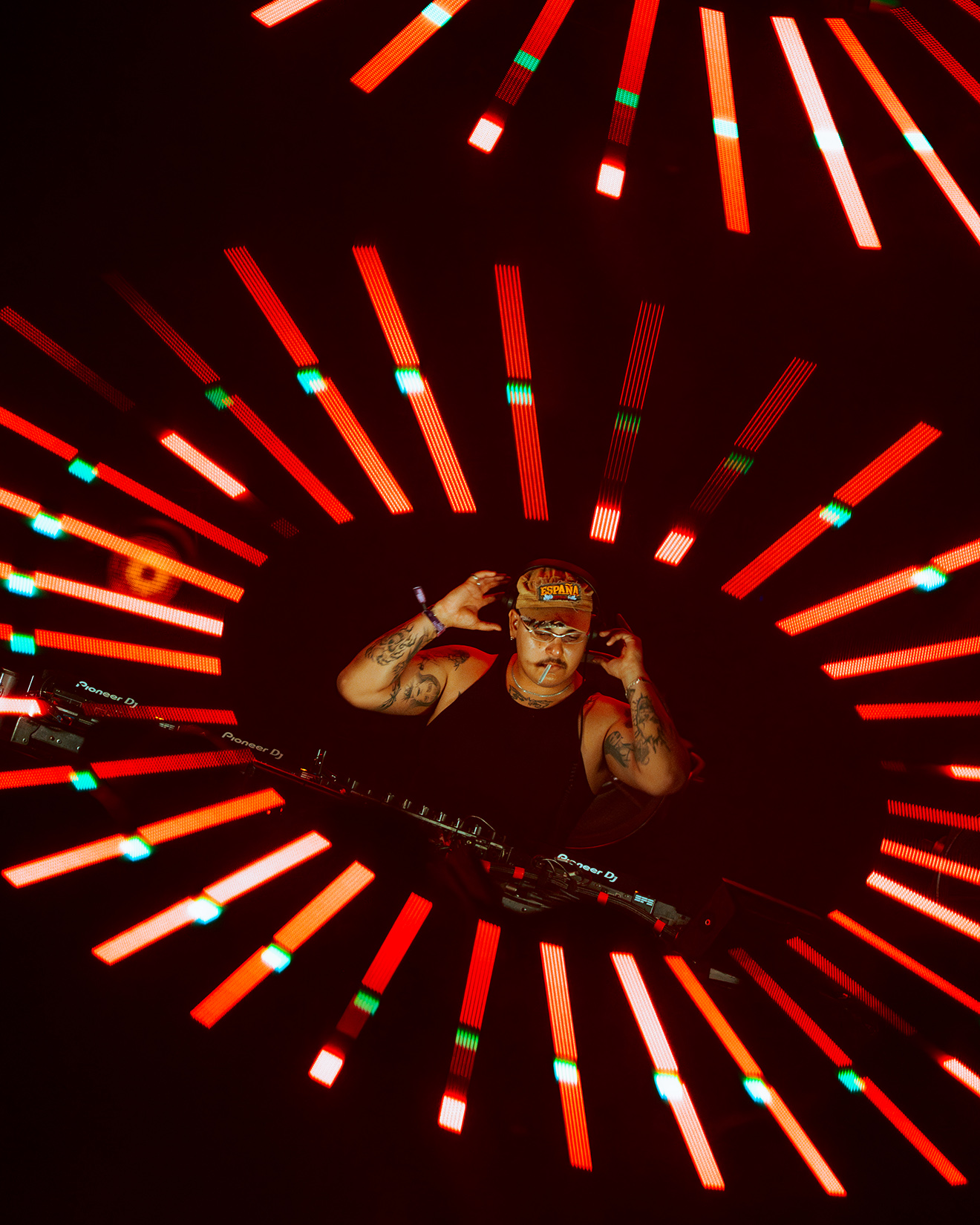
The Arts District in 2026 represents Skyline’s boldest programming to date. The stage has grown year on year, but the revamp this time around is pronounced. Located inside a vast warehouse in the centre of site, the stage is spacious, home to a state-of-the-art soundsystem, and well-produced with tasteful lighting against the jet black backdrop. To my tastes, it’s the best looking and sounding stage at the festival, and it’s dedicated to local heroes. All major cities have these needle-moving artists who are integral to the health of dance scenes at ground level, but not often afforded the same renown as international touring DJs who fly in and capitalise upon that grassroots grind.
But to anyone familiar with LA’s underground, it will come as no surprise that the Arts District stage hosts many of the weekend’s best sets. On Saturday Juliet Mendoza digs into the lineage of '90s house music with warm, soulful tones and vocals nodding to footwork and the percolator. Baile World founder CQUESTT gets the warehouse bouncing with Jersey club heaters, opening on a potent one-two of JIALING’s ‘Freaky Horns’ and ‘Shake the Room’ by UNIIQU3 & Dos Flakos, then sending the energy into overdrive with rowdy ghetto house selections, Miami bass anthems and Ahadadream, Priya Ragu & Skrillex’s global club smash ‘TAKA’. Signal Underground co-founder Mez Monty locks into a more sultry groove, serenading the crowd with sleek, sexy house, swelling with feelings and raw tension, typified by Baronhawk Poitier’s ‘Keep Onna Loving (Everyday)’. Victor Rodriguez and Perfect Lovers close out, a married couple who save their B2B sets for special occasions. They deliver on that billing with a masterful selection, spanning into and beyond psychedelic disco, R&B and soul dating back to the very origins of dance music. Rodriguez has been a part of LA nightlife since 1985 and has crates that would make the average Discogs user weak at the knees. “I was buying those records the first time around!” he quips backstage.
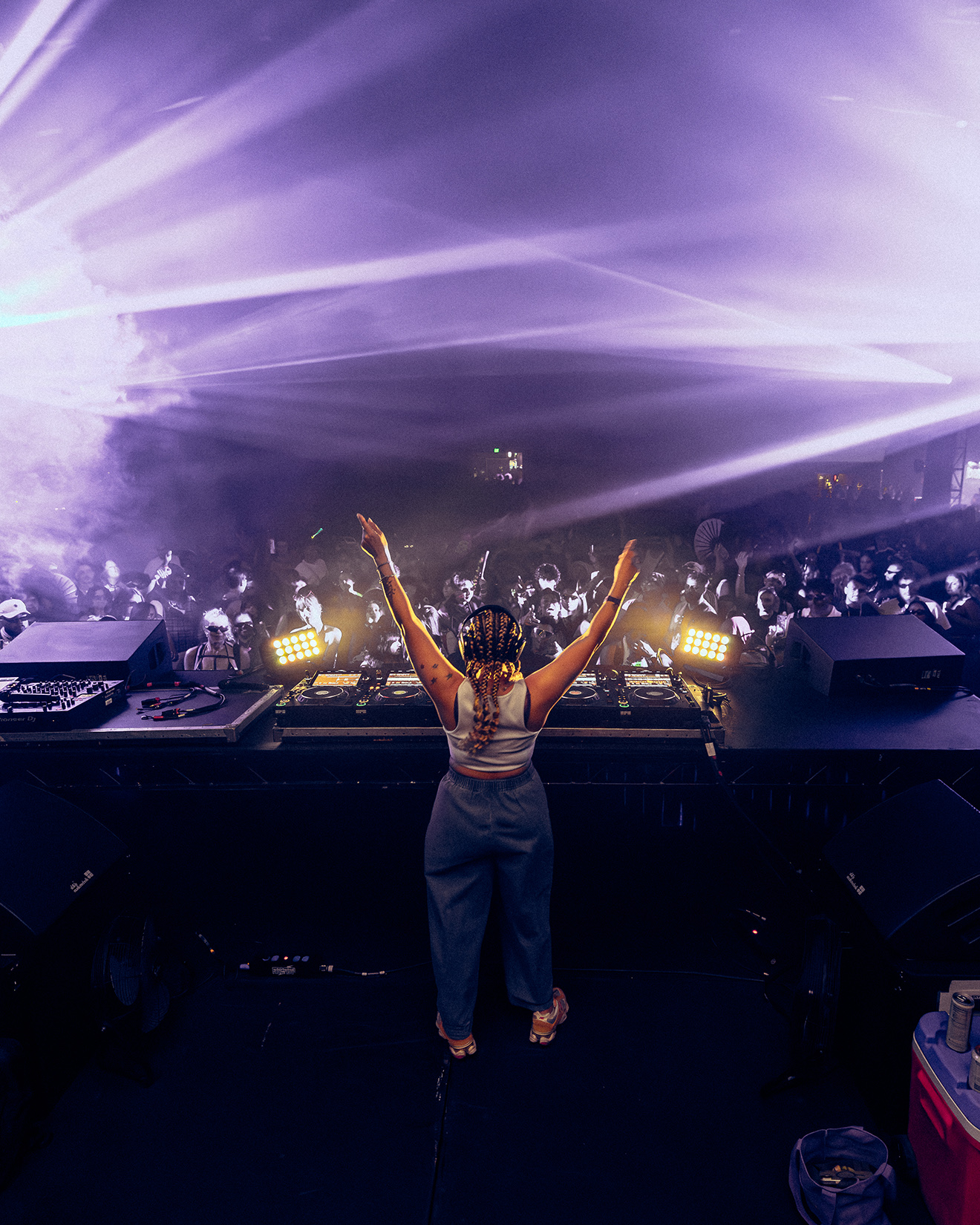
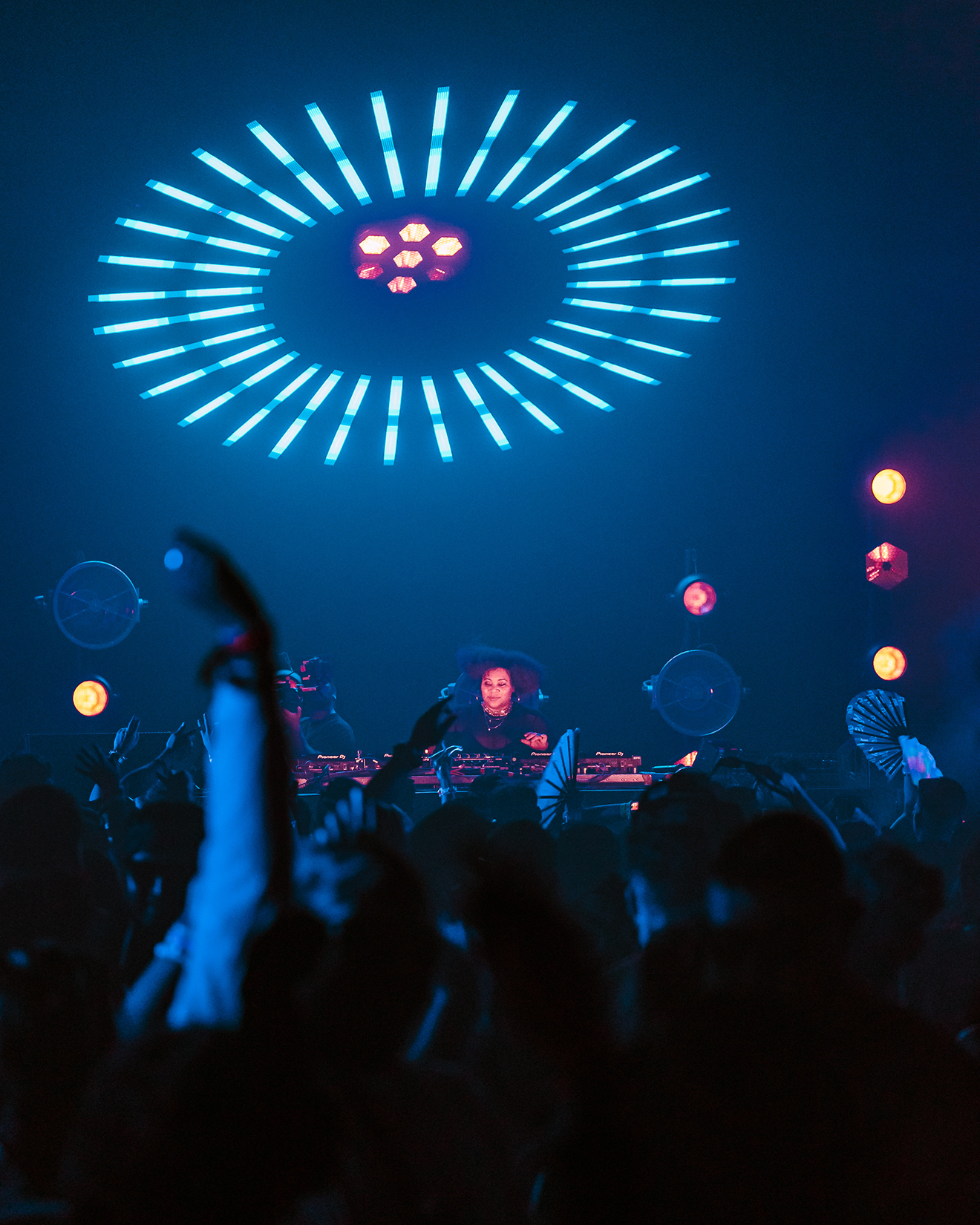
Into The Woods resident Mesmé is a standout on Sunday, playing rounded, impactful techno from the likes of Skudge and Shlomi Aber, filled with thick kicks and driving rhythms. Gyration Station’s DJ Warning sparks delirium with a set that pushes the edges of house music, spanning classic East Coast cuts like Junior Vasquez’s notorious ‘If Madonna Calls’ to the more chaotic West Coast variant in the vein of DJ Dan and Donald Glaude, powered by swaggering breaks, funk, acid and scuzzy basslines that teeter on the cusp of overload. Star Eyes goes in to close out, pushing BPM sliders forward like the throttle of a rocketship and achieving warp speed. It’s straight bangers from the off as ‘Bass Dhol’ blends into drill-club hybrid ‘Any Weather’, and the LA native only pushes faster and harder onwards, as bouncy bassweight and experimental techno from Killjoy to Boys Noize ignites the room via spinbacks and seamless blends alike.
In a time where festivals can be accused of cannibalising underground nightlife, monopolising line-ups and crowds with radius clauses and ticket prices that eat up a monthly budget, it’s encouraging to see Skyline take steps to buck that trend. “To dedicate an entire stage of a two-day festival to shining a light on L.A.'s underground DJs is a huge ‘look’ — it basically tells a lot of the festivalgoers, and also other promoters, booking agents, managers that we are important and worth paying attention to,” says Star Eyes, real name Vivian Host, an LA native who started DJing here aged 15. “It's the festival believing we can rock a big stage and hold our own against the international headliners that are typically the bread and butter of these kind of shows — duh, of course we can, but we're not often given the opportunity.”
“I hope that other festivals take notes,” says CQUESTT. “I hope it does inspire, and that it gives more opportunities to artists that deserve it, that may not have 100,000 followers, but are the real tastemakers and the real culture movers.”
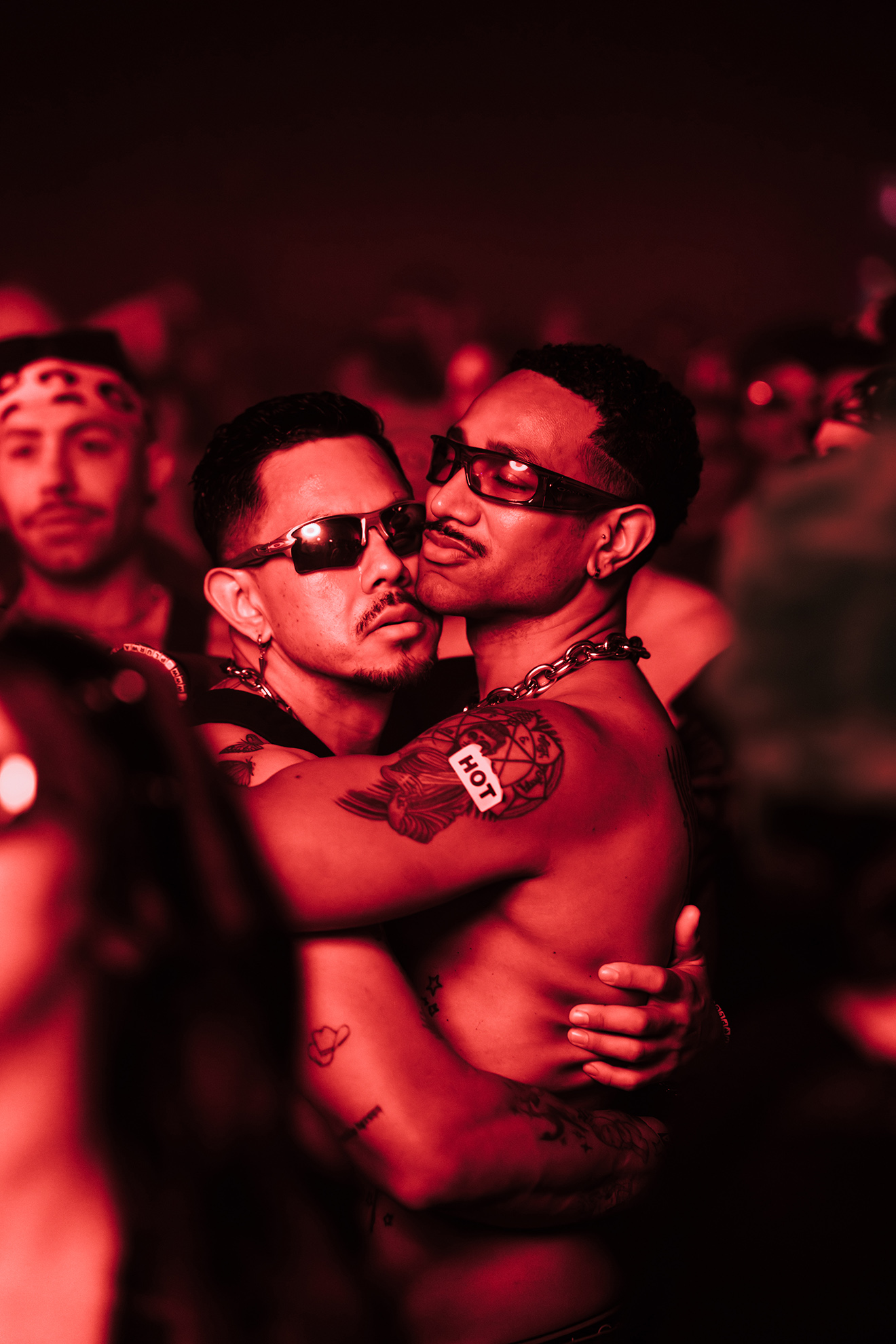
There’s a cautionary tale about allowing social media numbers to rule the roost in California’s most famous festival: the reputation of a vibeless crowd, overrun by corporate influencers, with walk-in wardrobes at the campsite. On the morning before Skyline opens, the festival puts out messaging encouraging attendees to log off, and the diverse crowd of Angelenos that descend upon the site are there to have fun. On Sunday afternoon in the Arts District, a twerking girl and a hot-stepping guy engage in a playful dance-off, with friends around them screaming encouragement. One shines a light on them as a circle forms — from a mini torch, not a camera phone — just illuminating the joy of the moment for those present. Outfits range from revealing PVC and fishnet combos to exaggerated neon fur explosions, matched with props like tie-dye dapo stars that delight dilated eyes. There are “hot” stickers everywhere.
“I'll be honest, being a lifelong raver, I never really went to festivals because I always had a hater outlook on them,” DJ Warning confides before his set on Skyline’s second day, feeling they were too commercial for his tastes. “Coming here really shifted the way I thought. It's not scene-y, it's not like the cool kid club, people are here to have a really good time, and I actually really appreciate that energy.”
A festival is never going to be the same as an underground rave, DJ Warning continues, but being able to dance with his community fuelled the same good feelings it always does, and he appreciates Skyline for providing that “middle ground” where you can experience the various offerings from LA's own at the Arts District to the international headliners. An example like Detroit's Movement Festival could be considered an inspiration for navigating this balancing act stateside.
“People, even myself, sometimes talk about this like they're two different things, but it's actually a spectrum,” reflects Star Eyes. “The overground and mainstream, festival and club culture, there's a lot of interplay, and a lot of DJs and inspirations going back and forth.”
This link was fried in the pandemic, with new gen electronic music fans unable to learn about the culture first-hand from the example of elders, and the commercialisation that comes with social media’s stranglehold deepening. Physical spaces that empower these connections are becoming evermore necessary.
“People are being introduced to dance music on Instagram and TikTok, and the taste level is not quite there, but it's their introduction. When they get open, they start maturing, they start looking for better music or better experiences,” says Perfect Lovers, who runs queer rave Por Detroit between Los Angeles and Mexico City. “It can be very hard to find these parties [in LA] because they're moving around all the time. You can't easily go online and figure out what's going on. You have to be brought into it. There’s younger queer people that haven't found their tribe yet. Young people in general who haven't found their community. [At Skyline,] people can wander in and get looped into this other underground scene that is happening. Creating those connections is a really beautiful thing about it.”

One of the most triumphant headline slots on Skyline’s biggest stage, East Side, comes from The Blessed Madonna B2B HAAi. Against the gorgeous orange glow of LA golden hour and the artfully lit Sixth Street Viaduct, they dig deep into hoofing house cuts filled with euphoria and catharsis that speaks to the moment, energising the crowd with a sample of Gil Scott-Heron’s “Who will survive in America?” refrain above thumping kicks and claps. A decade ago, HAAi was playing bar sets in London as a relative unknown, where she was spotted and offered the platform of a notable club residency, which became the breakthrough moment of her career. Catching up after the event, she’s full of enthusiasm for Skyline spotlighting the grassroots. “This is something that I feel is so overlooked with many festivals,” she says. “Championing local collectives and local artists, especially when it comes to artists from less represented backgrounds, brings so much community to festivals, and it shows the festivals are paying attention to what is going on in their cities and within different scenes. This is super important to be and I loved how much energy Skyline put into this.”
That night, HAAi is the special guest at a Por Detroit warehouse rave two blocks away, playing to an ecstatic throng of queer ravers through the early hours. If she had a radius clause, it couldn’t have stretched more than a couple of metres beyond Skyline’s doorstep.
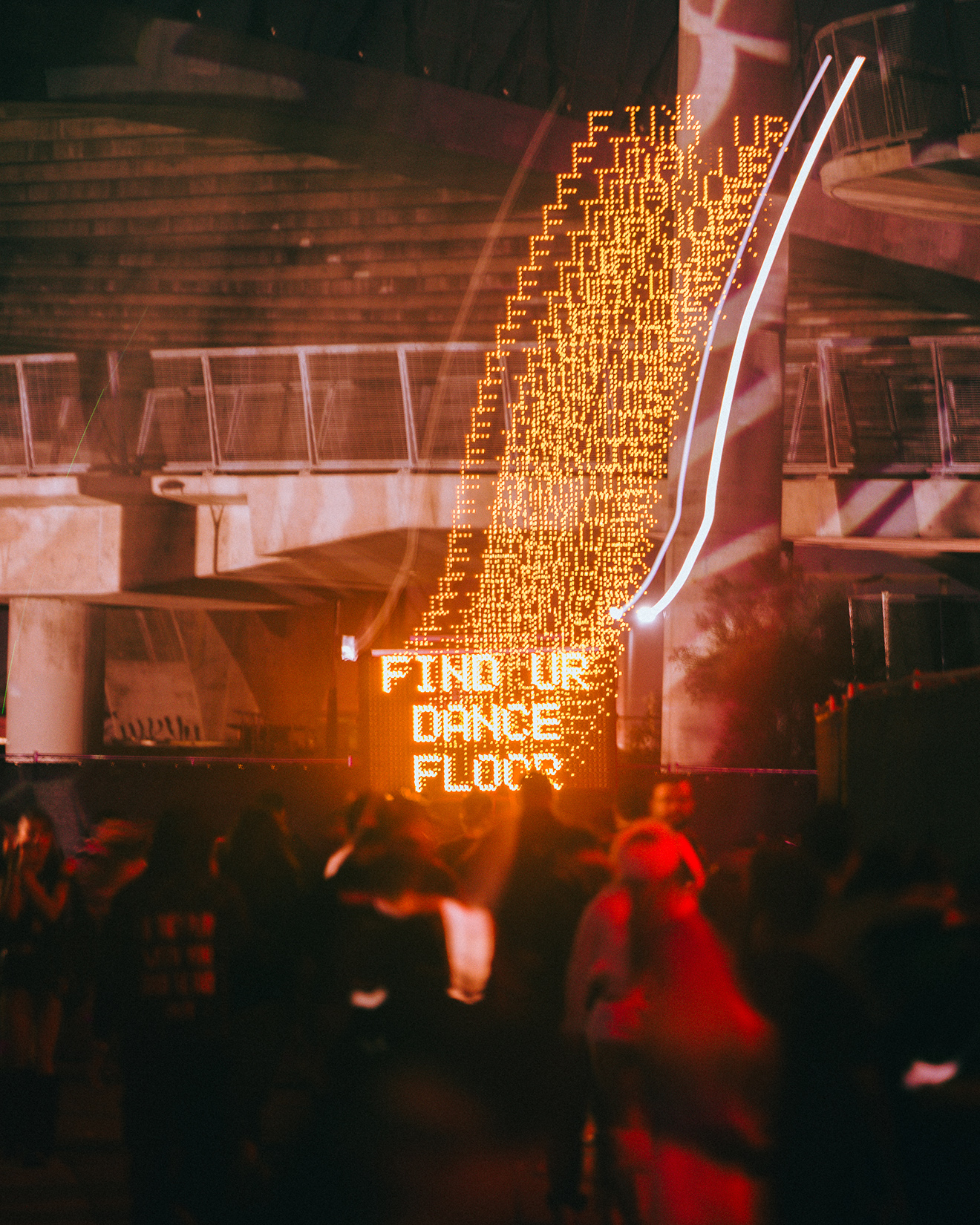
Crucially for this whole collaboration, it feels intentional and authentic from Skyline’s side, with a sense of legacy building. “I’ve attended Skyline over the last few years and have watched the Arts District stage evolve from a small side stage into the massive production it was this year,” says Mez Monty. “I know the team works intensely to ensure that stage gets the recognition it deserves, and every DJ this year understood the assignment … it ended up being many attendees' favourite stage of the weekend.” Momentum is reflected in the wider line-ups too, with multiple names from previous year’s Arts District line-ups graduating to the headline stages in 2026, including Stacy Christine, Marie Nyx, fun2bjane, Etari and OZA.
This energy extends beyond the festival weekend. In the lead-up, Skyline hosts its own community pop-up event at local record store Agora that is free entry and features an artist panel aiming to inform curious music fans “what it means to contribute to the LA underground”. According to Star Eyes, this is something that doesn’t happen a lot in LA. “We don't have many panels, workshops, or even spaces where we can just meet each other that aren't just, like, a very loud rave,” she tells me, when we sit for an interview at one of those rare jewels in LA’s landscape, the cherished independent community radio station dublab. “It's really nice to have these different events where people in club culture can gather outside of just the giant dance party, and talk and share ideas. I think that's gonna have a lot of positive reverberations.”
For this culture to sustain, things need to keep moving. It helps if the difference makers are given a platform, and ripple effects can take root. CQUESTT recently launched an LA promoter fund through her Baile World party, where $1 of every ticket sold is donated to a local from an underrepresented background to put on a party. “Being a promoter in LA, or being a promoter in general, is so hard. It's so expensive. There's so many different artists that can create more community and more spaces that this city needs There's so much gatekept information that you just don't have access to unless you know or know someone who knows. So I wanted to bridge that gap,” she tells me of its aims. Mez Monty looks wider with his Signal Underground party. “We're navigating a world that feels increasingly isolationist. Facilitating space for people to connect, share ideas, and release is the main driver of our work,” he says, outlining their curation philosophy as “largely inspired by showcasing community leaders across the nation and world doing the work in their respective scenes.”
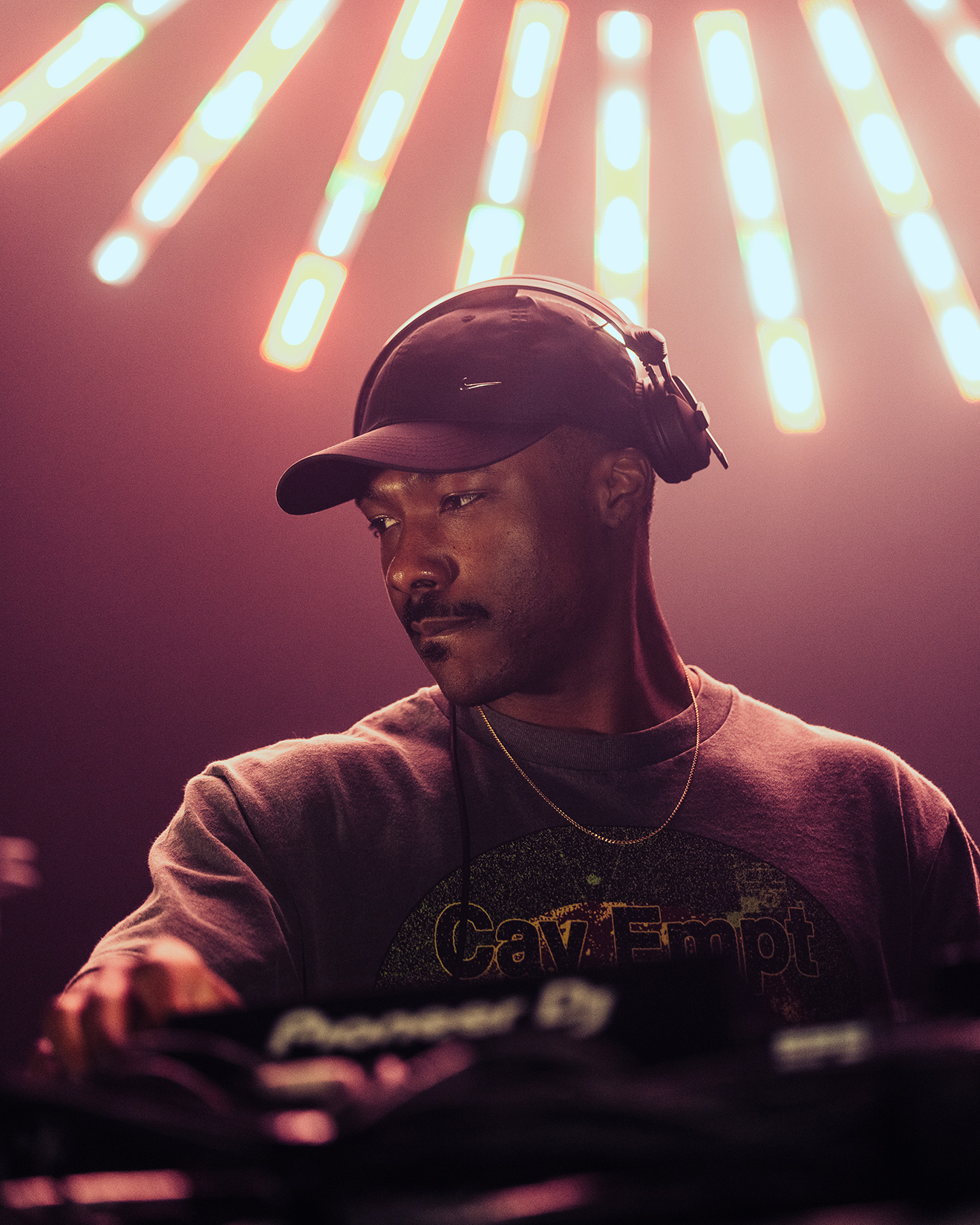
“I feel like what happens in LA is unlike anything that happens anywhere else in the world,” says Victor Rodriguez, who’s now in his fifth decade in the engine room. Many of the issues impeding the scene since its origins — turbulent political climate, aggression from agents of the state, impossible licensing laws, infrastructure that’s lacking — still persist. But the culture still manages to flourish, thanks to the endless energy of its community, and the inspiration that fuels their involvement. These people are proud of what they’ve built and what their city has to offer. The rave underground feeling supported instead of overlooked, or even threatened, is a necessary feature for any festival taking up space in this part of town.
While Insomniac has expanded well beyond its own illegal rave roots, and Skyline is not quite a full circle moment, it’s encouragingly self-aware about its place in returning to the source. The tone of voice is gently didactic about the culture, both online and on site via cutesy road sign messages, and the big ticket names are complemented by more niche offerings, curating a festival that rave lifers and rookies needing an entry point can enjoy in tandem. “It can act as a reference point for future festivals doing the same thing,” says Star Eyes.
“I was crying at various points while prepping my crate for my Skyline set,” she reflects as we catch up post-event, emphasising what this means. “The music contains so much memory. I was really overcome by the beauty of still being involved in this culture and community and thankful to still be DJing this music on a big stage, several decades on.” That feeling of euphoria bordering on the spiritual is palpable in her closing set on Sunday night, and vividly translates into the crowd. You don’t get that from a headliner on their fourth stop of the weekend.
Patrick Hinton is Mixmag's Editor & Digital Director, follow him on Instagram


