
 Features
Flow state: Polygonia is fulfilling her dream of full creative freedom
On her new album 'Dream Horizons', Polygonia showcases the full range of her artistry, combining acoustic instruments, vocals and electronic production in a texturally captivating record conceptualised around dreams. The Munich-based artist speaks to Christian Eede about spontaneous creativity, using her skills and platforms to help others, and breaking free of the 'deep techno' tag that previously confined her
Take a short walk from Lindsey Wang’s home base in Munich and you will come across Das Isartal, a beautiful white water river nature reserve housed among the mountains of Bavaria. It’s a constant source of inspiration for Wang, whose work as Polygonia has long been influenced by a deeply-held fascination with nature. “I love hiking and Munich is generally a city that is very connected to nature because it’s close to the Alps,” she tells Mixmag over a video call from the similarly stunning setting of Ruka Ski Resort in Finland ahead of a DJ set at Solstice Festival.
Admitting that she surrounds herself with plants while working in her studio, Wang’s sound is coloured by a distinctly organic and vividly melodic quality that stands in stark contrast to the somewhat po-faced, grayscale streak that runs through the big room end of today’s techno scene. She traces this aspect of her sound, in part, down to formative teenage adventures at psytrance festivals in Germany.
“Those kinds of festivals are always very deep in nature, so I experienced a lot of intensive musical moments in those settings,” Wang says, having taken a number of years to warm to techno due to a general sense of apathy with a male-dominated local scene in Munich that, at that time, seemed rather monotonous to her ears. Brief flirtations with the markedly more head-spinning sounds of UKF-style dubstep, deep drum ‘n’ bass, and IDM producers like Venetian Snares all seemed far more appealing as she first set out exploring electronic music in its many forms.

Wang’s musical background runs deep as the daughter of a Chinese father who played viola in orchestras and a German mother who played piano, as well as the granddaughter of a clarinet professor grandfather. “My very first instrument was the recorder as it is for so many children, and I’m pretty happy that I did that because it helped me understand the mechanics of lots of other wind instruments,” Wang says. She later progressed to taking up violin and piano, and participating in various orchestra camps and musical ensembles as a child. Requests to her violin teacher to break off-grid and teach her how to play jazz fell on deaf ears, however, with Wang admitting that she felt stifled by playing pre-prepared pieces and yearned for more spontaneity.
Read this next: The Cover Mix: Polygonia
“Later on, I started teaching myself to play the saxophone and flute, and I recently just got a piccolo flute,” she says. “I’m not the kind of person who is addicted to collecting analogue synthesisers, and instead I love collecting very old acoustic instruments.” The duduk, a double reed woodwind instrument originating from Armenia, and erhu, a traditional Chinese string instrument, are among her latest favourite purchases. “When you play an instrument, it’s a very satisfying feeling when your body resonates with its vibrations.”

Wang has recently started taking active steps to make her background and obsession with acoustic instruments a more central part of her dancefloor-focused output. “It probably sets me aside from many other producers who might not play instruments, so if I didn’t represent this in my music, I just don’t feel like I would be presenting the whole me.” December’s mule musiq-released ‘Upside Down’ EP — featuring a curiously vibrant modern-day take on the '00s microhouse of producers like Jan Jelinek and Matthew Herbert — was the starting point for this new working process. It fully comes alive, though, on recently-released album ‘Dream Horizons’, which marks Wang’s full label debut for Dekmantel, and sees her play flute, violin, saxophone and various forms of percussion, while also making use of her own voice.
Having previously contributed the track ‘Signo’ to last year’s ‘Dekmantel Ten’ compilation marking a decade of the Dutch festival behemoth, Wang’s latest LP is conceptualised around dreams and the myriad forms that they can take, both whimsical and nightmarish. It’s also a collection of 12 tracks that, once and for all, sheds the somewhat reductive ‘deep techno’ tag that has followed her around for several years up to this point. Traversing several tempos and styles, ‘Dream Horizons’ is a world-building exercise that folds in Wang’s diverse musical interests. Opener ‘Crystal Valley’ is a captivating beatless journey through arpeggiated synths and rumbling bass notes, while ‘Metaphysical Scribbles’ explores jittery halftime drum ‘n’ bass that will leave even the most precision-oriented DJs scrabbling round to find the ‘1’. There’s also room for the system-rattling sub-bass and lurching rhythms of dubstep in ‘Hidden Blue’.
“I love to explore many styles and for this record, I could feel as free as a bird in the sky,” Wang says of ‘Dream Horizons’. “There are so many feelings associated with dreams so it was a perfect base for me to start with. Dreams are a different version of our subjective reality, and how we process reality, so it was a good foundation for exploring different sounds.”
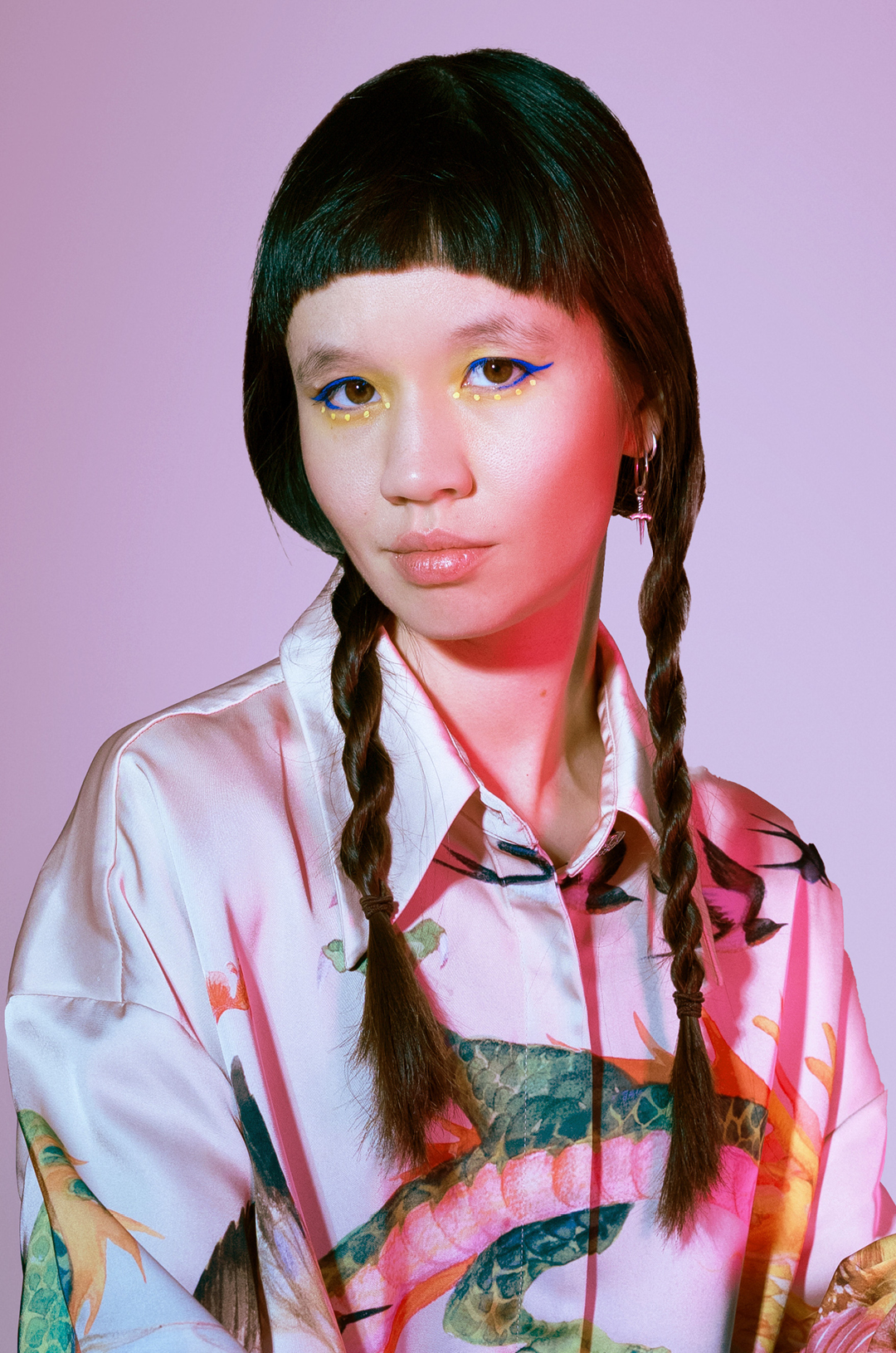
One of the record’s more intense cuts, ‘Gate To Amygdala’, for example, delves into the darker reaches of our unconscious experiences with its ever-ascending, whirring synths that could be filed away as a techno take on sleep paralysis. “Amygdala is the centre of processing emotions like fear and anxiety in our brain,” Wang explains. “I’m sure everybody has had a lot of very intense dreams where you are stuck in a constant state of fear, so I wanted to express that in that track.”
Read this next: What is sleep paralysis and how can you avoid it?
Above all, working on a larger project like ‘Dream Horizons’ was a liberating experience for a producer who started out making, in her own words, “leftfield hip hop beats, and experimental and ambient music” before later coming to techno and the faster, more psychedelic qualities that are currently fuelling the freetek revivalist sound of like-minded heads such as Woody92, Spekki Webu and Vardae. Album cut ‘Mindfunk’, for example, was “almost like a joke,” Wang says, adding that she simply wanted to “make something that sounded almost silly or annoying, but was still driving in a dancefloor sense.”
The record was created intensively across a period of around two months with Wang often working “on transport and in train stations” amid a busy schedule of DJ and live gigs. “I feel that this helped me build a cohesive sound across the record, because if you work on tracks across too much time, you can get lost in making very different sounds,” she says. It’s a creative process that she’s long adhered to, describing herself as a very intentional producer. While other artists she collaborates with might run through several different project versions of a shared production, Wang craves impulsivity, noting that she can easily grow bored of a track if she spends too long working on it. “My creativity only flows when I can be spontaneous, and that is why I produce in the way that I do,” she says.

This might explain why Wang has become one of the most prolific figures working in underground techno today. In addition to ‘Dream Horizons’ and December’s aforementioned ‘Upside Down’ EP, recent years have seen her release records for labels such as Prague-based Harmony Rec.; Berlin trippy techno leaders Midgar; Bambounou’s Bambe; Oslo-based, MNMT Festival-affiliated Monument Records; and Kangding Ray’s ara. She’s also contributed single cuts to compilations for Wisdom Teeth, Semantica Records and Argentina’s Danza Nativa, among others, while remixing the likes of Azu Tiwaline, Len Faki and Arkajo. There have been collaborations too with Rrose, on last year’s abyssal, stripped-back LP ‘Dermatology’; jazz drummer Simon Popp, in the form of 2023’s diaphanously hypnotic ‘Candid’; and as part of the jazz-electronic fusion trio Lyder alongside Niklas Bühler (AKA FTP Doctor) and Moritz Stahl (AKA odizouu).
Throw in an ever-busy touring schedule that has included a near-monthly residency at Munich’s BLITZ club––as well as DJ and live sets at events such as Dekmantel, Waking Life, Horst, Draaimolen and Sustain-Release in the past year alone — and creating a 2023 ambient soundtrack for German documentary Fungi Monster / Beziehungsweisen, exploring intergenerational trauma in the Vietnamese diaspora, and it’s hard to get your head around just where Wang finds the time for all of her projects while maintaining such consistent quality control.
“I’m just very motivated, and my work is also my passion so it’s not easy to switch off,” Wang admits, when we broach the topic of staving off burnout. 2025 has seen her take active steps to improve her sleep cycle, while she’s also got into bouldering and running. “From January to March this year, I had more time to just spend with friends, which was really amazing. It was nice to recharge.”
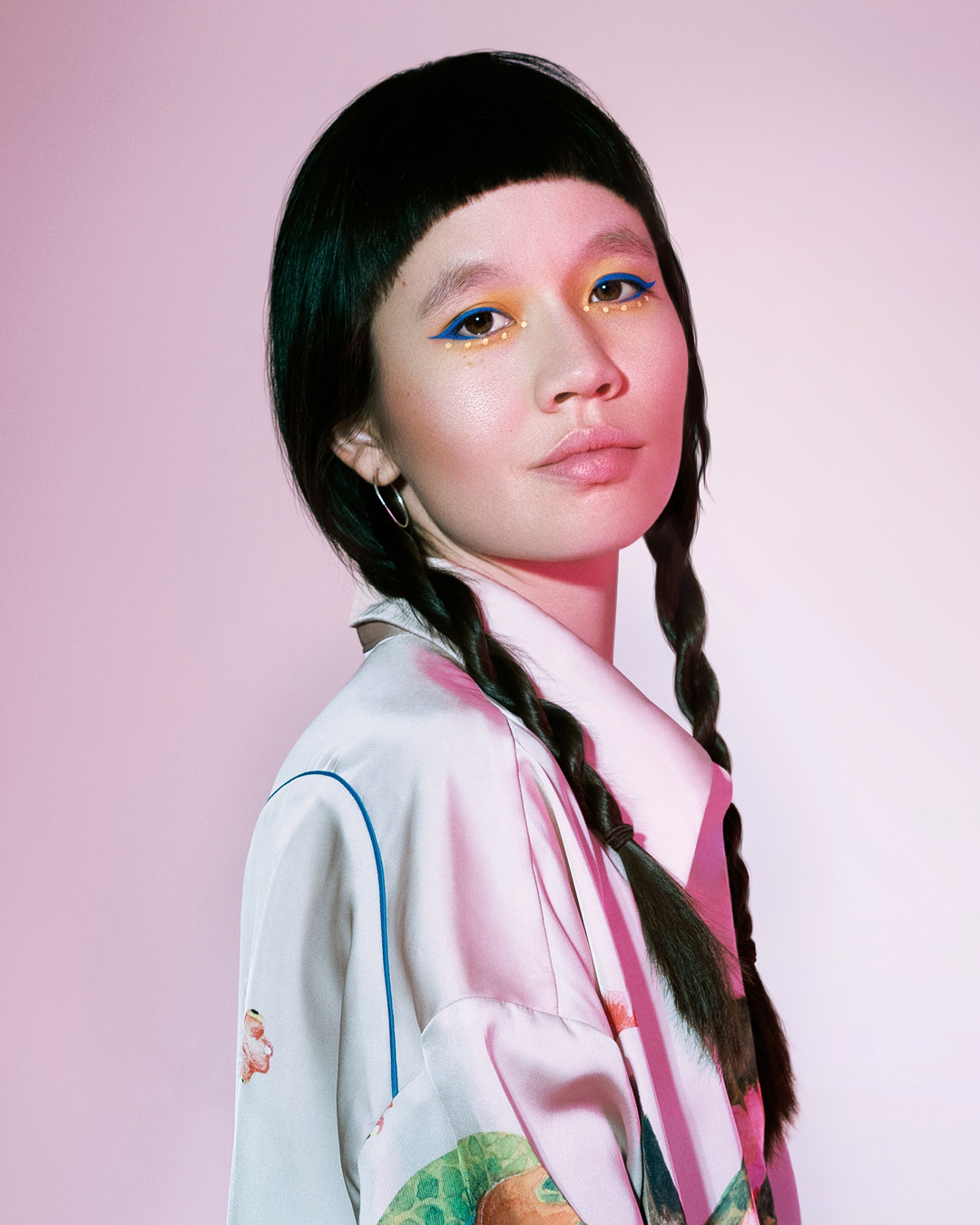
She also recently took the weekend off gigging to attend one of her favourite events, Germany’s Fusion Festival, for its entirety, simply as a punter. “Despite there being 70,000 people there, it’s a very German kind of festival and so many friends of mine go, so it’s my off time,” she says just ahead of the event. “I’m not reachable for any work. I’m just going to see all my friends and enjoy my time. It won’t necessarily be a body recharge, but it will be a mental recharge.”
Most importantly, Wang says that she’s never felt happier with where she is at in her career. Having broken out of the shackles of the deep techno sound that she felt had defined her for several years, she’s now finding herself being booked to play different gigs where she’s able to explore all of the corners of her sound. “Two years ago, I was mostly on only deep techno line-ups and I didn’t have the chance to play music outside of that,” she says. “A deep techno crowd sometimes doesn’t want to hear anything else. Now, every weekend is completely different from gig to gig. I can play fast 160 BPM music at one show, and then, for example, in Detroit recently, I played a back-to-back set with Erika where we went through lots of ambient and experimental music together.”
Wang has also more recently used the output of her two labels, ıo and QEONE, to communicate that her tastes lie far beyond any limits previously placed against her name. She runs ıo, founded as a collective and imprint in 2018, together with fellow long-time Munich-based friends including the producers Dycide and FTP Doctor. “We’re not really curating a specific sound with it, but it may have looked like that at the start because lots of the early releases were just focused on deep techno,” she explains. “The further we’ve gone with the label, we’ve realised that deep techno isn’t necessarily our home anymore. We just want to give people freedom to make what they want rather than being stuck on one sound.”

Launched in 2022, QEONE is Wang’s solo venture, and yet another opportunity to feed her prodigious appetite for spontaneity. “When you work with a bunch of people, decisions take longer and deadlines are harder to maintain,” she says. “QEONE gives me a project where I can set deadlines for myself and have the satisfaction of realising my own vision. It has now evolved into something that is so much fun to run that I’m so happy I started it.” The imprint is also another outlet for her love of organic, unpredictable sounds, putting out cavernously hypnotic records over the past few years from artists like Vardae, Pianeti Sintetici and Zvrra — all of it featuring gorgeously colourful artwork designed by Wang herself.
Read this next: Southeast Asia's underground is in a golden era
Future plans for QEONE will see her look to break further beyond the confines of the Western-centric techno scene, putting out records from producers hailing from Asia and Africa. Wang credits a winter 2024 trip to Manila for a collaboration with German cultural organisation Goethe-Institut as a particularly eye-opening experience. “I did a DJ workshop and a gig, and the DJ workshop was actually the more interesting part of it,” she says. “It turned into an eight-hour gathering where we spoke about the lack of exposure for non-Western artists.
“Lots of the people I spoke to felt overlooked by the Western scene because nobody’s even looking at what is going on there. Everybody in the European and American realm is interested in spotlighting themselves and their Western friends.” Admitting that she felt some guilt of her own about this reality despite QEONE not especially focusing its output on hugely well-known names, the experience has encouraged Wang to dig further and wider than ever before with a busy schedule of records now lined up for the label.
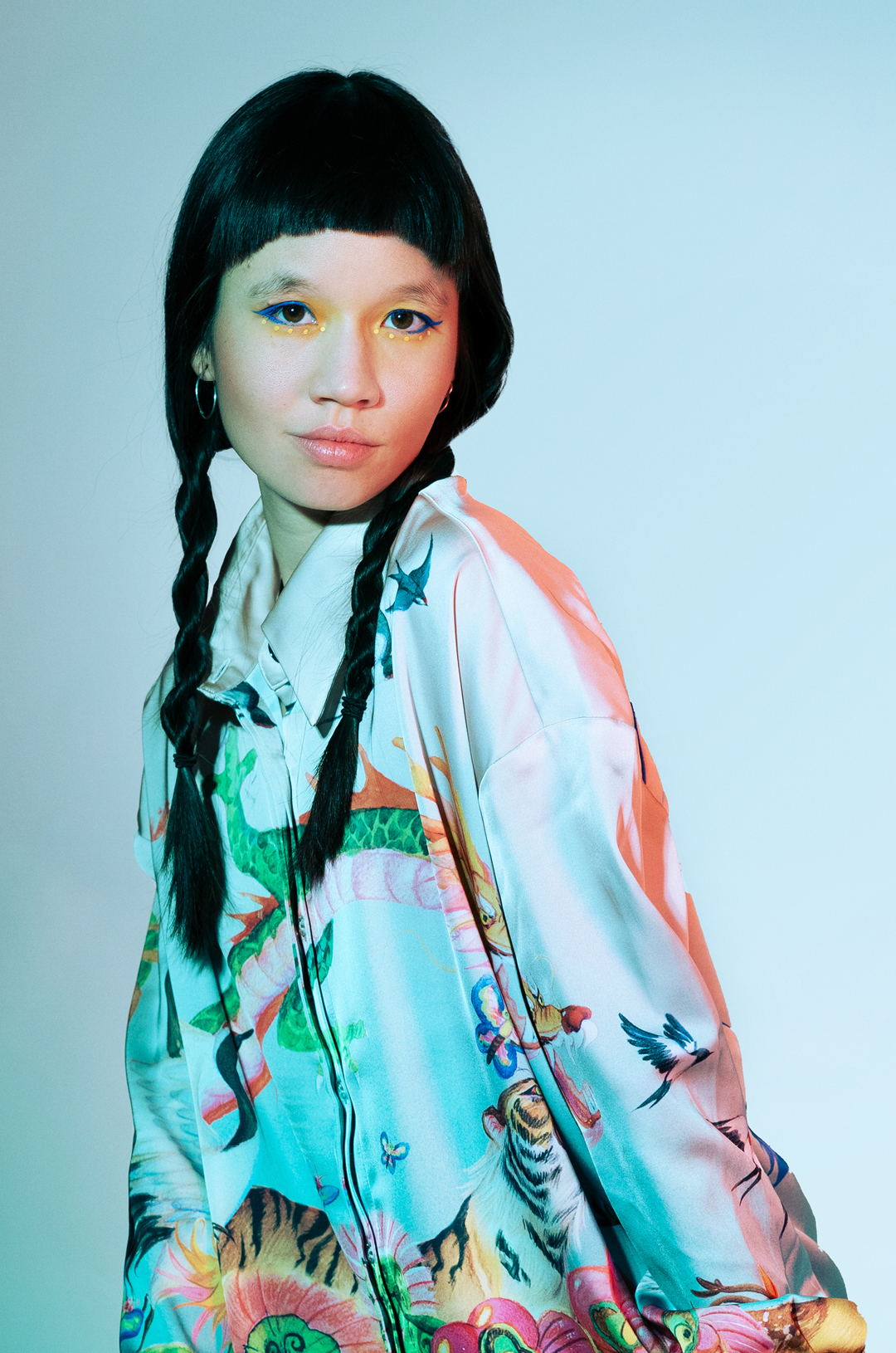
Next up for her is the launch of a software programme called Inspect. Designed with Wang’s ıo labelmates, it will aim to help producers better analyse and eliminate the unwanted frequencies in their tracks. “We want to debunk the idea that you need expensive equipment or big studios to test your productions, because I work on the road a lot, and even do the mixdowns on my AirPods while travelling,” she says. “You can achieve so much just with headphones and your laptop. I do lots of workshops and one of them is about producing on a budget, so it’s really important to me to create tools that can allow people to do that.”
In addition to her several music projects and dizzying gigging run, Wang has spent a number of years sharing tutorials via YouTube in an attempt to demystify the often impenetrable, male-dominated world of electronic music production. She also takes time to give technical feedback on upcoming producers’ demos via the platform Echio. “It’s so valuable to have access to a person who knows their shit and can give you productive feedback,” she says of why she signed up to the project. “It can help you grow as an artist and further your creative language so that you can better express yourself.”
With little signs of her work rate slowing down, and an unwavering commitment to giving back to a scene that has taken her under its wing over the past several years, Wang’s commitment to raising others up around her is admirable. “Music is about community, and I want to make a contribution,” she summarises. “Sharing is caring.”
'Dream Horizons' is out now via Dekmantel, buy it here
Christian Eede is News Editor at The Quietus and a freelance writer, follow him on Twitter


