
 Features
Elton John and The Blessed Madonna in conversation
As he gears up for the release of his first dance music remix album, which will land via Positiva for Record Store Day 2026, Elton John and The Blessed Madonna discuss their love of record stores, Studio 54 and the dancefloor moments that changed everything
There's very little Elton John hasn't done his six decades-long career; one of the few artists to hold the coveted EGOT status, 300 million records sold globally, a knighthood, a Glastonbury headline slot... the list goes on. Yet, this week the legendary British musician is preparing to tread new ground, releasing his first ever dance music remix album via illustrious label, Positiva Records.
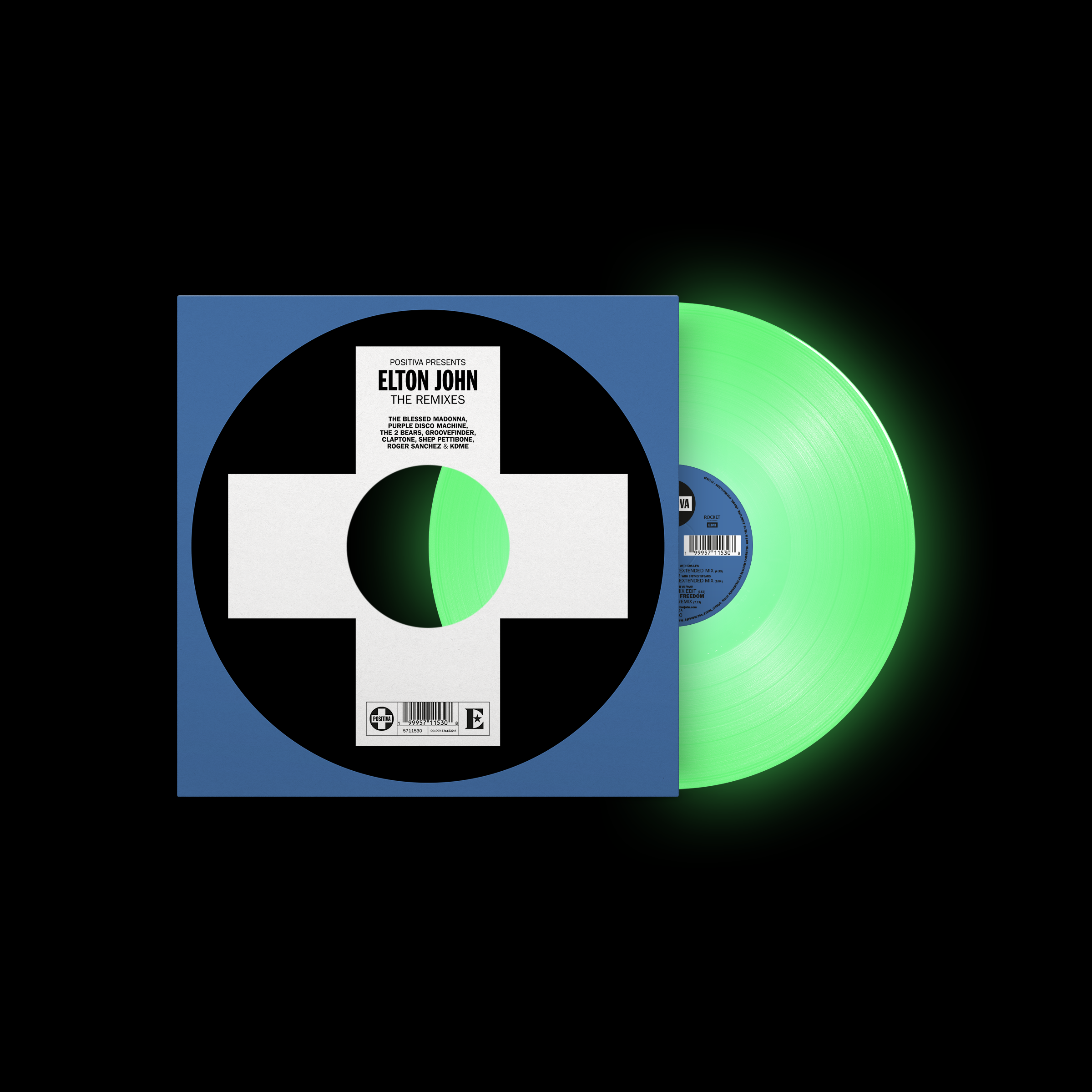
'Positiva Presents: Elton John - The Remixes' will land in the form of a limited edition glow-in-the-dark green vinyl LP to mark 2026's Record Store Day on Saturday, April 18, then become available digitally via Beatport the next day. Elton John and Positiva have enlisted producers including Purple Disco Machine, Pnau, Roger Sanchez, Claptone, KDME and The Blessed Madonna to rework some of his classic hits such as 'Don't Go Breaking My Heart', 'Cold Heart', 'Hold Me Closer' and of course, 'Rocket Man' for the special edition release.
"I've often put stuff out on Record Store Day, and I always make an effort to put something out that the fans have never heard to celebrate it. Something from the vaults that I think is really important," Elton John explains in the conversation below. "We've never done a dance remix album, although I've had plenty of dance remixes done. I'm really excited because I don't think anyone will have heard this stuff before." While Elton's discography may not scream "club banger" for the most part, his personal connection to dance music dates back to its disco origins, from being a regular at legendary nights at New York's Studio 54, Crisco Disco and Le Jardin, to his current fascination with electronic acts such as Fcukers, Four Tet, Pnau and Nia Archives who he has platformed on his Rocket Hour podcast for Apple Music.
One of the artists enlisted on the remix package, Chicago legend and former Smartbar resident The Blessed Madonna - whose own career in music spans 30 years - caught the attention of Elton and his husband David Furnish, both enthusiastic dance music fans. But the two artists had yet to have the opportunity to discuss their shared fascination with music until now.
To mark the release of 'Positiva Presents: Elton John - The Remixes', The Blessed Madonna sat down with Elton John for an exclusive In Conversation for Mixmag, which covers dancefloor epiphanies, the beauty and community of record stores, and how keeping their inner "kid" has helped them maintain their passion for music.
Read their conversation below, and find out how to get hold of a copy of 'Positiva Presents: Elton John - The Remixes' here.
The Blessed Madonna: Well, Hello!
Elton John: Hello, my angel. So nice to meet you. Before I say anything else, I'd like to thank you for the fabulous remix of 'Cold Heart', which is on this remix album. I was so happy when you said you'd do it, because my husband David and I have been huge fans of yours. So it's a big deal for us.
TBM: Whoa. Well, I mean, it’s such a beautiful record. I have followed you and loved your music my entire life. It’s been a privilege.
EJ: Well, I've been around long enough. How did you get into dance music? How old are you?
TBM: I'm almost 50.
EJ: What, no. Really? Well, you don't look it.
TBM: Yeah, well, pushing 50. I was born in the '70s, and I started going to raves when I was 14. You can read that chronology in a beautiful mythological way or a very different one. Either I shouldn't have been there or it's good that I was.
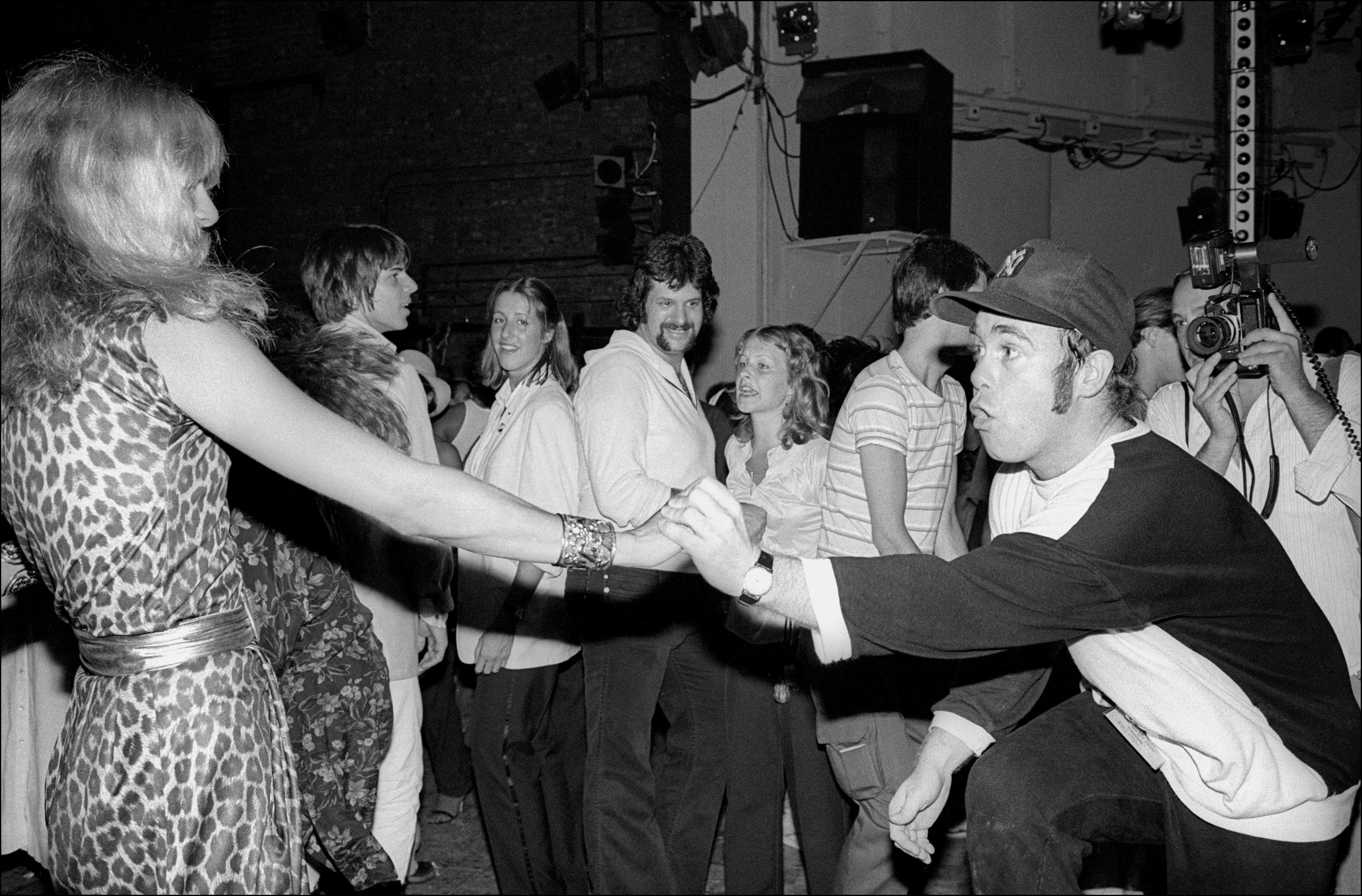
EJ: Well, it’s good that you were. My history in dance music started in the '70s when I first went to Le Jardin in New York, and heard stuff like Odyssey's 'Native New Yorker'. Diana Ross was there too; it was a lovely club. That was the first time I really heard dance music as it became dance music. Later on I went to see Larry Levan, and I went out with Divine to places like Crisco Disco....
TBM: Hell yeah.
EJ: Then of course, Studio 54. When Studio 54 first opened, people went there just to dance, because it was the beginning of disco and the beginning of dance music. The music was so amazing. It was like heaven.
TBM: Yeah. That's how I felt when... I was so young, and I'd been so ostracised coming from where I was. You know, I'm from the South. And I was born to it, for whatever reason. The first time I heard a big kick drum, I followed it like breadcrumbs to the future and it really ostracised me in a lot of ways from other kids, you know, there weren't many 10-year-olds listening to Belgian Europop and things like that. But It really was what I was interested in. I left school, because it really didn't make sense to be there — the West side of the American rave scene was starting to happen, and accordingly, I was able to see some things that became history. You know, the first time Richie Hawtin did Plastikman, all of those things.
EJ: Where in the South do you come from?
TBM: I'm from Kentucky! It's actually the mid-South. My Grandmother is buried right next to Colonel Sanders.
EJ: Well, there you go. I've played at the KFC Yum! Center [in Louisville]. I love the South. I spent a lot of time in Atlanta. 30 years on and off. There's a part of me that feels that, in another life, I was born in the South. That's where all the great music comes from: R&B, jazz, the blues. It all came from the South, baby.
TBM: Even when we move to places like Chicago and New York in the North. The South Side of Chicago, which is the working-class part of the city, is full of migrants from the South coming up to find jobs. I'm from Appalachia... people will say "apple-at-cha" and then correct you and say "it's not appa-ay-cha" but we say that where I'm from, so I will say it that way. But there was a neighbourhood in Chicago called Appalachia, and it's where all the hillbillies who didn't want to work in the coal mine, but were willing to do other kinds of labour, lived.
EJ: Do you think gay culture was really the thing that drove dance music in the first place?
TBM: I can only speak for Chicago. I was the secretary of the Frankie Knuckles Foundation, so I've had a lot of access to historical materials and what I have been told, from Jamie Principle and Lil Louis in particular, who were close with Ron Hardy and Larry Levan, my sense of it is that yes, that’s true, but it's also more complicated. Really, it’s a crossing zone. There were lots of straight people who were involved in the beginning of house music, but there were also a lot of gay men who were not out - and never came out - because in Chicago, house music is inseparable from church music. So, you have a record like 'Stand On The Word' that becomes this essential record for the genre, but it's a gospel record that most certainly did not affirm gay people when it was made. So I think it's that collision.
EJ: Dance music evolved so much from traditional disco music and then for me, one of the epiphanies that I had... I used to go to a gay club in Paris in the '80s called Le Boy, how appropriate. I loved it. But the record that turned my head was Inner City 'Good Life'.
TBM: That's such a foundational record.
EJ: That changed for me the scenario for how dance music was going to go.
TBM: Yeah, and I think there are those left-turn moments. I'm trying to pull the wheel to the left now myself, desperately. I think that we have come to a place in dance music... I don't even mean to move away from pop, because I think pop is often the most transgressive thing. There are things hidden in plain sight, where there is a lot of dance music that is nihilistic bliss. It's all orgasm and no foreplay.
EJ: [laughs] Yeah, exactly.
TBM: Those kinds of records I don't really have any interest in.
EJ: Yeah, the best dance music records, no matter where they came from, what era they came from, have fucking great melodies.
TBM: They did.
EJ: And 'Good Life', I just thought, fuck, that's amazing.
TBM: And to come out of Detroit... and Detroit at that time.
EJ: When you left school, what did you do? Did you become a disc jockey, did you work for a record company or what?
TBM: I threw raves from a very young age. Real big ones. I also sold mixtapes around the country, which was a thing you could do. You could drive up and down I-65 and I-75. The Midwest rave scene wasn't really just the Midwest; it was a corridor or cities along a few major US highways that they created after World War Two. I sold mixtapes, I hustled T-shirts, I hustled everything — I did every job you could do. I designed rave flyers...
EJ: You loved it?
TBM: I still love it. I stand in defence of it. The kids are alright.
EJ: I was talking to someone the other day, and I said, you know, I've been around for an awful long time, but some of my fondest memories were when I started out, with hardly any money. Just doing stuff and making music, backing people like Patty LaBelle and Billy Stewart. It was so much fun. I couldn't believe it, I was 17-years-old and doing something I loved. They were hard times, [there's no] getting around it. But they were so enjoyable, they gave me backbone, and they were my formative years.
TBM: Absolutely. 100% the same. I didn't have two of nothing. But what could I give to have any of that time back, the things that we saw and did? Historic things that they write about now in literal, actual history books, that I was right there for. You know, when people watch that video of Daft Punk in Wisconsin at Even Furthur in 1996 without their helmets on and people are going crazy, I have to have been standing right next to whoever was shooting that. You know?
EJ: I hope people these days get the same things out of music that we did. I don't know if they do, because things have changed so much with, you know, the internet, people able to download music and stream music. We didn't have that. We went to record stores, and we bought 12 inches, and you made mixtapes of the stuff that you loved, right?
TBM: Yeah! And you could call a record store, and they would play things over the phone.
EJ: Yeah.
TBM: That was one thing I remember, if you wanted to shop online... You would call the record store in whatever city you didn't live in, and they would play things over the phone — they had a special thing, and you'd be like: "yes, no, yes, no." I can remember buying an Underground Resistance record from Detroit and having it shipped to Kentucky.
EJ: So you were ahead of the game, basically.
TBM: I've always said, I might be early, but I'm not wrong. That's one of my favourite lines from The Big Short, and I'm still there. I always want to tell people: ‘I was never not there’. If you're that kid who's in the dirt, don't worry, I'm in there with you.
EJ: I've never gotten rid of my kid, and that's why I love my life so much. To be involved in music, and the kind of music that I love and am obsessed with, the thing that I loved when I grew up, and then learnt about... things that evolved. Not just dance music but every type of music. I'm still in there, and I love it. I can't think of anything better than to do what I do.
TBM: I agree. I have often said... it changed for me, it used to be that I was the happiest in front of a speaker. But that was when I was younger, and my knees worked.
EJ: [laughs]
TBM: I had great knees [laughs]. What I'd give to have those knees.
EJ: Have you still got them or not?
TBM: They need a refresh.
EJ: Mine have been done. I've got both knees done.
TBM: It's gonna happen.
EJ: What is the thing that you’re working on right now that’s keeping you motivated
TBM: So from the day that "he who shall not be named" got re-elected, I started making an album about it — that is a dance record. Moving large crowds, I wanted to road test it on them and it's working. So I feel comfortable that we're going to talk about things. Because people love dance music and dance music is American Black music. Not solely, but largely. There are other people like Patrick Cowley who are equally important, but you would not have house music without Black people. Unfortunately though, Americans love Black art much more than they love Black people.
I was on tour with Moodymann in South America, and I love Kenny. Kenny has always been so good to me. We were in Brazil, and I walked down to the stage to do the handover, and he said, "You've got the microphone; you have to help save us. You can't let him get us." There's even a video of it, we're talking about it, and he's holding me and looking me in the face. In that moment, I knew there's no way to step away — not that I would. But when Moodymann tells you to do something, you just do it. Then I started right then, quietly writing a record about this thing, and I thought about records like [Marvin Gaye's] 'What's Going On', that were beautiful to listen to, but also really meant something.
EJ: Of course.
TBM: And like, why don't we have that in dance music? I want that. Also, I think that artists are essentially the guardians of symbols; we shape them and move them in the widest sense. All artists are moving symbols and shaping where they go, shaping how they're perceived, shaping how iconography works, and it doesn't just make us the pushers of them, but it makes us the caretakers. In this moment, when there are so many forces that are coming to harm the weakest among us - that would harm gay people, that would harm trans people, that would harm immigrants - we as the guardians of symbols must make sure that those symbols are not misused for wrong purposes.
EJ: The Elton John Aids Foundation has the motto: “We never leave anyone behind.”
TBM: That's it. I have given to your foundation many times, and also I was in ACT UP from the age of 12, so I have been with you since birth. And that was a tough kid to be in Kentucky. So yeah, we're the ones who have to get out front.
EJ: Alright, so let's talk about this record. It's coming out on Record Store Day.
TBM: We love it. We love Record Store Day.
EJ: I've often put stuff out on Record Store Day, and I always make an effort to put something out that the fans have never heard to celebrate it. Something from the vaults that I think is really important. We've never done a dance remix album, although I've had plenty of dance remixes done. So, I talked to my manager and said, “Why don't we do a remix album?" and she said, "Why don't we put it on Positiva?" And I said, that's great, because they are a great dance label. I'm really excited because I don't think anyone will have heard this stuff before.
TBM: I'm so excited.
EJ: I'm so thankful for you to be on it. Because you know, I'm such a huge admirer and fan of what you do and I love dance music, and I've never put a dance record out like this. I think the fans will like it. Positiva are very excited. I’m very excited, so thank you for being a part of this.
TBM: There's no way I wouldn't. And it's the honour of my life to get to do this. Also, Record Store Day is really important to me. I am the child of record stores.
EJ: [laughs] Me too!
TBM: You know, my home record store is Gramaphone in Chicago and every time I make a record, I give them a version of it and only they have first. And I just drop a box off.
EJ: If I didn't do what I did, I'd work in a record store, without question.
TBM: Oh, absolutely. I might as well have [laughs]. Half the Smartbar residents also work at Gramaphone. I think I'm one of the only ones that doesn't.
EJ: Right, well, I love it. I mean, when I first made it as Elton John I used to... my friends had an import store in London called Musicland, and on Saturdays I used to go and serve behind the counter. When I was Elton John and I'd had a hit. I'm just fascinated by what people fucking buy... "You're buying this?!"
BM: Oh yeah.
EJ: It's like "Why are you buying this?". It's just fascinating. But that shop specialised in import singles from America, great soul singles, when 12-inches started to come out. So yeah, I could be surrounded by vinyl all day and just be very happy.
TBM: Yeah, I have lived inside Gramaphone. Every time a new record gets released we order pizza for everybody and have a little dance party in the record store... it just goes on for an hour-and-a-half, or two hours. Everybody buys a bunch of stuff and there's a big sale on used records, and I personally own about 11,000 and...
EJ: Whew.
TBM: Yeah. I know. I had to have them shipped over from America on a barge.
EJ: Thank you so much for doing this interview. It's been great, I'd love to buy you dinner some time. Alexis Petridis, my dear friend, used to work for Mixmag, and he was part and parcel of this as well. So have a great day, a great month, and I'll run into you soon, OK?
TBM: And to you, too! I'll see you in London.
Megan Townsend is Mimxag's Deputy Editor, follow her on X


