
 Features
‘SickElixir’ is Blawan’s victory lap against his demons
In exploring his unerving, brutal and soul-baring sound, Blawan has managed to change the course of his life; the Yorkshire-born producer speaks to Megan Townsend about the path of self-salvage that led to his new album
While it only ran for two seasons in the early ‘00s, BBC sitcom Early Doors has become a cult classic for its depiction of a proper Northern boozer: think god-tier one-liners; oddball regulars that will have you wheezing one minute and pull at your heartstrings the next; and Royle Family-esque stretches of quiet broken up by the occasional sound of change rattling or exclamations of “bluddy ‘ell”. “That’s how I'd describe my music,” Blawan, AKA Jamie Roberts, tells me as we sit in an East London cafe on the release day of his new album, ‘SickElixir’. “It’s like fag smoke everywhere, some maungy old bloke in the corner. It’s not taking itself too seriously.”
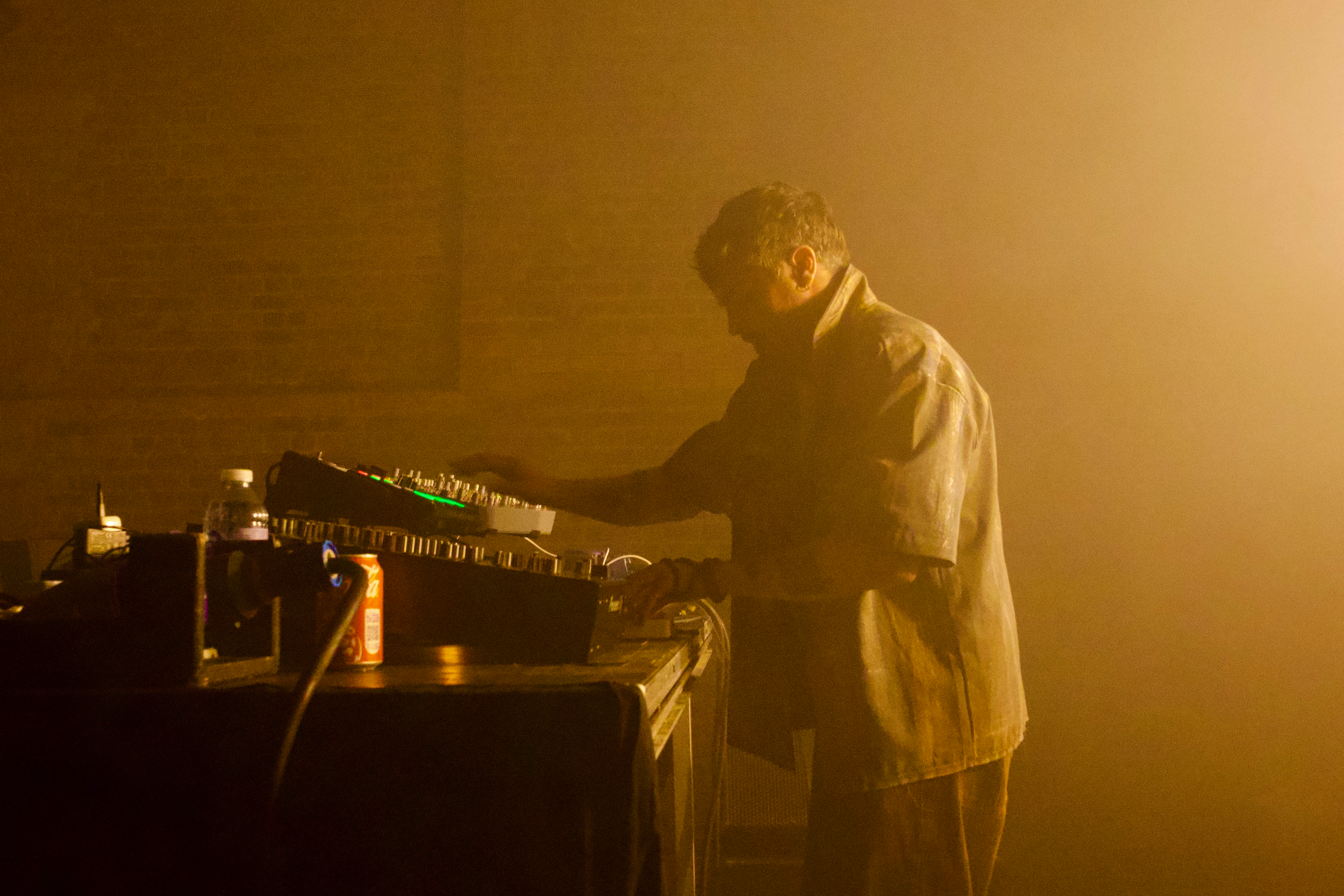
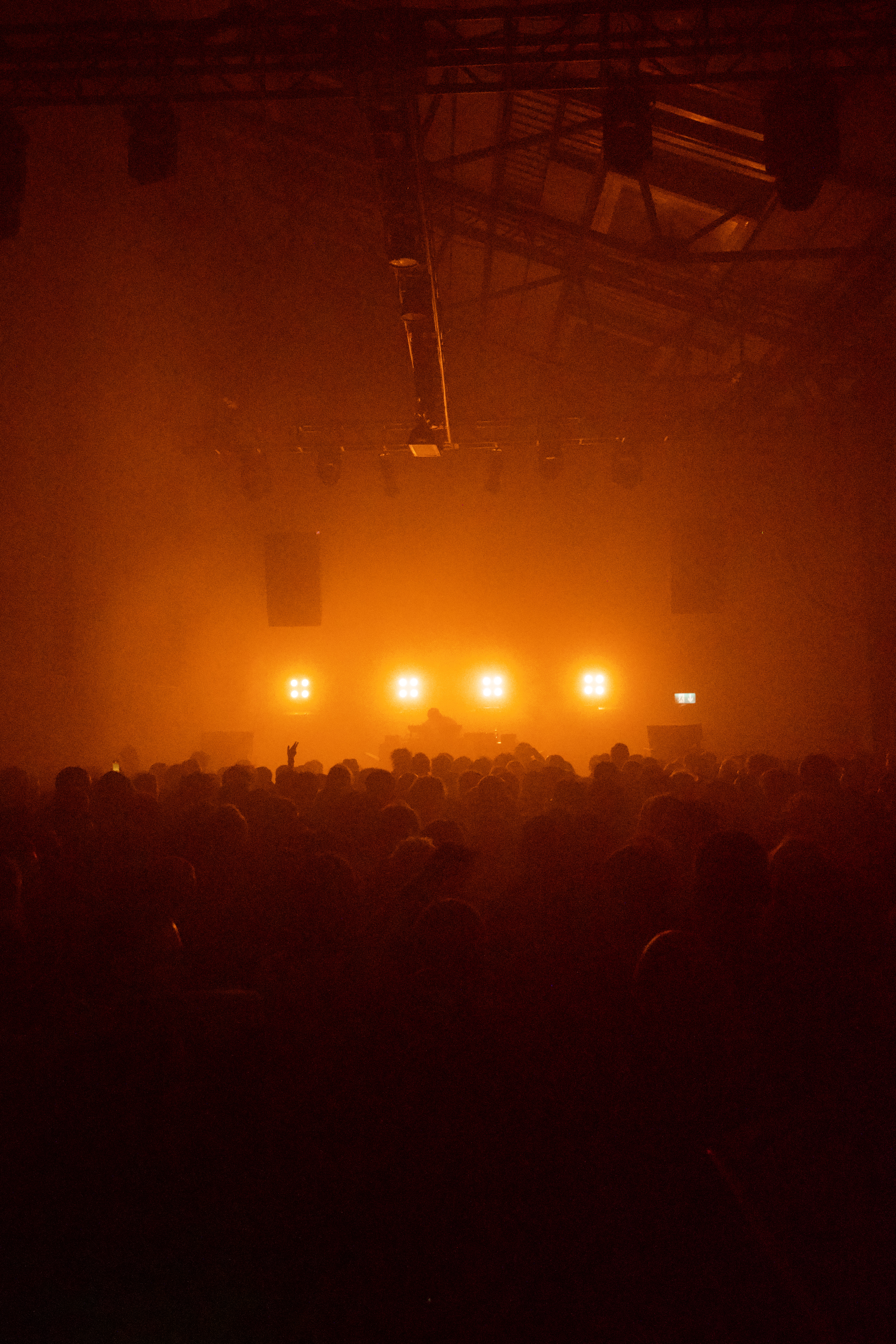
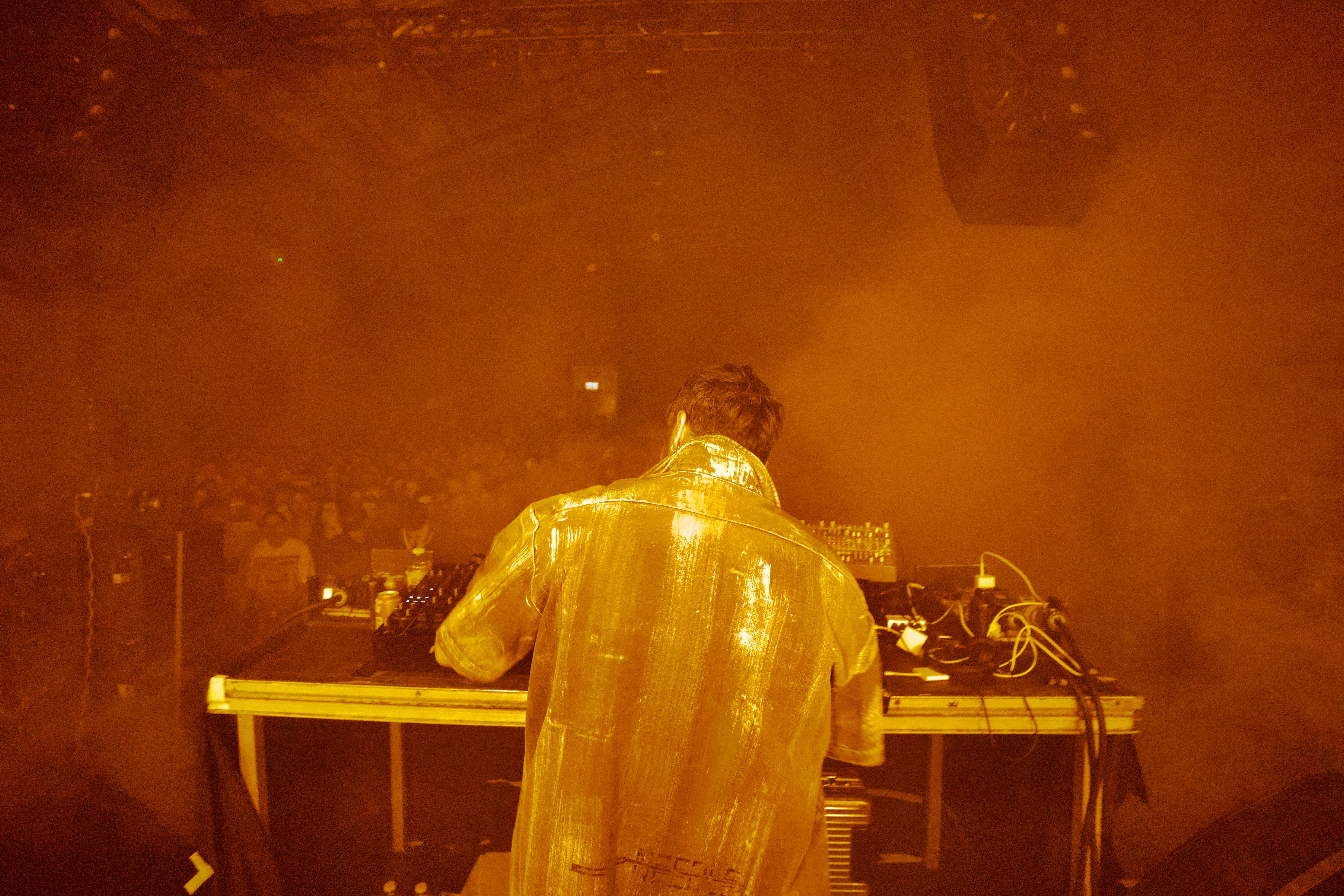
A few hours later however, Blawan is taking his pub landlord role seriously, presiding over his hundreds of punters at London’s Village Underground. He is “shitting himself” he admits, just before the show. “It’s not as if I’ve not done this before, I’m a seasoned vet when it comes to playing live,” he says. “But people will be coming, and because its album launch day, it’s all fresh and now they are going to hear some weird mutations of it. I just try to make it as fucked up and as fun as possible.”
In a setting that could be described as a million miles away from The Grapes, once you adjust to the metallic scuttling and foreboding vocals, I start to realise what he means. Balloons, helpfully handed out at the entrance, soar overhead as the all-out assault of keening bass and shattering kicks begins — there’s cheers, whoops, even the odd giggle as they pop underfoot in the brief, dizzying moments of silence. Everyone seems to have a grin plastered across their faces. Yes, it’s intense, bewildering… terrifying even. But everyone is still having a proper laugh.
It's been a bewildering few weeks in the lead up to tonight for Roberts, who has been occupied with the roll out of ‘SickElixir’ - his debut full-length record on XL Recordings and the follow-up to a string of EPs on the label that have seen him deviate from the 4x4 techno through which he initially made his name before the pandemic to new, more off-kilter sonics. In the few hours before we sit down, there are already a flurry of shining reviews rolling in. “I woke up and my phone was just popping off,” he tells me, shaking his head. “I’ve been doing this for a long time, it’s not like I’m not used to putting music out. But for something so personal to me, in an abstract way, it’s hard for me to understand how people are connecting to it. It means the fucking world, but it’s mad.” Fans and commentators alike have made connections to the unsettling, futuristic turmoil depicted within ‘SickElixir’’s glitchy, fervid 14-track expanse; in an interview with Roberts just days before, Apple Music 1’s Zane Lowe describes it as “emotional music, but i’ve never heard anything like it in my fucking life.”
The crowd at Village Underground, similarly, are already well-versed in each track, with a particular flurry of cheers ringing through the warehouse space as the punching drums of ‘Weirdos United’ come hurtling from the soundsystem. The aptly-named third track is where the process behind ‘SickElixir’ began, created - ironically - while Roberts was alone in a “poxy” flat in Leeds. “I was quite down, then I created this track and it was just so different from anything I’ve done before,” he tells me. “I was like: ‘What the fuck is this?’ It took me a few days, then I realised I might be onto a vein of something here.” I tell him I read that there had been over 100 demos for ‘SickElixir’; “way more than that,” he replies between fits of laughter. “I mean over a two year period man, it must have been way more than 200. That’s with breaks in between too. Most of my music isn’t stuff for Blawan. I write a lot of metal, a lot of weird stuff. It’s just for me, I listen to it and absorb myself.” I ask him if it acts as a sort of journal, a way to document or express his emotions. “Fucking hell, I didn’t think of that,” he blurts. “Exactly. No one’s going to read it, no one is going to listen to it. I have so many little, one-minute bits of music that I keep on my hard drive. I don’t archive it, I listen to it regularly.”
It's not unusual for an artist to channel their deep-rooted emotions into a record, with Blawan having already alluded to his experiences with trauma and grief being a core inspiration behind ‘SickElixir’ in recent interviews. However, his process of creating music seems to lie less in a conscious attempt to communicate those feelings, but to process them in his own head. “I’m very emotionally connected to other people,” he says. “I can read other people like a book, but I can’t read myself. So music’s always been a way for me to get stuff up, see where I am.”
The sometimes-violent, occasionally serene and wholly unorthodox sounds heard on ‘SickElixir’ could probably lend to his admission of the tumultuous mental state during which it was written. Though, Roberts admits, it comes part and parcel from the “odd relationship” he’s “always” had with music – from both his use of it as a tool to get to grips with his emotions, and his - somewhat - unconventional tastes. “My favourite song when I was 12-years-old was this track called ‘Tampon Lollipop’ by Skinless,” he breaks into a fit of laughter. “It’s disgusting really. The lyrics are ‘orrible. Its silly as fuck. I was a huge grindcore fan, then my taste just kept getting weirder and weirder.”
He begins to list off death metal bands he became entranced by in this period, such as Cannibal Corpse and Napalm Death; he also points to JK Flesh, the solo techno project of Justin K. Broadrick, drummer from industrial metal band Godflesh. whom Blawan and his Karenn duo partner and Voam co-founder Pariah recently hosted for a performance on their curated stage at Draaimolen. “There’s this unspoken connection [between metal and electronic] for people my age, who are late-30s/40s or whatever. It's so relevant, because when we were younger, that was dominant.”
As a teenager in Barnsley, somewhat isolated from the bubbling cultural centres just a few miles away, his music taste was shaped either by going to metal gigs, renting CDs, or by searching for music on torrenting sites. “I’d download folders called ‘Swedish Death Metal’ and there would be so much random stuff,” he says. “I came across Squarepusher and Venetian Snares while searching for Aphex Twin. I was just looking for something as mental as metal but electronic,” he adds. “I was trying to connect those worlds early on.” Around the same time, he says, his journey as a musician began, playing in death metal and grindcore bands across Barnsley, while his growing fascination with electronic music led him to getting his start on Fruity Loops/FL Studio. “I’d be at home making plinky plonky house music,” he laughs. “It’s a very odd musical lineage. That’s probably why I write such odd music now.”
As heads bob and writhe beneath him at Village Underground, I wonder if he feels a sense of satisfaction from his viewpoint of what feels, essentially, like a mosh. Around halfway through the set, the balloons have taken on a less lighthearted energy — they’ve become annoying, an obstruction even, but in In its own fucked up way, it’s enjoyable, convivial in its intensity.

In a literal sense, much of the campaign around the album has referenced the industrial noise Roberts’ was exposed to while working at a maggot farm as a teenager - the flinty scuttling, the unsettling crashing and bashing - as a direct influence. Though as he describes the toll it took on him, having started the job at 14 after being constantly on the move as a result of “crazy family shit”. It’s clear the experience’s connection to his music runs much deeper. “I didn’t even finish school,” he says. “It was a big operation, they used to find farms and then do it until people in the surrounding area could smell it and then fuck off. It was on UK’s Toughest Jobs at one point, the actual place I worked.”
“I’d be shattered from work, go home and play in bands or make music. That’s all I did,” he continues. “There's a sonic impact with the machinery, but there's a way more important effect it had on me and that was socially, I became a recluse and I just sat on my computer writing music.” Working for the business until he was around 20-years-old, he describes the smell of ammonia - which maggots let off if they are hungry, stressed or warm - and the use of dye in rearing the larvae as being a key driver behind his teenage isolation. “People hear the word ‘maggot farm’ and they think ‘that sounds horrible’, but the reality… you can’t even describe it. I could show you a video honestly,” he goes to pull out his phone, but then seems to think better of it and places it back in his pocket — which I’m extremely thankful of.
“Imagine then,” he continues, “playing at a gig at 16-17-years-old. Drumming a small bar, sweating and all of a sudden this pink stuff starts coming out of your pores, you smell like piss and corpse.” He then looks up at me cheekily. “I mean that’s probably the most metal thing ever to be fair.” On occasions he’d be asked to leave venues due to the smell, undertaking an obsessive hygiene routine as a result that would leave his skin raw. “It can’t be very good for your self esteem can it?” he says. “I became embarrassed to go outside and be near people, so I just stayed inside and made music.” He insists that, despite the grisly picture he paints of the farm, he didn’t have a horrible life as a teenager. “At the time, that's all I knew. All I saw was cash coming in. I wanted to get this Ayotte custom drum kit for six grand, and I’d tell myself, if I’m lucky enough, in six months I’ll be able to afford that. I saved up the whole year. For a 15-year-old kid that’s so exciting.”
While the access to his paychecks afforded him the opportunity to develop his skills as a musician, eventually Roberts’ decided to go to college and earn a qualification to, hopefully, help him reach uni and leave behind his life as a maggot farmer. There, he found encouragement from his tutor, former Magazine keyboardist Bob Dickinson, who introduced him to his bandmates - and their shed of synthesisers - not long after. “He was a funny character,” he says. “The type of guy where he'd come in, if you were rehearsing or sommat, if it sounded horrible he'd be like ‘That's fucking awful’. It was really brutal. The other two were a bit more kind, but Bob it was a fucking knife like. But these guys, I think they saw something in me. There was no other adult in my life that would give me that kind of encouragement, like I knew anything about music,” he says.
As a typical youngster with an internet-induced fascination with electronic music, it wasn’t until he was much older that he would have his first dance music experience. He describes going to watch Iration Steppas Sound System at Leeds’ West Indian Centre as a “cathartic experience” that led to an all-out obsession. “Going into this hall, as a young guy with people passing spliffs around, standing next to a soundsystem as it goes ‘BRRRR’. I was just like: ‘What is this magic?’”, he recalls. “The second time I went, I puked up because it was so loud. I would be the guy in there, sitting in the sub.”
“I’d never heard anything like that before. People weren’t even dancing just fucking… vibrating from the sound,” he sits back and puts his hands to the back of his head. “You’d walk over the hill to get there, and it had this tin roof and I remember the first sound you’d hear was this rattling, it sounded like someone was demolishing the building. It’s like this universe that you feel like you've never explored before and you're fucking ready for it.”
The set that really changed his course though, was north of the border in Glasgow, lost in the throes of Scuba at Sub Club during the “peak Hot Flush period” in 2005. “He was playing this technoid shit. I recognised it as techno - but it was so heavy,” he recalls. “To be honest, I enjoyed the set, but I couldn't wait for him to finish because I wanted to get home and start trying out some of this shit I've just heard. Pangaea too, I saw him there and it blew my fucking mind. I don't know where or what I'd be doing now if it wasn't for those Sub Club nights.”
“Back then, I was doing all sorts of shit, I was playing metal… I’ve still got stuff I made when I was a teenager, and it's funny, because you can tell it was me, even back then,” he laughs. “You can see the direction was a bit more sporadic. But then having those moments, where I was trying to find something to do and then seeing Scuba playing the most alien stuff I've ever heard in my life for an hour. I was just like, yeah. That's it man. Those are the dots I’m trying to connect.”
Seeing Shackleton play at Sub Club was another formative moment. “I was like ‘Who is this guy?!’, then meeting him and hearing him talk and he's got this proper Lancashire accent,” he laughs. “I was like: ‘Fucking what?! You're playing this really weird, Middle Eastern stuff — this makes no sense. God, you can literally do anything you want. There's no rules here.”
Just a few years later, Blawan would be making his debut on the beloved Hessle Audio imprint Pangaea co-founded, kicking off a production run with releases on R&S, Hinge Finger and his own Ternsec, making a move to Berlin as an in-demand DJ with bookings at some of the world’s most discerning techno venues. I ask if he hopes that young, burgeoning producers have had the same experience in hearing his own, thick Yorkshire twang as he did with Shackleton. “I mean I hope so,” he replies. “I hope I can break down some walls, because there are a lot of walls.”

There’s a clear dilemma in the way Roberts talks about the rise of Blawan; born out of his fascination with the music, yet the gatekeeping nature of the techno scene - which he describes as a “snake eating its own tail” - also led to his desire to move away from it. “Techno can be one of the most futuristic sounds, not necessarily the music itself, but the mental state it puts people in. You go on the dancefloor, you’re having a good time and maybe you’ve taken a little something – then someone plays some really amazing techno, it’s fucking magic.”
“I just think, what a shame to keep repeating yourself, try something else. Take people to an even more magical state. But you can’t, it’s hard work man,” he confesses. “If you think about The Prodigy, they went from rave music and acid house to The Prodigy… how do you get from one to the other? It’s because they were brave enough to just say, fuck it, let’s try something else. I think so many people end up feeling safe, techno needs a kick up the arse.”
“I understand though, once you have a career… the thing is, in techno, that industry behind it is massive. It’s so scary to try something else, because then someone might not book you anymore,” he says. “It gives you a good life, you know? You can go from a kid in your bedroom to driving around in a Porsche if you want. It’s pretty quick as well.” I ask him if it was that quick for him, he shakes his head. “No, but my life did obviously change, for better and for worse.” He describes becoming the “stereotypical English guy who moved to Berlin and lost himself,” and while he is open about his past struggles with drug addiction, he insists it wasn’t just due to partying that things took a turn for the worse. “It was mental health problems and family shit, then brick-by-brick, I just drowned. I knew I needed to get out of techno, not just because it was going to kill me. It just spiritually and creatively wasn’t doing what I needed. I was being pulled under so much that I didn’t know how to make the change.”
In 2019, following a period of being in and out of rehab, Roberts was desperate to break the cycle that was threatening to destroy him. “It was becoming quite apparent that I was losing complete control of my life,” he explains. “I was a zombie, so deep in my soul and I was like ‘I’ve got a choice here: I carry on, probably die. Or, I try something else.”
“I had a friend in Berlin with this restaurant, he had really good meat, I asked him where he got his produce from and he told me about this dairy farm, about two hours away in a place called Mecklenburgische Seenplatte,” he looks up. “Hard word to say that.” At this point he made the radical decision to visit the farm and ask the farm’s manager, with the little German he’d picked up, for a job. “I went back the next day, he was a bit cold, obviously you know… wondering ‘who’s this DJ coming here?’ I told him: ‘My German’s not that good, can I talk to you in English’, he opened his mouth, straight away I was like…” he looks at me with complete disbelief. “He’s from Scarborough.” For Roberts, meeting a fellow Yorkshireman in rural Germany felt like a “lightning bolt”, “After the last seven years, I don’t believe in coincidences anymore. It was like something out of The Matrix. God - or something - was telling me that I was meant to be there.”
Roberts would go on to spend two-and-a-half years at the farm before and during the COVID-19 pandemic, becoming “entrenched” in the family and the community. “I was envisaging myself settling down there. I had this beautiful life. I’d wake up at 5:AM and ride on horseback through this misty pine forest with the cows, I was like: ‘Fuck music man.’” In a reversal of fortunes for the young lad whose solace from the grim conditions of the maggot farm was making and playing music, now the sweaty recesses of the club at the weekend became his source of discomfort away from his newfound tranquility.
Yet, he did return. In 2021 he released his debut EP on XL Recordings, ‘Woke Up Right Handed’, a warped, antithetical move from his techno productions that would continue through 2023’s ‘Dismantled Into Juice’ and 2025’s ‘BouQ’ — both of which referenced his time on the farm with cow hide and sheep-themed artwork respectively. “After a few years, something was screaming at me to get back to music,” he tells me. “I didn’t want to let my demons and the drugs win, because they were winning and that annoyed me. I couldn’t let that happen.” The boy who toiled and reeked of ammonia to save up for his drum kit had to find a way to make music again — and it appears that, for Roberts, 'SickElixir’ is his way of saying thank you to him. “Everything I’d done since I was a kid had been to allow me to have this creative life. Then, for this small period in this disgusting city - I don't mind saying Berlin is disgusting either, it is - I nearly let that take it away.”
He credits XL’s Will Aspden with helping him to “find his voice” again, after years of the drugs, dilemmas and demands of the techno scene having pulled him away from his vision. “After years of writing 4x4 I needed some help, but it wasn’t just about that,” he admits. “I was just trying to find a way to express that I was really trying to change my life – not just my career - but my entire life. This was the catalyst for that... it sounds a bit lame to people who don't really write music, how just writing a track can do that. But when you use music to communicate with yourself, when it comes from this deep personal place, that is how it works.”
The last few, shattering bars ring across Village Underground and the crowd, as overwhelmed as they are satisfied, let out gasps of cheers in his direction. As he looks onto them and raises his hands to clap, it's clear something has changed. While he’s spent the last few years touring again, as Blawan, alongside Pariah as Karenn, even collaborating with Skrillex — this gig, this show, this album, is him returning to what he was supposed to do. The young lad is back behind his drums. The wrangler is back with his herd. The pub landlord is back in his pub.
“I knew it would change everything,” he says. “It sounds so weird, but programming stuff on a computer - just putting the dots in different places - has caused this monumental shift. Making club music was harming me. Now, I’ve just put a kick here and a kick there,” he laughs, before raising his coffee cup to a cheers. “And I’ve reprogrammed my life.”
Blawan's 'SickElixir' is out now, buy/listen to it here.
Megan Townsend is Mixmag's Deputy Editor, you can follow her on Instagram


